Skiing hairstyles for helmets focus on comfort, security, and zero bulk at the back of the head. Thick knots or high ponytails push helmets forward and cause pressure points, which quickly ruin a day on the slopes. The best styles sit low, hug the scalp, and control flyaways while protecting hair from cold air and friction. Braids, flat twists, and tucked buns work especially well. With the right prep and placement, your helmet fits properly, your goggles stay put, and your hair still looks good when everything comes off.
Why Skiing Hairstyles for Helmets Work Best When They Stay Flat
Skiing hairstyles for helmets succeed because they remove volume from the occipital area—the spot where helmets cradle the skull. Flat braids and low tucks keep pressure even and stop painful hotspots from forming.
They also protect hair from winter damage. Tight weaves reduce tangling from wind and scarves. Moisturized, enclosed ends suffer less breakage. That means better comfort on the mountain and healthier hair once you get indoors.
The Best Skiing Hairstyles for Helmets to Try
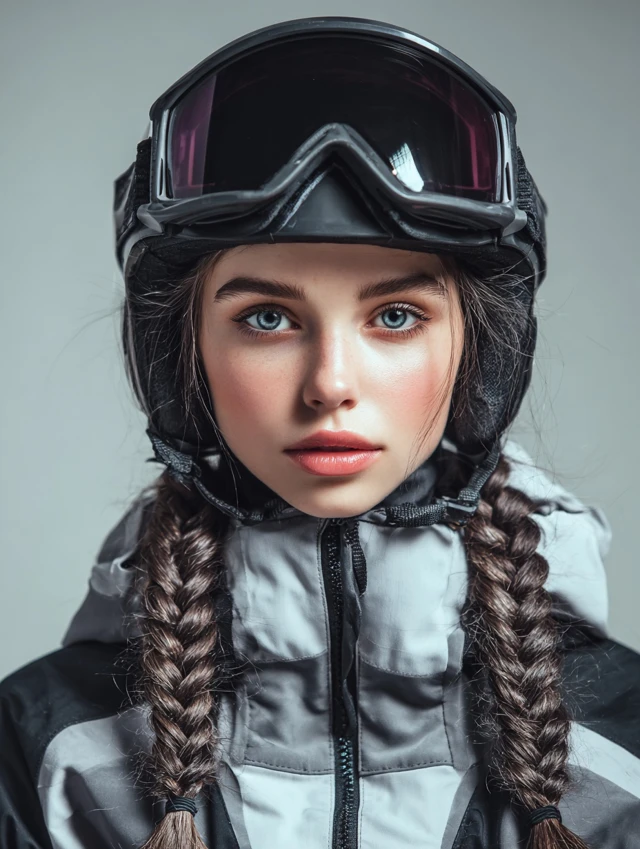
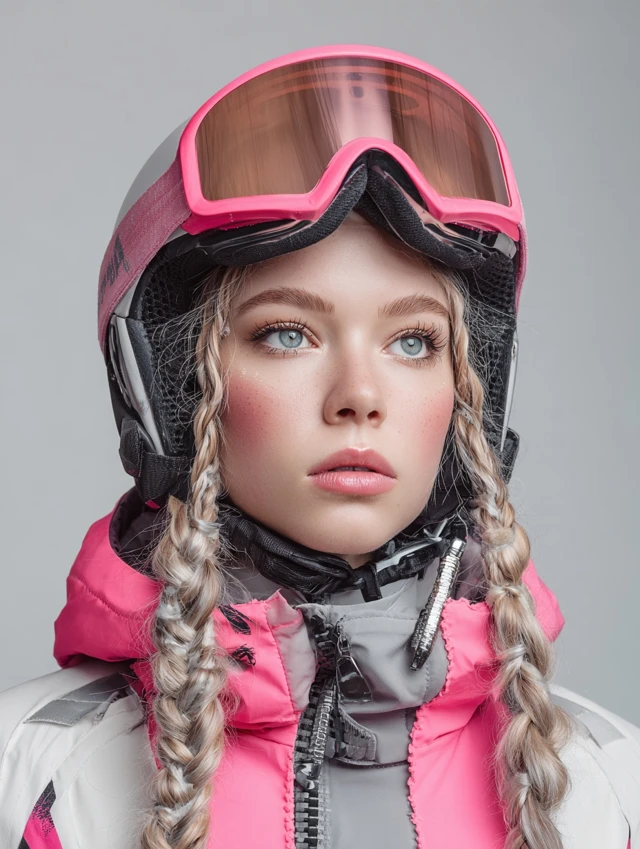
Double French Braids
Two braids run straight back from the hairline and sit flat along the scalp, keeping everything controlled. They distribute hair evenly and avoid bulky spots at the nape.
1
2
3

4
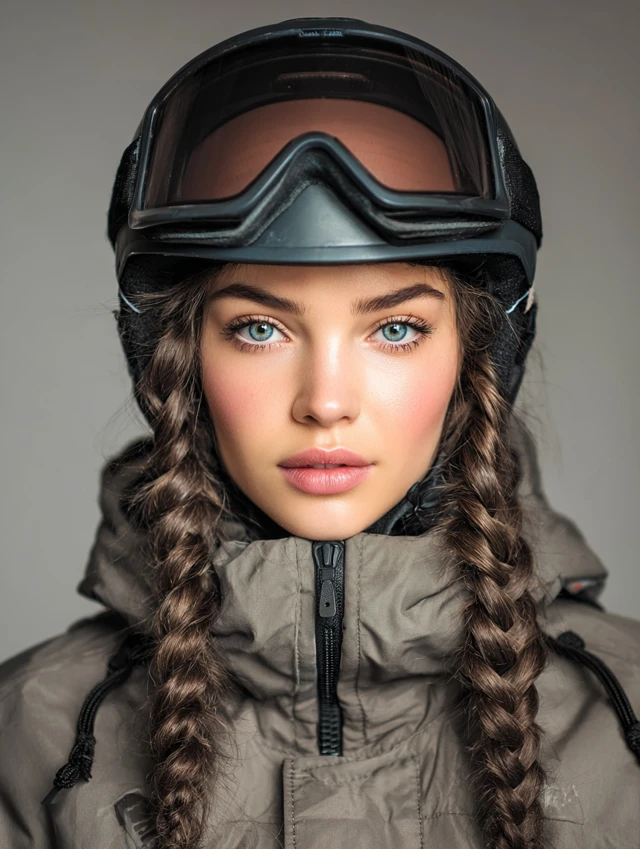
Works for most hair types and lengths past chin level. Add leave-in conditioner before braiding. This style lasts all day and fits rental helmets easily. Re-braid only the front if needed.
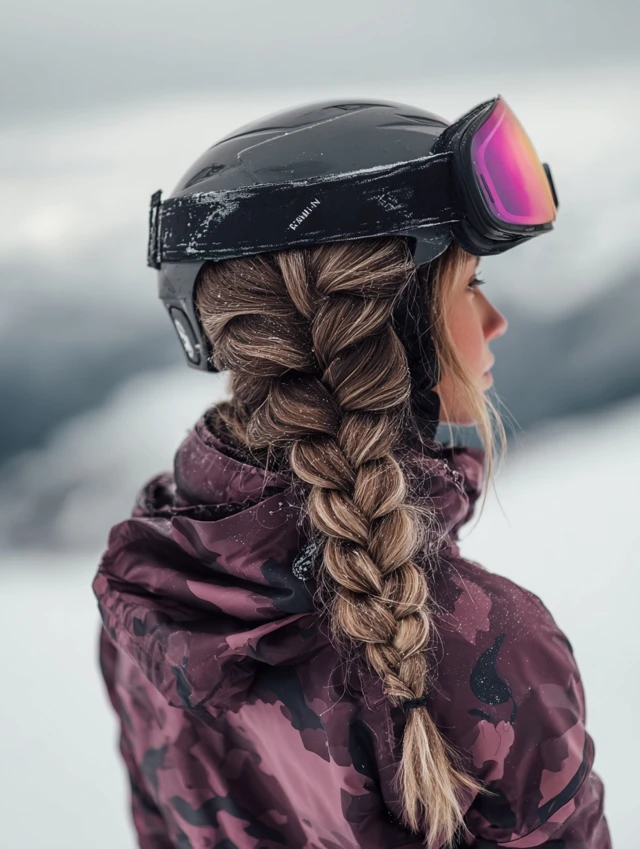
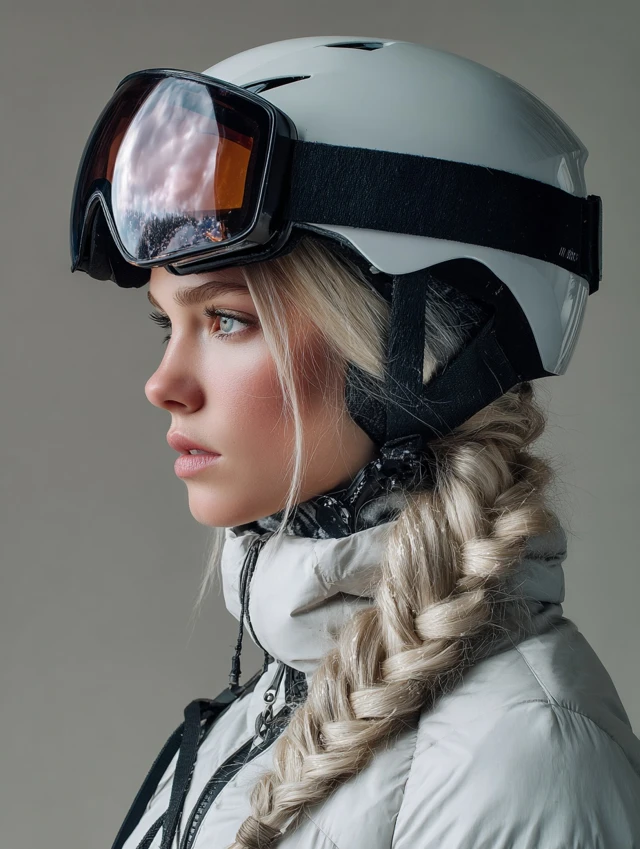
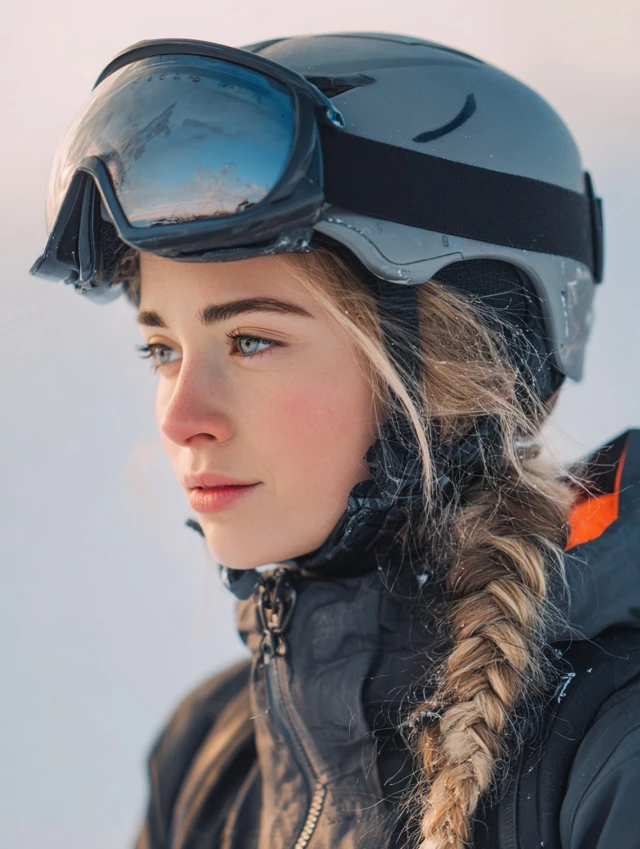
Low Braided Ponytail
Hair gathers at the nape and continues into a single braid. The placement avoids pressure while keeping ends contained inside jackets or buffs.
1
2
3
4
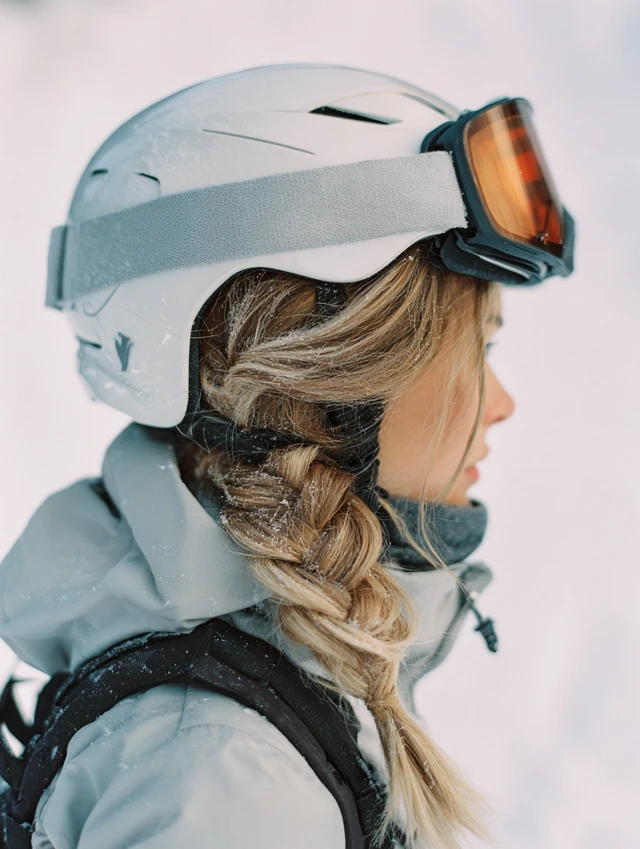
Great for medium to long hair. Secure with soft elastics. This look suits casual ski days and long sessions on cold lifts. Maintenance stays minimal once set.
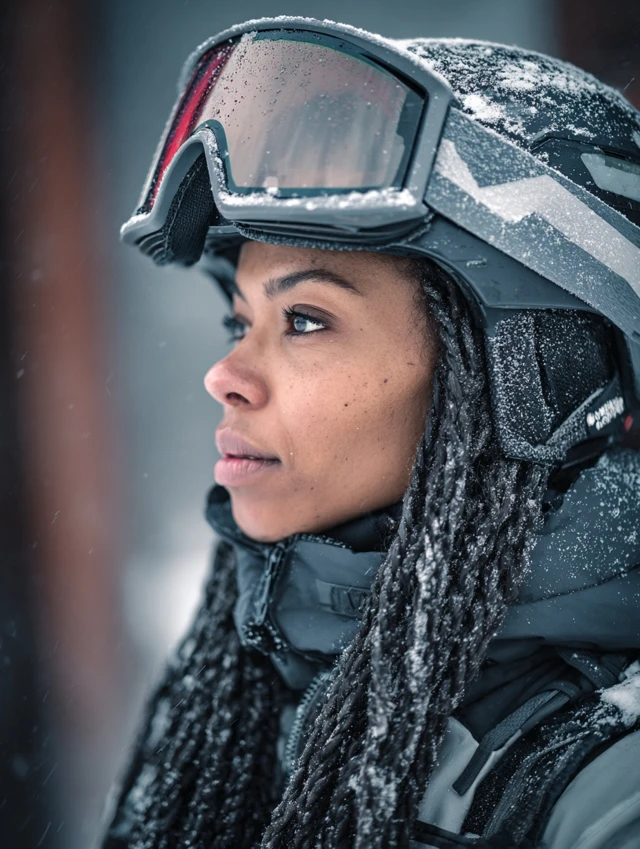
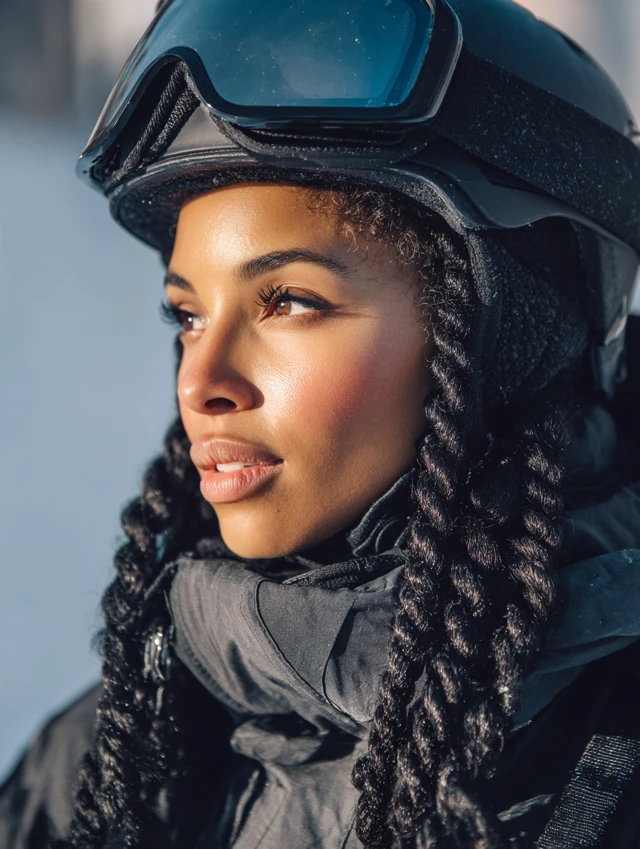
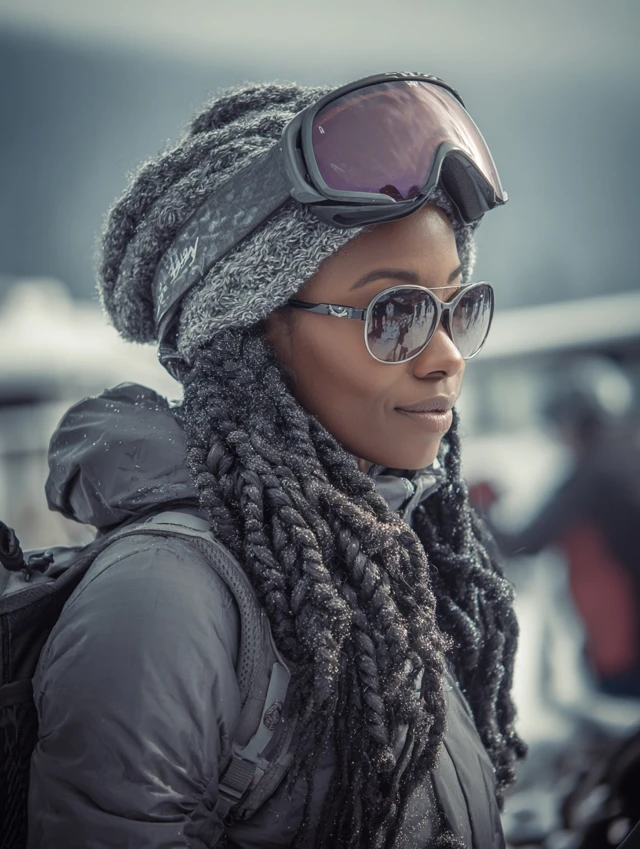
Flat Twists into a Low Bun
Flat twists sweep back and coil into a compact bun right at the base of the skull. The twist pattern keeps hair smooth under helmets.
1
2
3
4
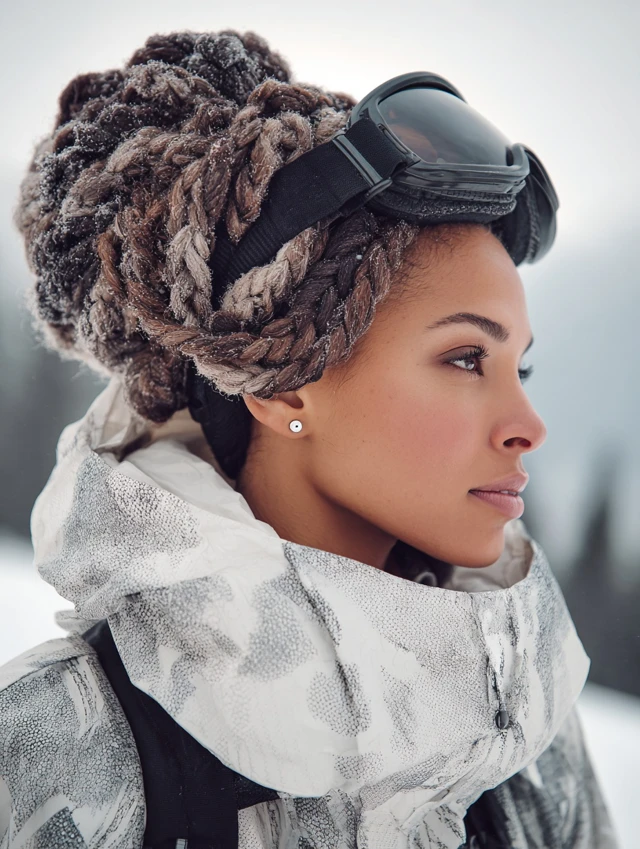
Perfect for natural textures. Moisturize first for slip. This style fits long ski days and windy conditions. Pin tightly and wrap with a silk liner before helmeting up.
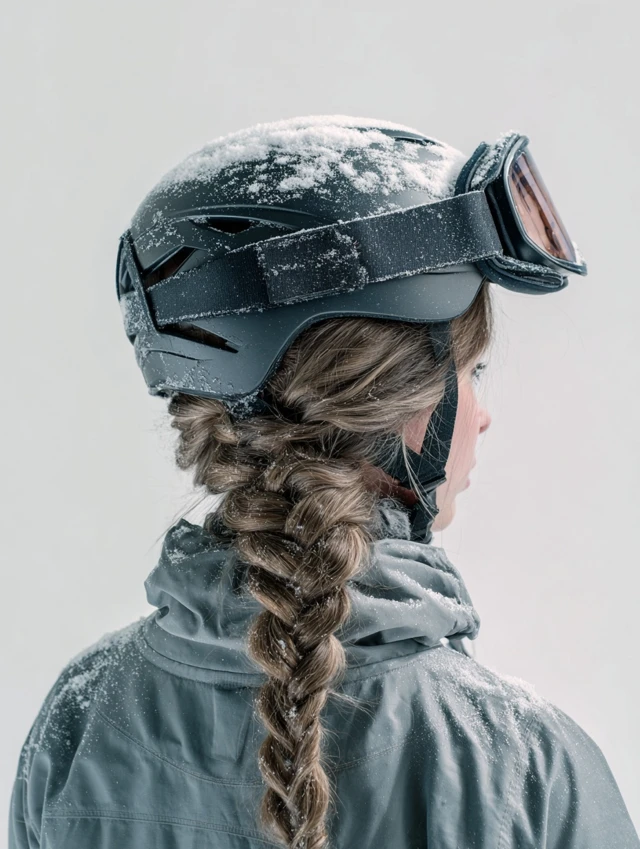
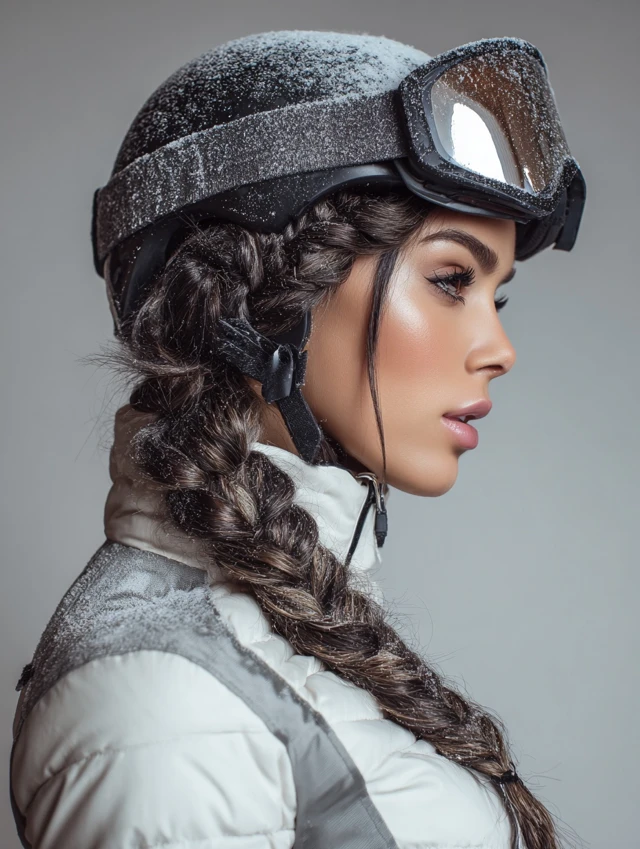
Single Dutch Braid Down the Back
A Dutch braid sits raised slightly but stays narrow enough to avoid helmet pressure. It channels hair straight down the spine and keeps the neckline clean.
1
2

3
4
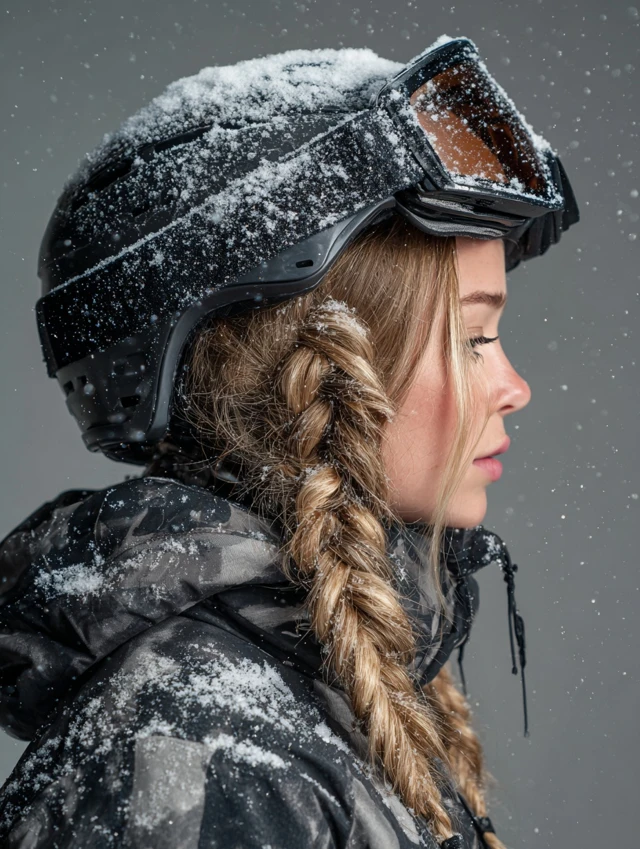
Best for thick hair that needs strong control. Prep with styling cream. This look works for full-day skiing and après-ski transitions. Loosen slightly afterward for comfort.
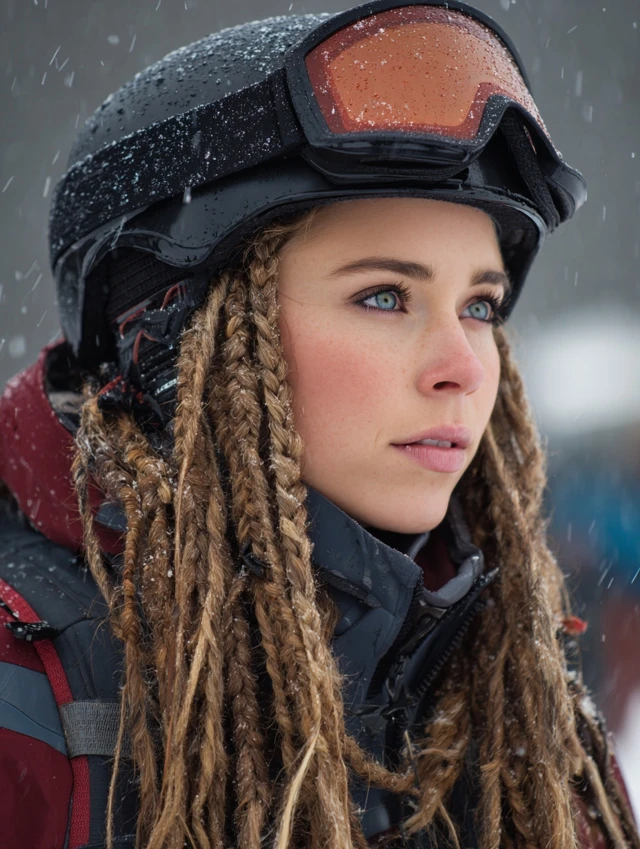
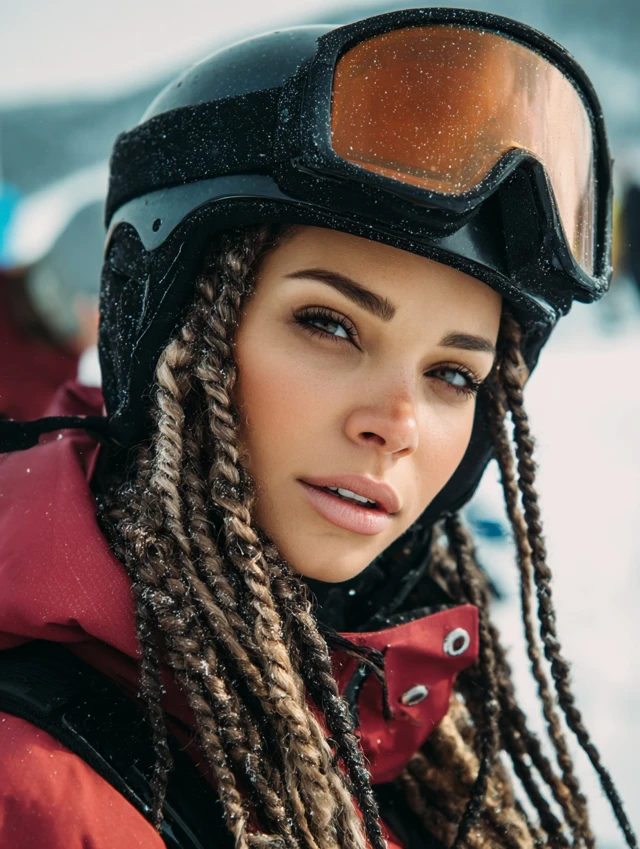
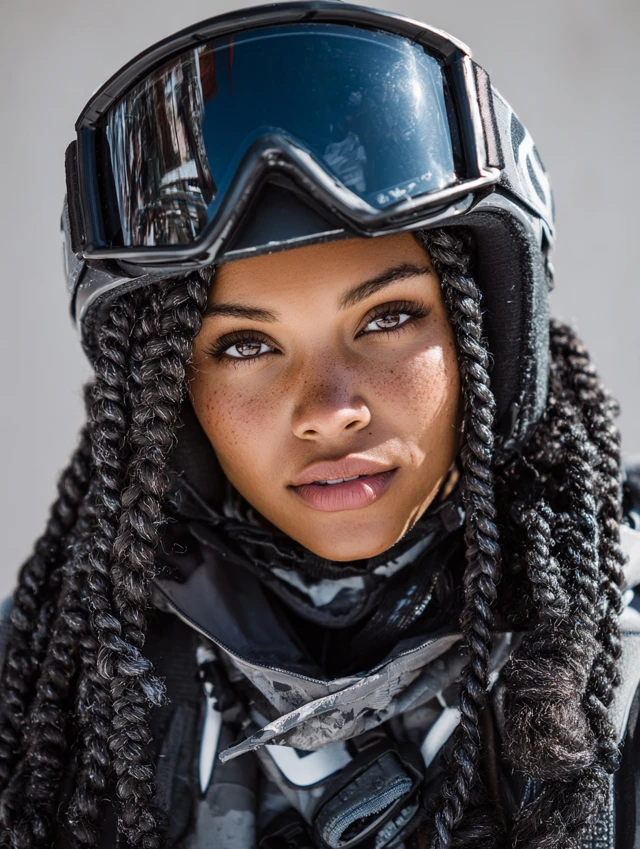
Low Two-Strand Twist Pigtails
Two twists start behind the ears and fall straight down. The symmetry balances weight and prevents hair from bunching.
1
2
3
4
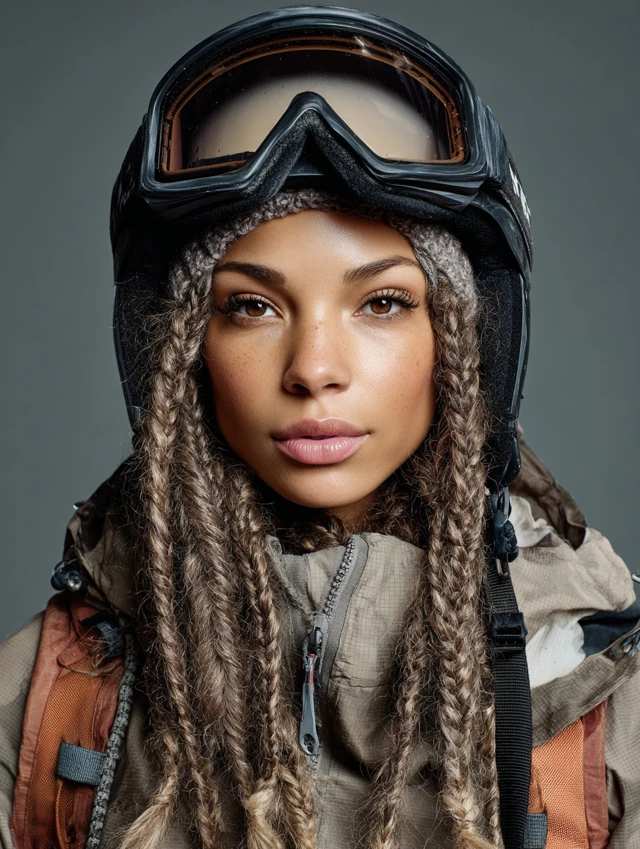
Ideal for curly or coily textures. Stretch lightly before twisting for extra length. This style suits layered helmets and long scarves. Easy to refresh overnight.
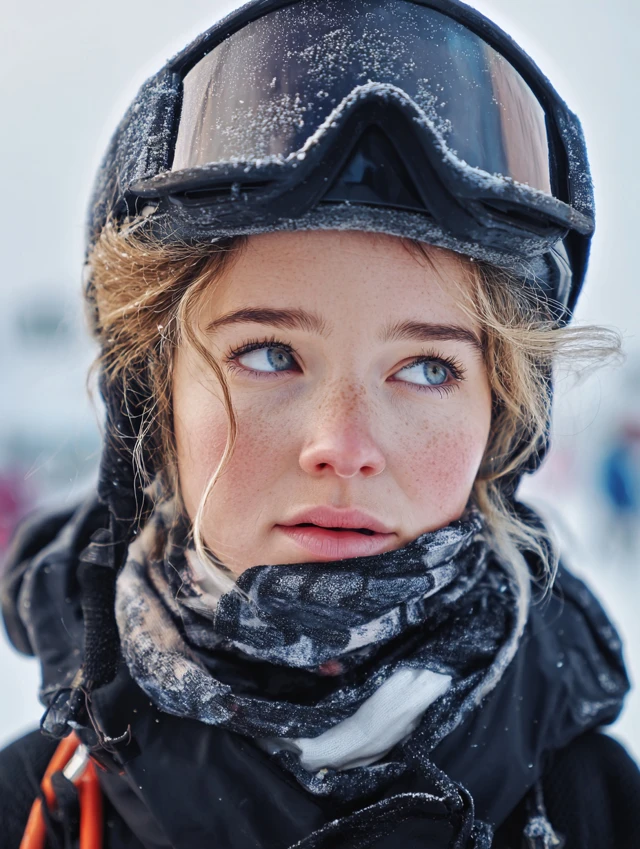
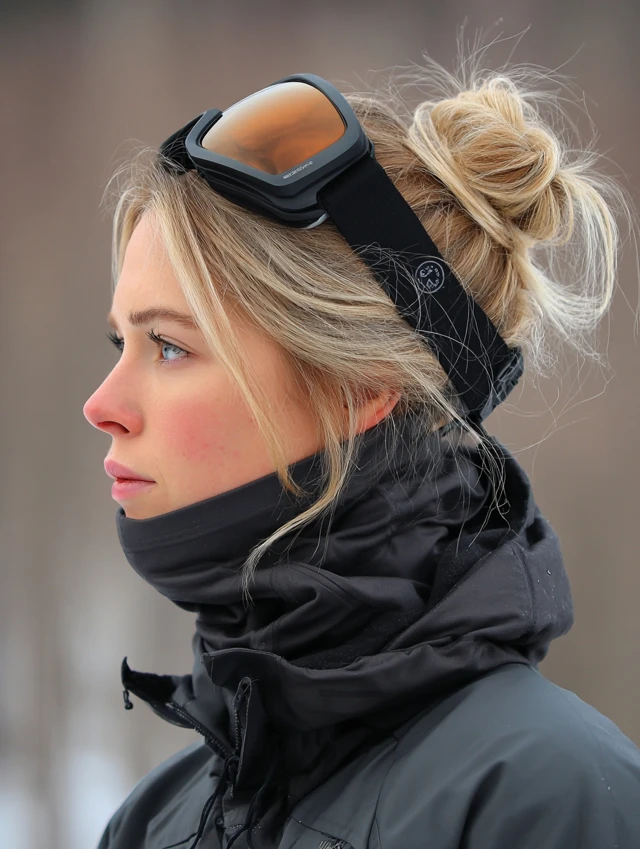
Tucked Low Bun with Neck Gaiter
Hair gathers low, twists inward, and tucks under a gaiter or buff. The fabric keeps ends smooth and adds warmth.
1
2
3
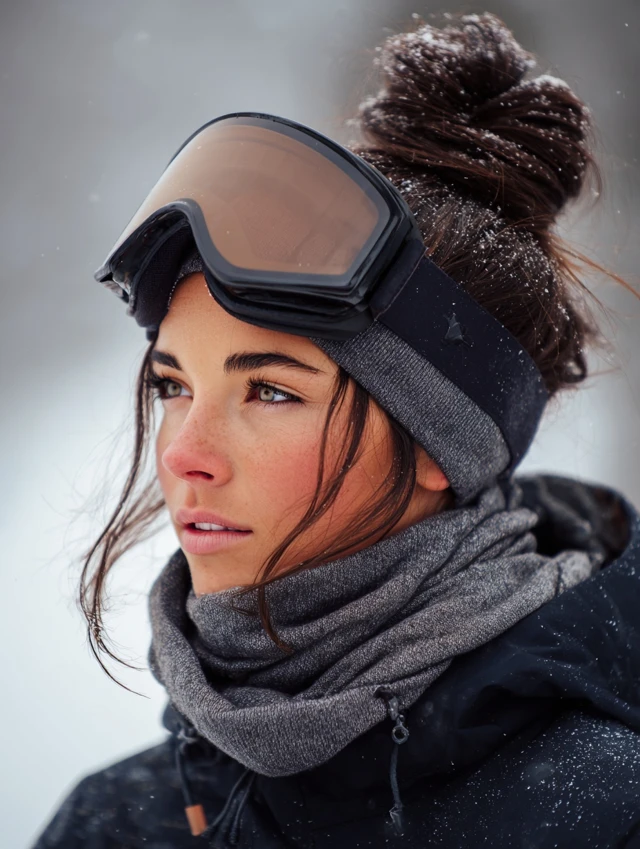
4
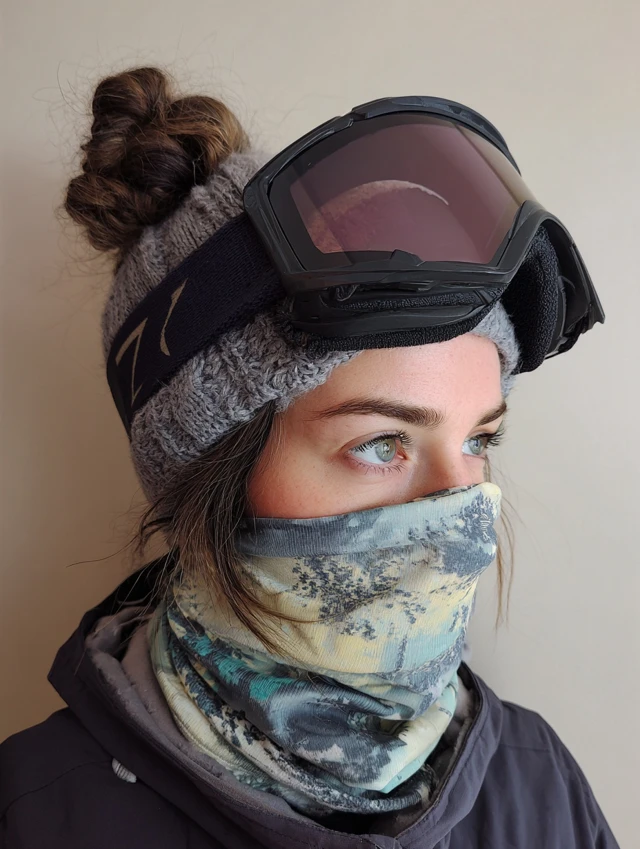
Great for short-to-medium hair. Use smoothing cream to reduce friction. This style fits minimalist skiers who want everything hidden and protected.
How to Nail Skiing Hairstyles for Helmets
Start with damp, conditioned hair so braids stay sleek. Avoid high ponytails or messy top knots. Keep everything below the occipital bone. Use fabric elastics instead of rubber. Add a silk or satin helmet liner to reduce friction. Tuck ends into collars. Moisturize again after skiing.
Final Thoughts on Skiing Hairstyles for Helmets
Skiing hairstyles for helmets work best when they stay low, flat, and secure. Smart braiding and twisting protect hair, prevent pressure points, and make helmet fit feel natural all day long.
From double French braids to tucked nape buns and twist pigtails, these styles keep you warm, safe, and comfortable on the slopes. Which one would you try first—the twin braids, the flat-twist bun, or the low braided pony?