The word “blunt” gets thrown around loosely, but a true blunt bob means one length, cut with zero graduation or layering, so every strand ends at exactly the same line. That precision is what makes it look sharp, but it also means the health of your ends matters more here than in almost any other cut. Here are 17 ways to wear one.
Classic Blunt Bob
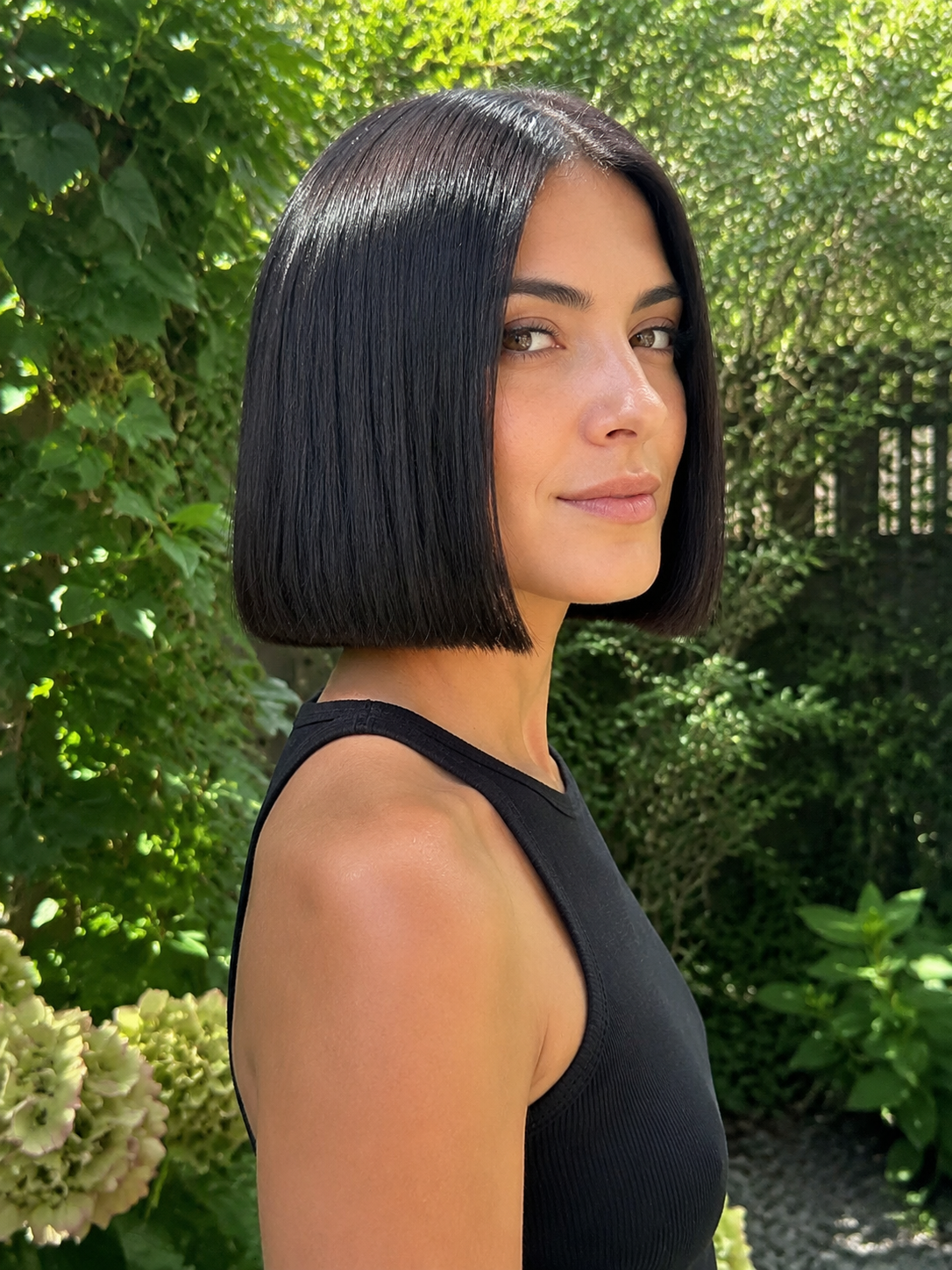
A chin-length blunt bob cut with no layers at all gives the most graphic, uncompromising version of this style. Every strand ends in one perfectly straight line, which only works if your ends are in genuinely healthy condition. Blow it out with a round brush and finish with a flat iron for the crispest possible edge.
Blunt Bob Lob
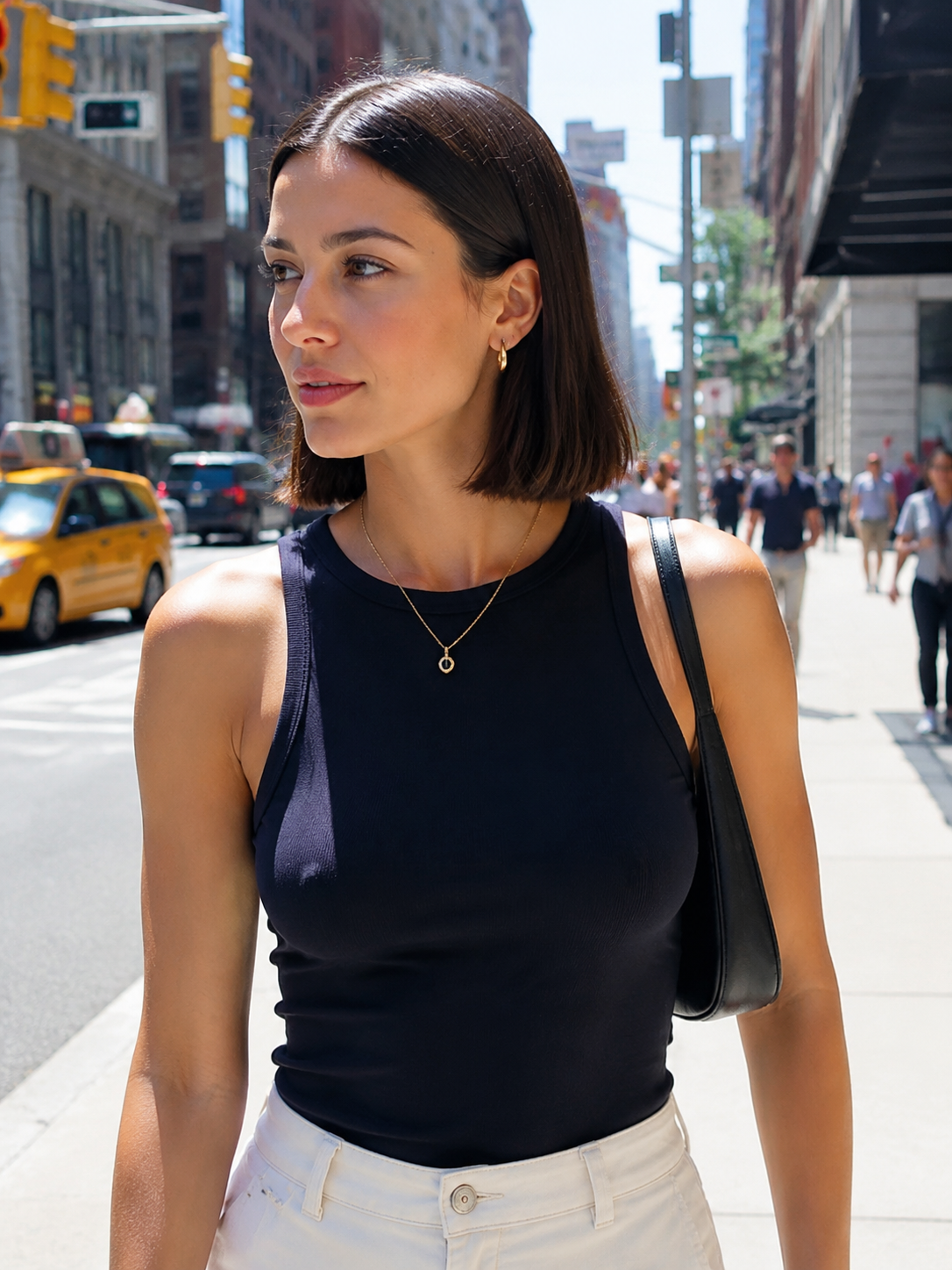
Taking the blunt cut down to collarbone length softens the severity while keeping the one-length precision intact. This longer version tucks behind the ears more easily and works well if you’re not ready to commit to a shorter chin-length cut. Ask specifically for zero layers so the length doesn’t undercut the blunt effect.
Micro Blunt Bob
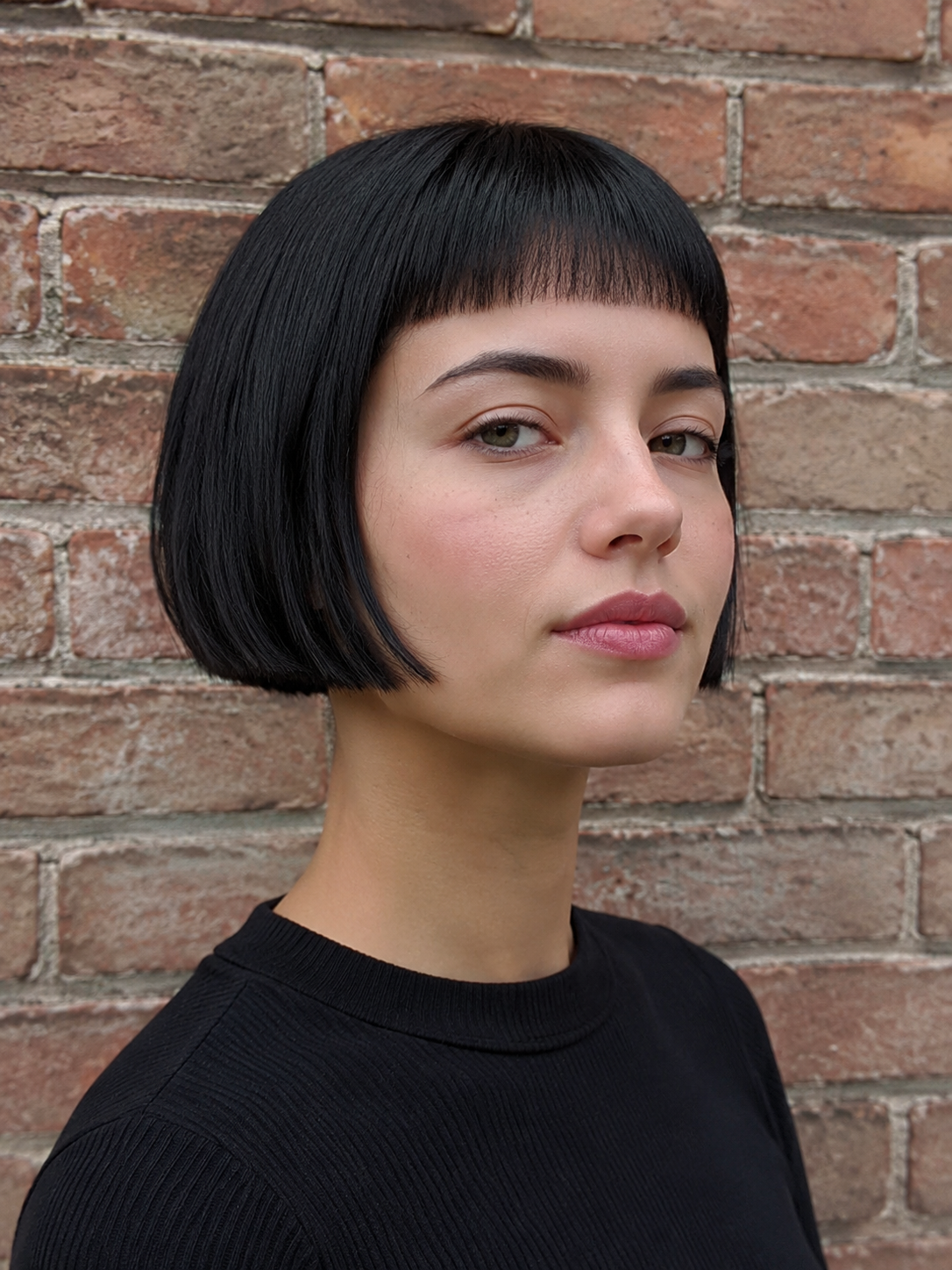
A micro blunt bob sits jaw-grazing or higher, making it the shortest version of this cut. The shorter the length, the more visible any unevenness becomes, so this one demands a precise, steady hand at the salon. Style it sleek and close to the face for the boldest, most graphic result.
Blunt Bob with Bangs
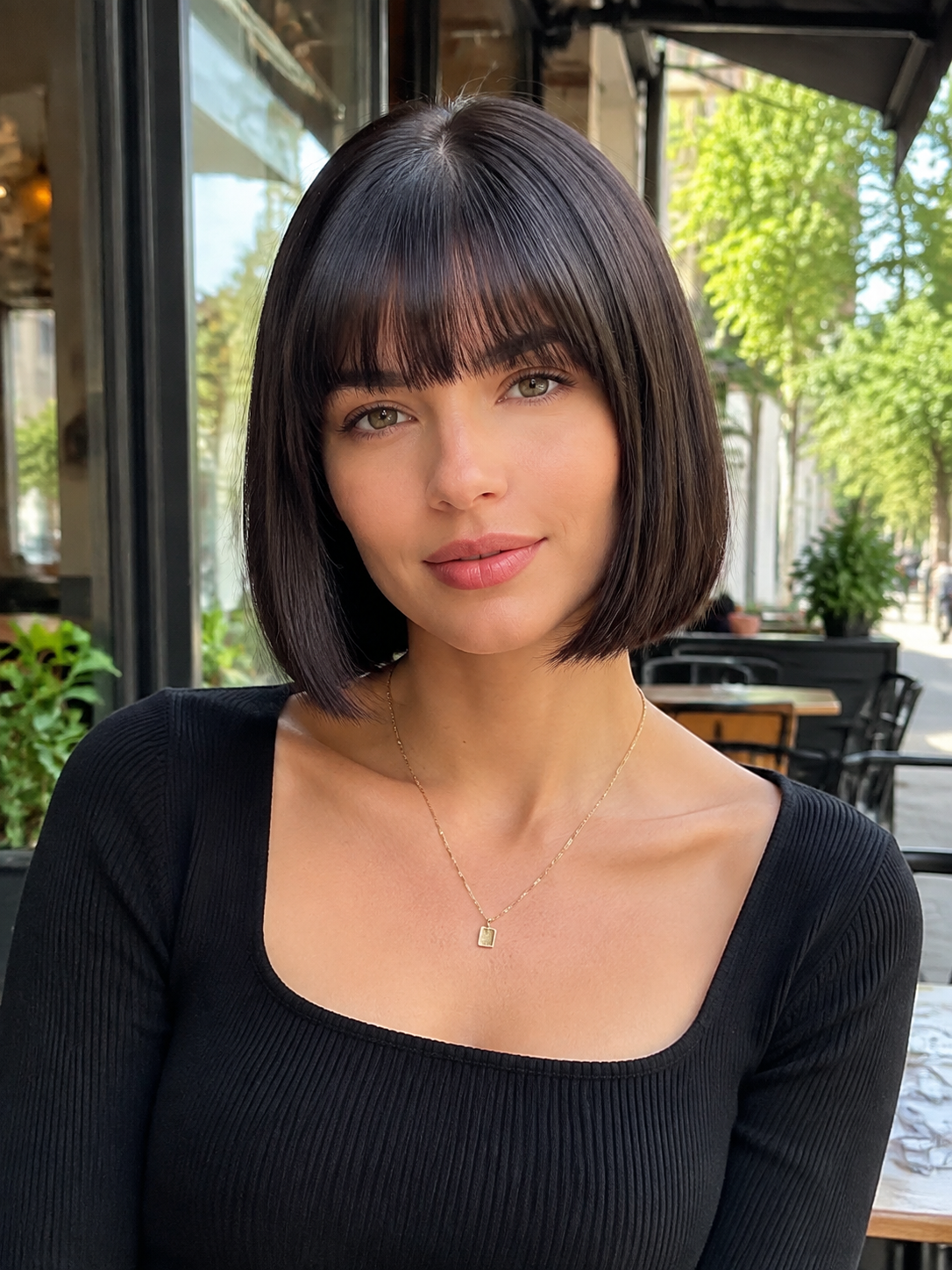
A full, blunt fringe cut at the same uncompromising line as the bob itself creates a matched, deliberate frame around the whole face. This pairing reads most striking on hair with minimal natural wave, since bangs hold their shape better without humidity working against them. Trim the fringe every three to four weeks to keep both lines crisp.
Blunt Bob with Curtain Bangs
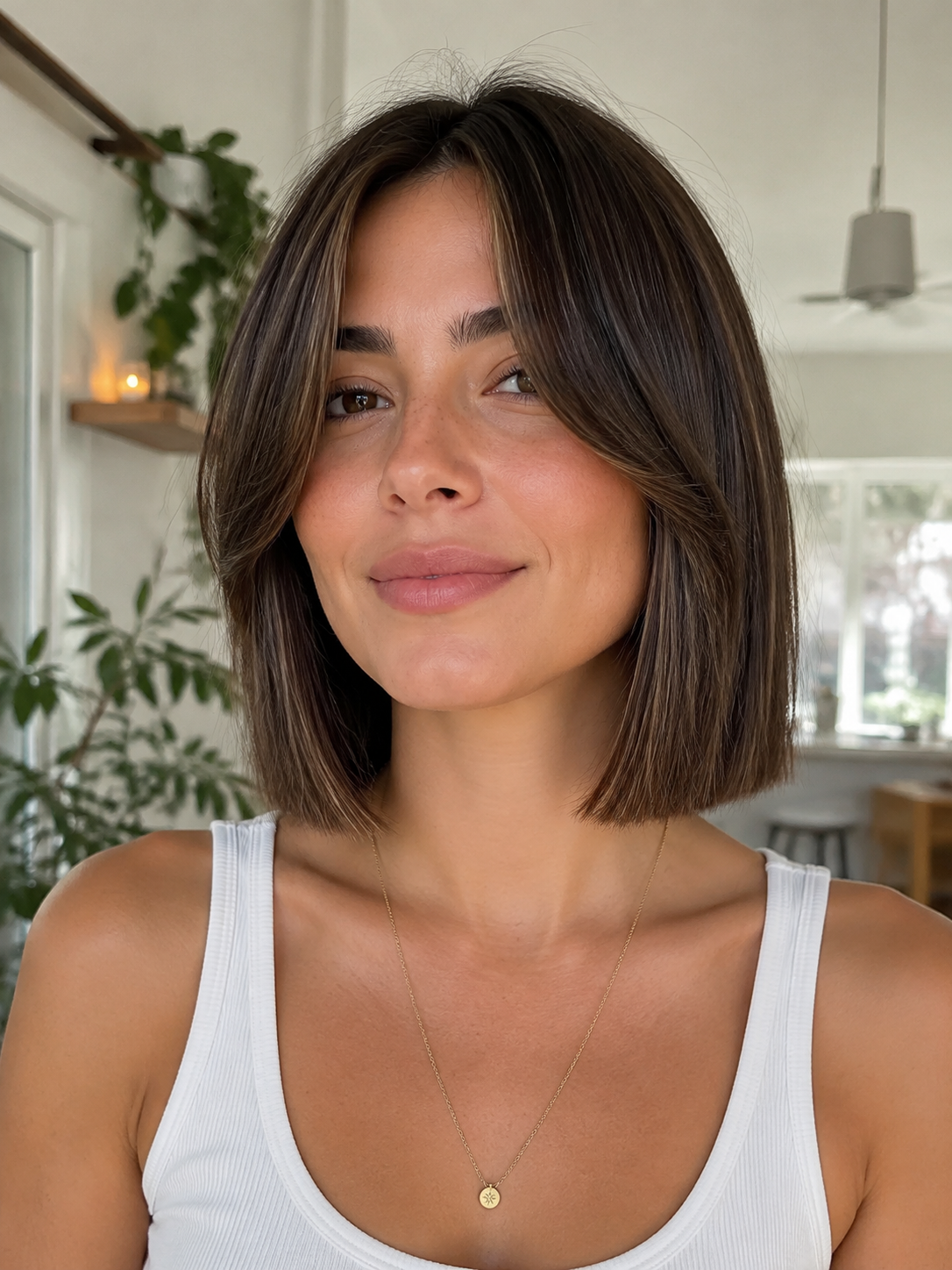
Curtain bangs split at the center and swept toward the temples soften the sharpness of a blunt bob without breaking its one-length rule elsewhere. The contrast between the swept-back bangs and the straight-across bob line gives this cut more dimension than a fully blunt fringe. A round brush blowout keeps the curtain shape lifted off the forehead.
Angled Blunt Bob
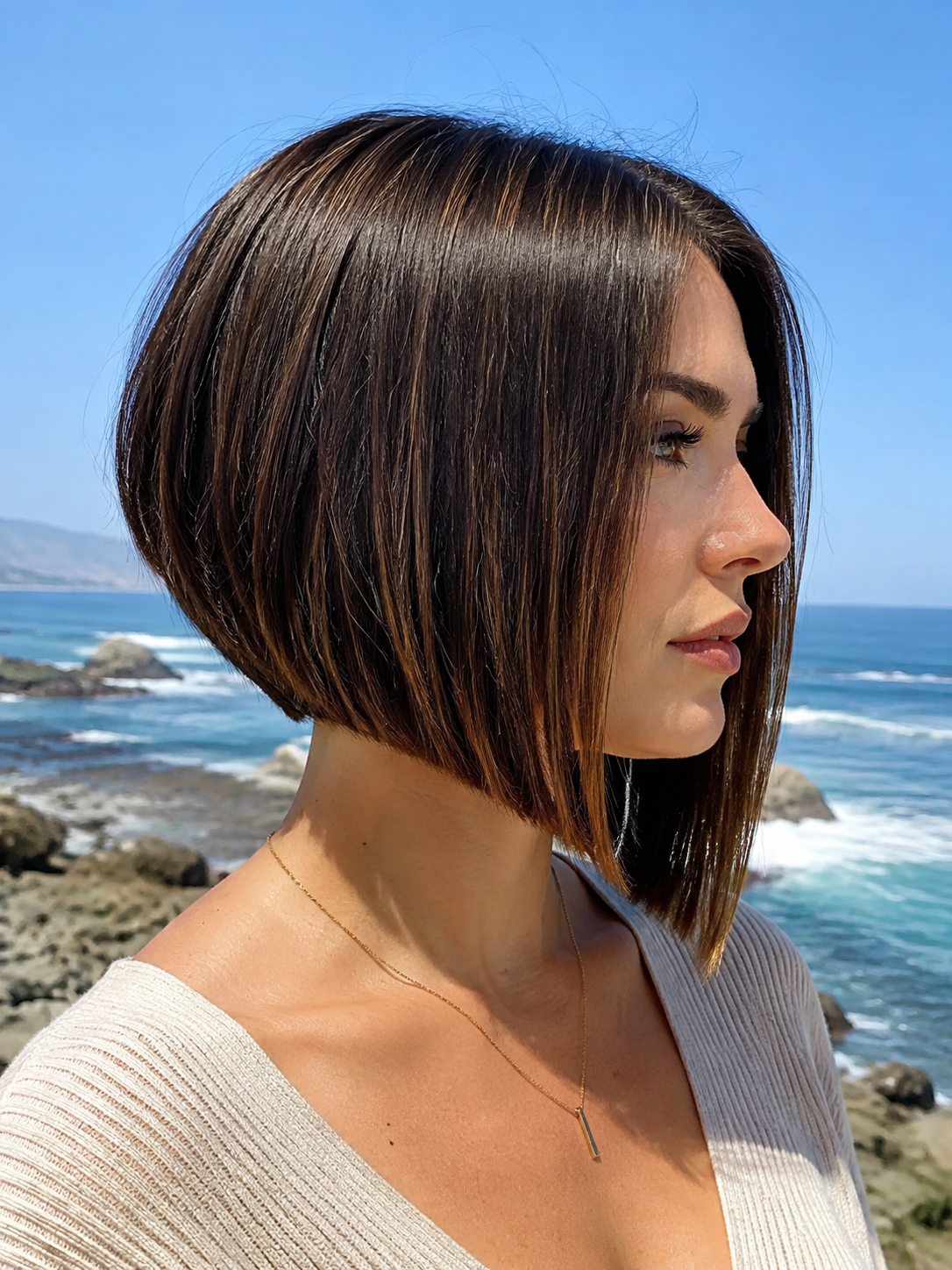
An angled blunt bob stays longer at the front and shorter at the back, creating a diagonal line while keeping each side individually blunt-cut with no internal layering. This shape draws attention toward the jaw and chin. Style it straight and sleek so the angle reads clearly instead of getting lost in texture.
Graduated Blunt Bob
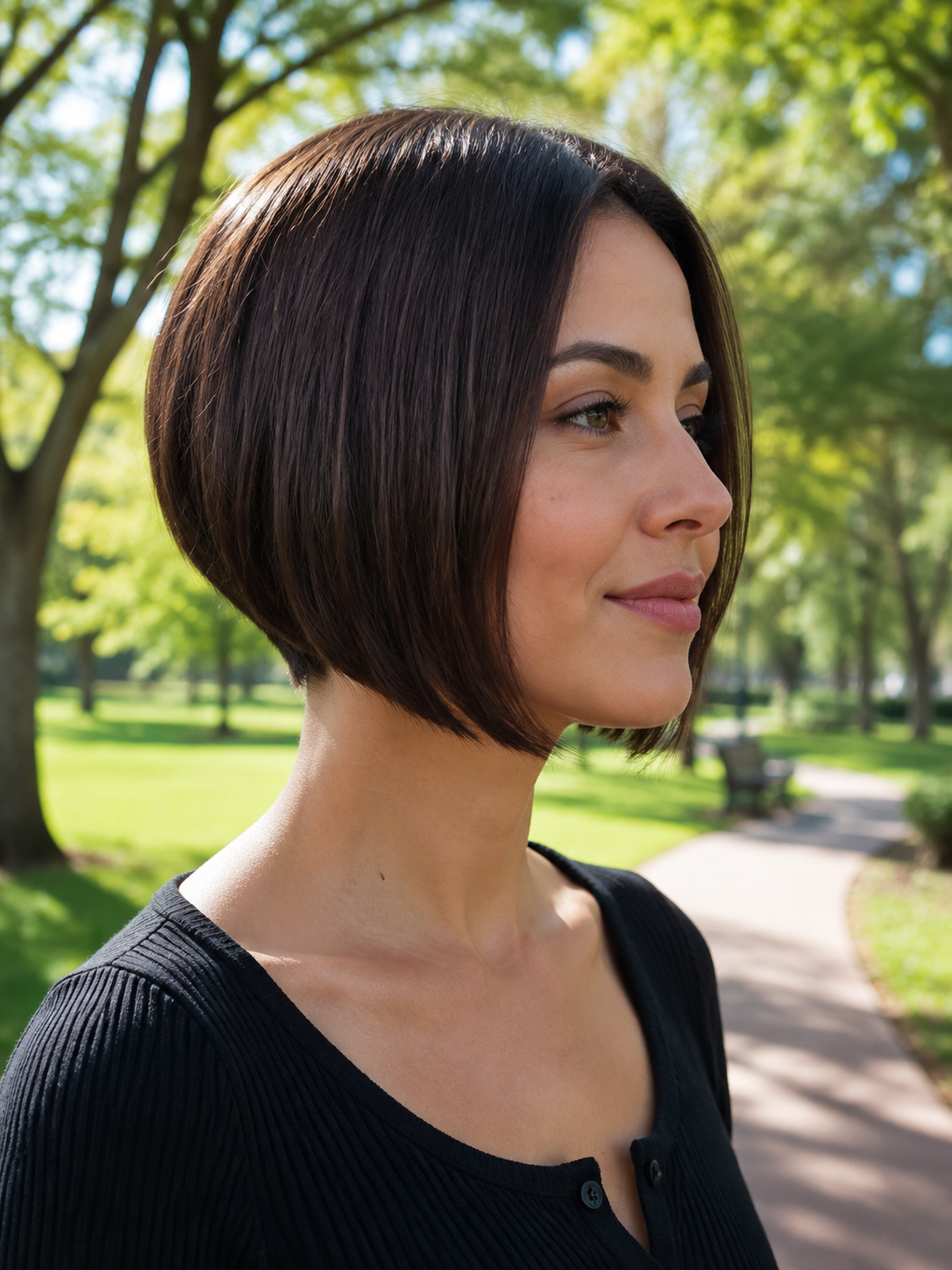
Graduation adds subtle stacking at the back nape while keeping the front line fully blunt, giving a bit of built-in volume without sacrificing the sharp silhouette up front. This works especially well for finer hair that needs help holding shape at the back. Ask your stylist to keep the graduation subtle so the blunt effect stays dominant.
Side-Part Blunt Bob
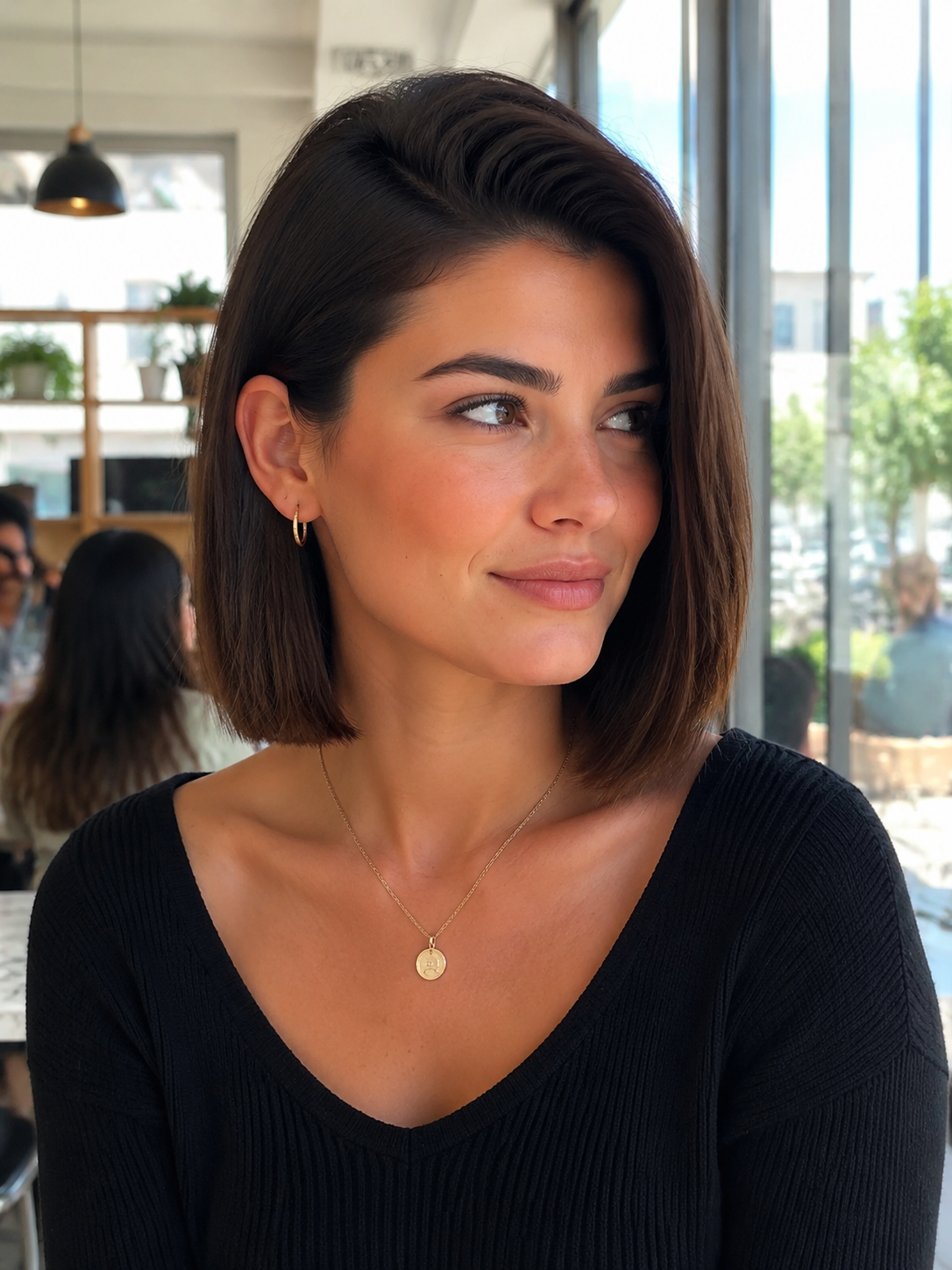
A deep side part shifts more weight and length onto one side of a blunt bob, adding asymmetry without an actual asymmetric cut. This part placement flatters rounder face shapes especially well, since it breaks up horizontal width. A small amount of pomade at the root keeps the part from sliding back to center.
Middle-Part Blunt Bob
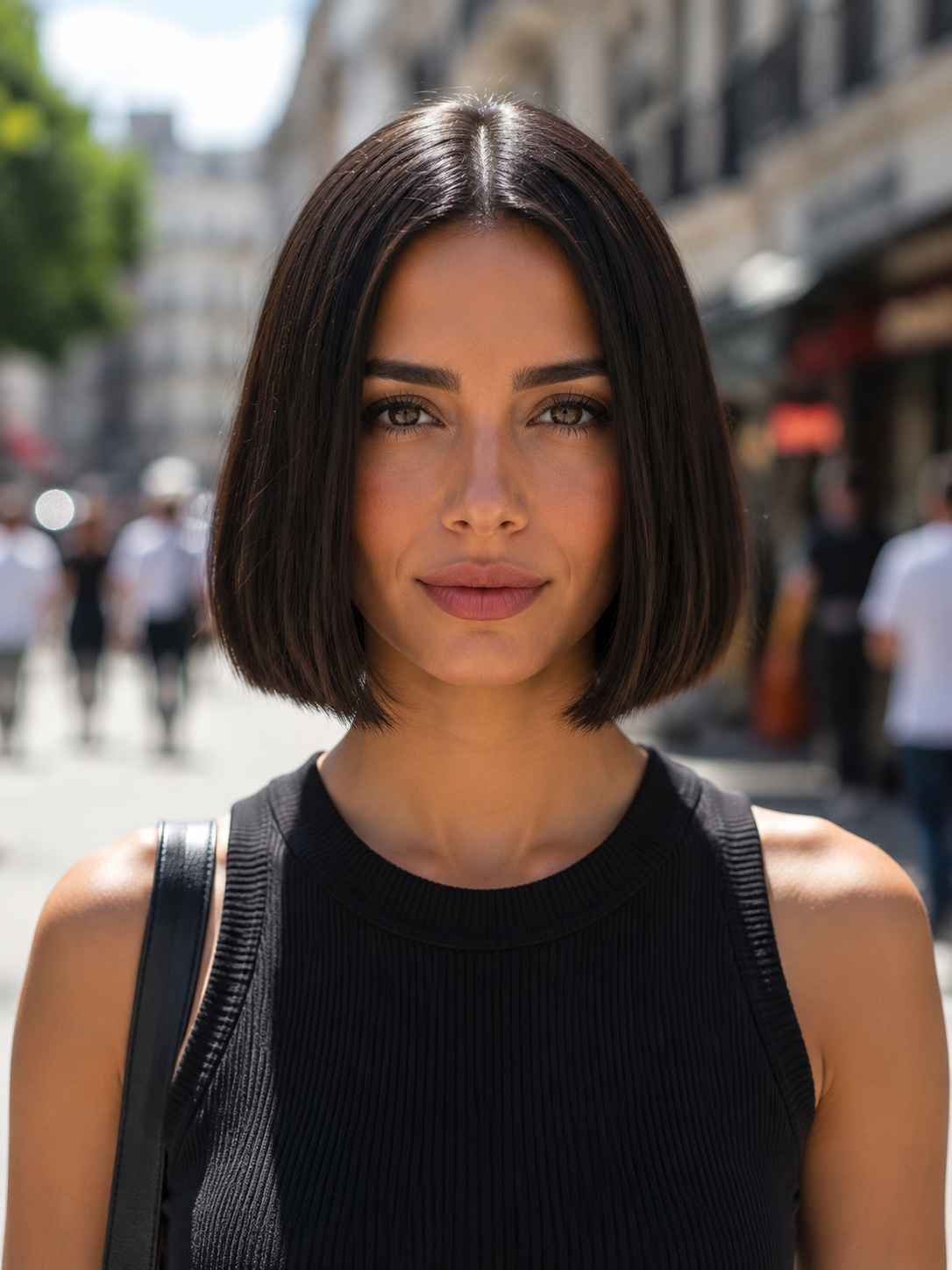
A precise center part gives a blunt bob perfect, geometric symmetry on both sides, which is exactly why this style depends on even, careful cutting. It photographs especially well straight and sleek, letting the mirrored lines do all the visual work. Skip heavy product at the crown so the part stays clean.
Sleek Blunt Bob
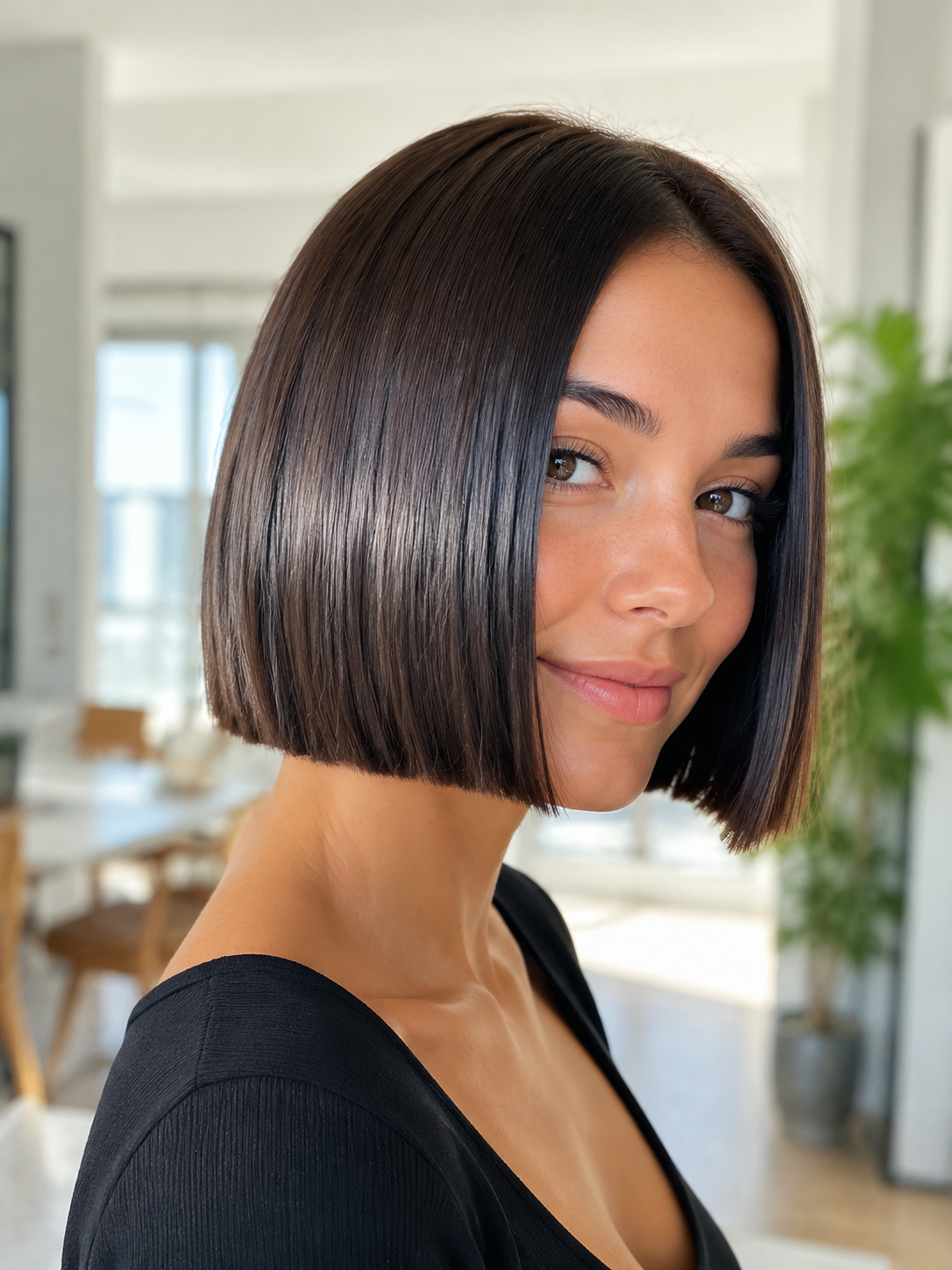
A flat iron pass and a lightweight shine serum turn a blunt bob into a glassy, mirror-finish statement. Work in small sections with a heat protectant applied first, and finish with serum rather than anything waxy that could weigh the ends down. This finish shows off the blunt line better than any other styling choice.
Wavy Blunt Bob
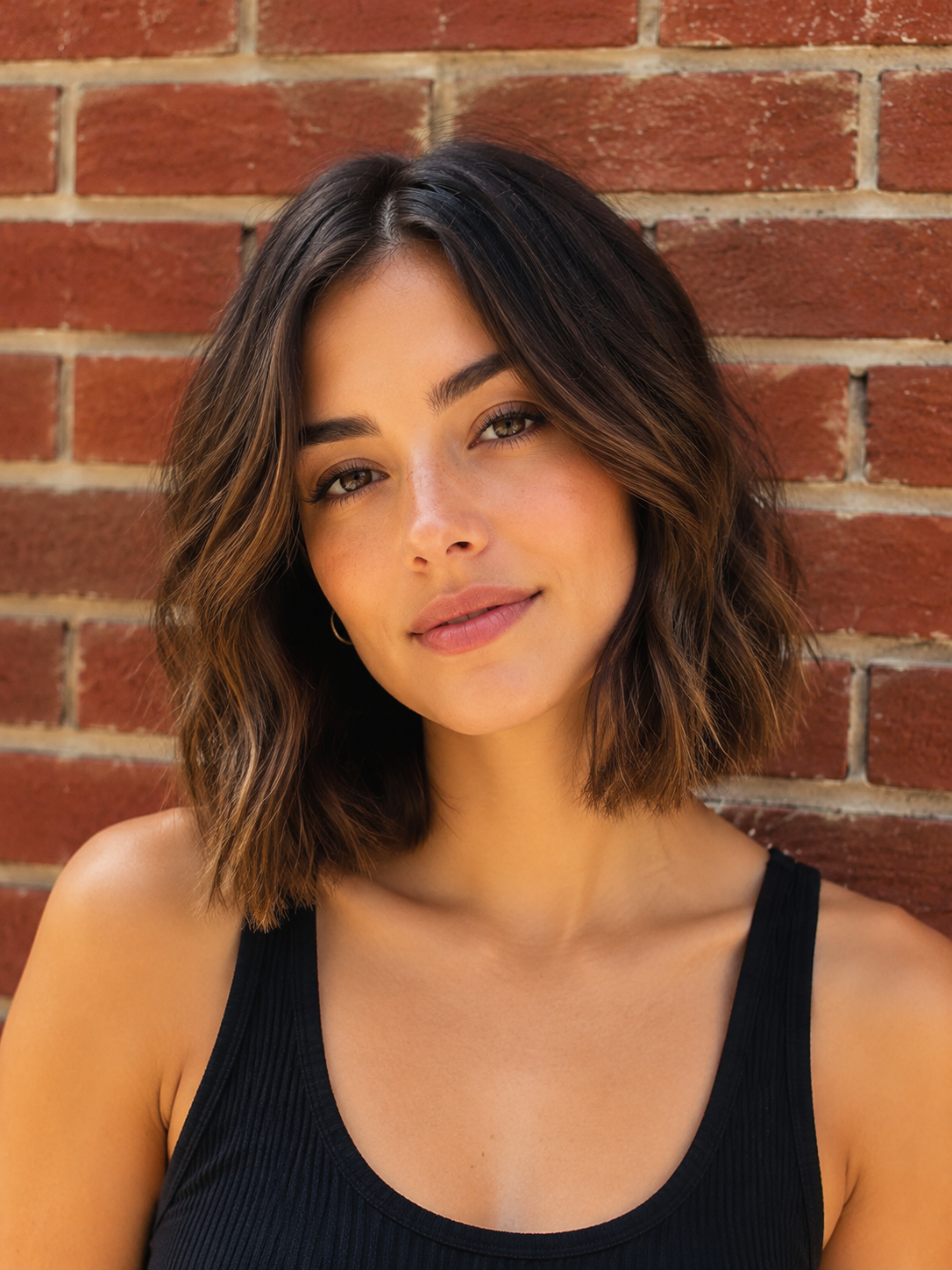
Loose waves run through a blunt bob without disrupting its one-length foundation, since the waves add texture rather than altering the actual cut line. Use a curling wand on alternating sections, then rake fingers through once cooled. A texturizing spray at the roots keeps the wave from collapsing by midday.
Curly Blunt Bob
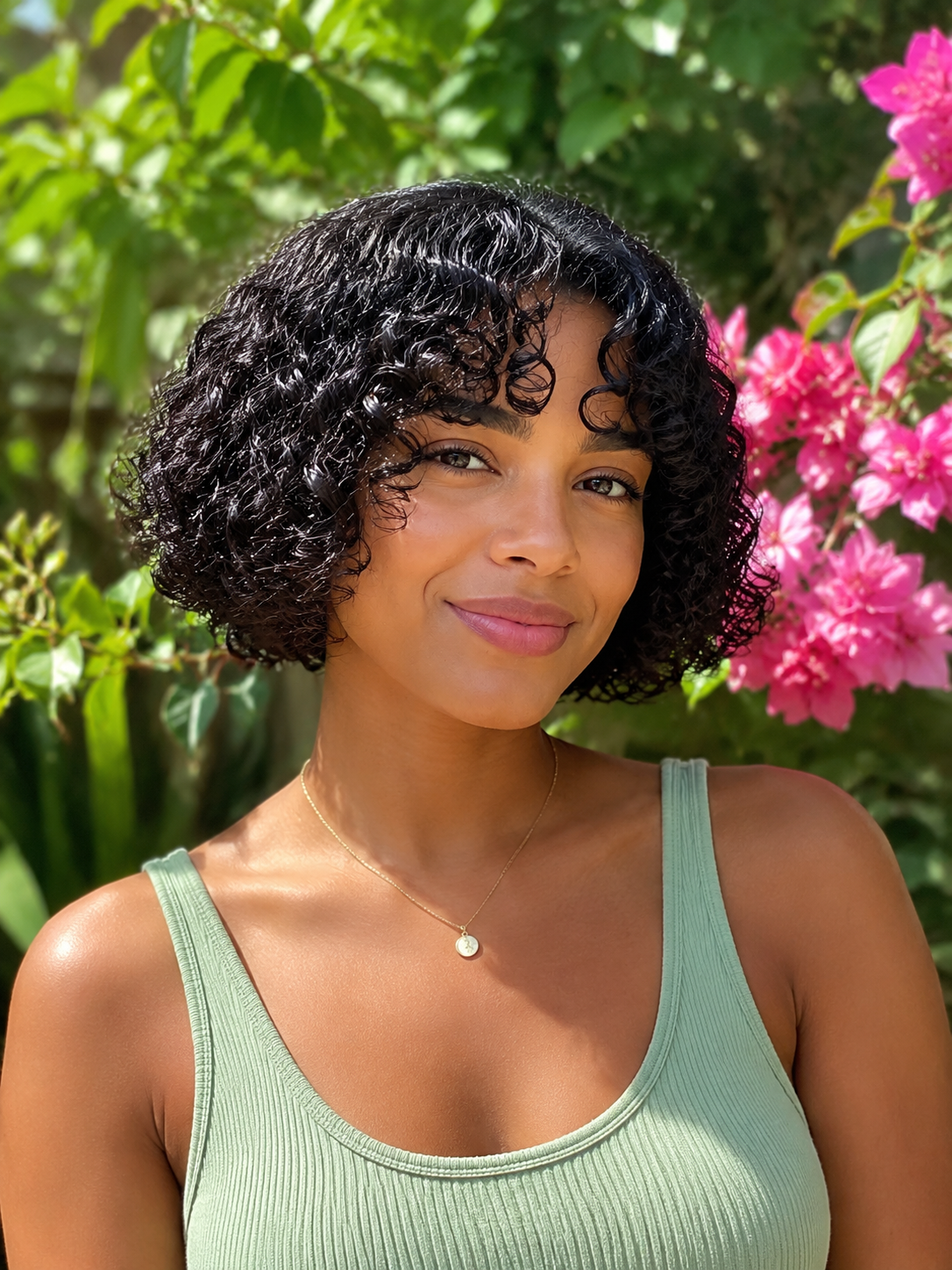
A blunt cut on curly hair needs to be done dry, since curls sit noticeably shorter once they spring up from a wet, stretched-out length. This version still reads as blunt once the curl pattern settles, since the ends land at one visual line despite natural texture variation. A curl cream on soaking wet hair keeps definition high and frizz low.
Blunt Bob with Money Piece
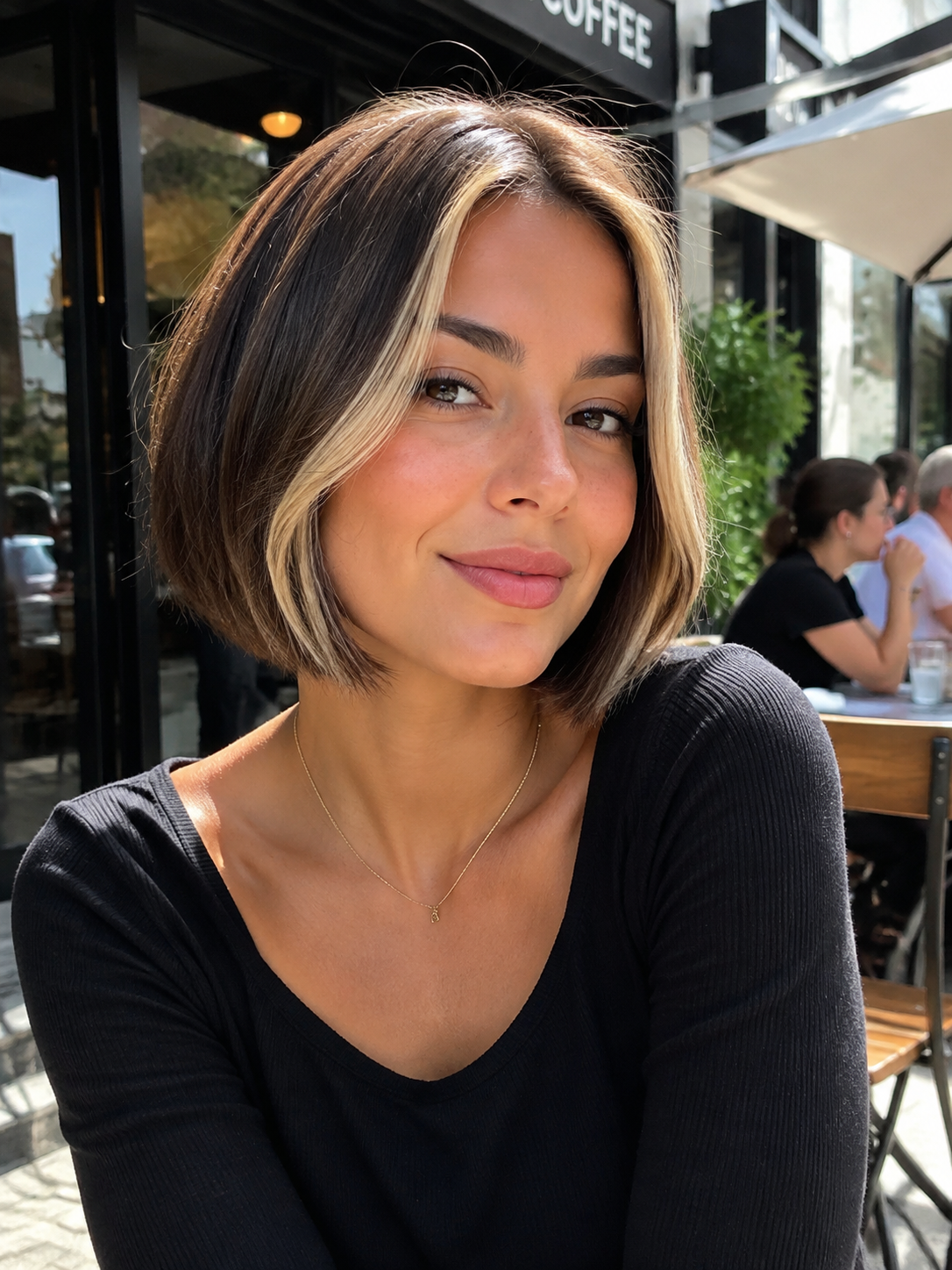
A brightened face-framing section, or money piece, adds contrast and depth to an otherwise uniform blunt bob without changing the cut itself. This is a lower-maintenance way to add color interest, since it’s a small, targeted section rather than an all-over process. Keep the rest of the base color close to your natural shade for the most seamless blend.
Dark Blunt Bob
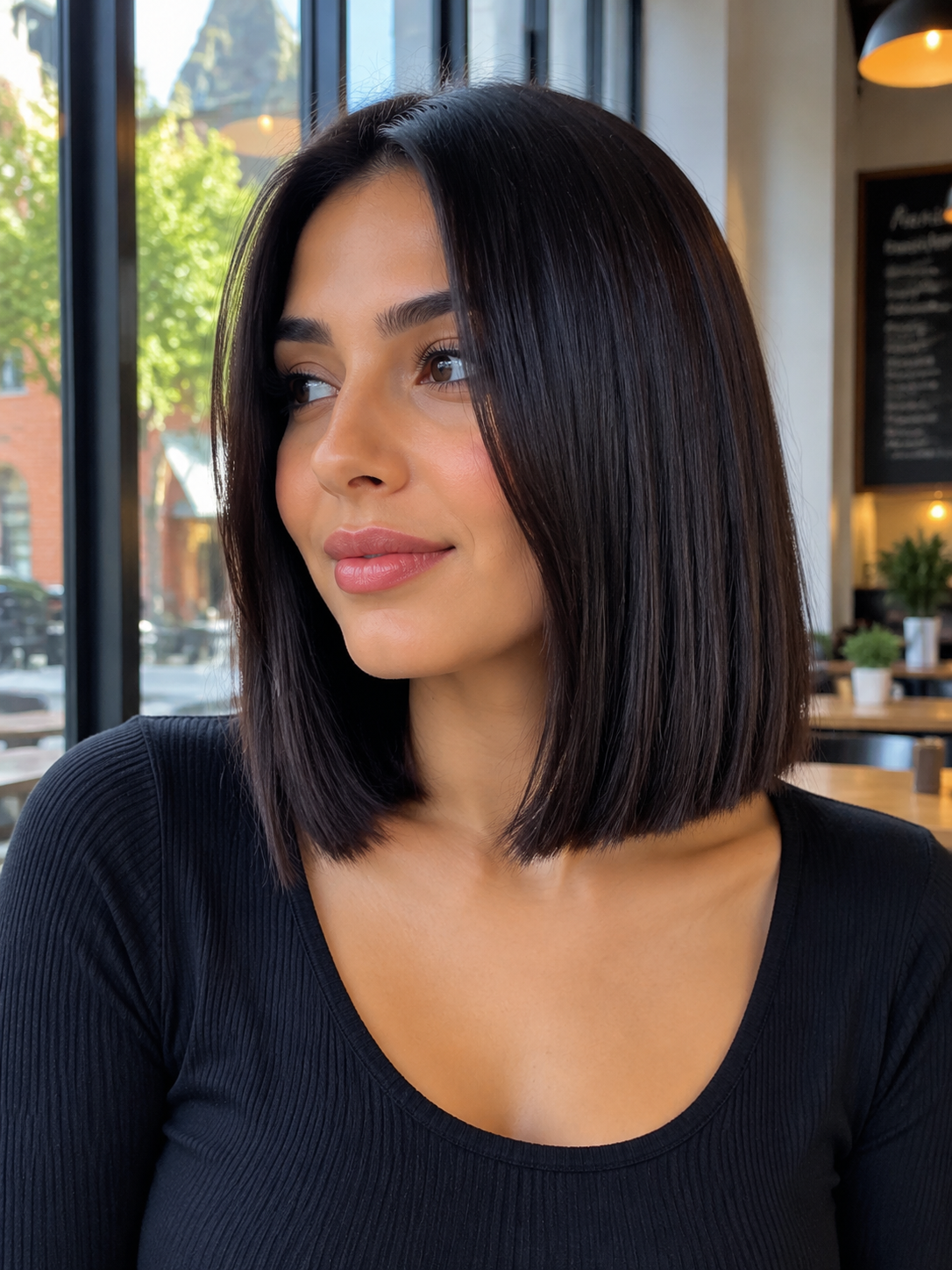
A rich, uniform dark shade, whether your natural color or a deep single-process color, makes the sharp line of a blunt bob even more visually striking. Dark, glossy hair shows off precision cutting better than lighter shades, since there’s no color variation to distract from the shape. A glossing treatment adds shine without lightening the overall tone.
Blonde Blunt Bob
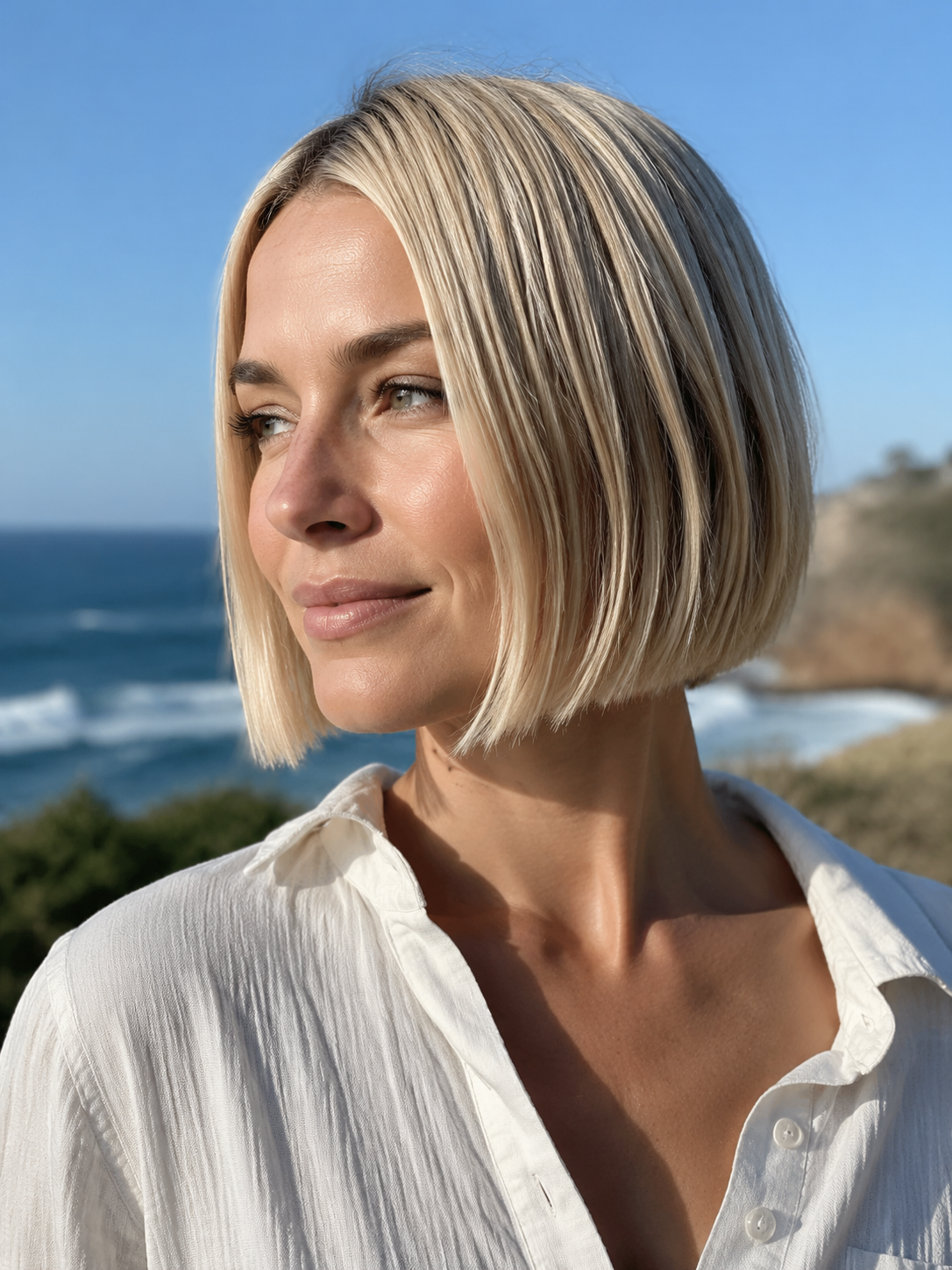
A blunt bob in an all-over blonde shade needs regular toning to avoid brassiness creeping in between salon visits. Purple shampoo once a week keeps the tone cool and prevents the color from pulling warm. This combination photographs especially well in bright light, where both the color and the cut line are fully visible.
Textured Blunt Bob
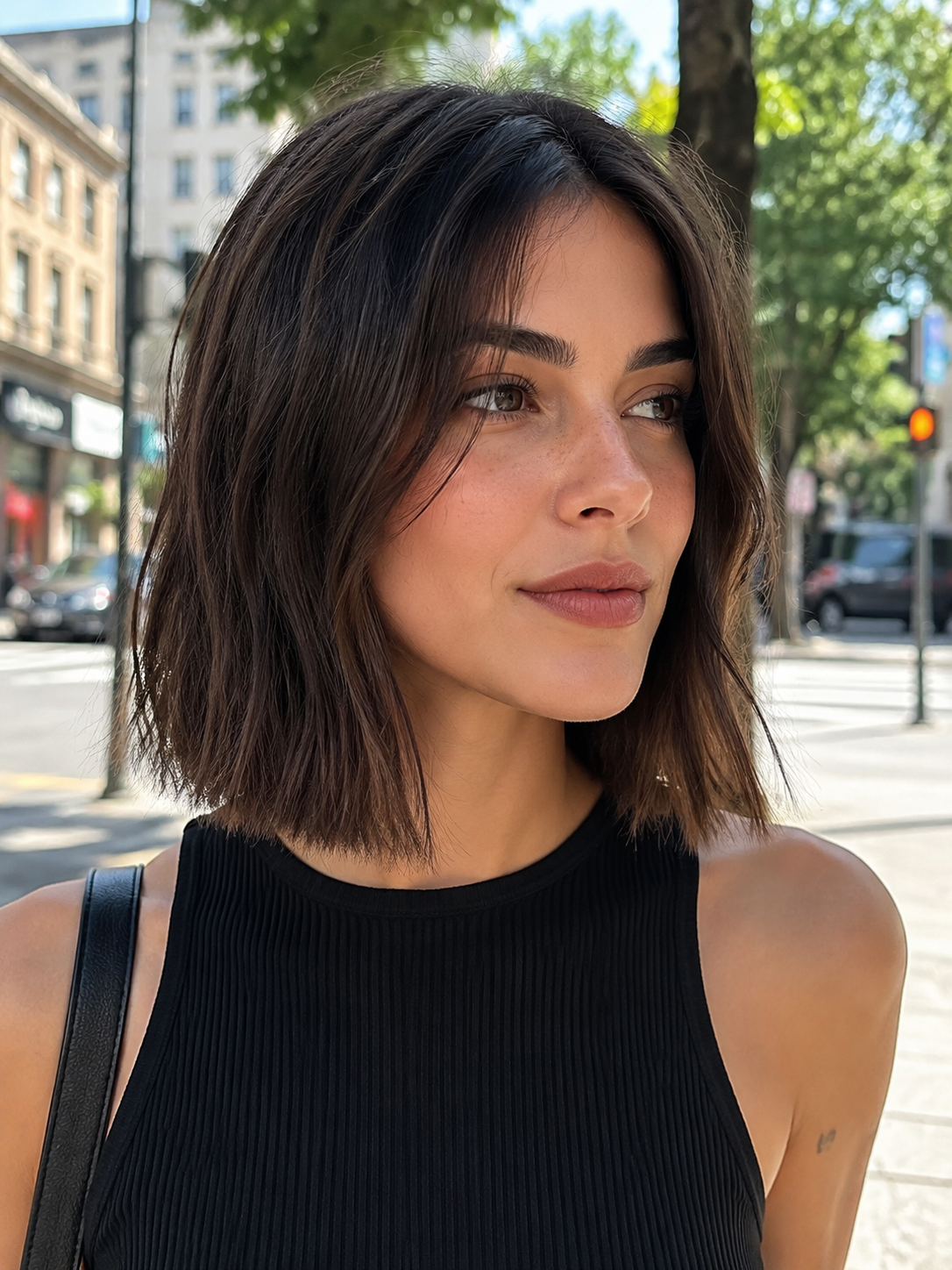
A small amount of point-cutting right at the very ends softens the blunt line just slightly without abandoning the one-length structure overall. This works well for anyone who wants the blunt look but finds a completely razor-sharp edge too severe for their face shape. Finish with a light texturizing cream worked only through the bottom inch.
Undercut Blunt Bob
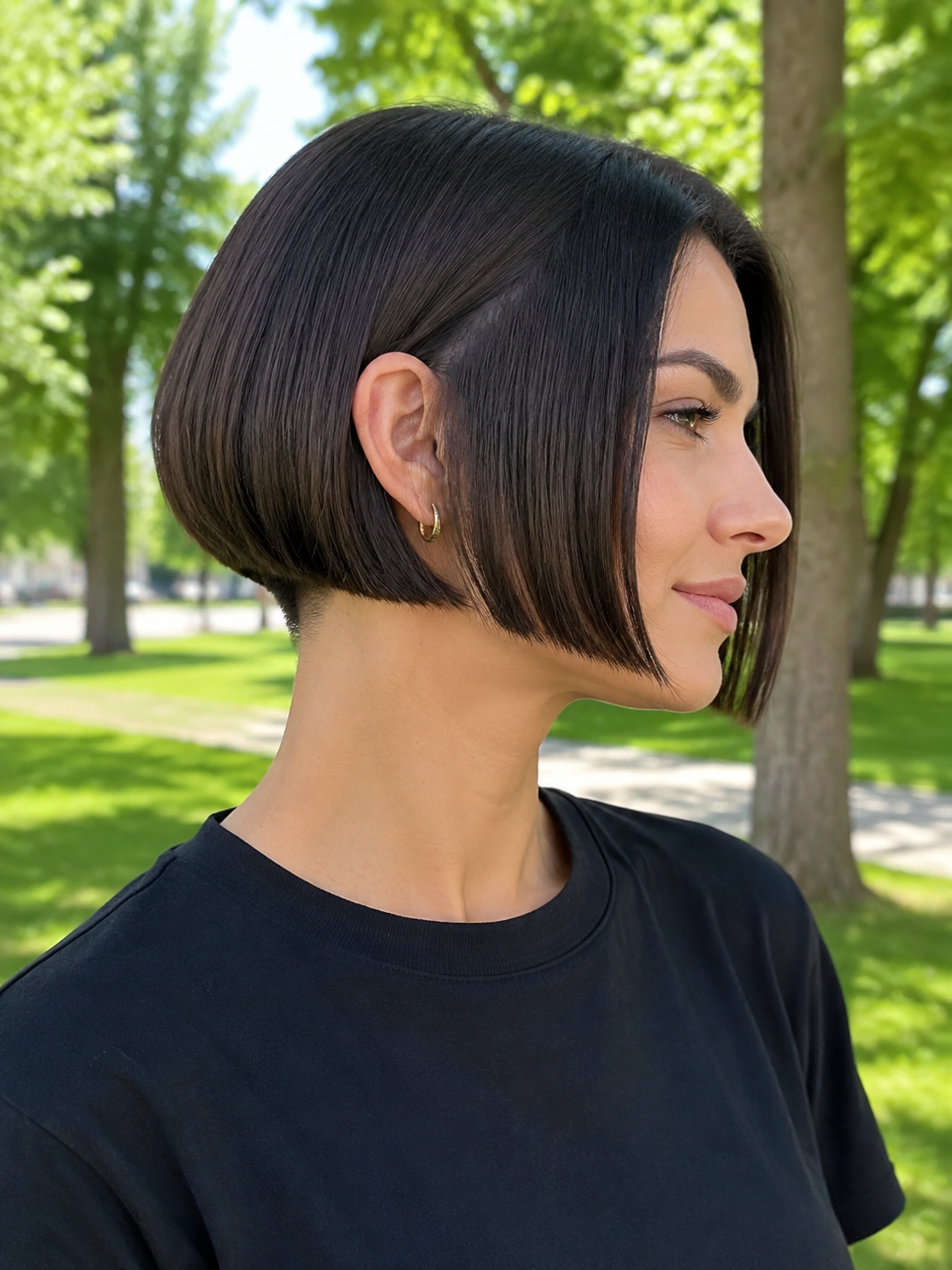
An undercut hidden beneath the visible top layer adds an edgier detail to a blunt bob without altering the clean line you see when hair is down. It’s a way to add personality and a bit of shock value that only shows up when you want it to. This style needs enough top-layer thickness to fully conceal the undercut underneath.