Ask any stylist who their happiest clients are, and women who went pixie after 60 come up again and again. There’s a reason the cut keeps winning at this age: hair often gets finer and flatter over the decades, and a pixie turns that into an advantage, trading limp length for shape, lift, and ten-minute mornings.
The cut also draws every bit of attention up to the eyes and cheekbones. These 20 pixies cover the full range, from soft and feathered to boldly cropped, so there’s a version here for every face and comfort level.
Classic Tapered Pixie
Timeless is the word women use when they finally land on this one. The classic tapered pixie keeps gentle length on top while the sides and nape graduate shorter and cleaner toward the hairline.
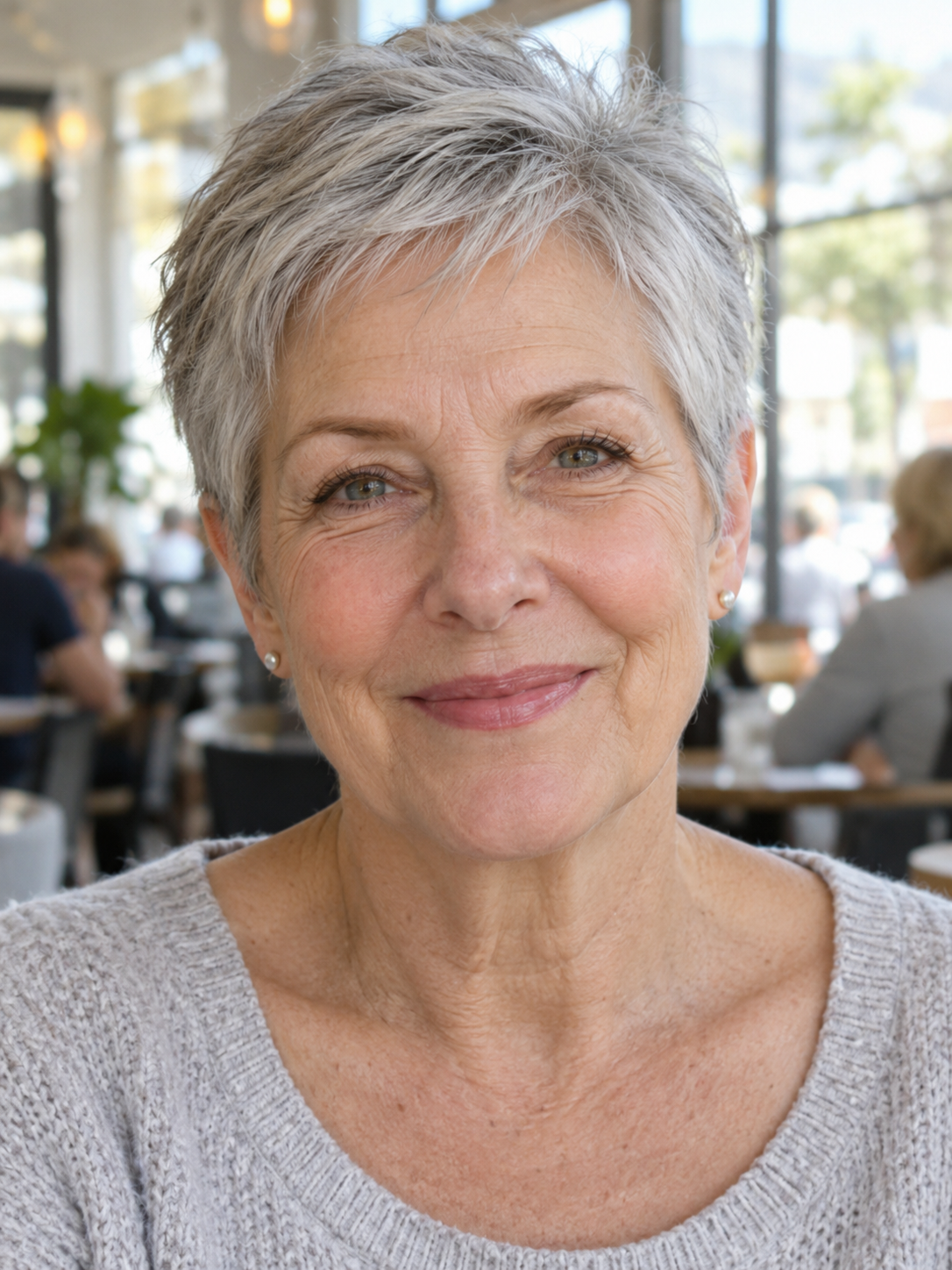
It flatters nearly every face shape and needs only a quick finger-styling with light cream. Trims every five weeks keep the taper crisp, and that’s genuinely the whole maintenance routine.
Textured Pixie with Choppy Layers
A little edge goes a long way after 60, and choppy layers deliver it without trying too hard. Point-cut pieces through the crown create separation and lift, so the cut never sits flat against the head.
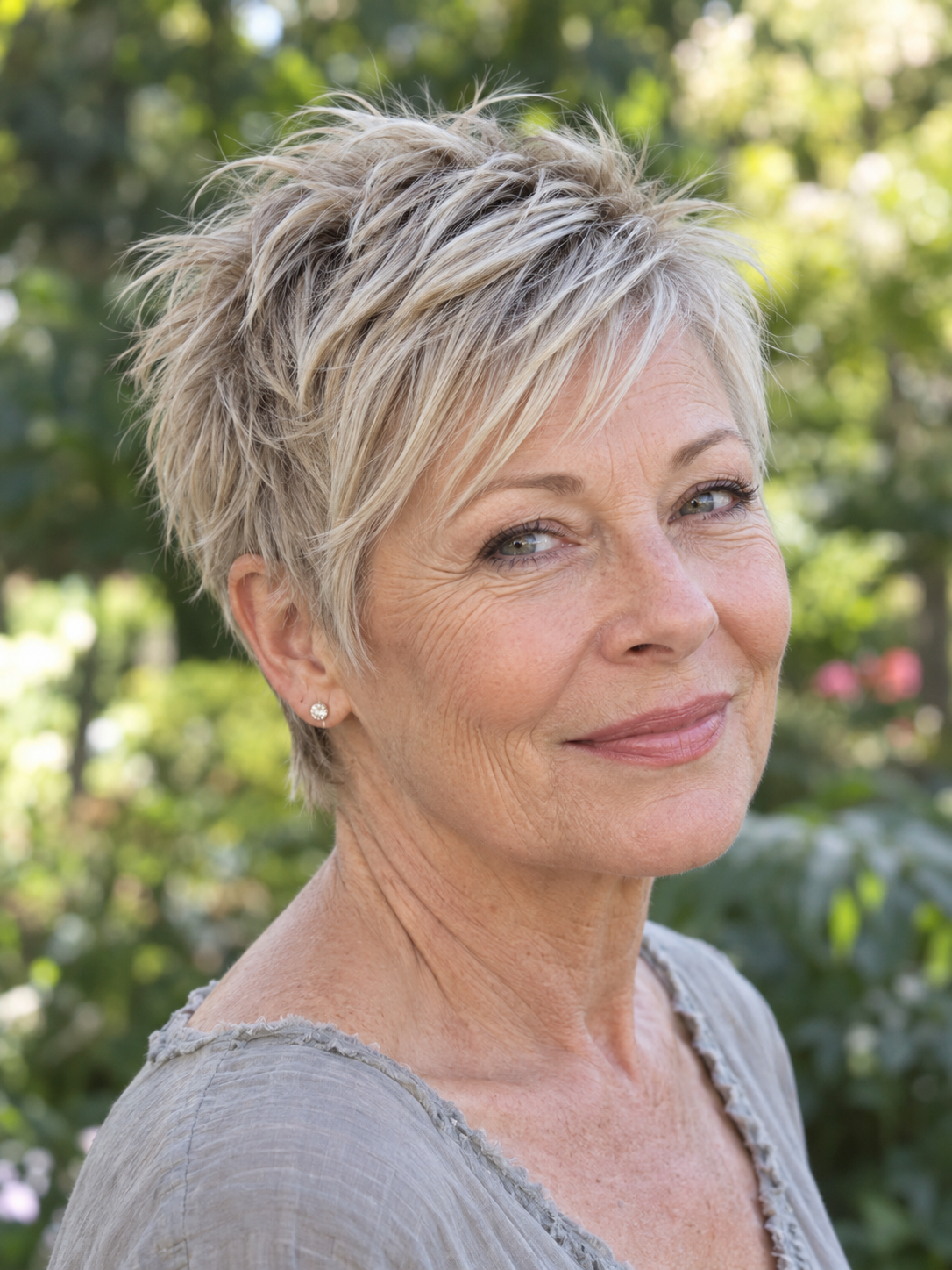
Rub a small amount of texture paste between your palms and push the hair around until it looks deliberately undone. The messier it gets, the younger it feels.
Silver Pixie
Fully gray hair stops being something to cover and becomes the whole point here. A short cropped pixie shows off silver at its brightest, since the ends are too new to have yellowed.
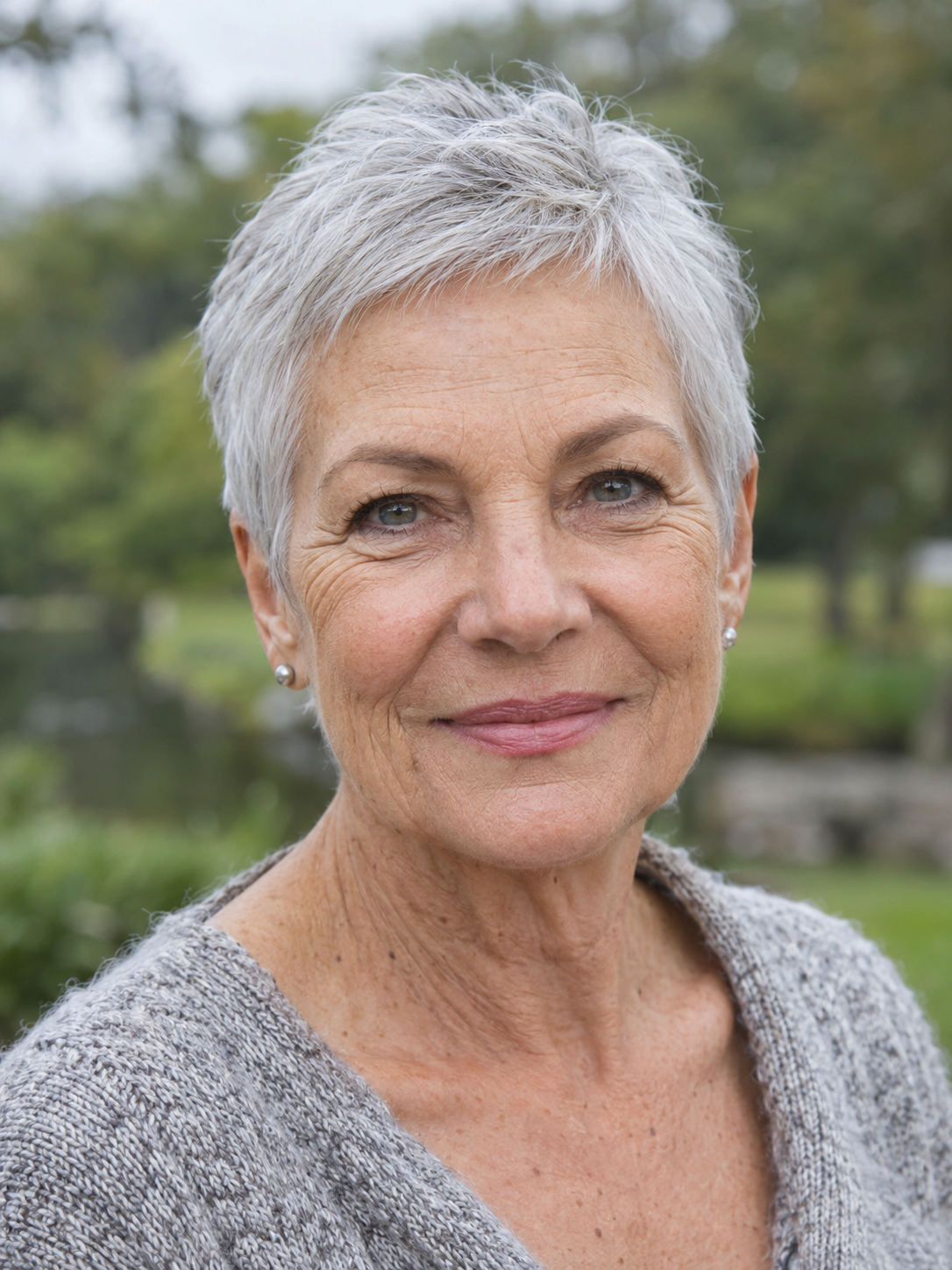
Ask for a cool-toned gloss to keep the shine icy rather than dull. Against the right lipstick, this combination is the most striking look on this list.
Long Pixie
For anyone nervous about going properly short, the long pixie is the gateway cut. Hair stays long enough on top to tuck behind the ears or sweep across the forehead, while the back and sides sit short and neat.
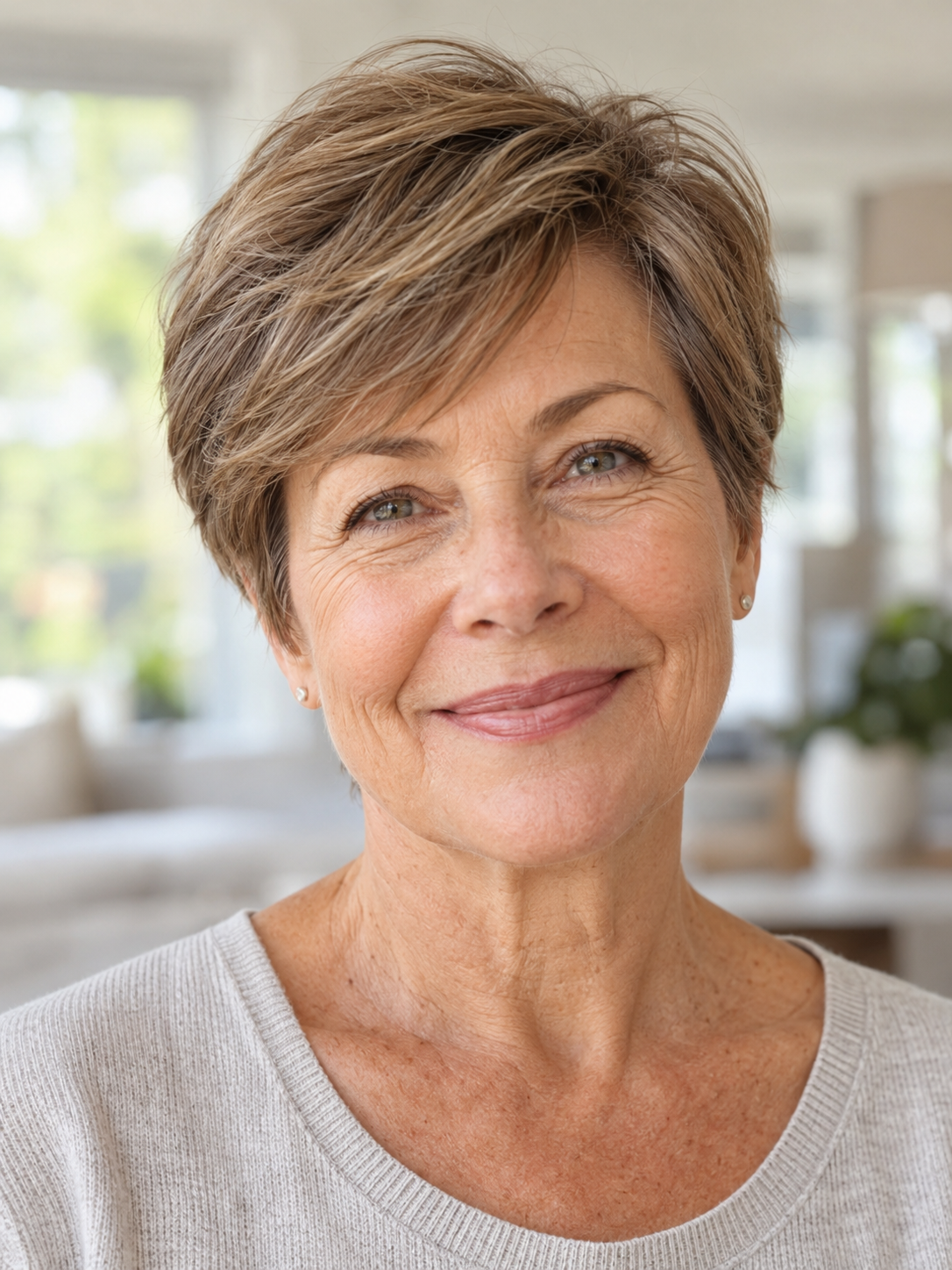
You keep styling options, a bit of movement, and the ability to grow it out quickly if you change your mind.
Feathered Pixie
Soft edges everywhere, nothing blunt or severe. The feathered pixie layers the top and sides into light, overlapping pieces that brush the face like wisps.
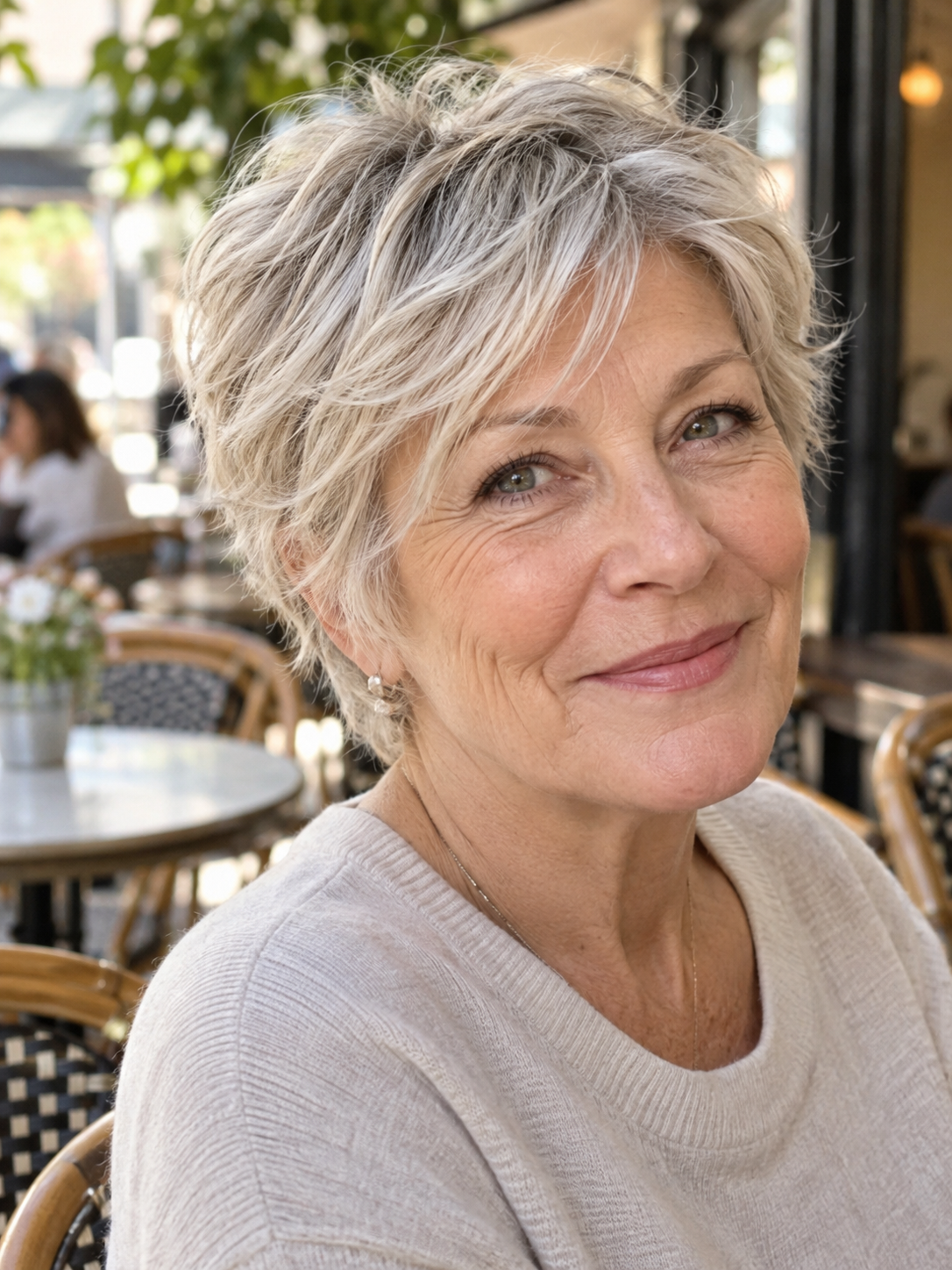
It’s the gentlest-looking cut here, which makes it a favorite for softer features and anyone who found their last bob too heavy. A round brush and two minutes with the dryer give it that airy lift.
Pixie Bob
Halfway between a pixie and a bob, this hybrid earns its popularity. The back is cropped and shaped like a pixie while the front falls longer, grazing the cheekbones.
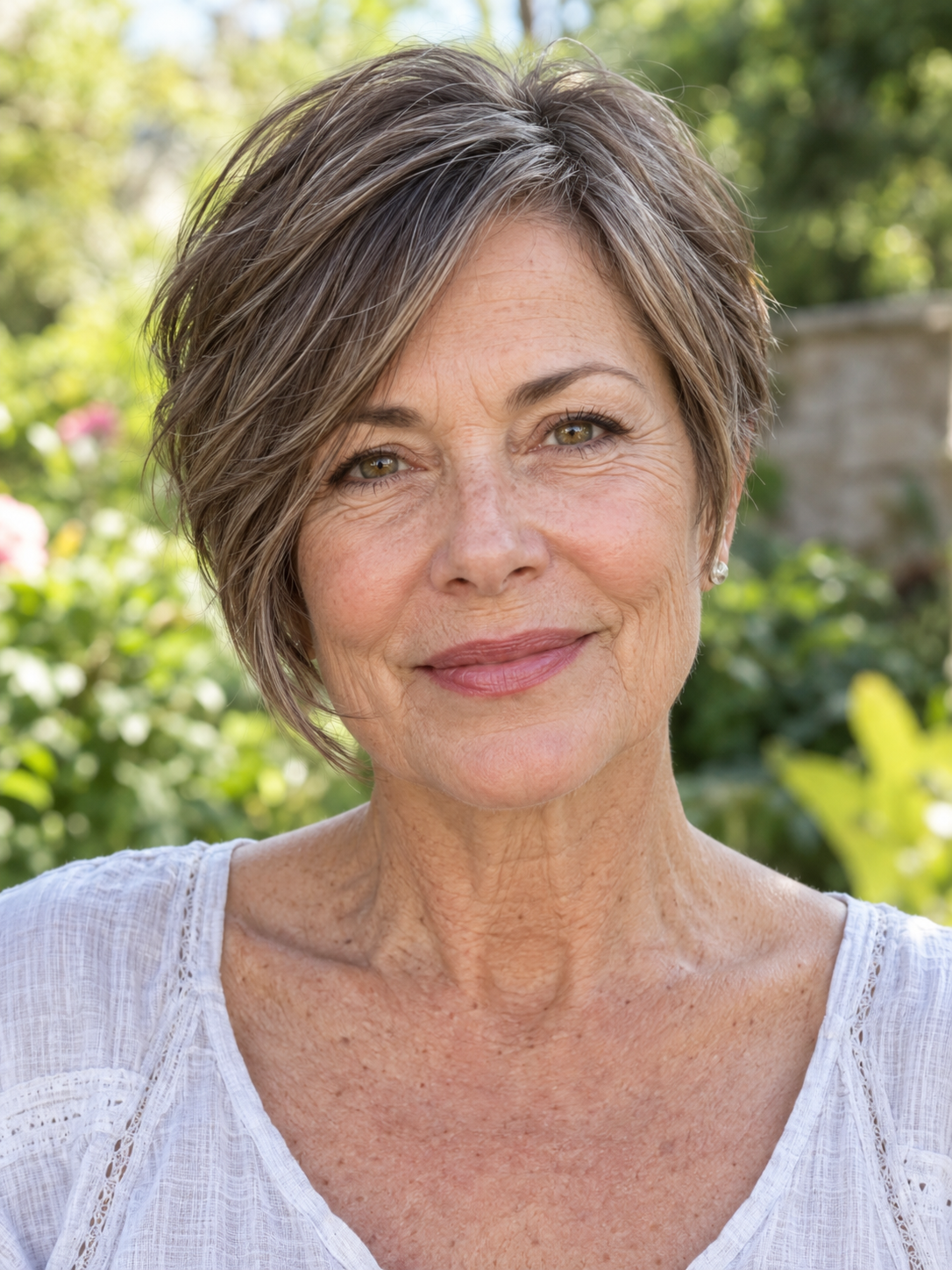
That longer front frames the face and softens the jawline, which is exactly where many women over 60 want coverage. It works on straight and wavy hair alike.
Pixie with Side-Swept Bangs
The forehead gets graceful coverage without a hint of heaviness. Side-swept bangs angle across the brow and blend into the sides, drawing the eye diagonally and softening horizontal lines along the way.
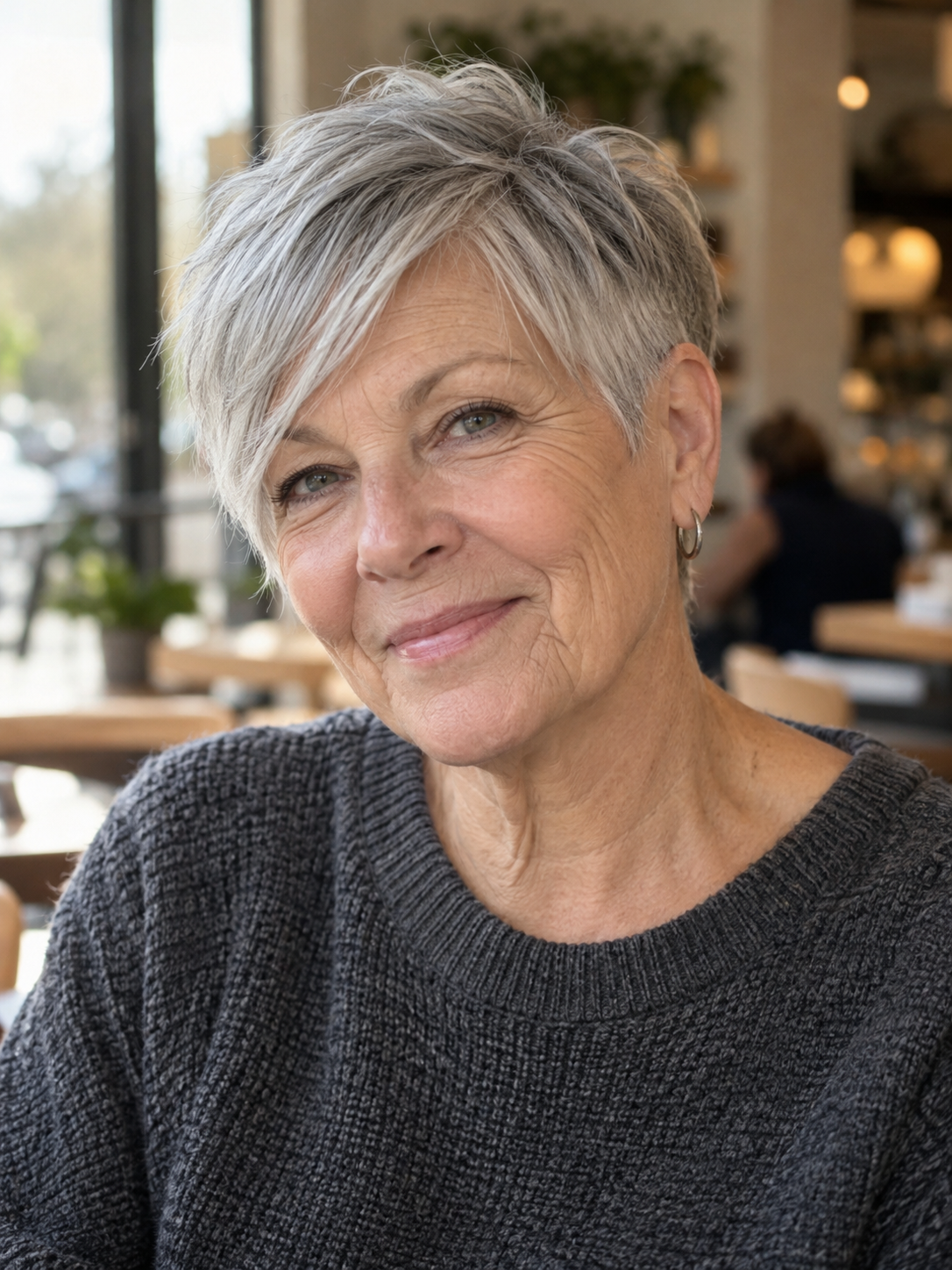
This is the pixie most often recommended for longer face shapes, since the sweep adds width. Blow the bangs in their direction while damp and they hold all day.
Short Choppy Pixie
Bold suits this decade better than people expect. The short choppy pixie crops everything close, then breaks up the surface with irregular snips so nothing looks helmet-like. The result is spirited and a little rebellious.
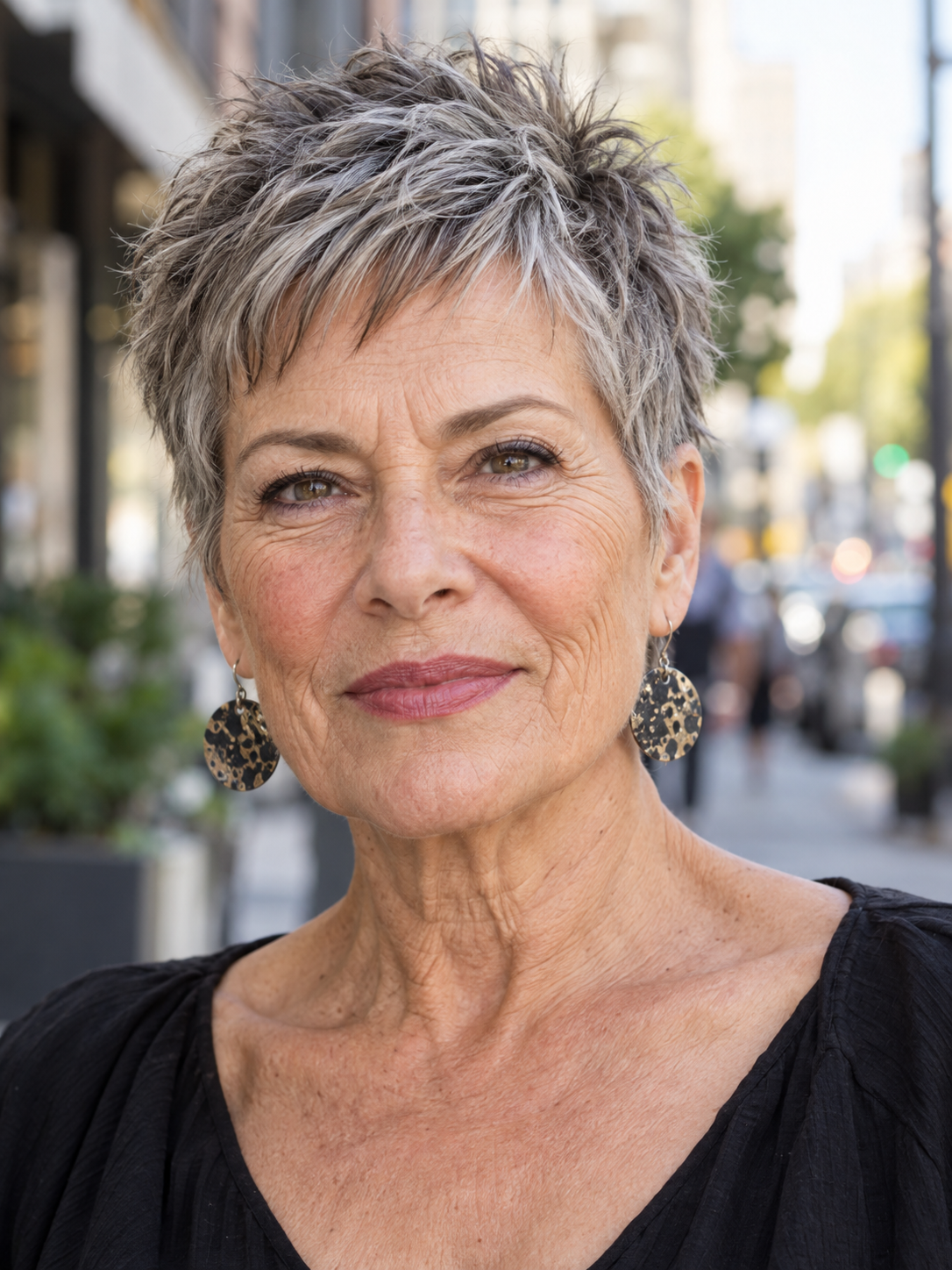
It demands confidence more than effort, because styling takes under five minutes. Strong earrings finish it better than any product can.
Tapered Pixie for Fine Hair
Fine, thinning hair is the most common reason women over 60 go short, and this cut is built for it. Keeping the perimeter tight and tapered makes sparse areas look intentional, while short layers on top stack together to fake density.

A volumizing mousse at the roots before a quick blow-dry doubles the effect. Thin hair has no better friend than this cut.
Wavy Pixie
Natural wave finally gets to do the work for you. A pixie cut into wavy hair lets each bend sit where it wants, creating built-in volume and movement that straight hair has to fake.
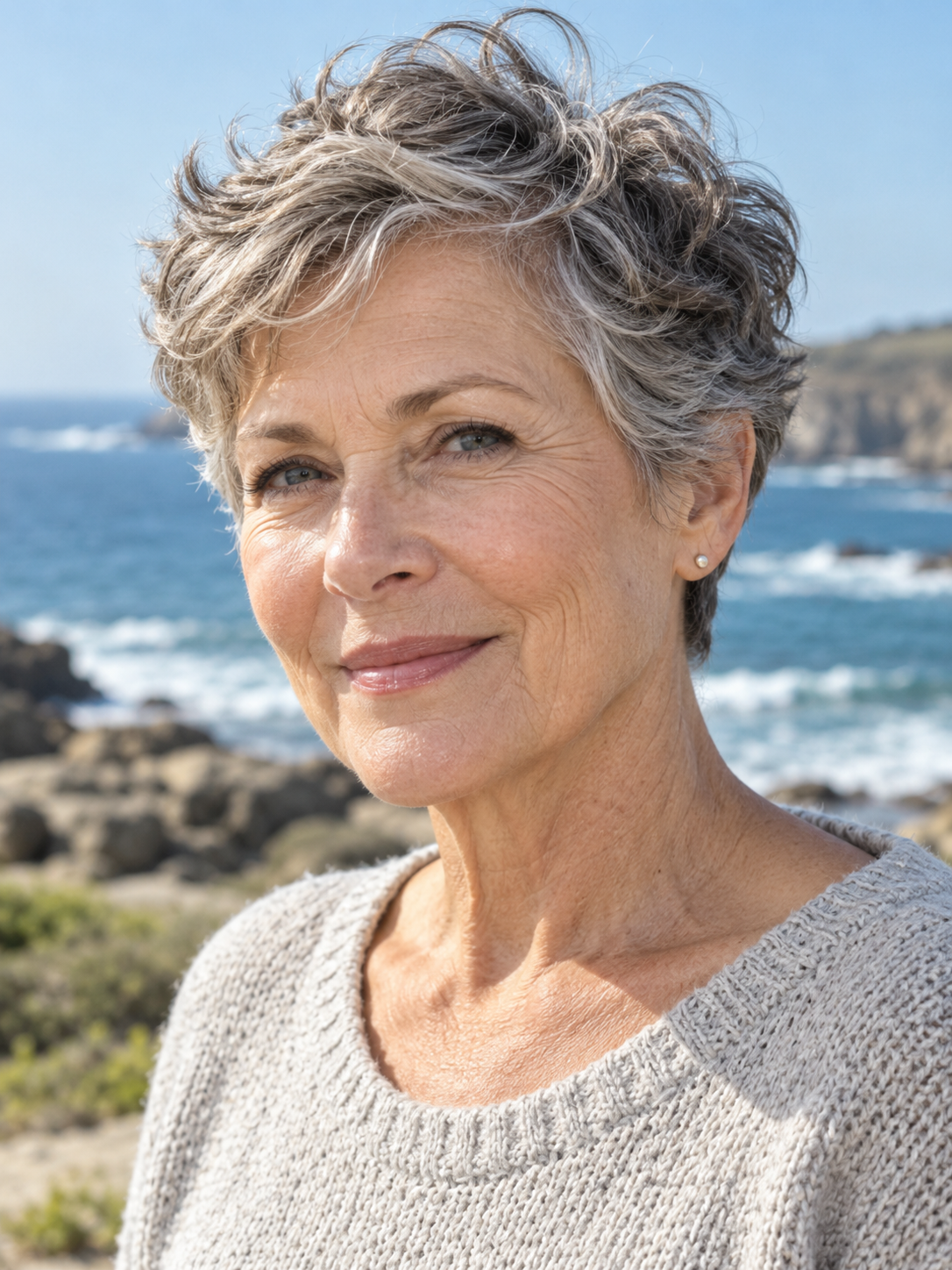
The trick is asking your stylist to cut it slightly longer than a straight-hair pixie, since waves spring up. Scrunch in a light curl cream and walk away.
Salt-and-Pepper Pixie
The in-between stage of going gray looks fantastic cropped short. Salt-and-pepper mixes natural silver with your remaining darker strands, and a pixie displays that contrast like deliberate dimension nobody paid for.
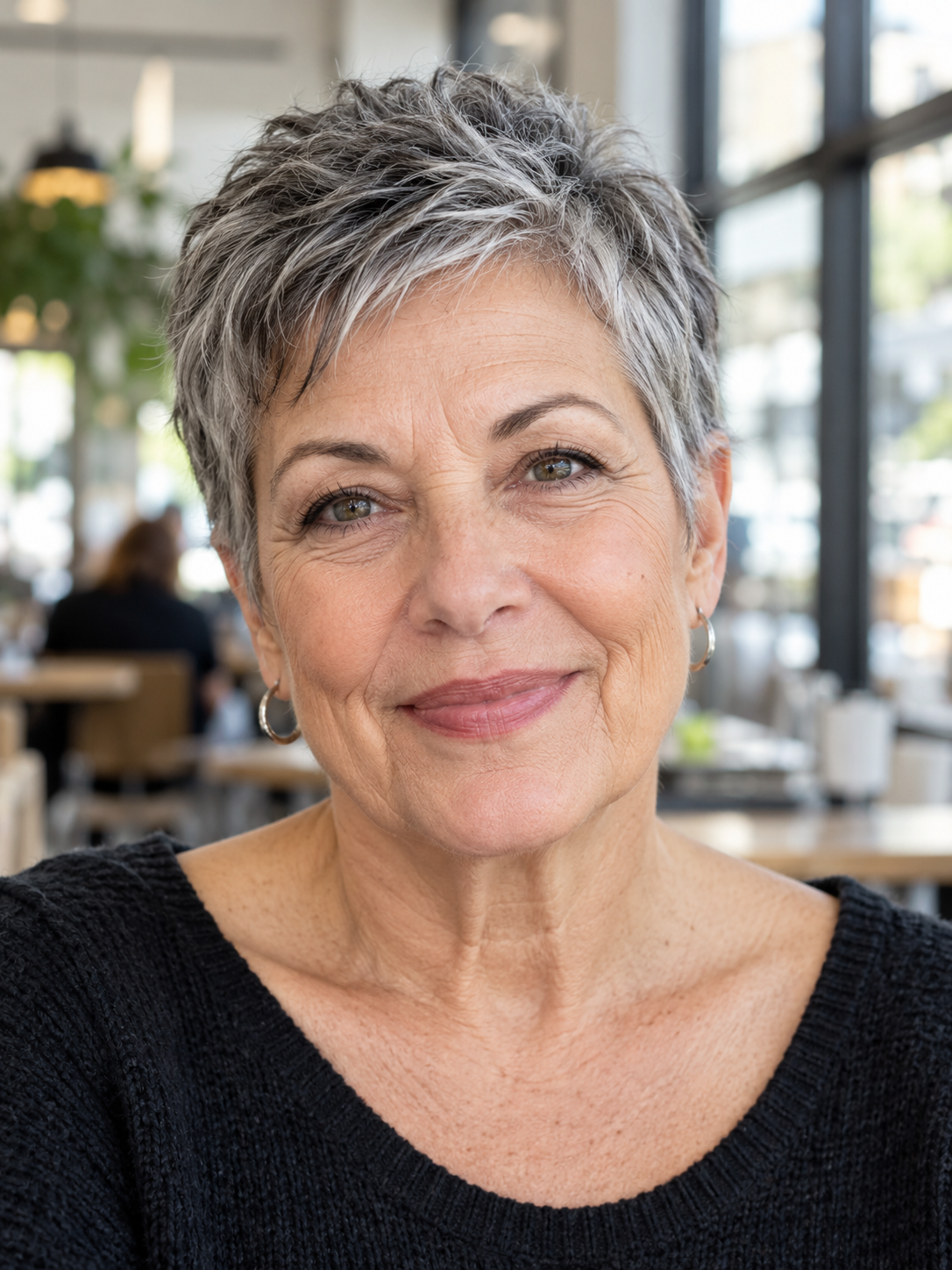
It’s the easiest color decision on this list, since it requires doing nothing at all. A clarifying shampoo monthly keeps the silver strands bright against the dark ones.
Pixie with Wispy Bangs
Soft fringe changes the whole mood of a short cut. Wispy bangs sit sheer and piecey across the forehead, light enough to show skin through them, and they take years off a face the way heavier bangs can’t.
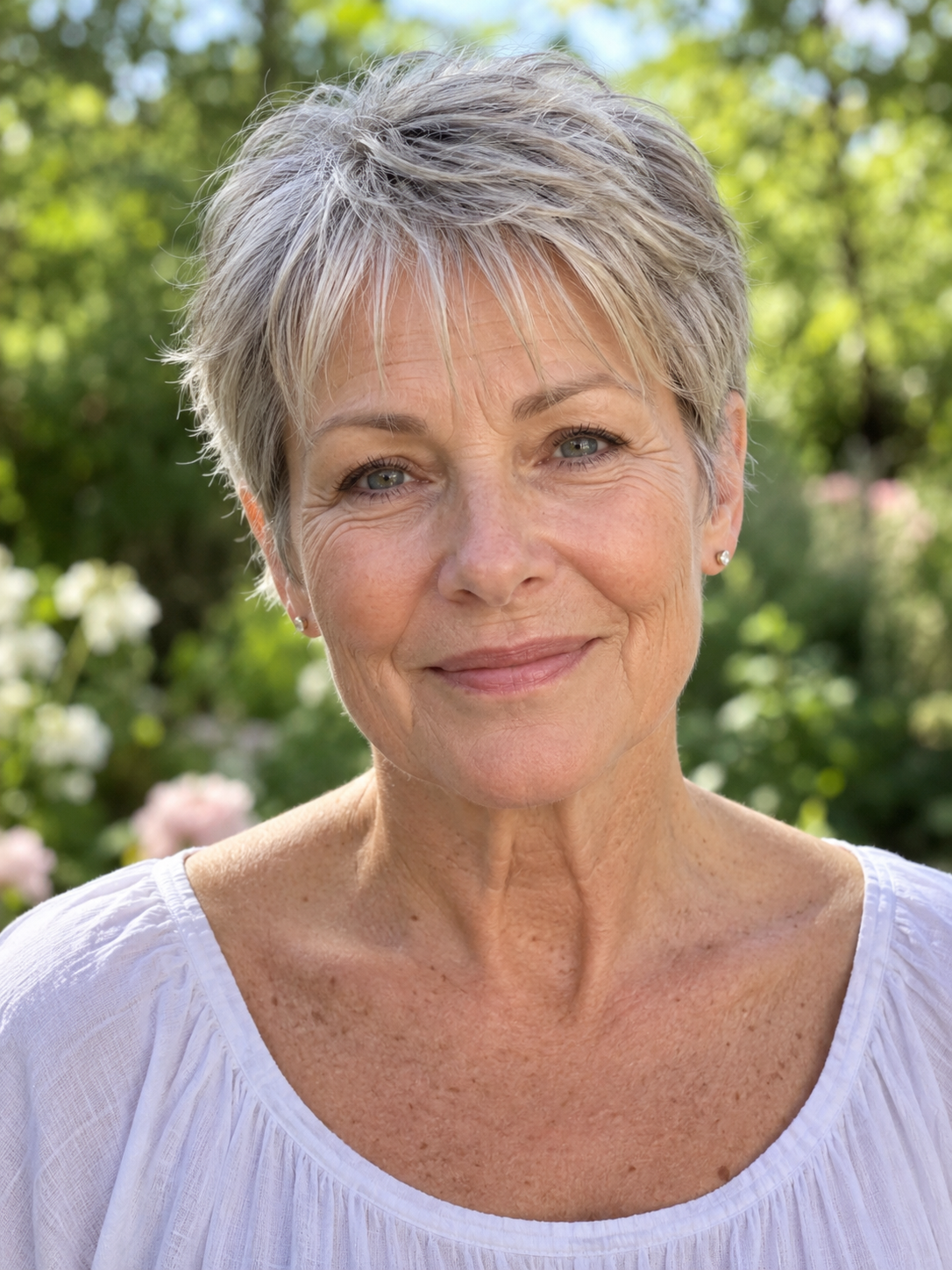
The rest of the pixie stays short and simply shaped so the fringe stays the focus. Air-drying is usually enough.
Stacked Pixie
Volume at the crown is the signature move here. The stacked pixie builds short, graduated layers through the back of the head so the silhouette rounds outward instead of falling flat.
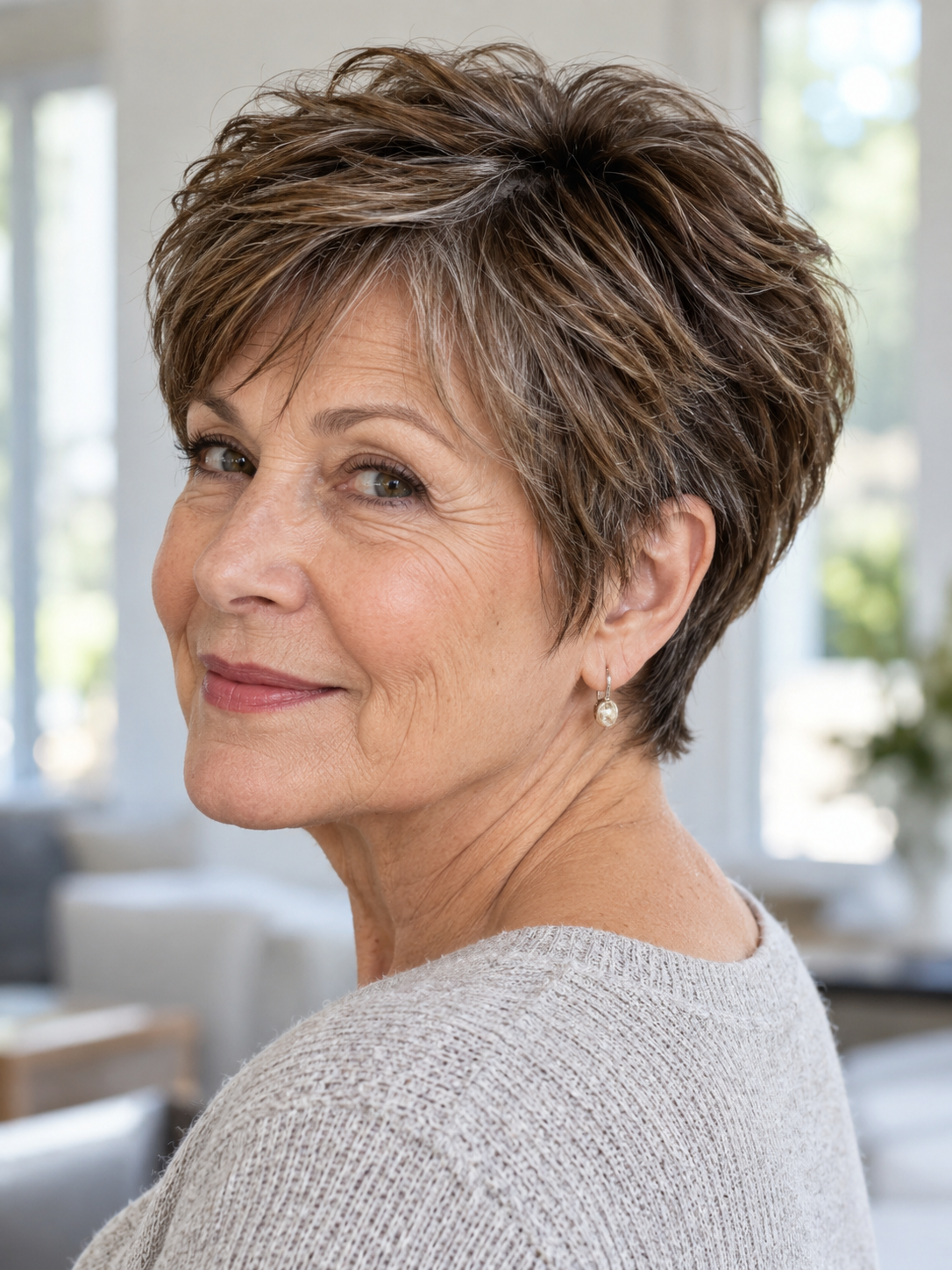
From the side, the shape is unmistakable. It’s especially useful for fine or straight hair that refuses to hold lift on its own. A vented brush and blow-dryer set the stack in minutes.
Asymmetrical Pixie
One side falls noticeably longer than the other, and that single decision makes the whole cut modern. The asymmetrical pixie suits women who want proof that style doesn’t retire at 60.
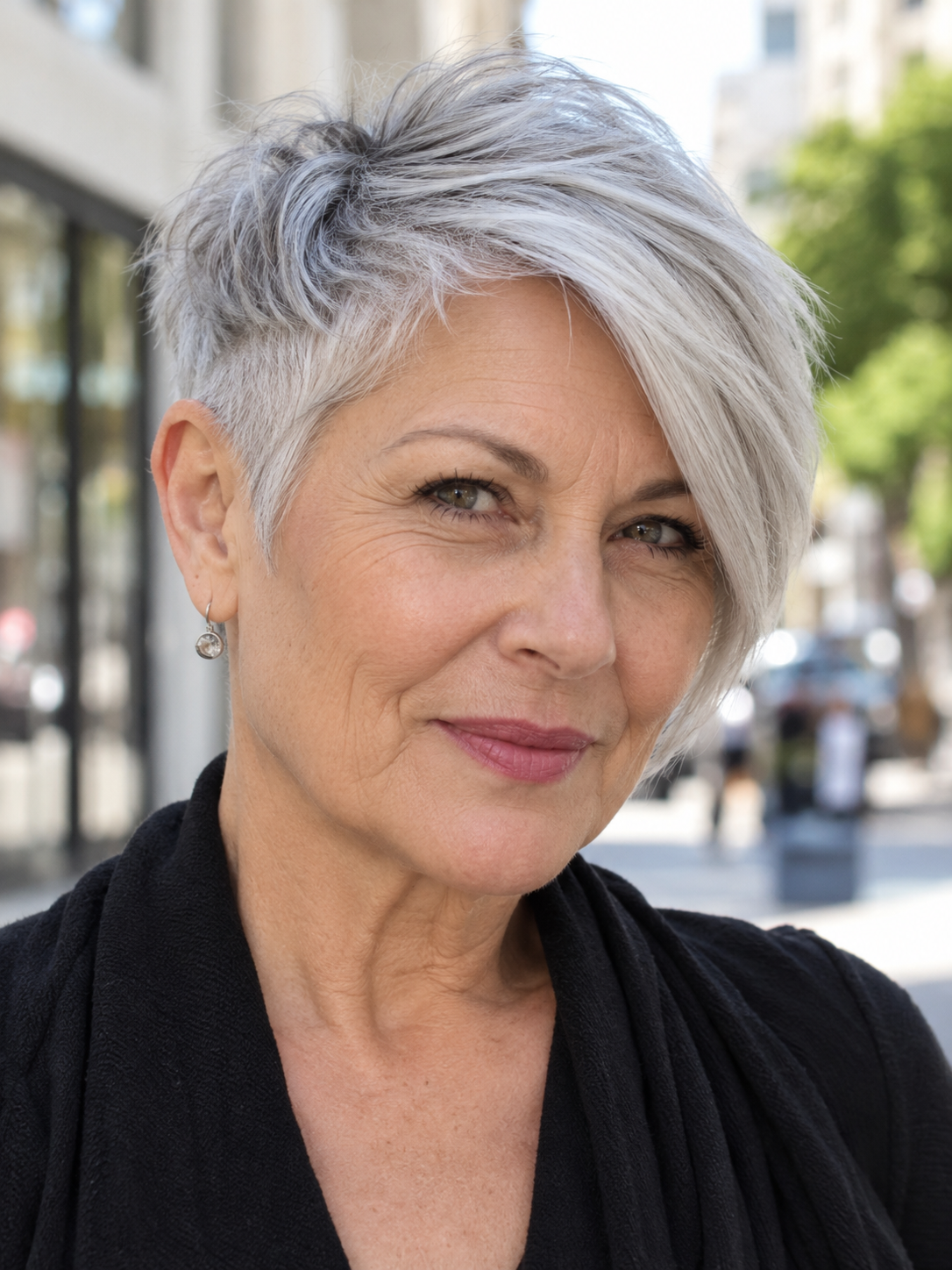
The longer side can sweep toward the cheekbone while the short side stays cropped above the ear. It’s striking in photos and surprisingly easy to maintain between trims.
Curly Pixie
Tight curls and short cuts are a natural pairing. A curly pixie shapes the curls into a rounded, springy silhouette that frames the face without any styling tools.
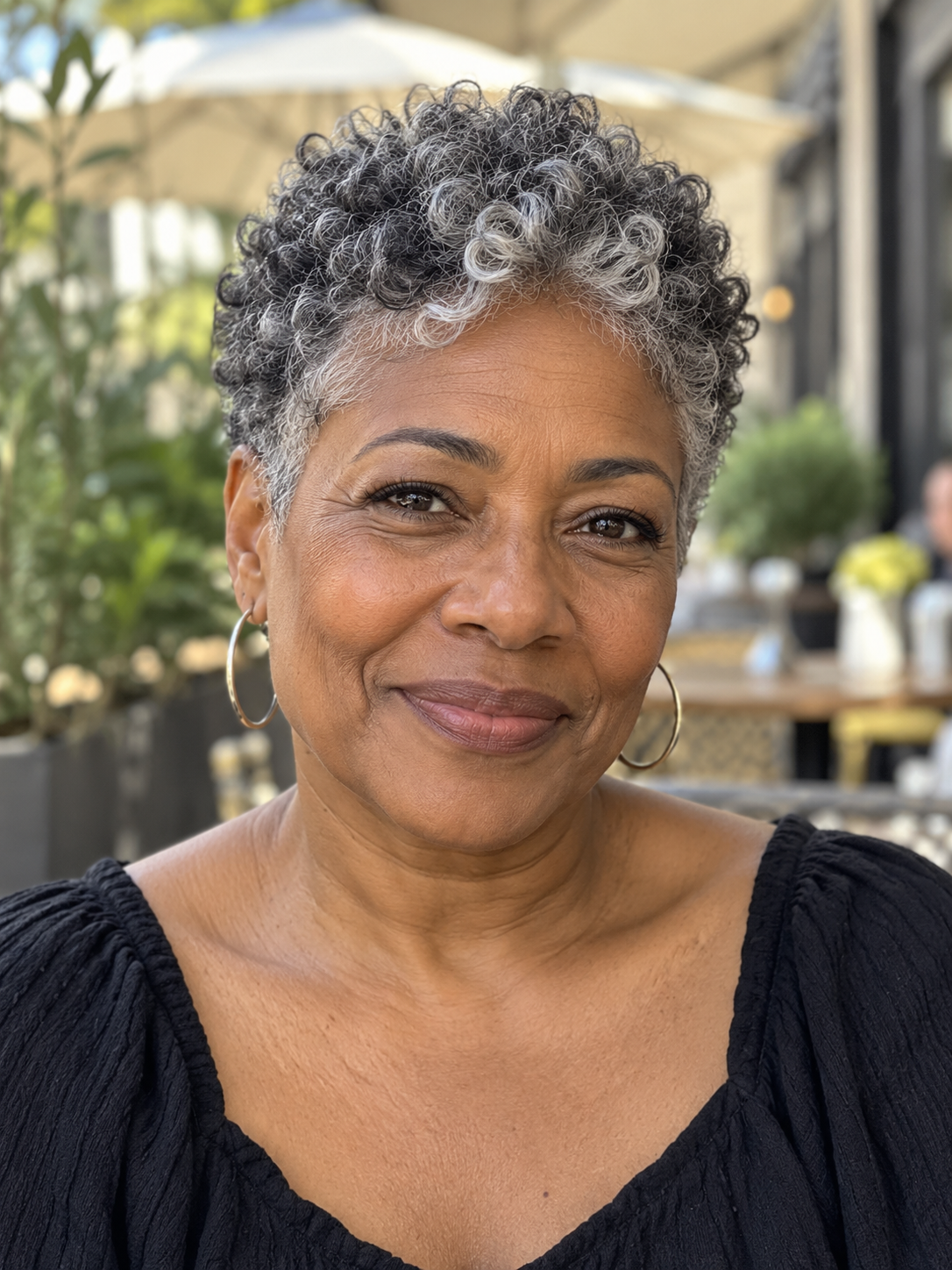
The key is a dry cut, where the stylist shapes each curl as it naturally falls. Leave-in conditioner keeps the texture defined, and mornings become a matter of fluffing and leaving the house.
Pixie with Undercut
Hidden shortness, visible polish. The undercut pixie buzzes the nape and lower sides close while longer top layers fall over them, so the cut looks soft from the front and sharp when the hair moves.
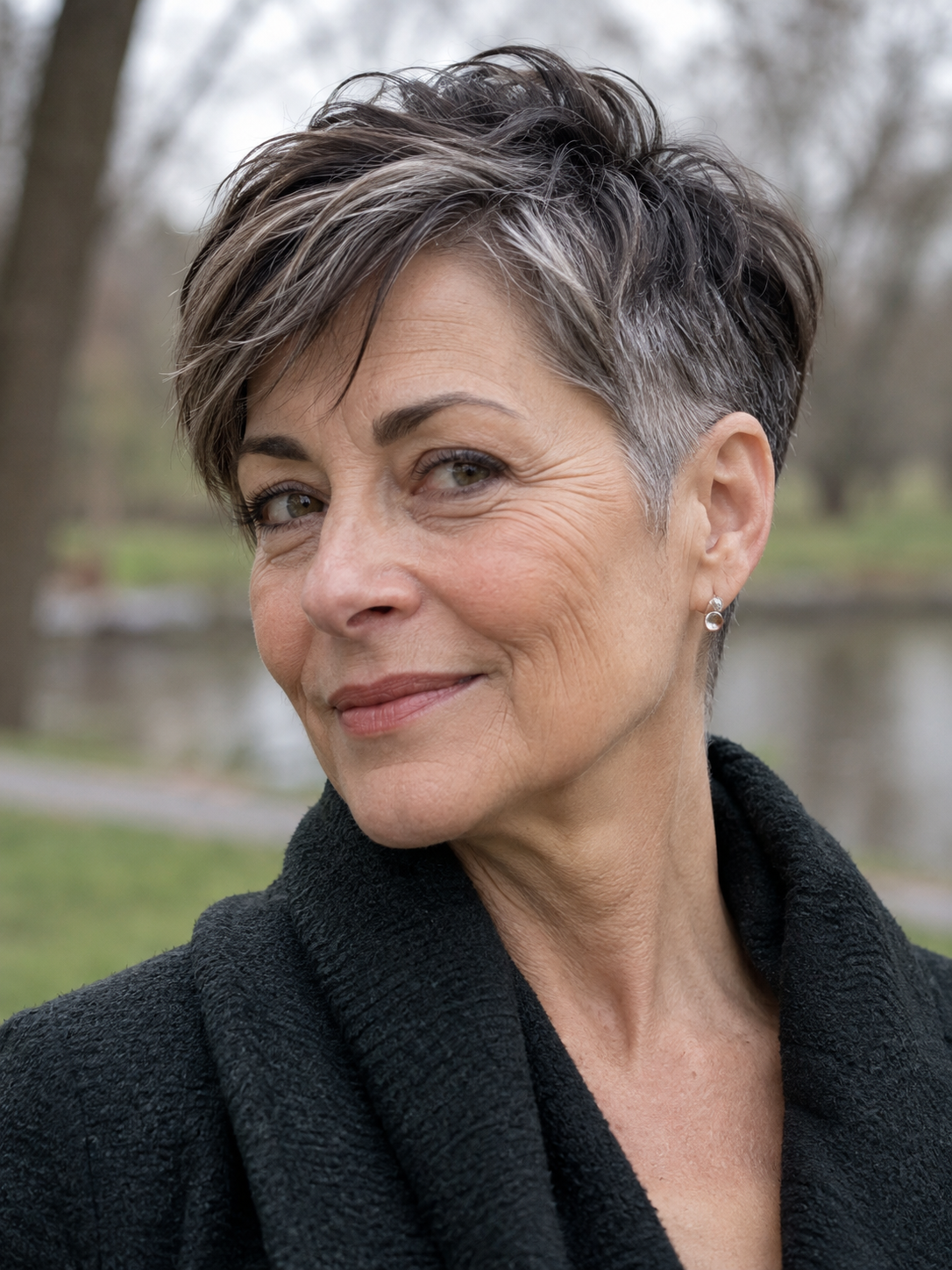
It also removes bulk, which lightens thick hair considerably in warm weather. Fewer women over 60 wear it, which is exactly why it turns heads.
Spiky Pixie
Energy is the whole personality of this cut. Short layers all over get pushed up and back with a working wax until the ends separate into soft spikes.
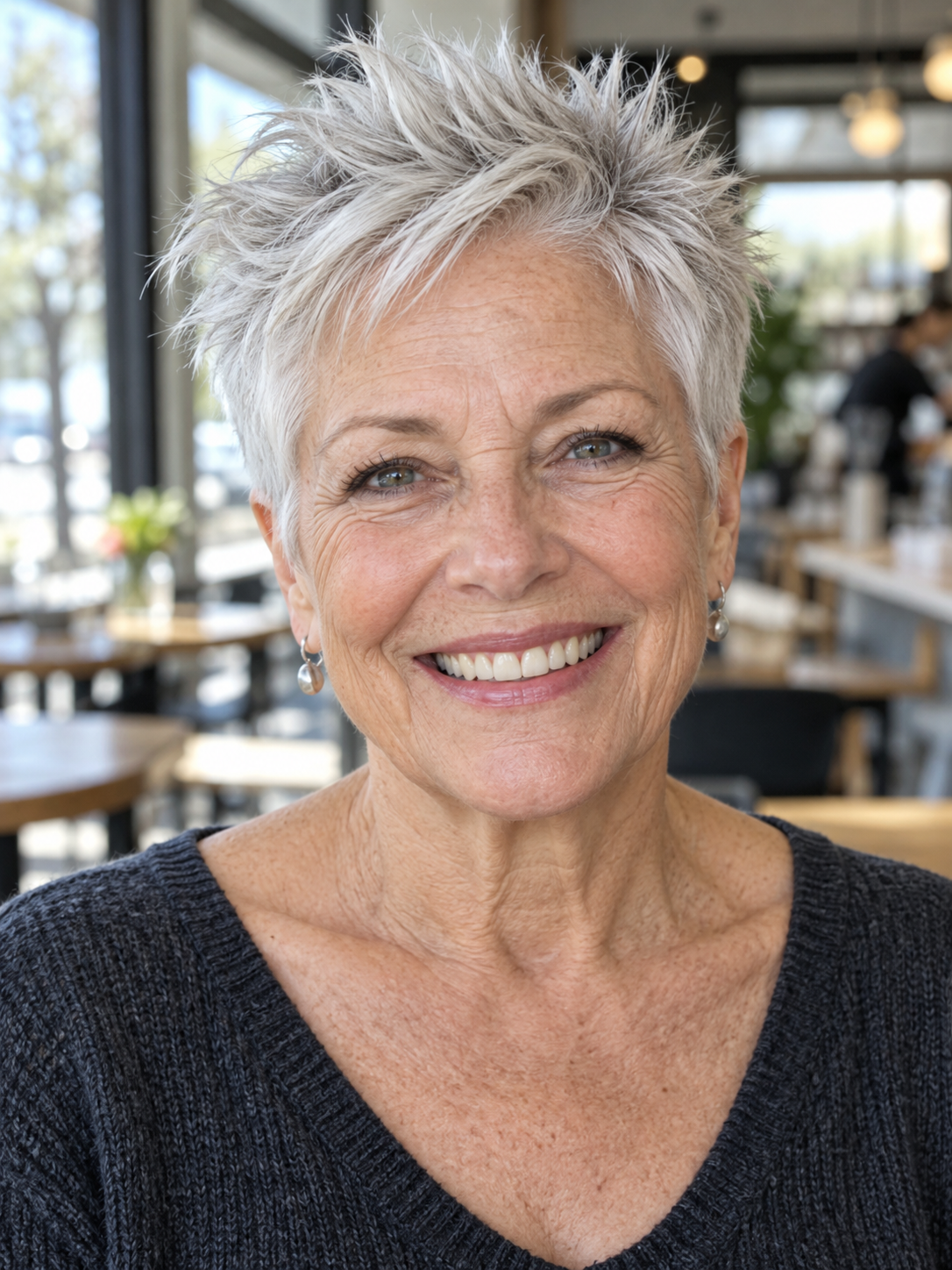
The lift adds height, which flatters rounder faces, and the overall effect is lively rather than harsh. Keep the spikes textured and bendy instead of stiff, and the look stays modern.
Highlighted Pixie
Dimension does for short hair what length does for long. Fine highlights woven through a pixie, blonde over light brown or caramel over deeper brown, catch light every time you turn your head.
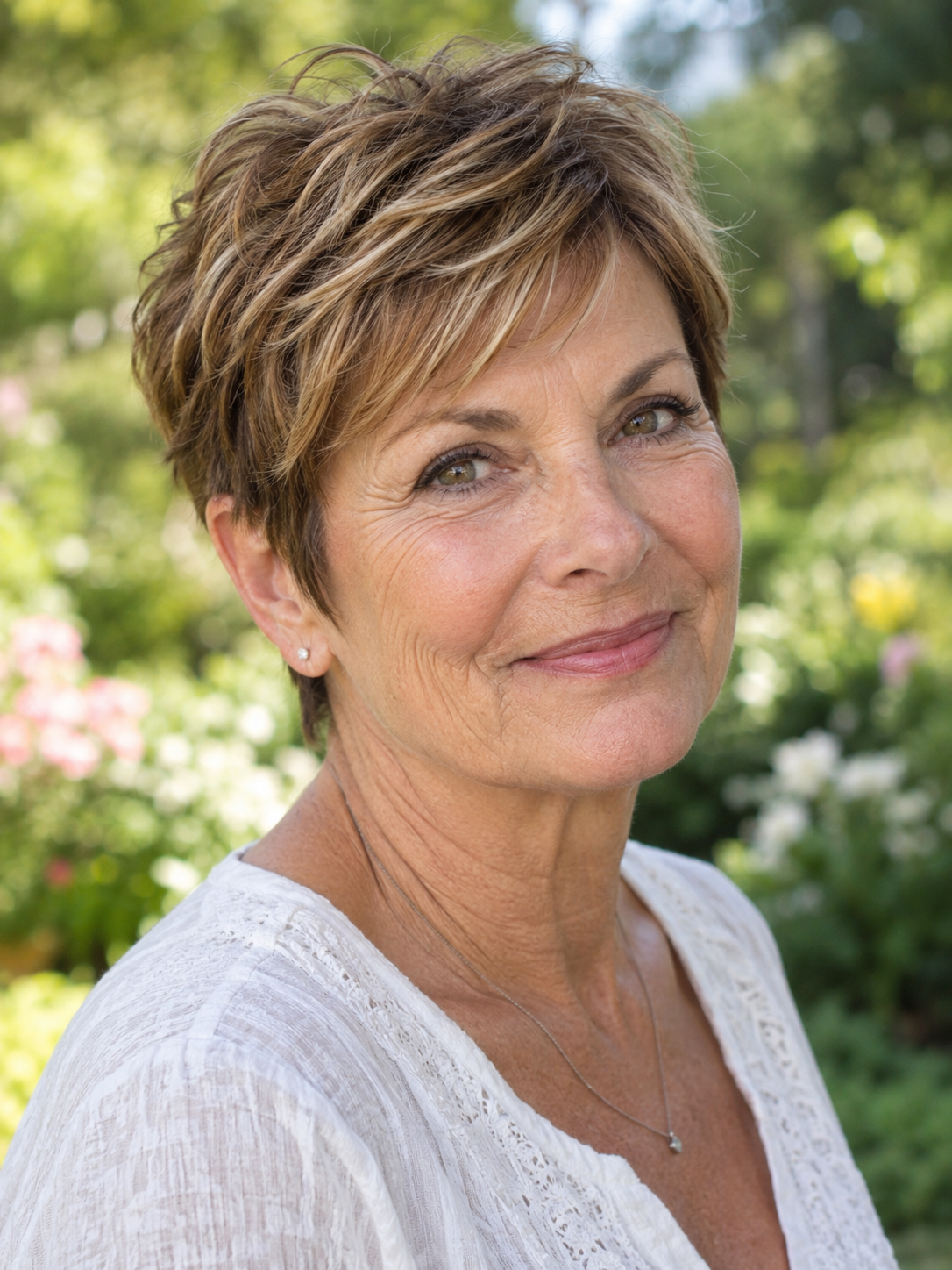
On short hair the foils take less time and cost less, and the grow-out is forgiving. Ask for babylights around the face for the most natural finish.
Pixie with Longer Top Layers
Movement on top, neatness everywhere else. This version keeps three or four inches through the crown while the sides and back stay cropped, so you can push the top forward, sweep it sideways, or lift it up depending on the day.
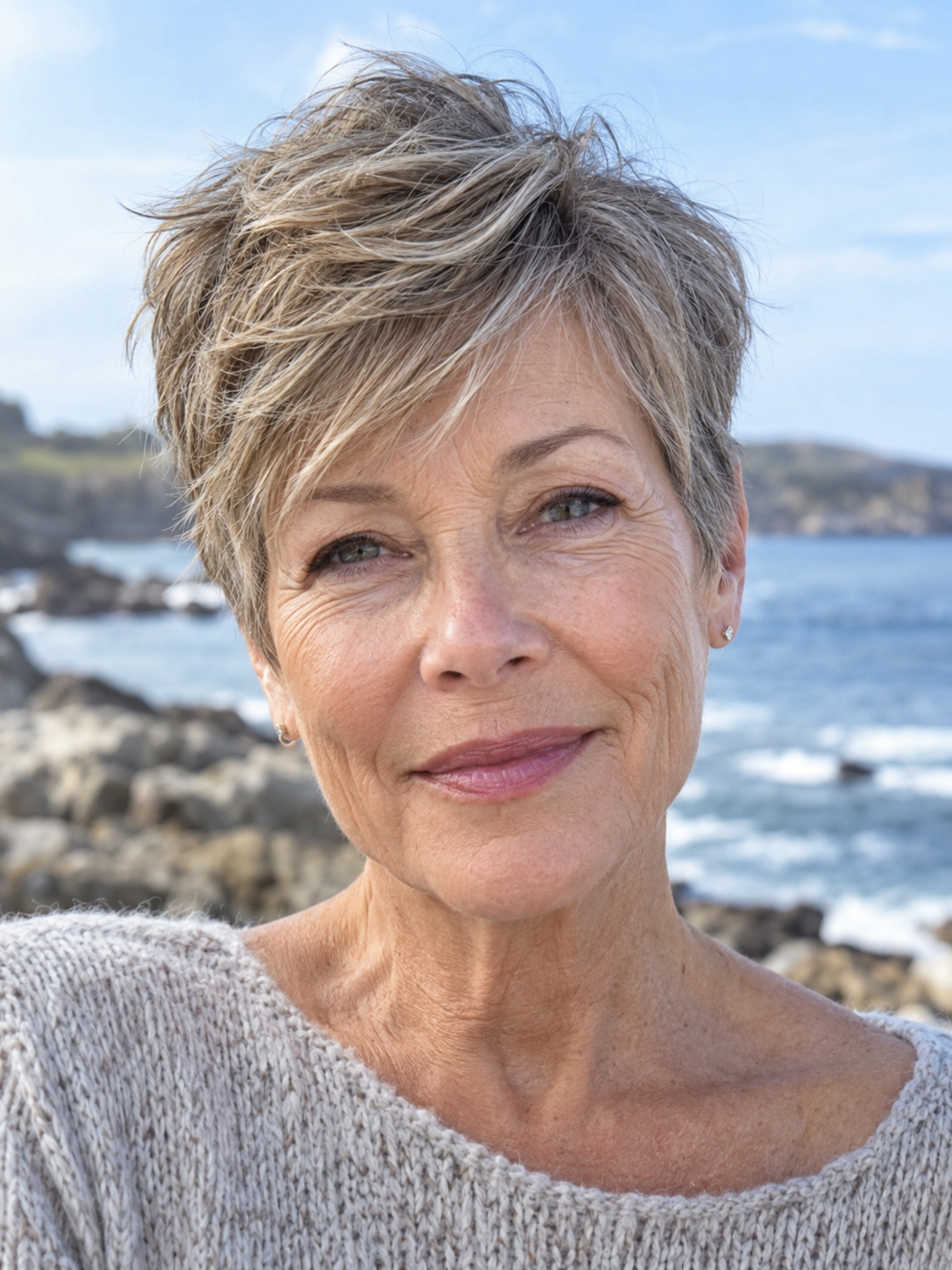
It’s the most versatile pixie here, offering different looks from a single cut. A light pomade handles all of them.
Cropped Micro Pixie
The shortest cut on this list asks for the most nerve and repays it fully. Hair sits cropped close all over, well above the ears, with just enough length on top to direct forward.
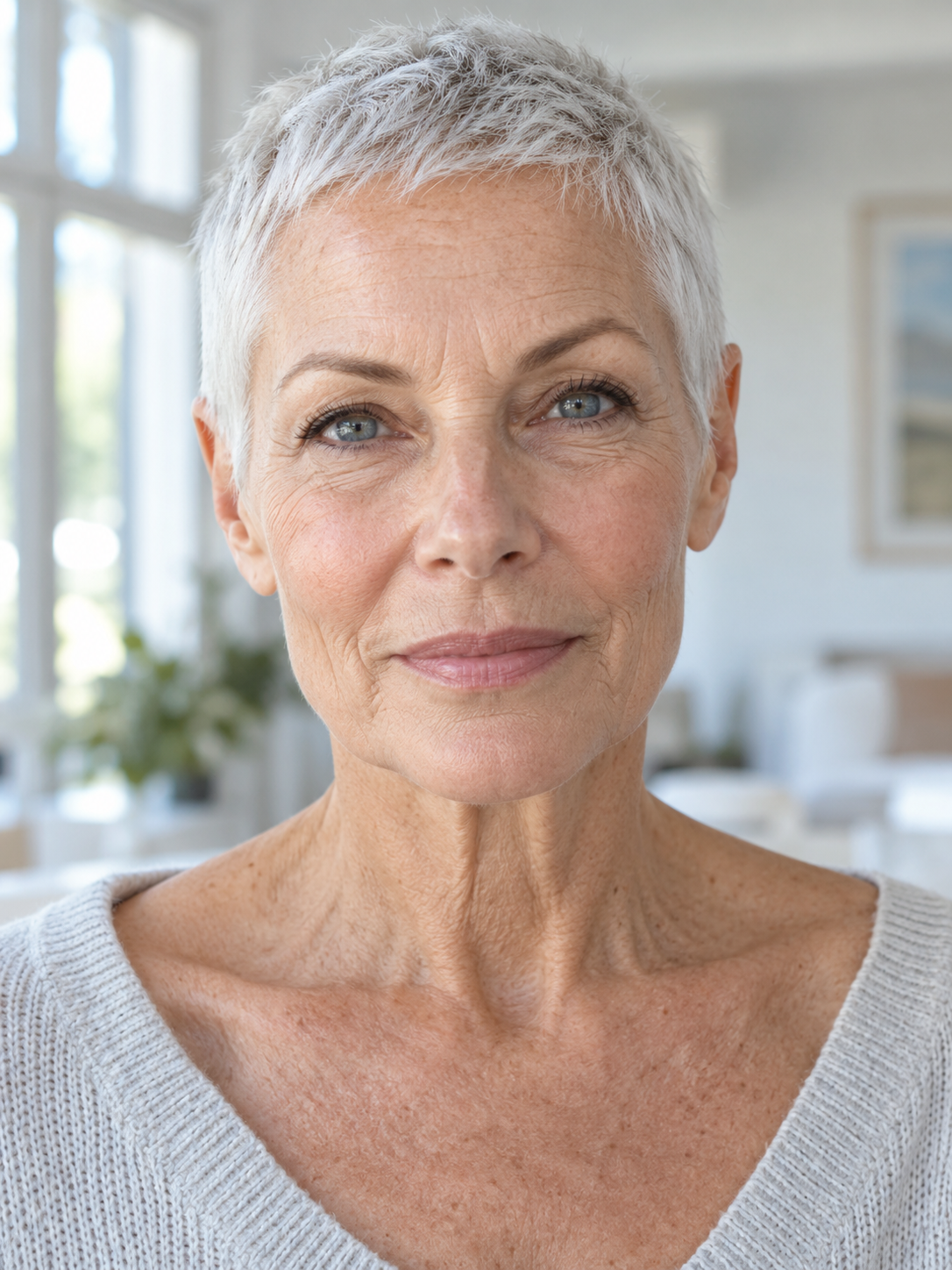
Cheekbones, eyes, and jawline do all the talking. Styling disappears from your routine almost entirely. Women who take this leap rarely go back to longer hair.