Thin straight hair has a habit of going flat by noon, no matter how much product you throw at it. The real fix usually isn’t more volumizing spray, it’s the cut itself. Certain lengths and layering techniques create the illusion of thickness by breaking up that slippery, one-directional fall, while the wrong cut just makes strands look even more sparse. Here are twenty styles built to work with fine, straight hair instead of against it.
Blunt Bob at the Collarbone
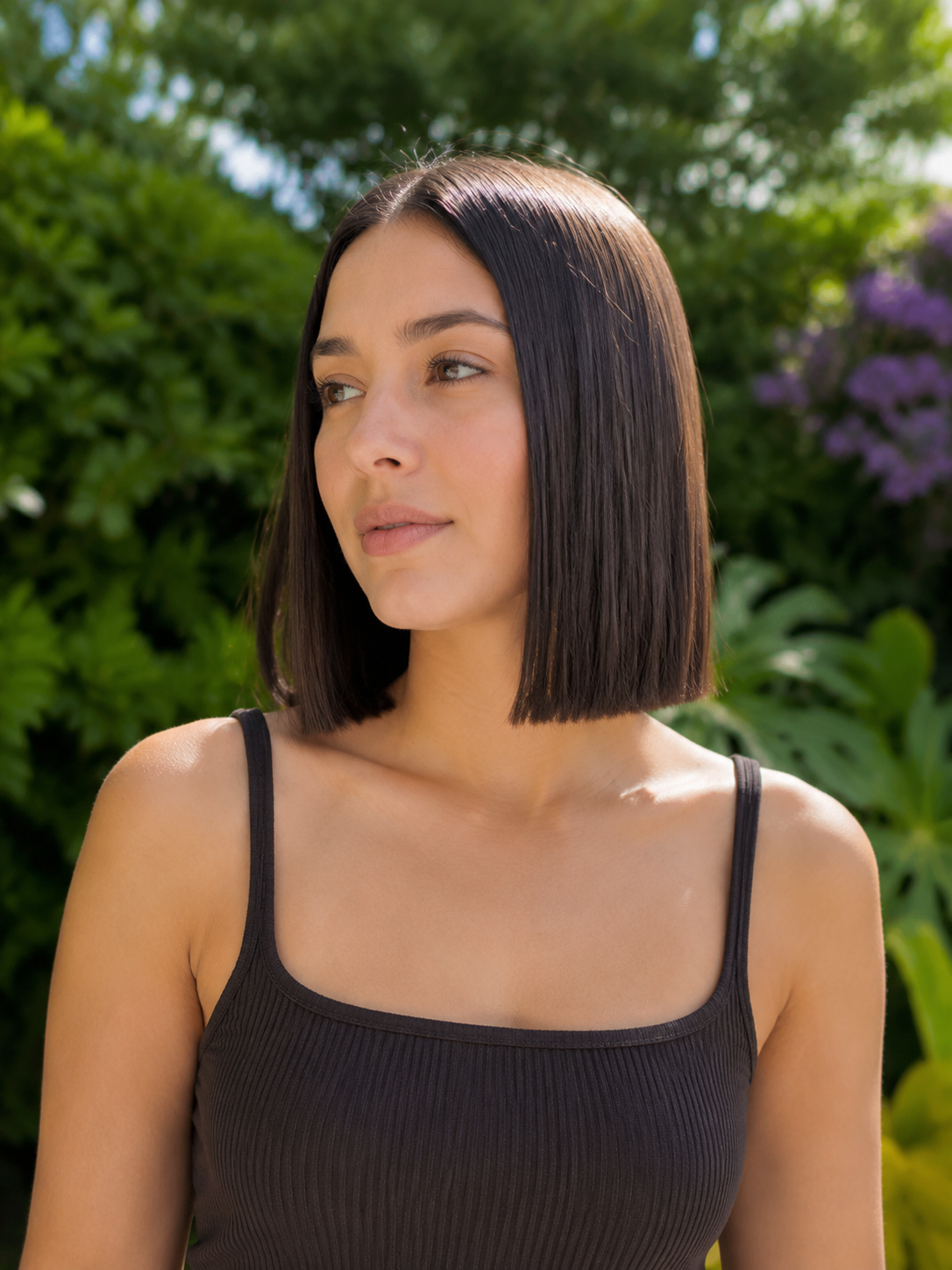
A blunt, single-length cut is one of the best tricks for thin hair because it stacks the ends together instead of thinning them out with layers. Hitting right at the collarbone keeps enough weight to swing but still looks intentional. Ask your stylist to keep the perimeter as horizontal as possible for maximum density at the ends.
Textured Pixie Cut
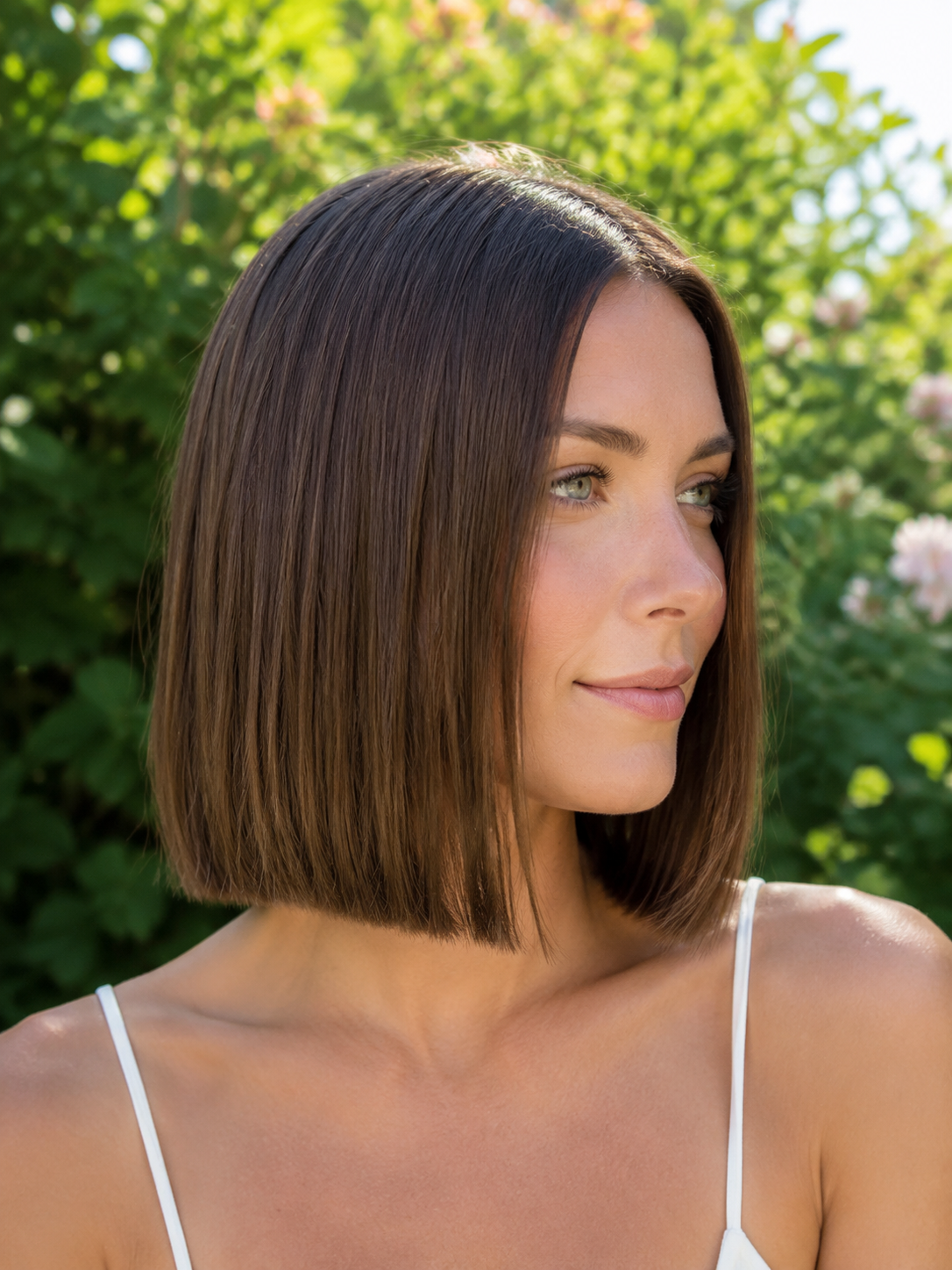
Going short removes the excess length that drags fine strands down and flattens them against the scalp. A textured pixie with point-cut ends adds movement without relying on thickness that isn’t there. Keep the crown slightly longer for lift, and use a matte texture paste instead of anything heavy or shine-based.
Wispy Curtain Bangs
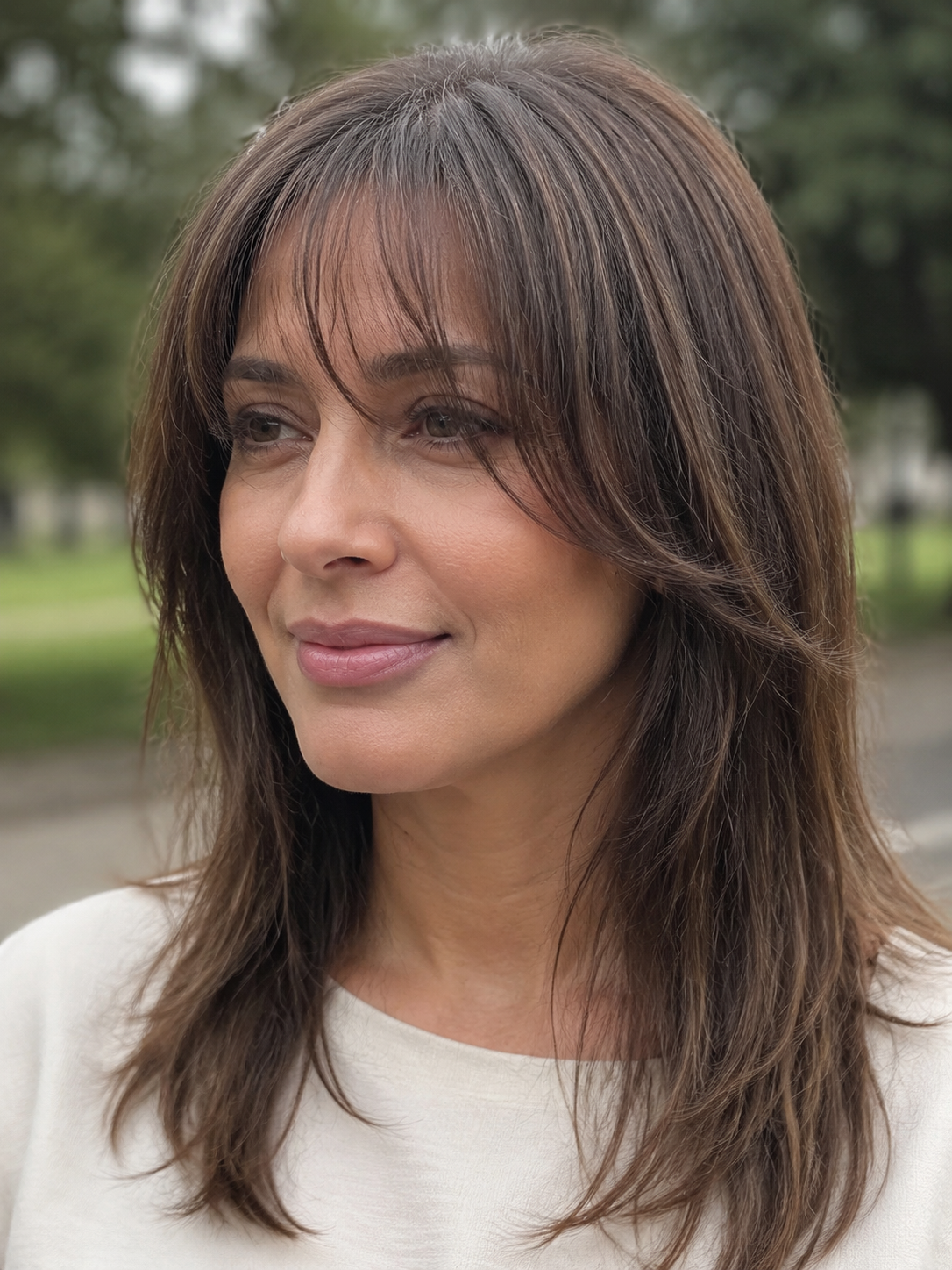
Curtain bangs framing the face add visual fullness right where people look first. Keep them wispy rather than blunt, since thin hair can look sparse under a heavy fringe. Ask for face-framing pieces that blend into longer layers on the sides, and a light dusting at the ends so they don’t look see-through.
Long Layers with a Money Piece

Long layers on thin hair need to be subtle, since too many can strip out the density fast. A few well-placed layers around the face, paired with a money piece highlight near the front, create dimension that reads as texture rather than thinness. This works especially well on hair that’s naturally straight and slippery.
Chin-Length French Bob
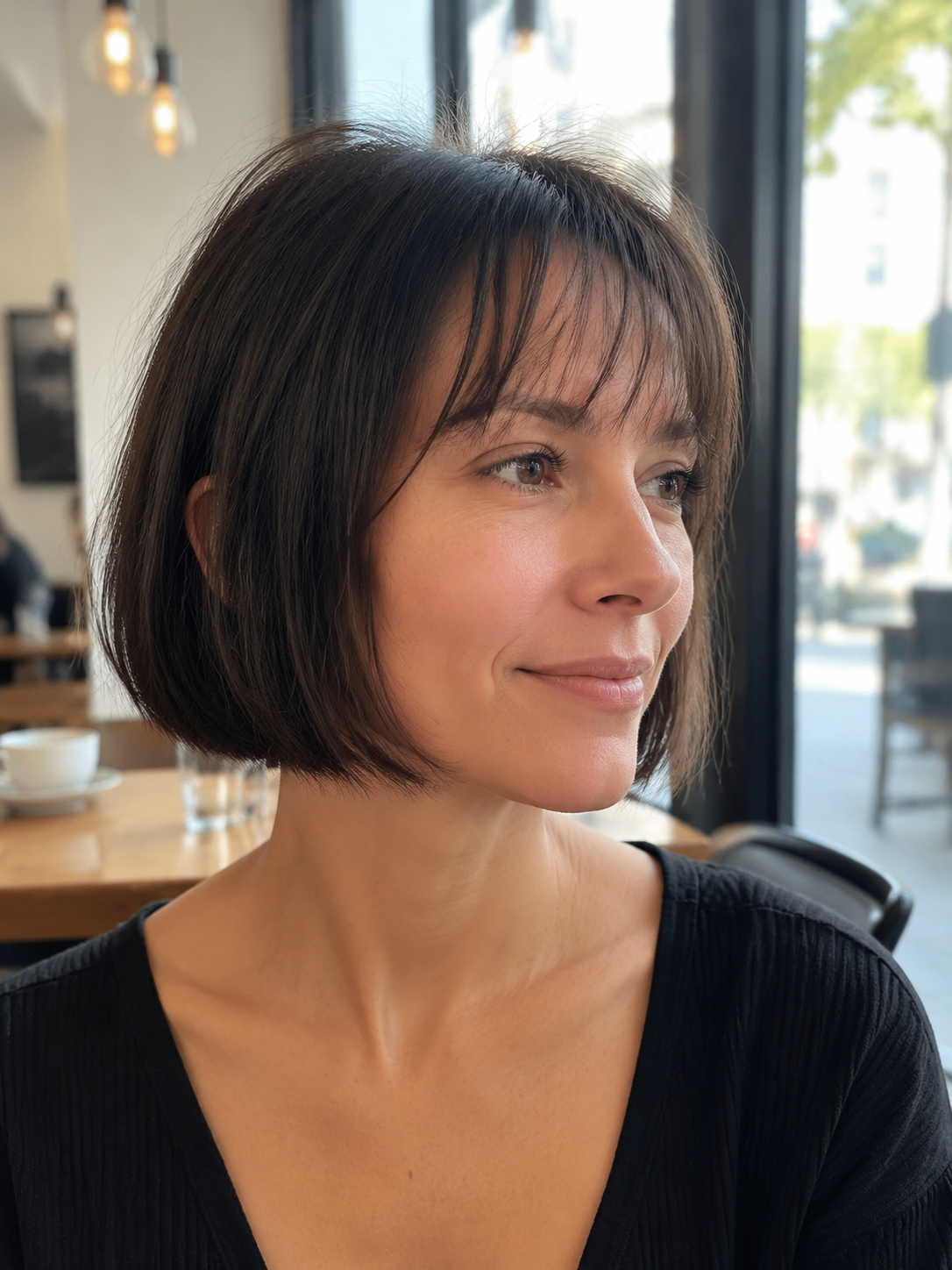
The French bob’s short, blunt length is naturally flattering on fine hair because there’s less length for gravity to pull down. Soft, undone bangs finish the look without adding bulk. This cut also tends to require less daily styling, since the shorter length holds shape on its own.
Choppy Shag
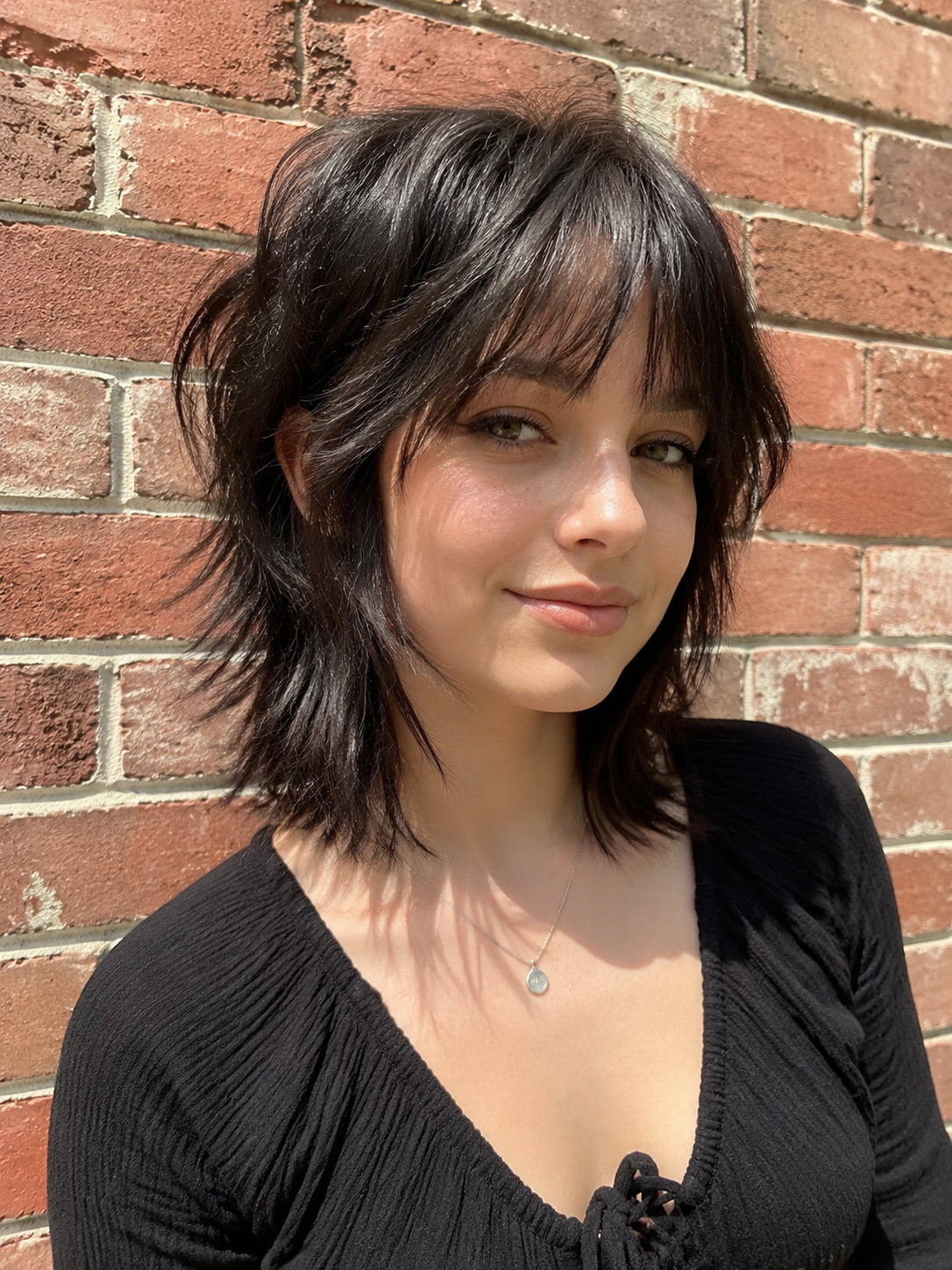
A shag cut, when done right, is one of the few layered styles that genuinely helps thin straight hair. Short, choppy layers throughout the crown create built-in texture and movement that mimics thickness. Pair it with a flat iron for slight bends at the ends rather than trying to curl fine strands into big waves.
Side-Swept Bangs with Face Layers

Side-swept bangs blended into longer face-framing layers soften a thin hairline without the commitment of full bangs. This works on almost any length and gives you volume exactly where a straight-on part tends to look thin. Keep the part slightly off-center to hide any visible scalp.
Angled Bob
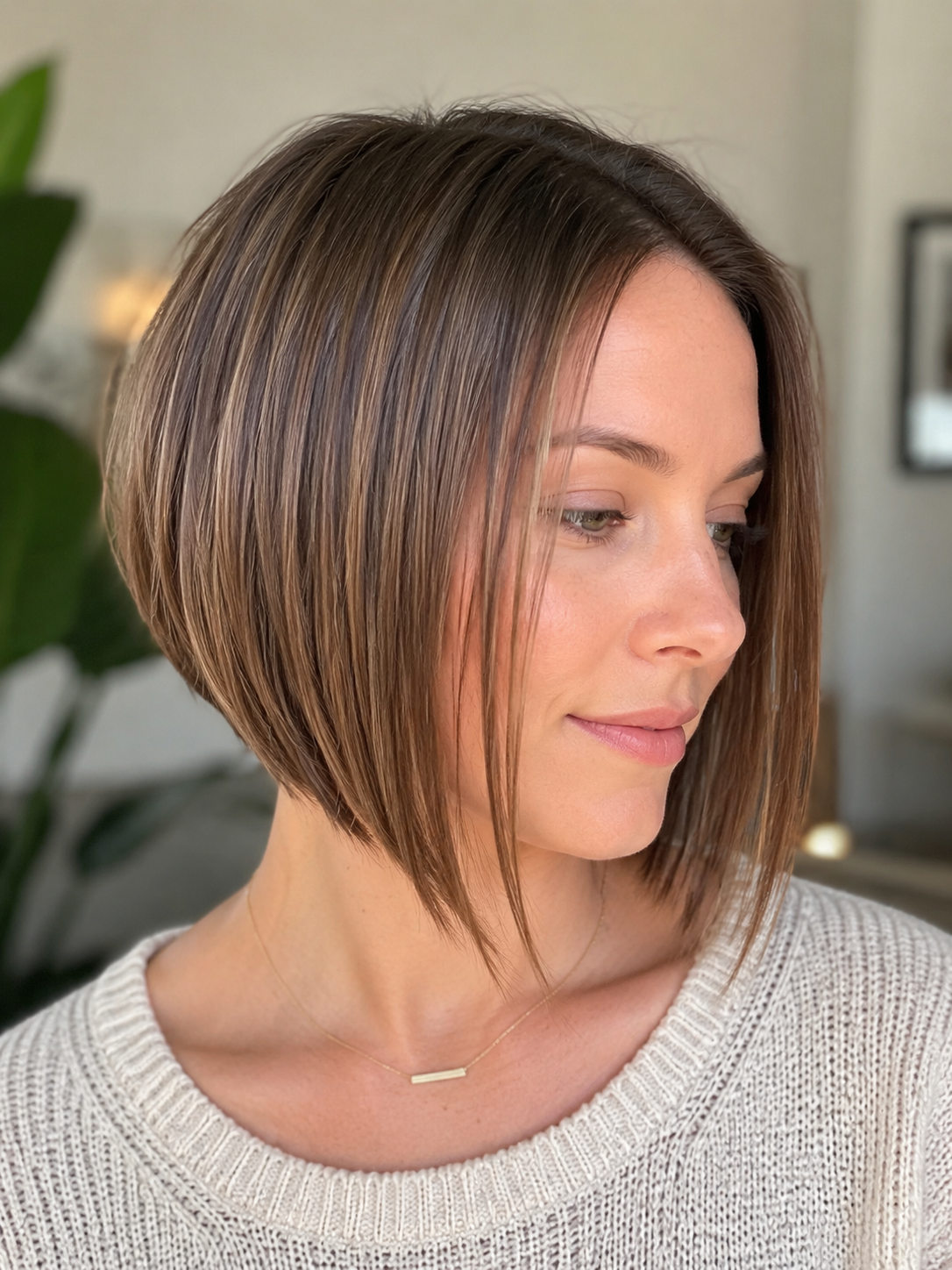
An angled bob, longer in front and shorter in back, uses the shorter back section to create natural lift at the crown. The gradual slope also avoids the thinning effect that even, all-over layers can have on fine hair. It photographs well and holds its shape between washes better than longer cuts.
Face-Framing Layers on a Medium Length
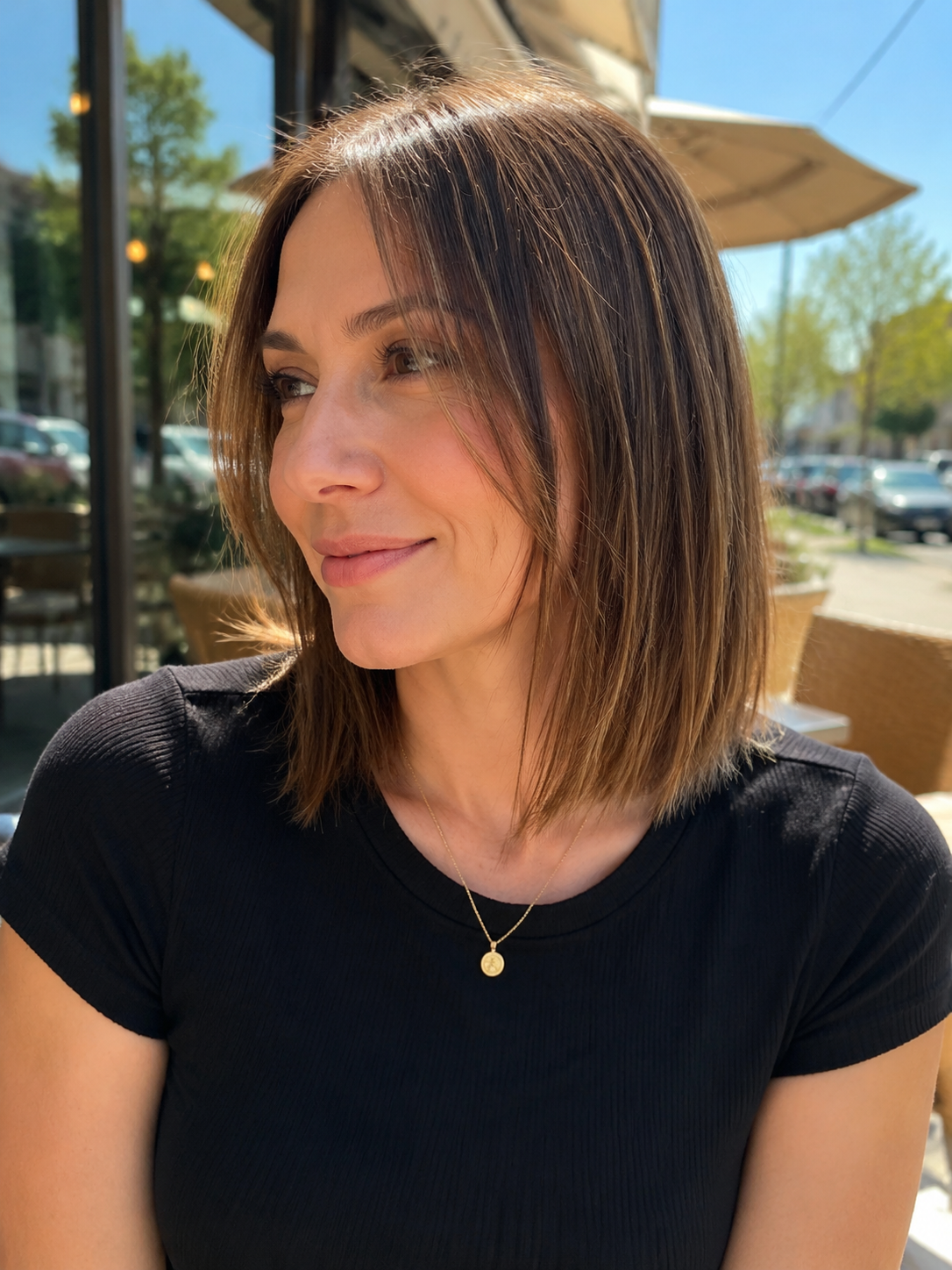
Rather than layering the whole head, concentrate layers just around the face on an otherwise blunt medium length. This keeps the overall silhouette full while still softening the front. It’s a low-risk way to add movement if you’re nervous about layers thinning out your ends.
Low-Maintenance Lob
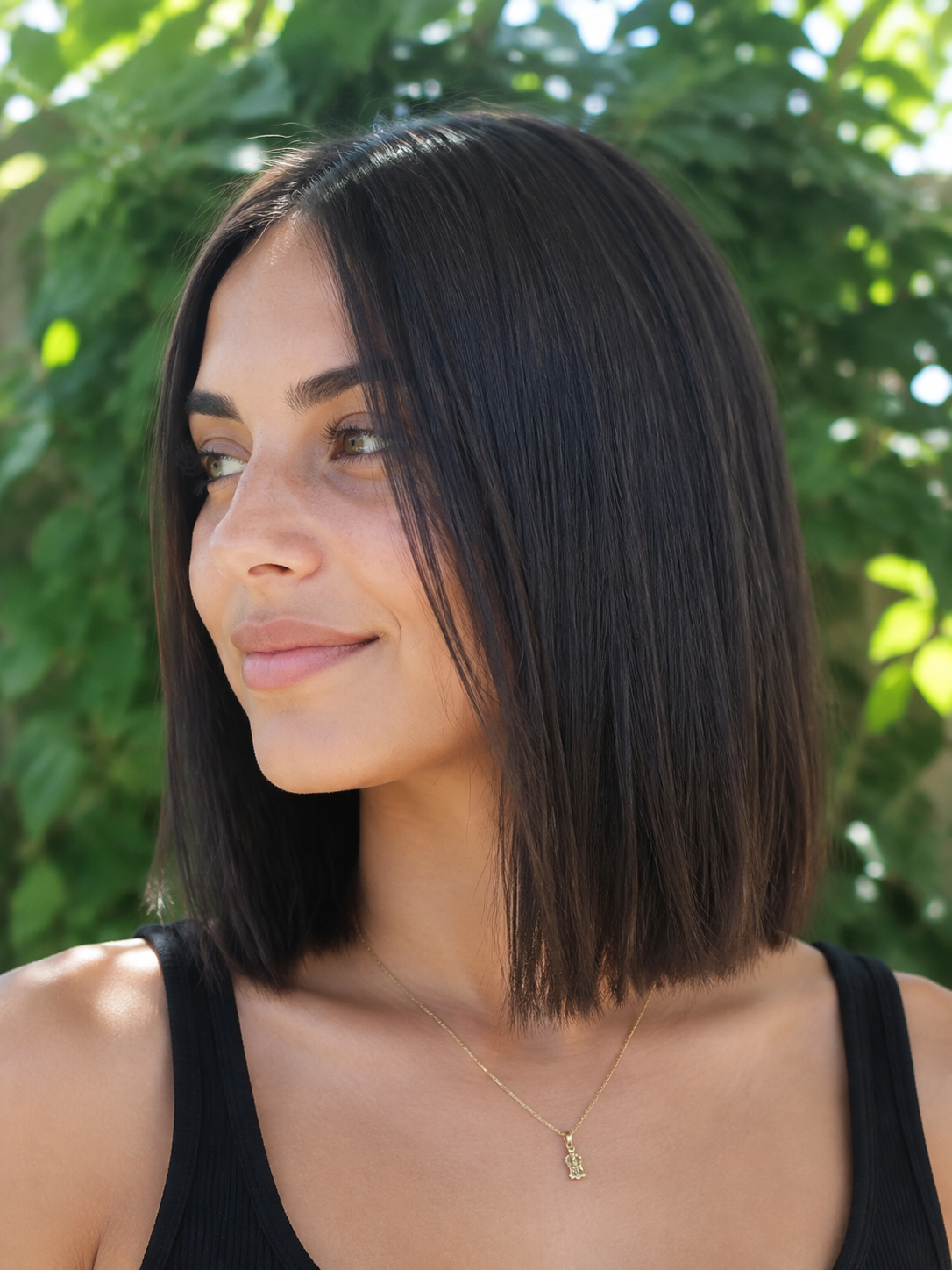
A lob at the collarbone or just below is long enough to still put in a low bun but short enough to avoid the stringy look thin hair can get past the shoulders. Keep it mostly blunt with minimal internal layering, and let the natural straightness do the work.
Point-Cut Blunt Ends
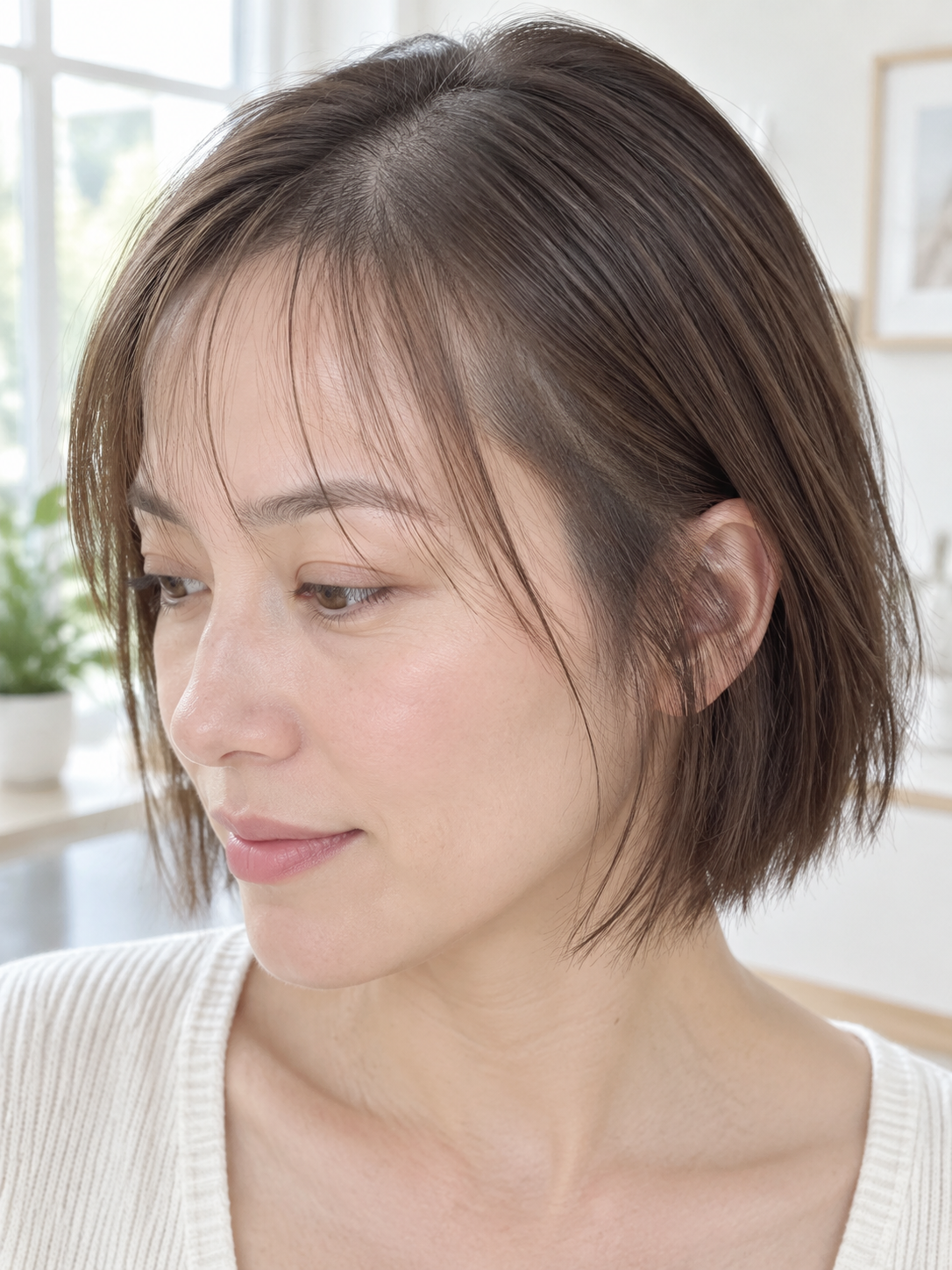
Instead of a razor-sharp blunt line, ask for point-cutting along the ends. This technique removes tiny triangular sections of hair, which softens the line just enough to avoid looking thin or wispy, while still keeping the overall density-building benefit of a blunt cut.
Bixie Cut
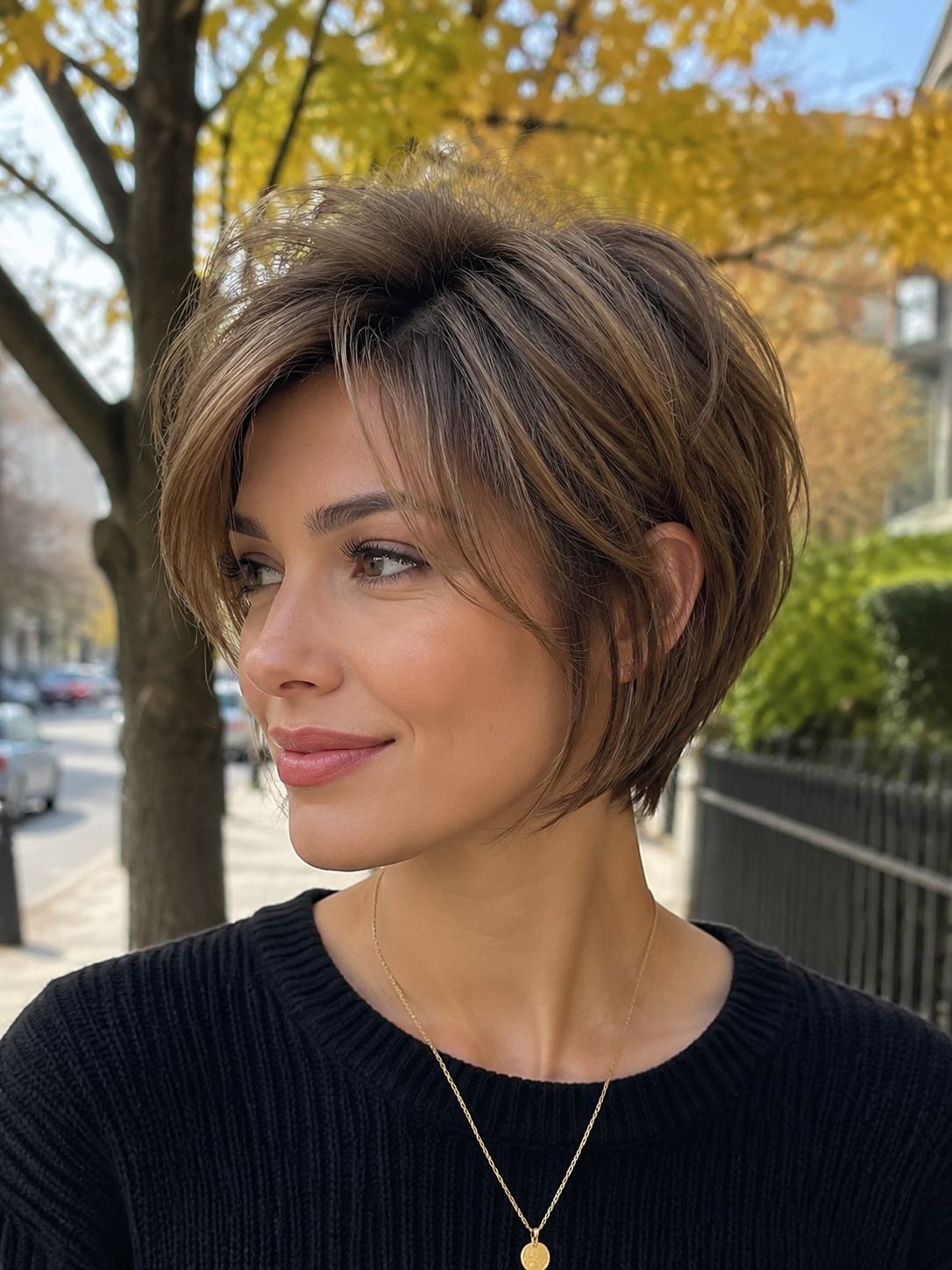
The bixie splits the difference between a bob and a pixie, landing around the jaw with short, piece-y layers on top. It’s a strong choice for thin straight hair because the shorter length reduces drag and the layered crown adds height. Style with a small round brush for extra root lift.
Feathered Layers

Feathered layers, cut at an angle rather than straight across, blend more softly into thin hair than blunt layering does. They add subtle movement around the face and neck without creating gaps that can happen when layers are too heavy-handed on fine strands.
Textured Crop
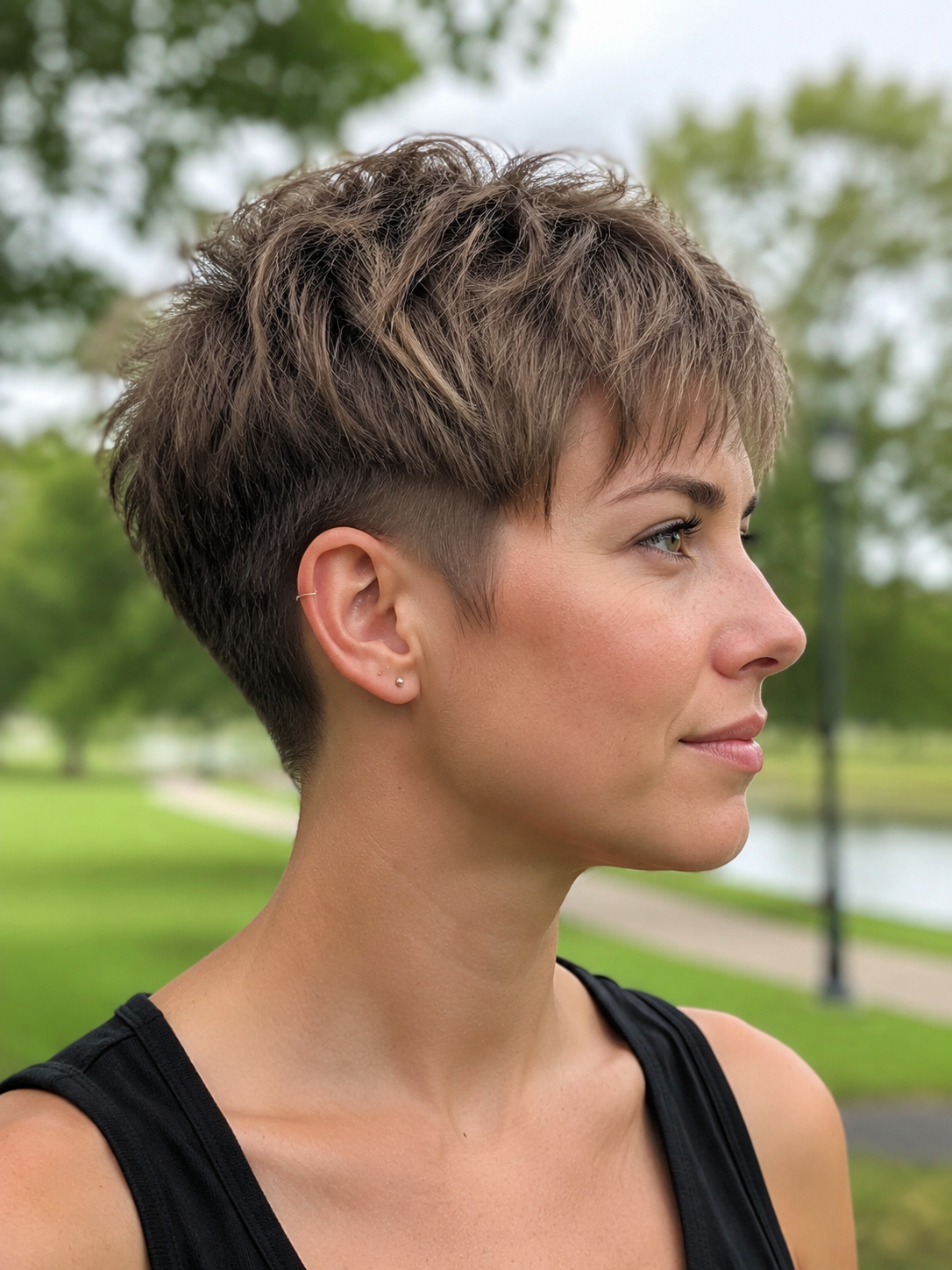
A short, textured crop works especially well on straight hair that lacks natural texture, since the cut itself does the job that curl or wave would otherwise do. Ask for disconnected layers at the crown for extra lift, and keep the sides close for a clean, low-maintenance shape.
Wolf Cut

The wolf cut combines shag-style layering with mullet-inspired length at the back. On thin straight hair, the heavy layering at the crown creates volume that’s hard to fake with product alone. It’s a bolder choice, but it genuinely photographs fuller than most other layered cuts.
Ear-Length Pixie Bob
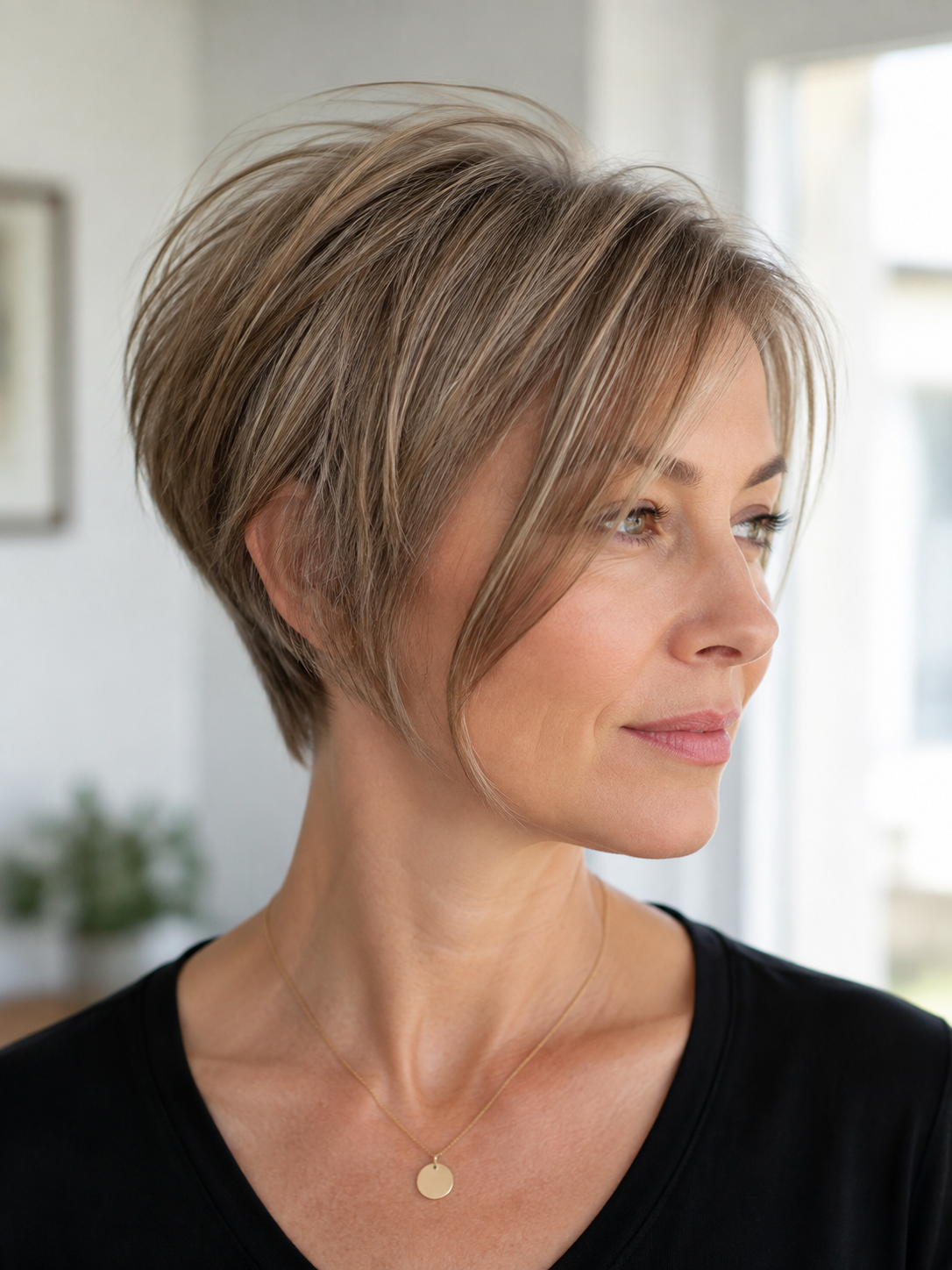
Landing right at the ears, this cut is short enough to eliminate the weight that pulls fine hair flat, but still has enough length to tuck behind the ears or add a light wave. A slightly longer front section keeps it feeling feminine rather than severe.
Micro Fringe with Long Layers

A short, blunt micro fringe paired with longer face-framing layers creates a strong contrast that draws attention away from thinness elsewhere. This combination works best on hair with at least some length to balance out the short bangs.
Volumizing Blowout Layers
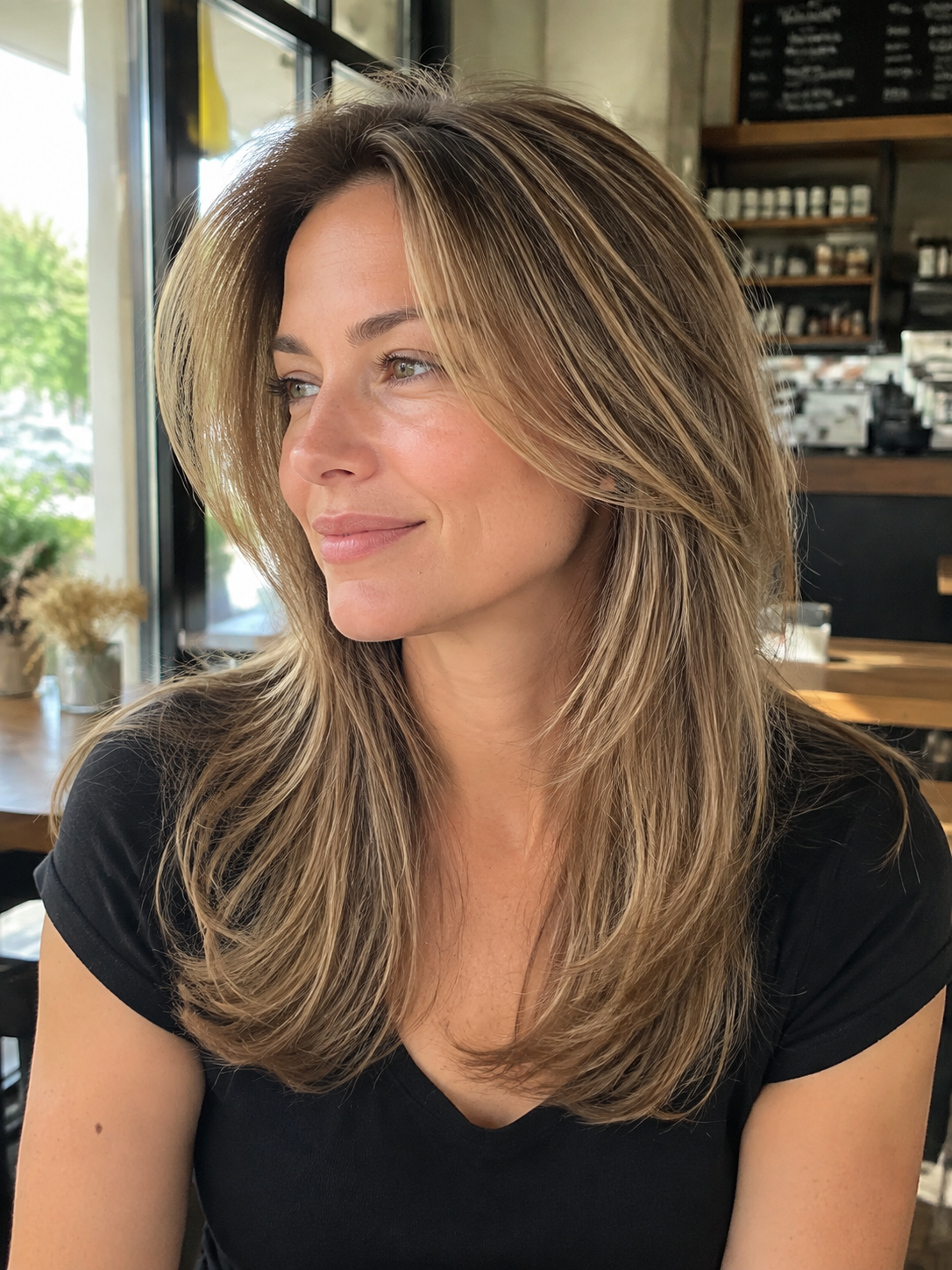
Long layers cut specifically for a round-brush blowout, rather than an air-dry, can build noticeable volume at the root. The layers should start higher up, closer to the crown, so there’s more to lift and less flat length weighing everything down.
Jaw-Length Bob with Subtle Layers
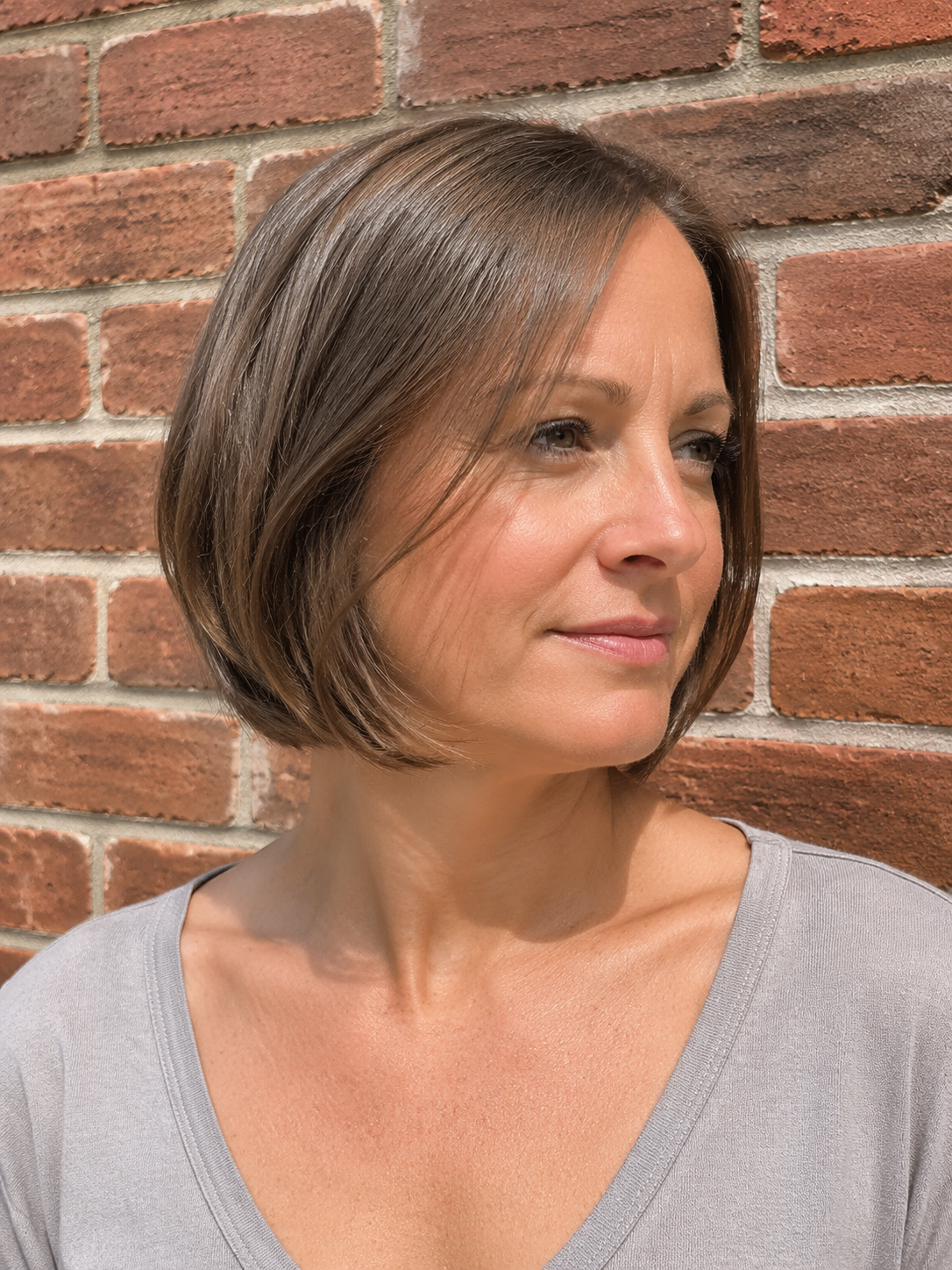
A few light layers added only at the very ends of a jaw-length bob keep the blunt, density-building base intact while softening the line just slightly. This is a good middle ground for anyone who wants a bit of movement without losing volume.
One-Length Micro Bob

Cutting straight across at a very short, chin-grazing length maximizes the blunt-cut density effect, since there’s barely any length for weight to accumulate. It’s a striking, high-impact cut that reads as thick simply because the ends are so concentrated.