A long pixie is the cut stylists reach for when someone says they want short hair but aren’t ready to lose everything. The back and sides stay cropped close, but the top and face-framing pieces get left long enough to tuck behind an ear or sweep to the side. That extra inch changes everything about how the cut wears day to day, it softens the silhouette and buys you more styling options than a classic pixie ever could. Here are 19 ways to wear it.
Classic Textured Long Pixie
Piecey layers throughout the crown give this cut movement without looking overworked. Ask your stylist for a razor finish instead of scissor-only layers, it keeps the ends soft rather than blunt.
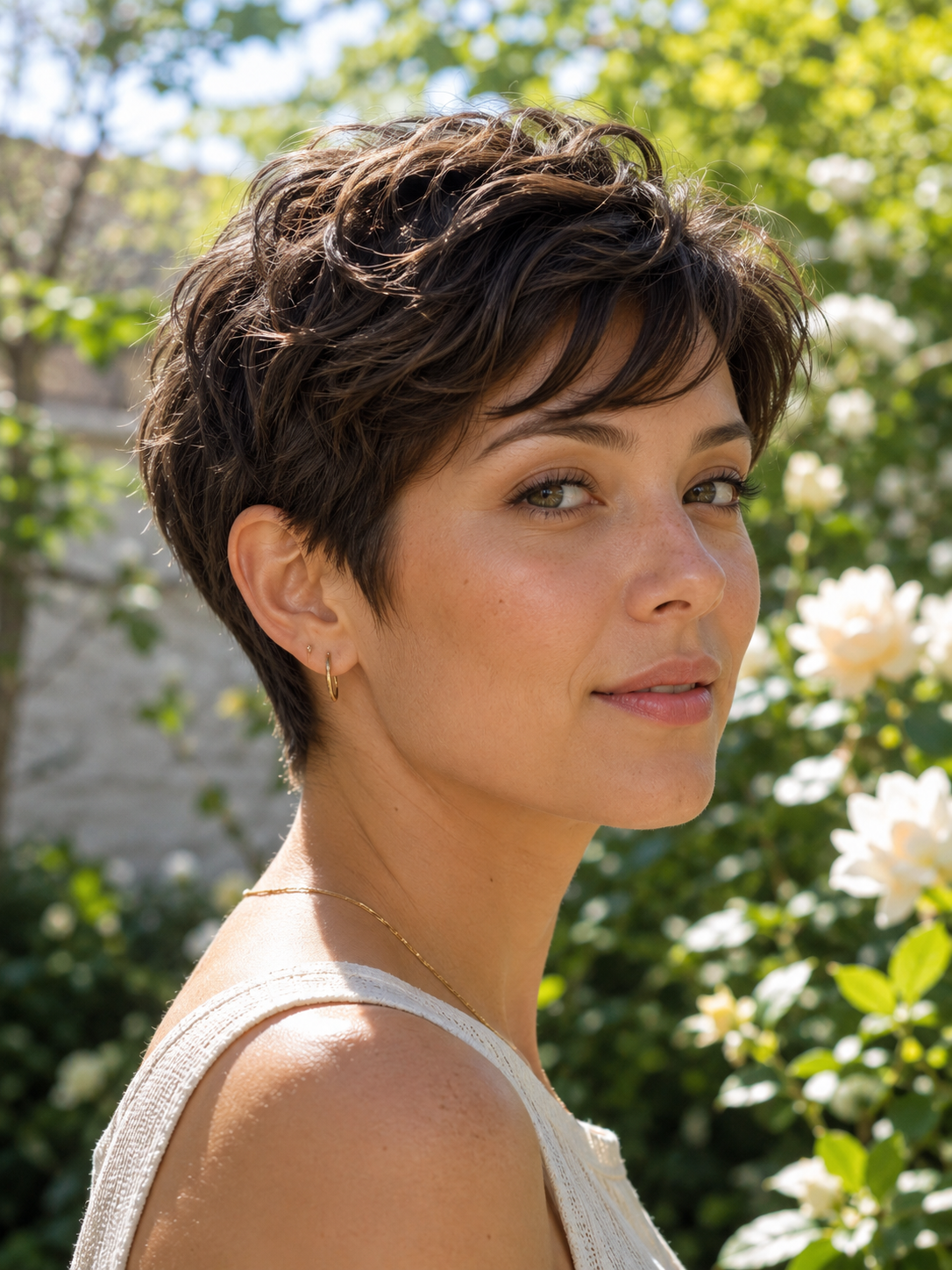
Work a texturizing paste through damp hair and let it air dry for natural separation. This version suits straight to slightly wavy hair best and holds its shape well between trims.
Bixie
Half bob, half pixie, this hybrid keeps a cropped nape but leaves enough length around the face to graze the jaw. It reads less severe than a traditional pixie while still being low maintenance. Curling the face-framing pieces under adds softness, or leave them straight for a sharper finish.
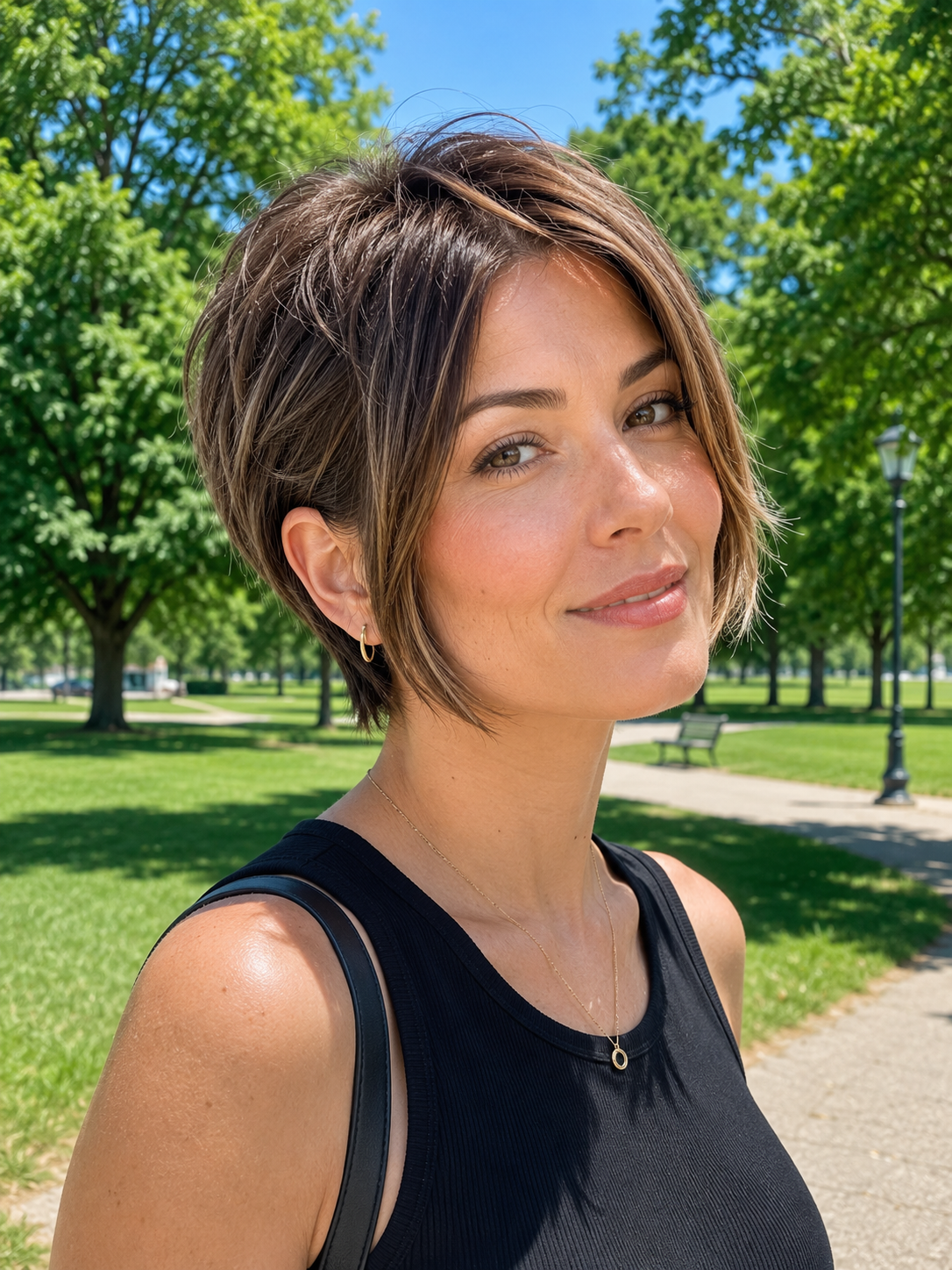
The bixie has become one of the most requested cuts for anyone easing into short hair for the first time.
Side-Swept Fringe Long Pixie
A long, sweeping fringe changes the whole mood of a pixie. Instead of cutting straight across, the fringe angles from a deep side part and blends into the longer crown layers.
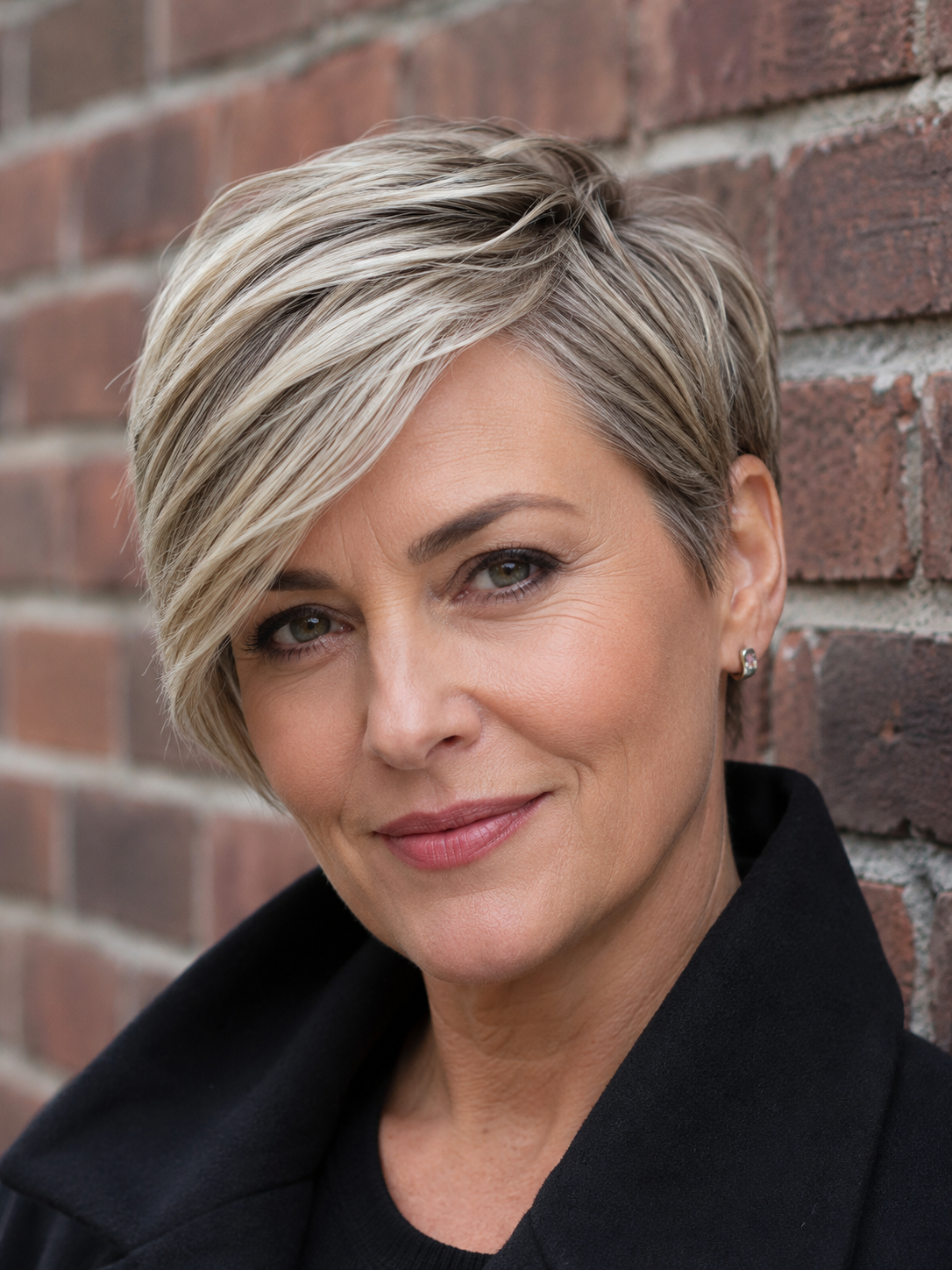
It softens the forehead and works especially well for anyone with a rounder or heart-shaped face. Style it with a round brush for volume, or press it flat with a flat iron for a sleeker line.
Curly Long Pixie
Curls need extra length to show their full shape, which makes this cut ideal for natural texture. The longer top layers let ringlets or waves coil without getting cut off mid-curl. A lightweight curl cream defines without weighing curls down.
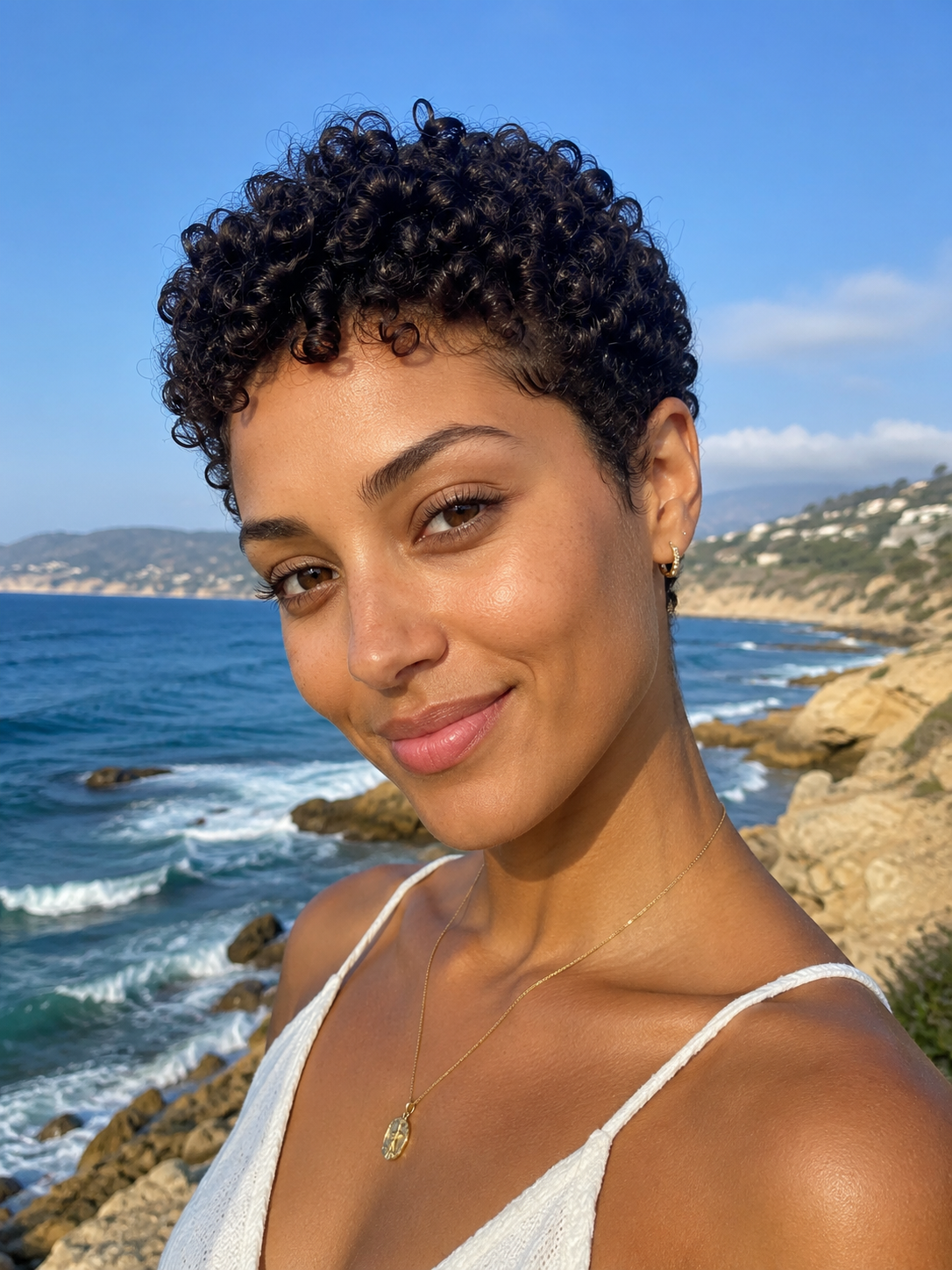
This one takes more patience at the salon since curly hair shrinks up when cut dry, so ask your stylist to cut it wet first and refine dry.
Wavy Long Pixie
Loose waves add effortless texture to a long pixie without much daily effort. A sea salt spray scrunched into damp hair brings out natural bend, and a diffuser speeds up drying without disrupting the wave pattern.
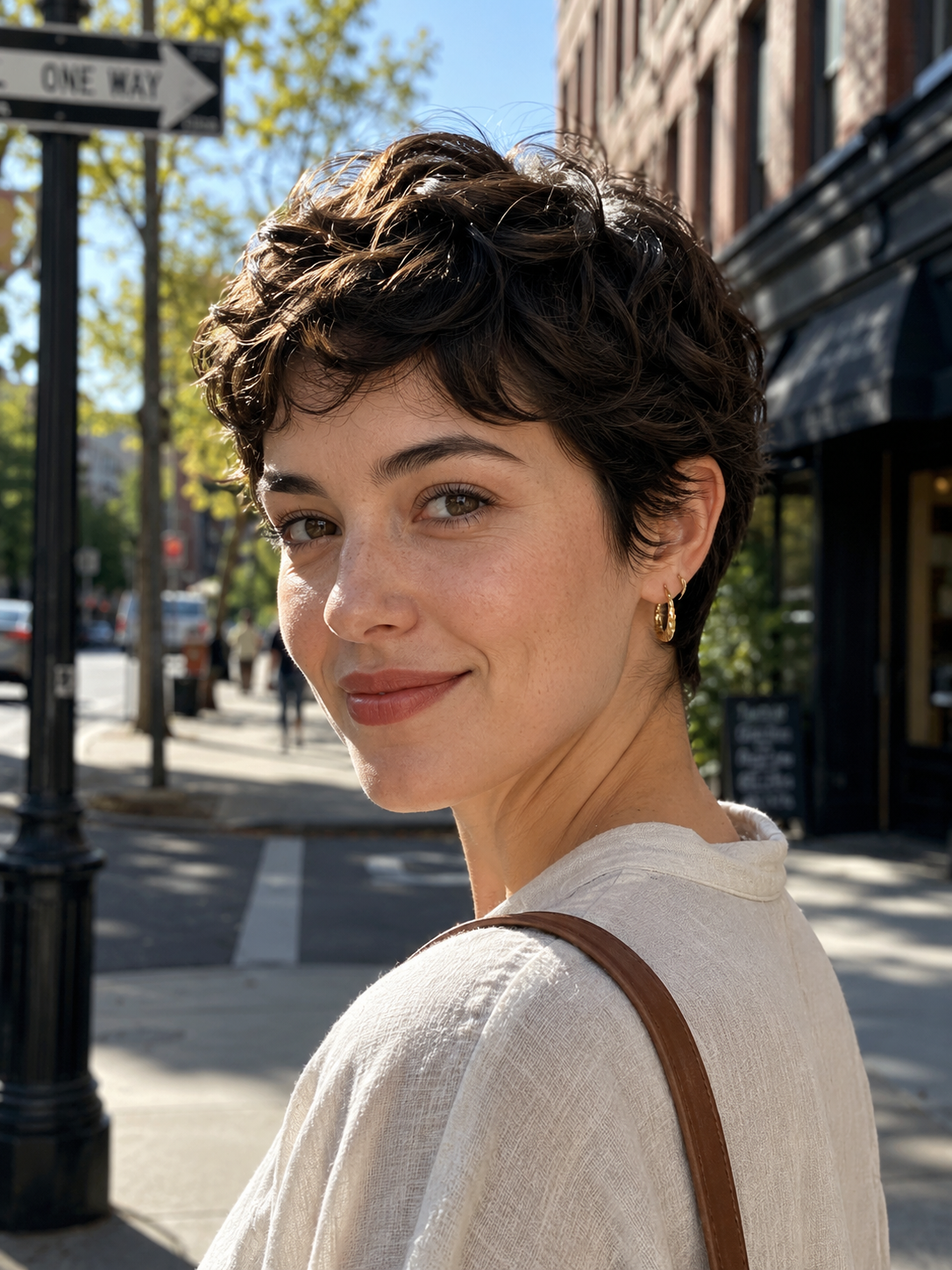
This version tends to look best with slightly longer layers at the crown, giving the waves room to move instead of sitting flat against the head.
Undercut Long Pixie
Shaving the underside close while leaving the top long creates dramatic contrast. It’s a bolder choice, the kind of cut that photographs well from every angle.
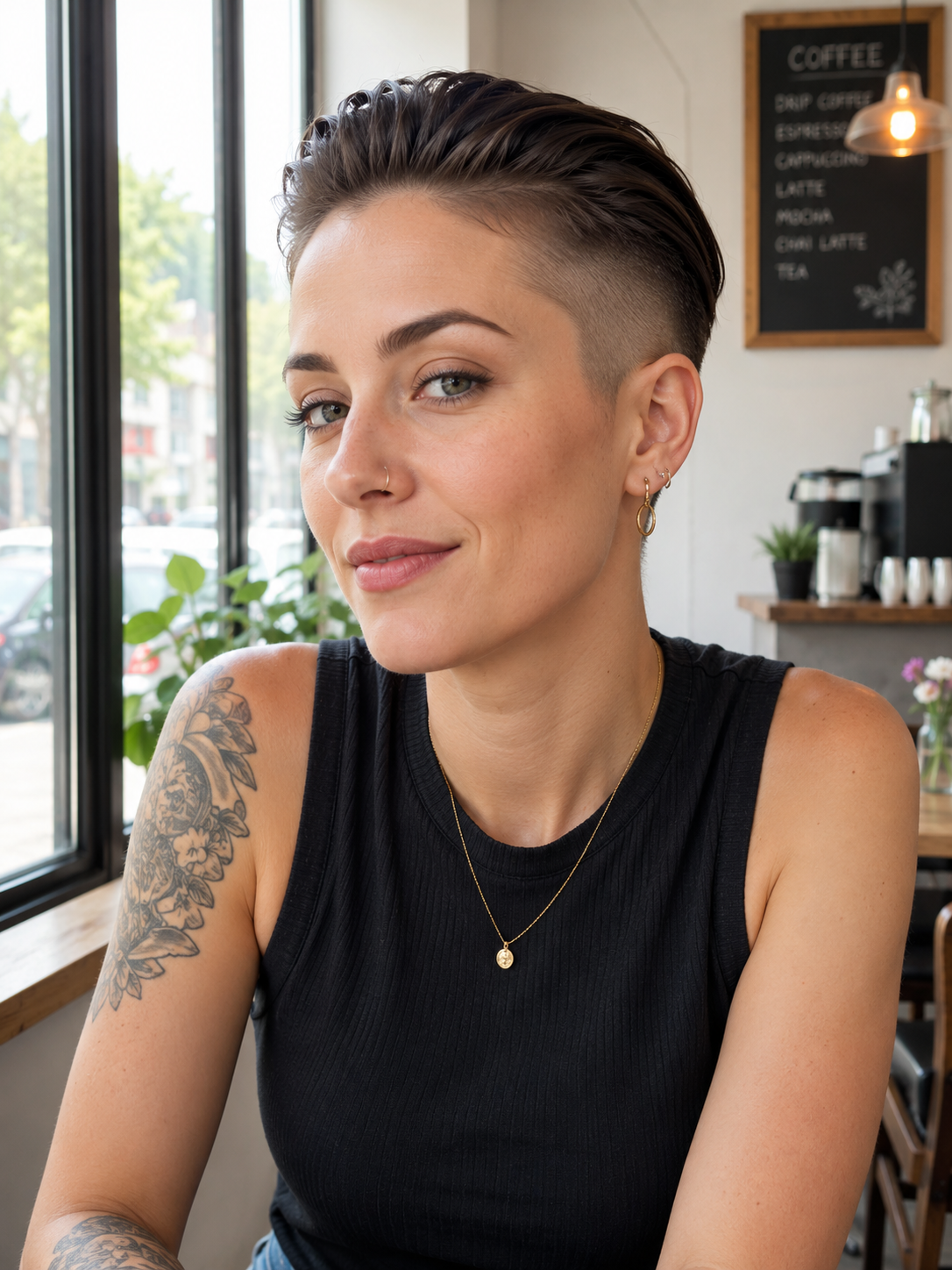
Styling is simple, just push the longer top hair to one side or slick it back. Keep in mind the shaved section needs touch-ups every few weeks to maintain the crisp line against the longer hair on top.
Asymmetrical Long Pixie
One side cut noticeably shorter than the other gives this pixie an edgy, sculptural quality. It works especially well for square or angular faces, since the uneven lines soften strong jawlines.
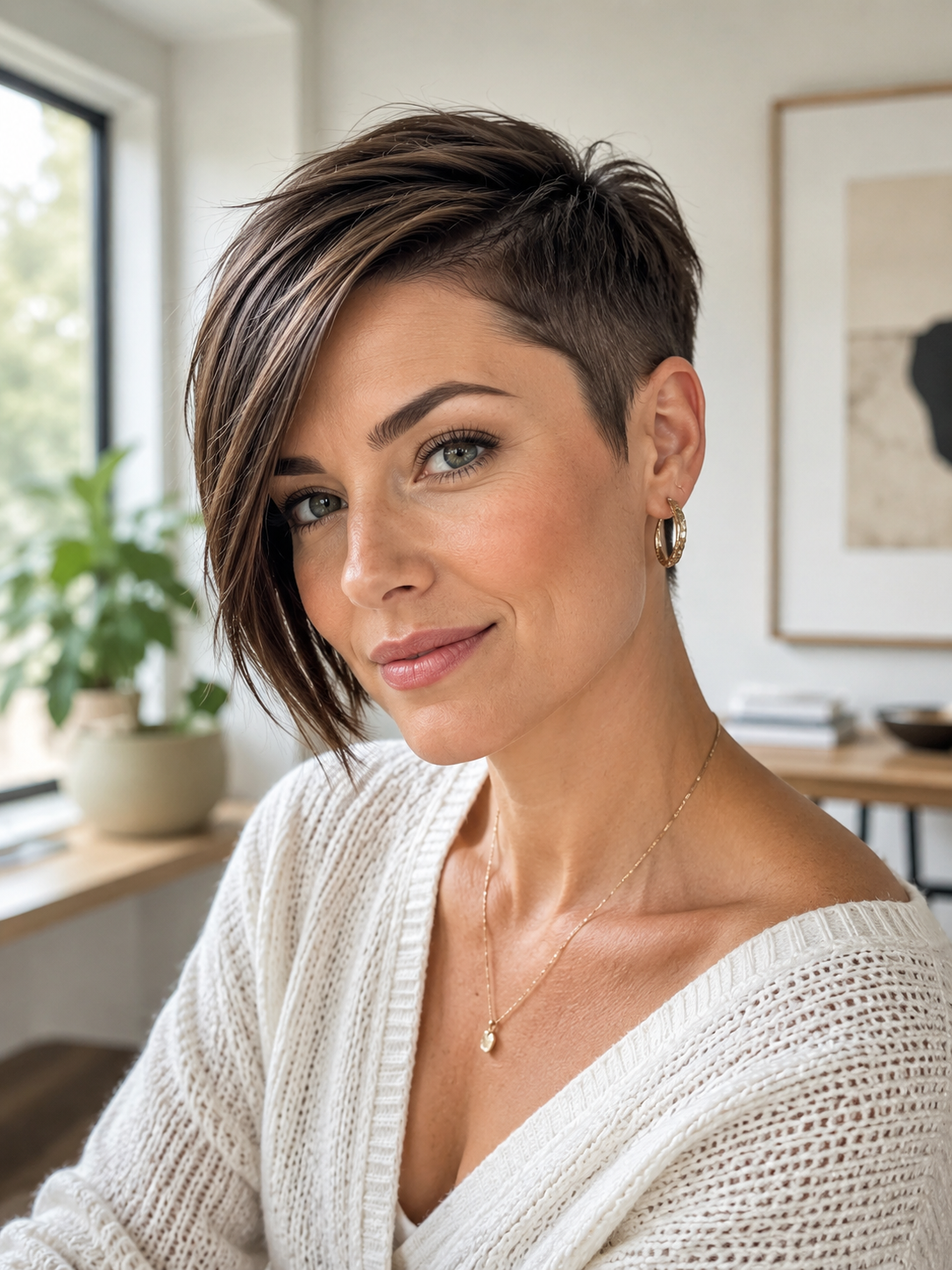
A flat iron helps keep the longer side sleek and directional. This isn’t a cut for anyone who wants symmetry, but for the right person it’s striking.
Long Pixie with Micro Bangs
Tiny, blunt bangs paired with longer sides create an unexpected contrast that feels modern rather than retro. The bangs sit high above the brow while the rest of the cut stays long and loose.
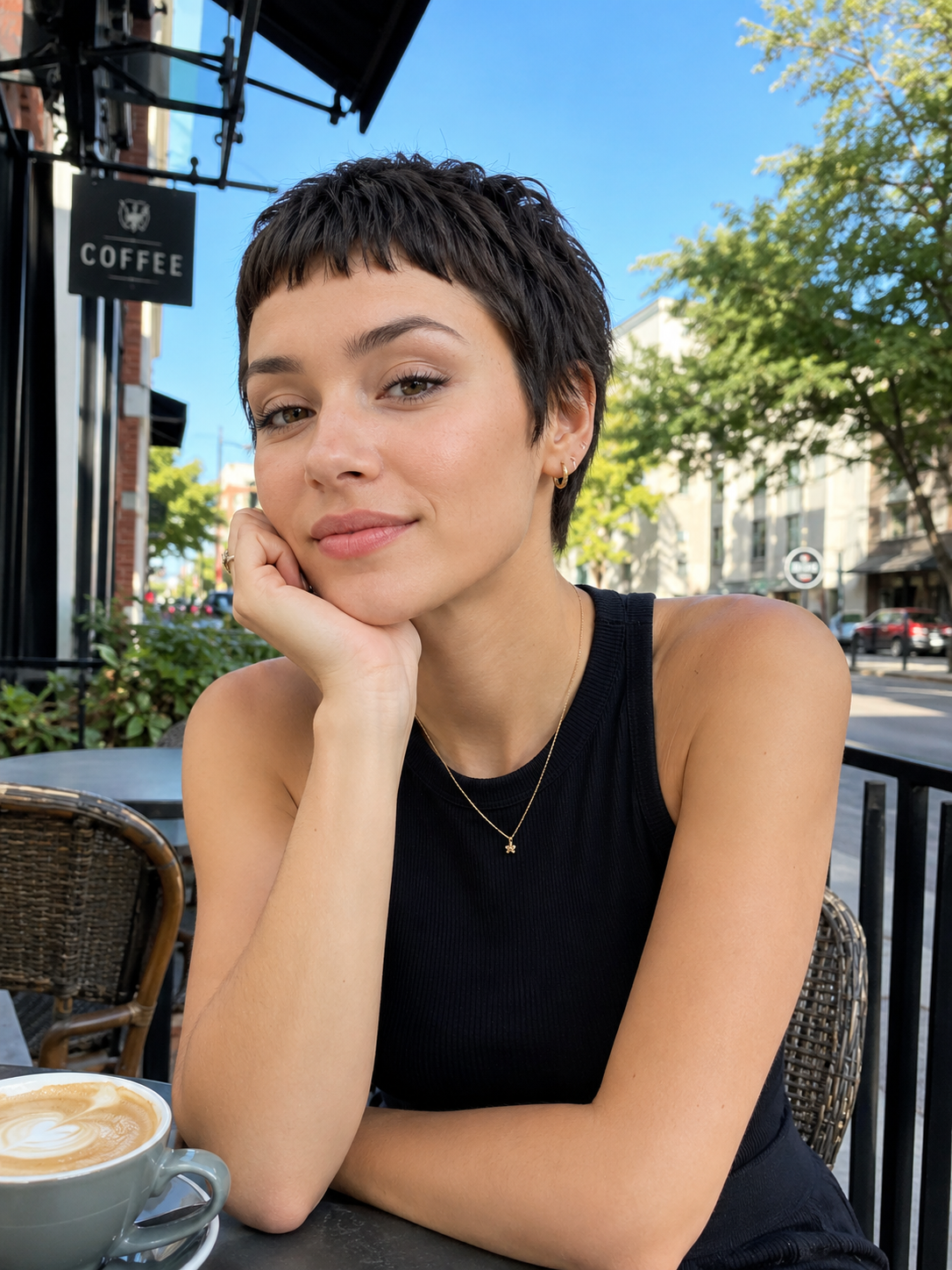
This combination draws attention straight to the eyes. It suits oval and heart face shapes particularly well, since the forehead stays mostly exposed.
Sleek Wet-Look Long Pixie
Skip the texture entirely and go smooth. A lightweight gel worked through damp hair and combed flat creates a polished, almost architectural finish.
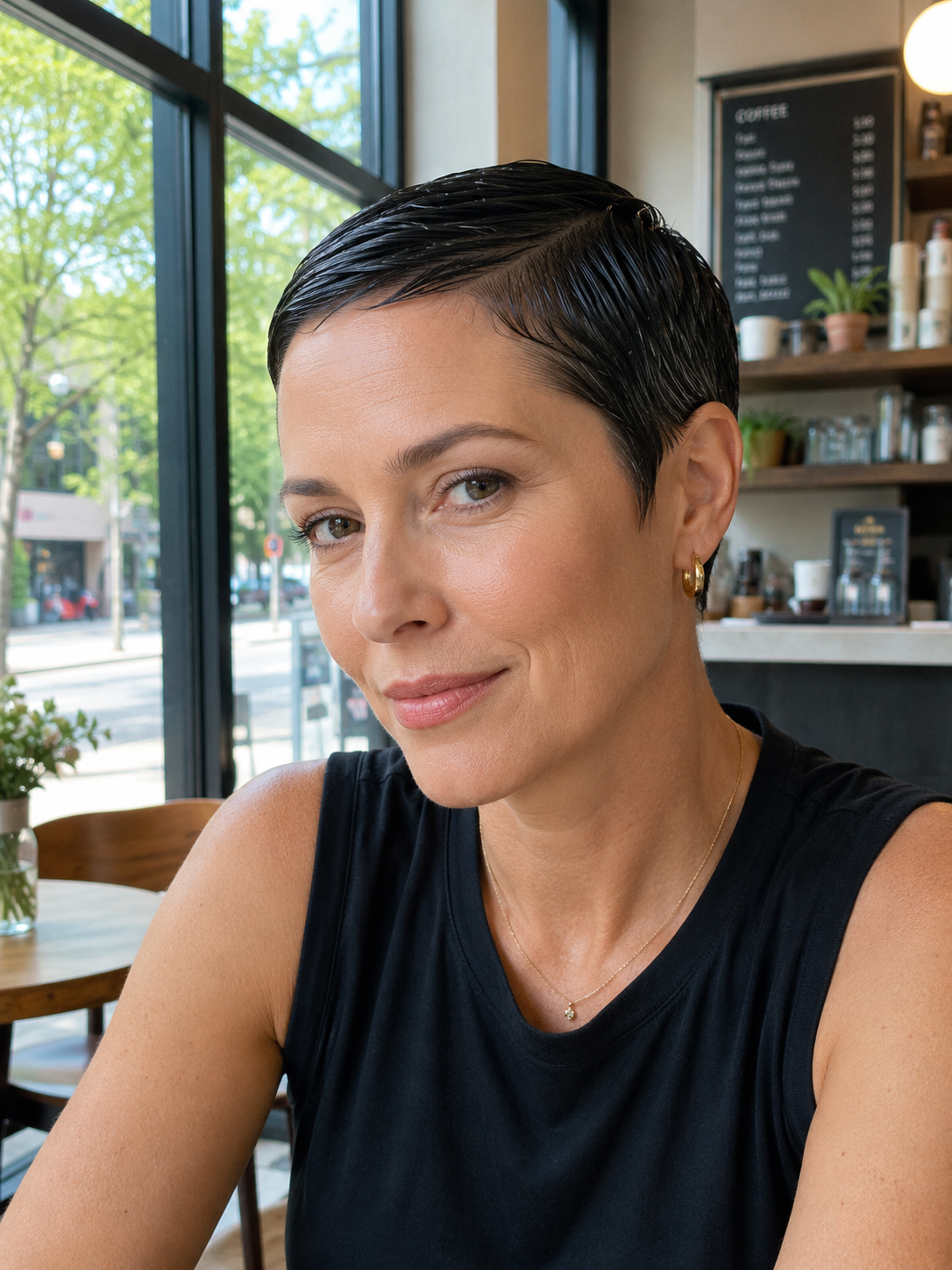
This look leans editorial, it photographs beautifully but does require a bit more product than the average pixie. Straight hair takes to this style easiest, though a flat iron can smooth out waves first.
Shaggy Long Pixie
Choppy, uneven layers give this pixie a lived-in, undone quality. The layers are cut with more texture around the crown, so the shape looks intentionally messy rather than sharp. A dry texture spray is the one product this style really needs, it adds grip so the layers hold their separation through the day.
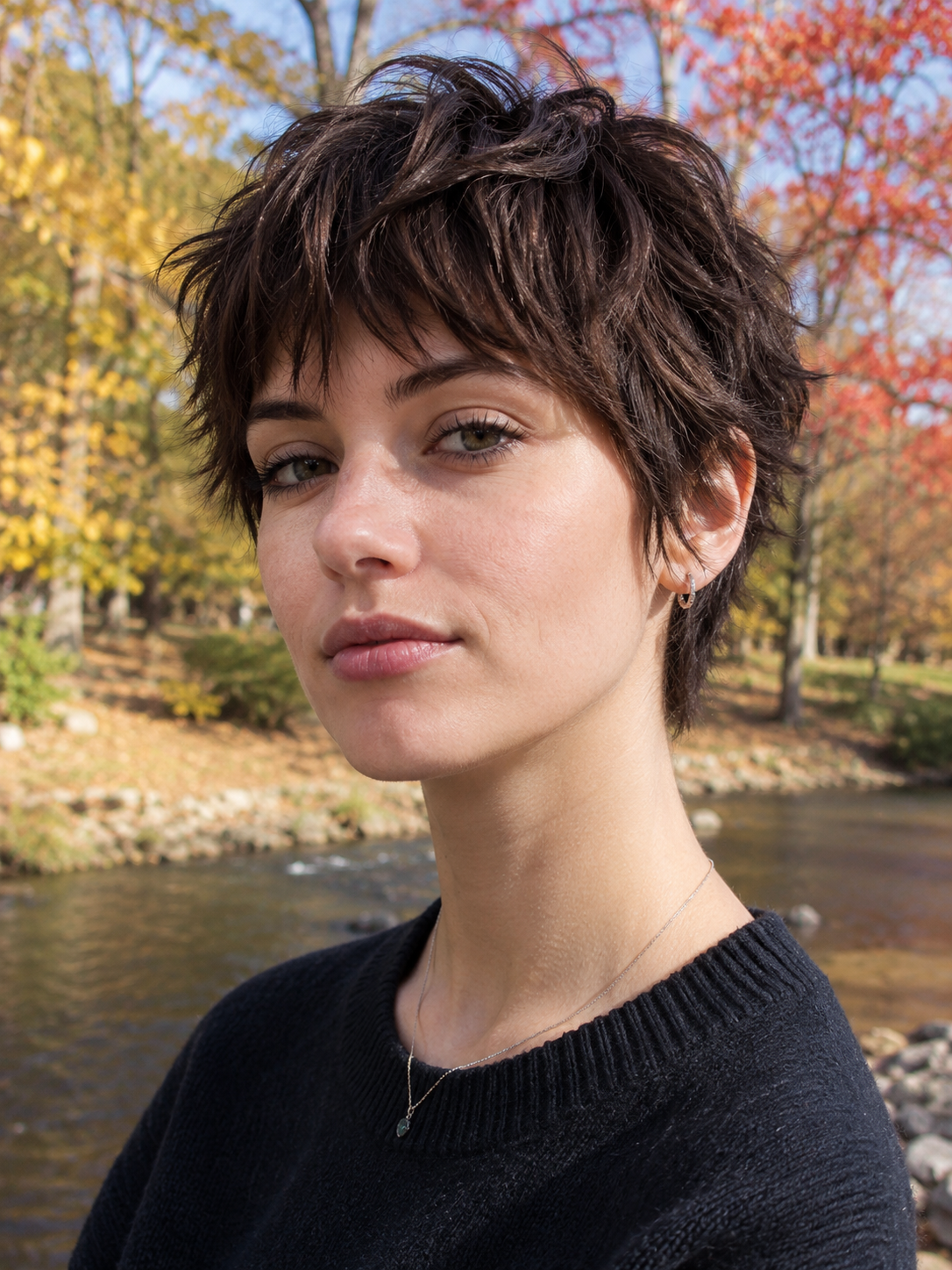
Great for anyone who wants short hair without a polished, precise finish.
Tapered Nape Long Pixie
The back gradually shortens from crown to nape instead of stopping abruptly, which gives the whole cut a cleaner, more refined outline.
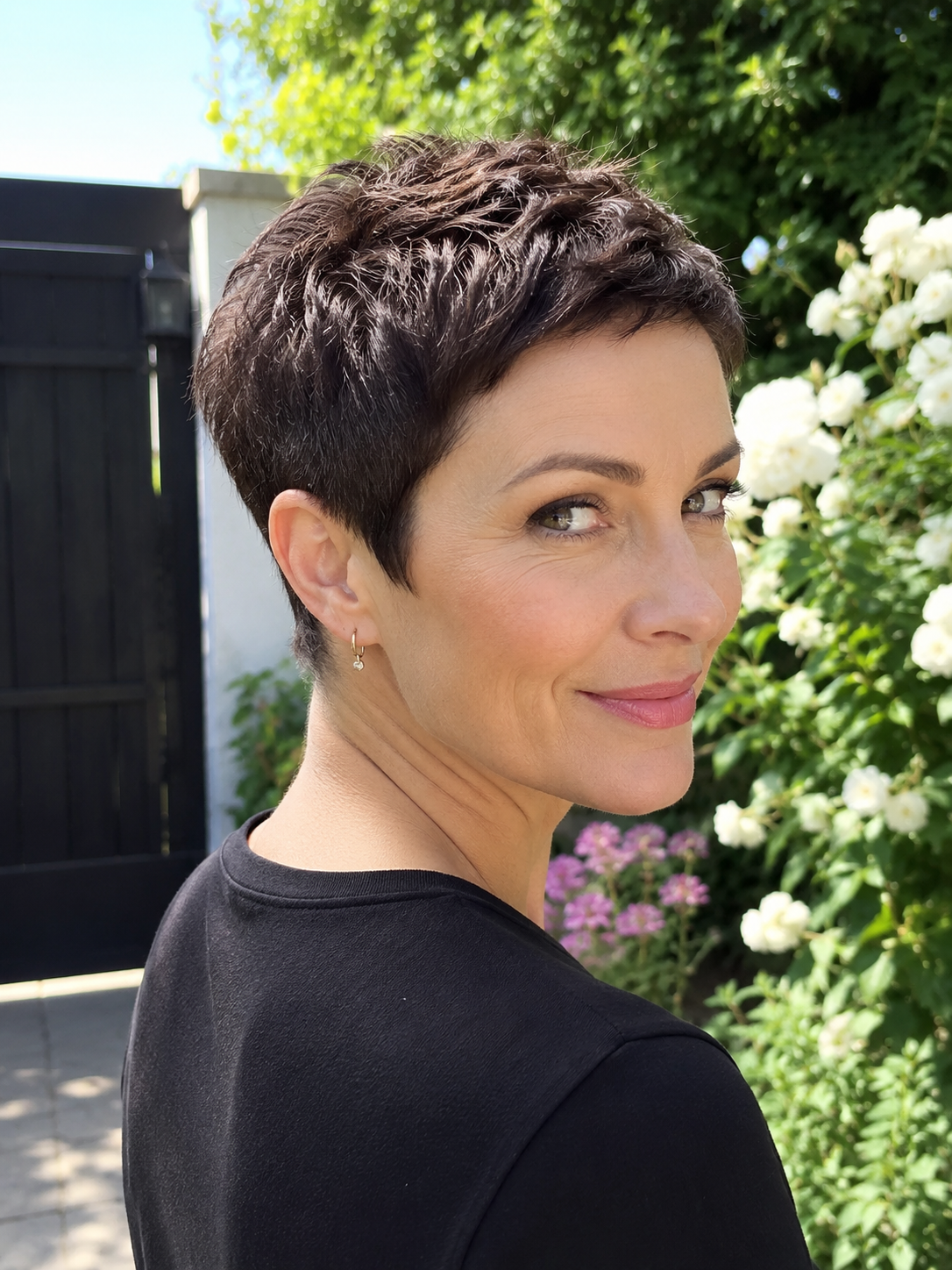
Longer layers on top balance the closely tapered back. This version tends to grow out more gracefully than blunt-cut pixies, since there’s no harsh line to maintain between salon visits.
Razored Long Pixie for Thick Hair
Thick hair can overwhelm a pixie shape if it’s not thinned correctly. A razor cut removes bulk at the root while keeping the ends soft, so the style sits closer to the head instead of ballooning out.
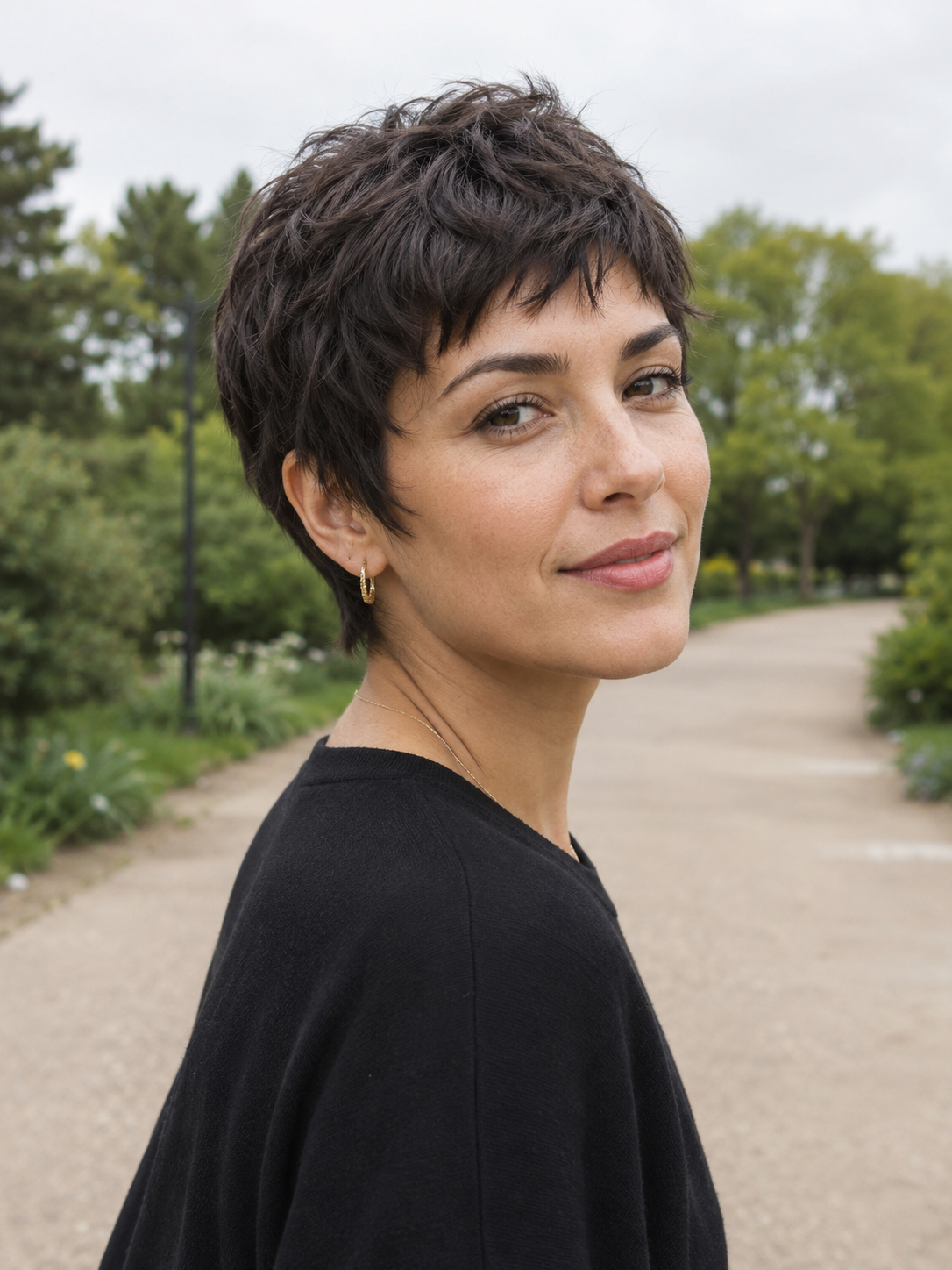
This technique also helps thick, straight hair hold curl or wave better than blunt scissor cuts do. Ask specifically for razoring at the consultation.
Volumizing Long Pixie for Fine Hair
Fine, straight hair tends to fall flat under length, which is exactly why a long pixie with shorter underlayers works so well. Cutting the underneath hair shorter than the top creates the illusion of thickness.
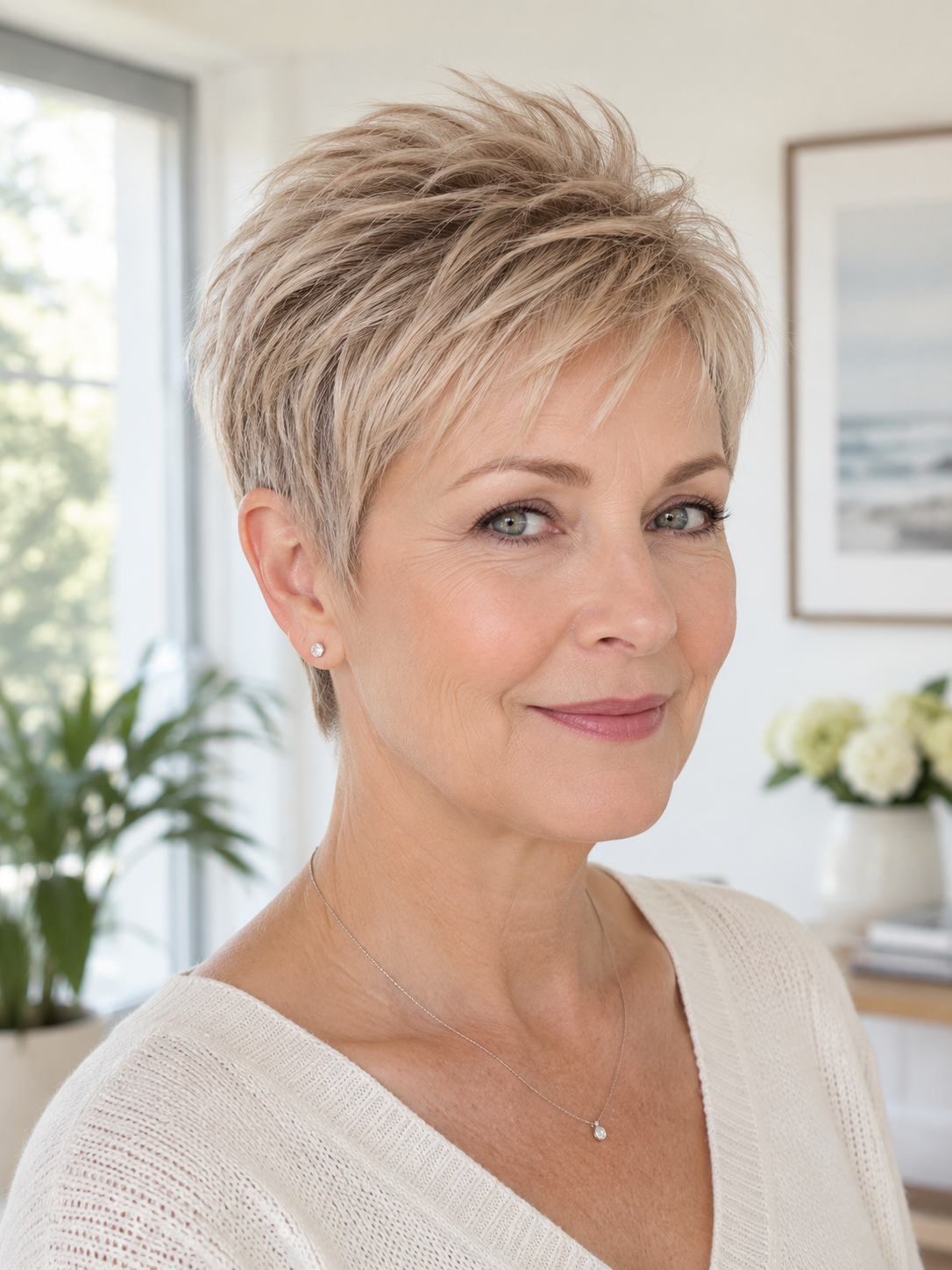
A root-lifting mousse applied before blow-drying adds staying power. This is one of the most flattering short cuts for anyone dealing with thin or fine strands.
Silver Long Pixie
Gray hair paired with a long pixie looks deliberate rather than accidental, especially with a bit of length left around the crown for softness. If you’re coloring toward silver rather than growing it out naturally, expect a toning routine with purple shampoo to keep any brassiness at bay.
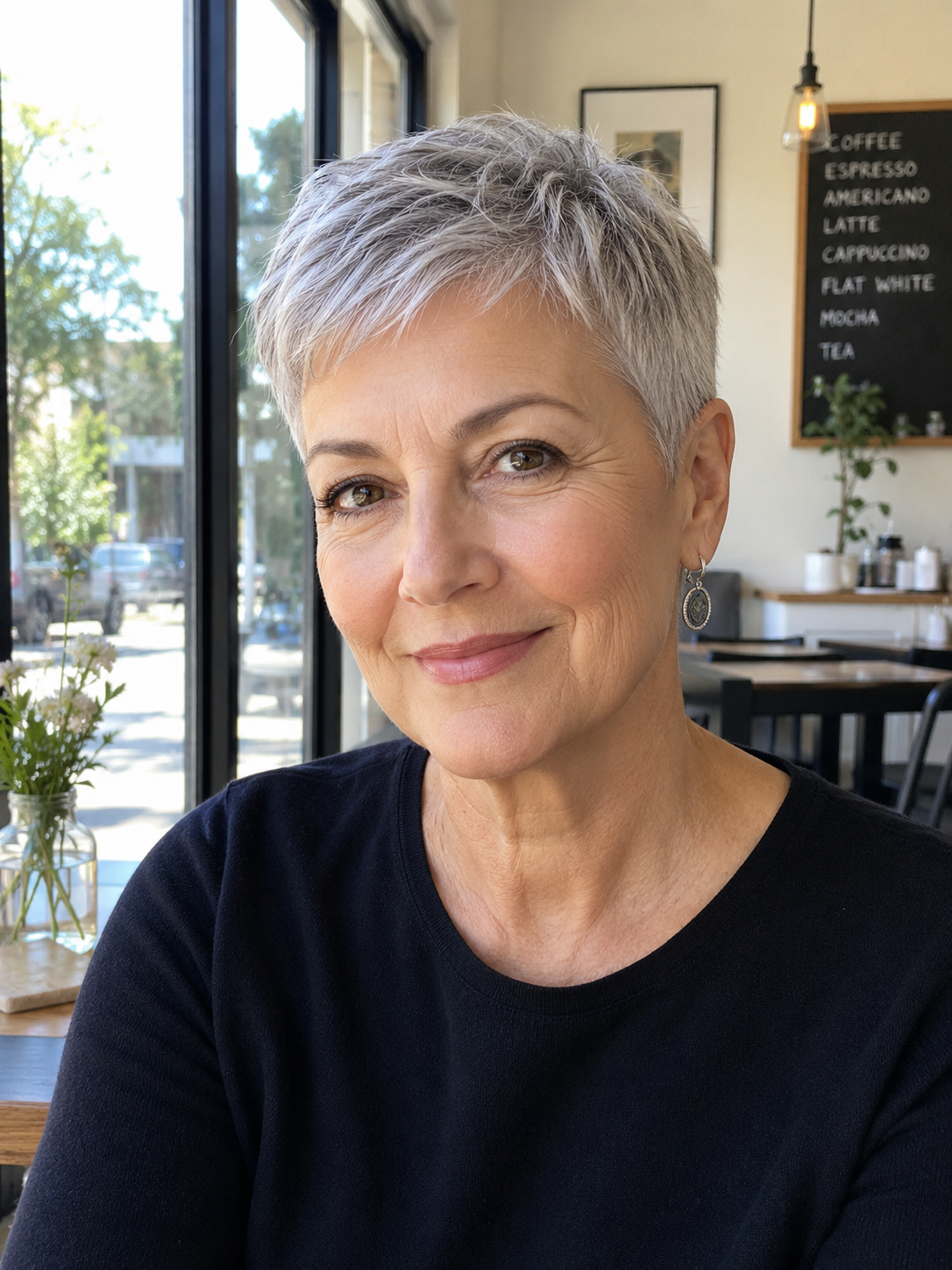
The shorter length actually makes the transition to gray easier to manage overall.
Balayage Long Pixie
Hand-painted highlights add dimension without the commitment of an all-over color change. On a long pixie, balayage tends to concentrate around the crown and face-framing pieces, where it catches the light most.
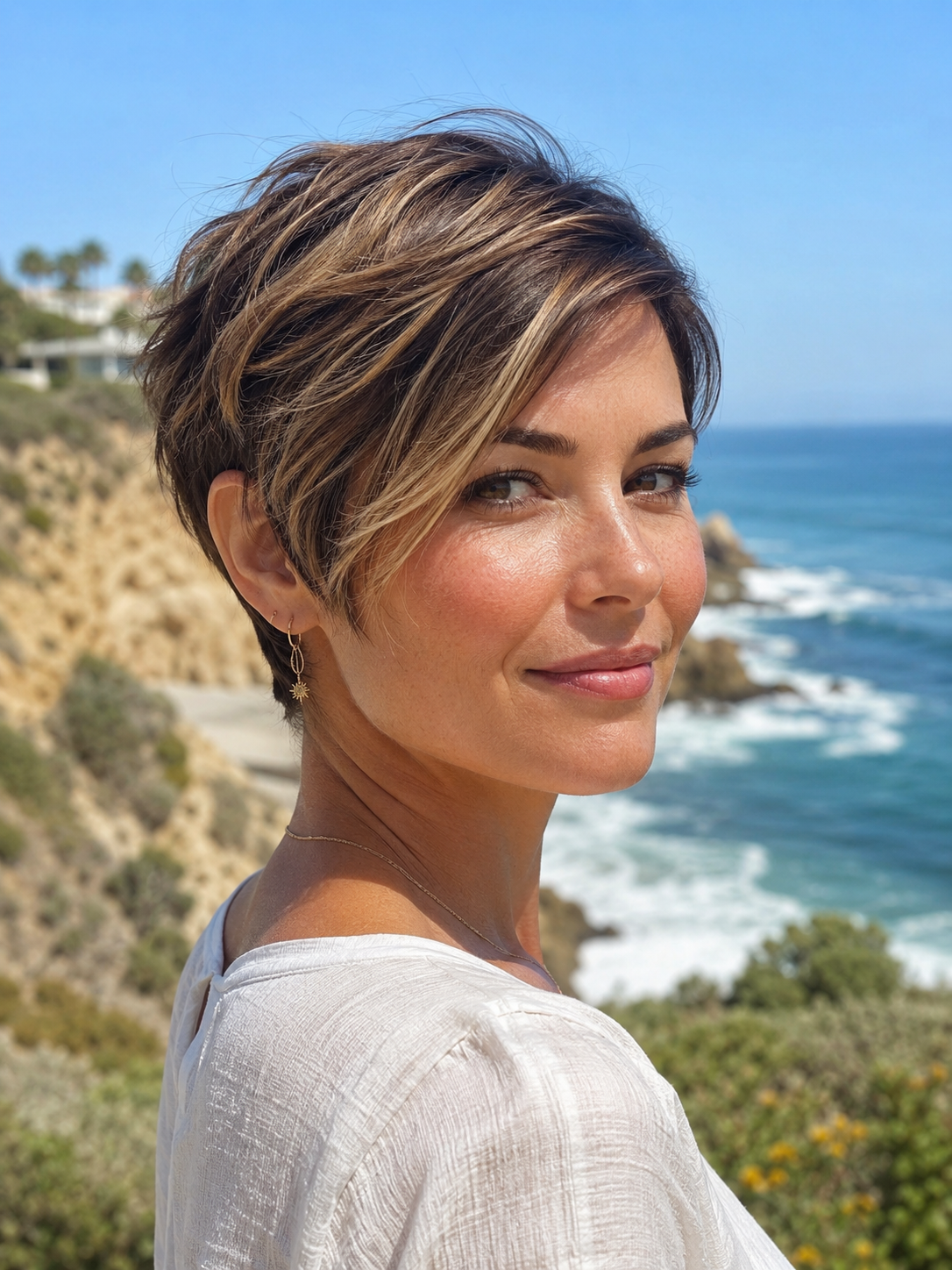
This is a lower-maintenance color option than full highlights since the grow-out stays soft, though vivid or heavily lightened balayage will still need regular toning.
Disconnected Long Pixie
A hard line separates the shorter sides from the longer top, skipping the usual gradual blend. It’s a graphic, deliberate look that works particularly well on straight hair where the line stays crisp.
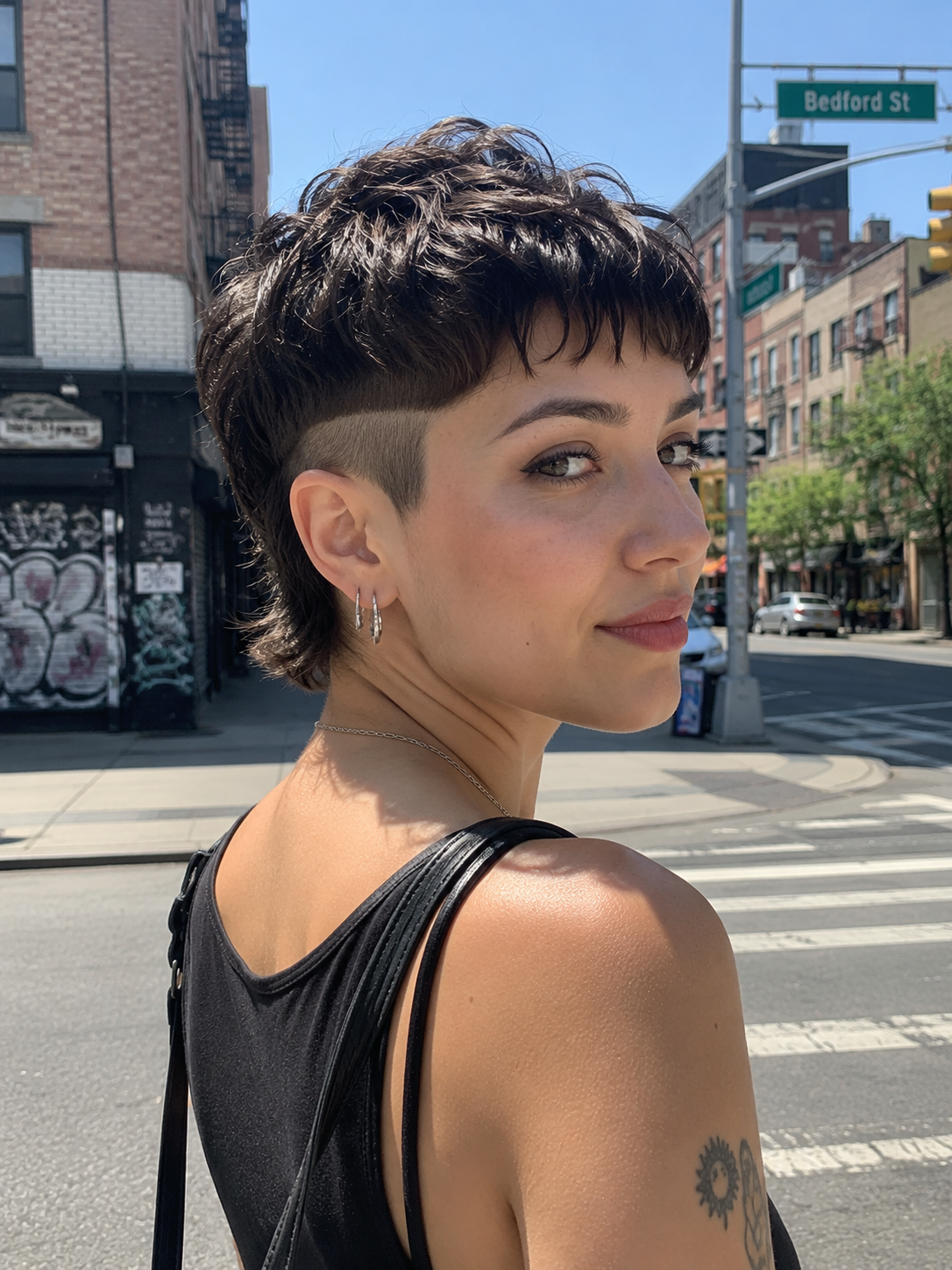
Style the top section forward or to the side to really show off the disconnection. This cut needs sharper, more frequent trims than a blended pixie to keep its shape.
Grown-Out Pixie Bob
When a pixie has been growing out for a few months, it often lands somewhere close to a short bob with pixie-length underlayers still visible underneath.
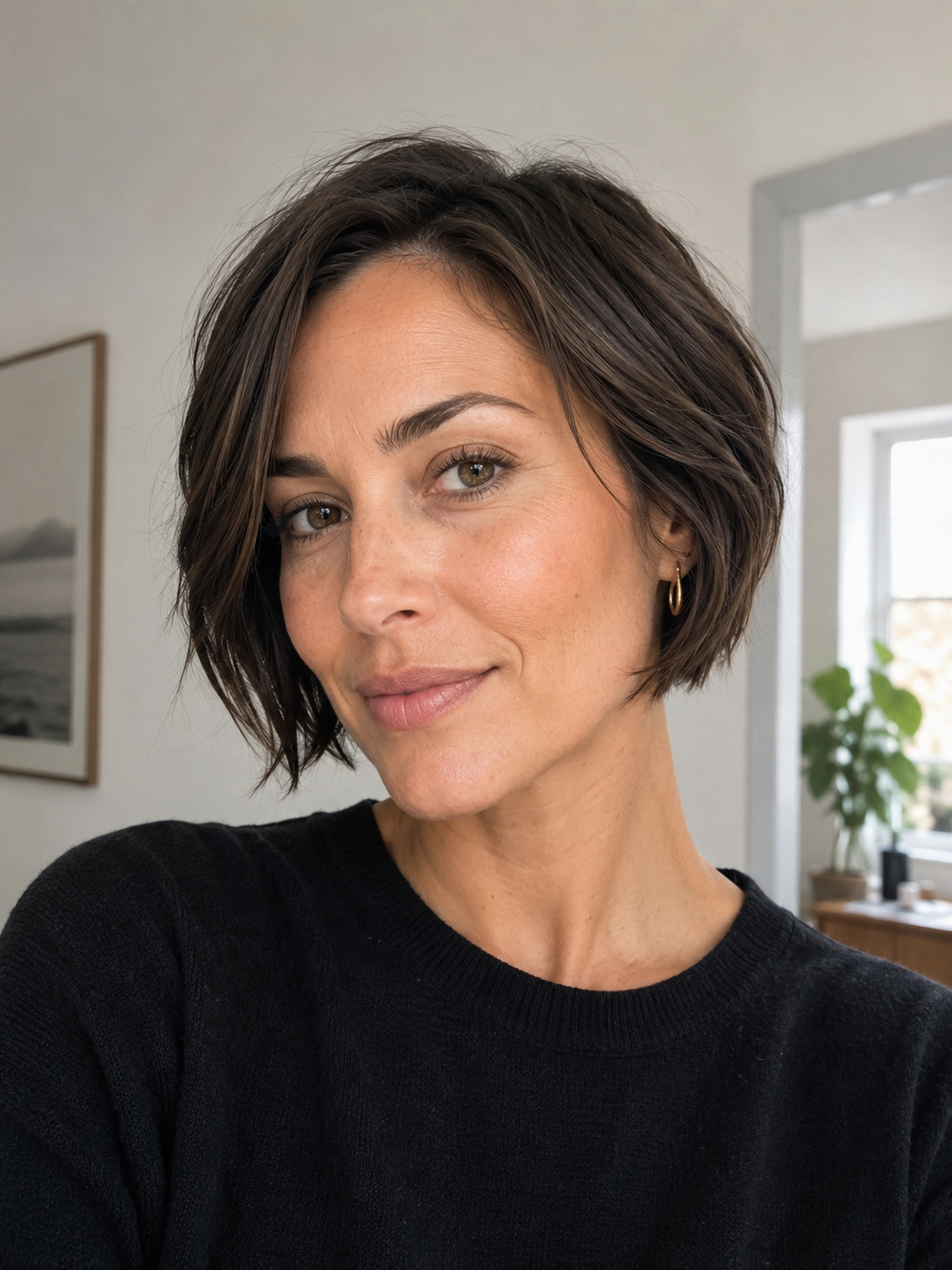
Rather than fighting the in-between stage, this style leans into it with soft layering throughout. It’s a practical option if you’re transitioning out of a pixie without wanting to cut it all off again.
Spiky Long Pixie
A firmer hold product pushed up from the roots gives this pixie height and edge, while the longer pieces on top stay loose enough to move. It leans rock and roll rather than polished.
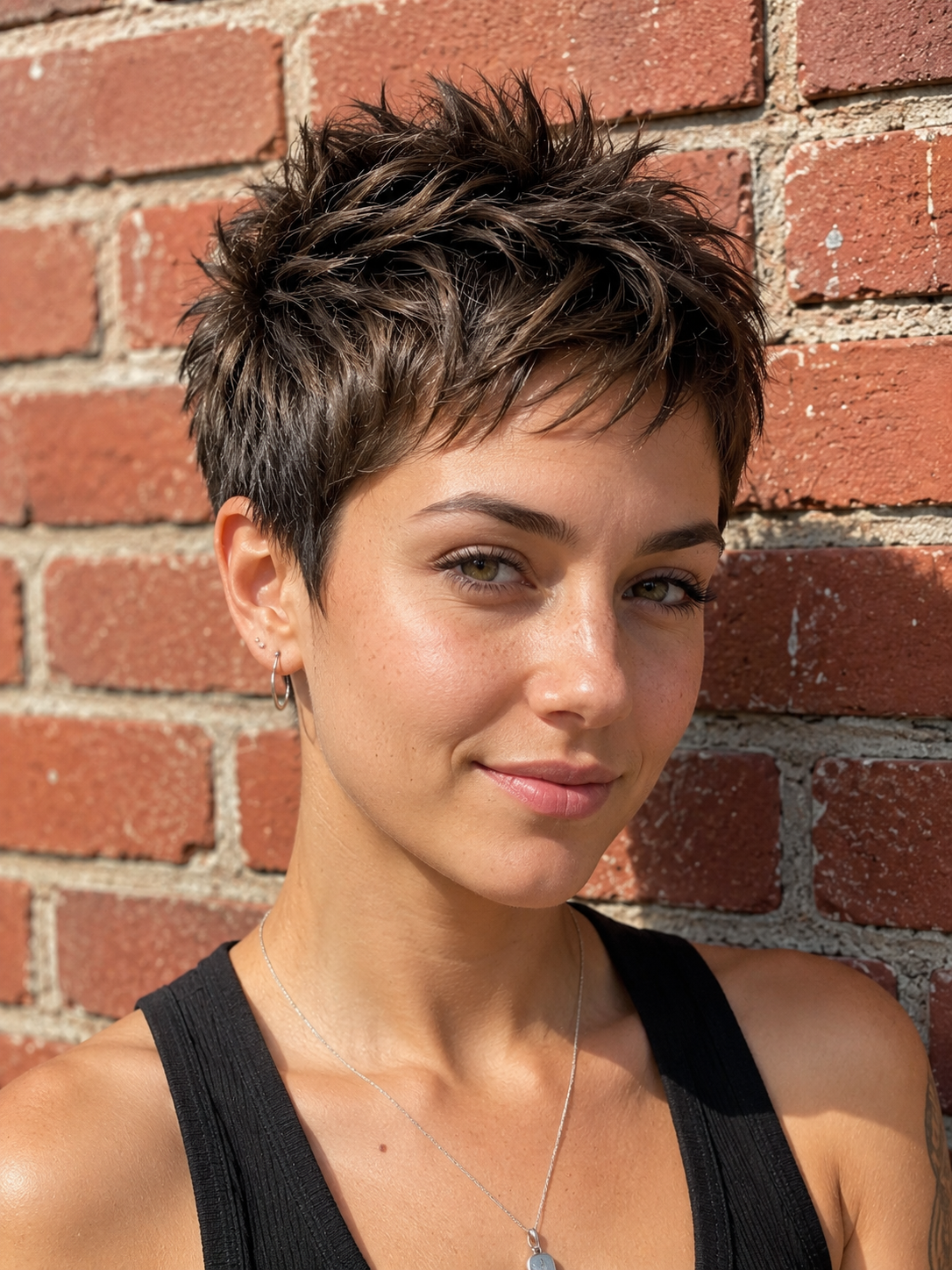
Apply a matte paste to damp hair and finger-style upward for texture, then finish with a light hold spray so it holds through the day without going stiff.
Swoopy Layered Long Pixie
Long, sweeping layers cut at different angles create movement across the whole head instead of concentrating in one section. The result feels dynamic and a little unpredictable in a good way.
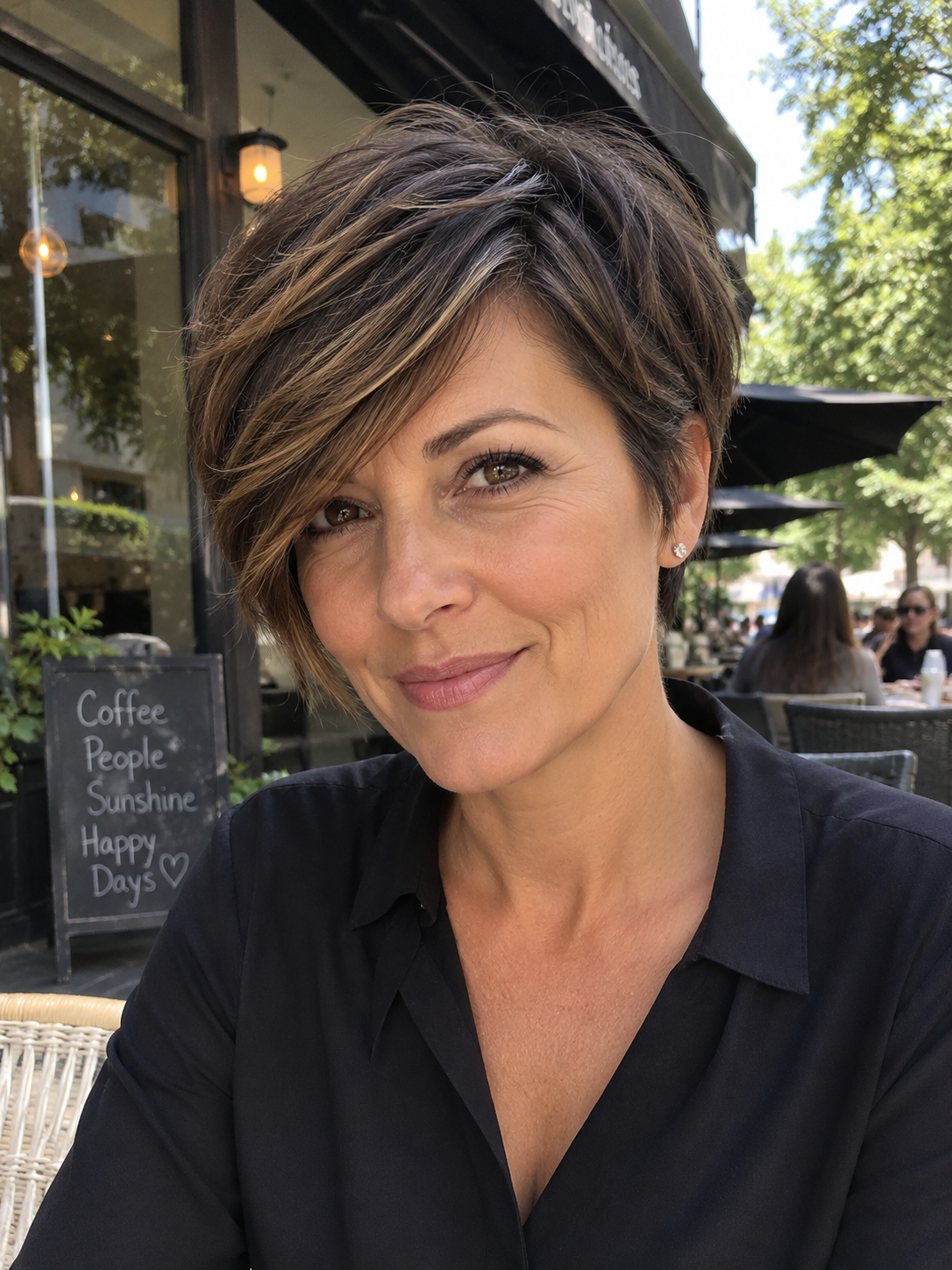
This version works well styled with a round brush for lift, directing the layers to swoop across the forehead or off to one side.