Layers matter more as hair changes with age, not because the rules of cutting change, but because volume and texture stop coming as easily on their own. The right layering placement can do more for a cut’s overall look than length ever will. Here are 18 layered hairstyles built around real volume, movement, and low-effort styling.
Short Layered Pixie
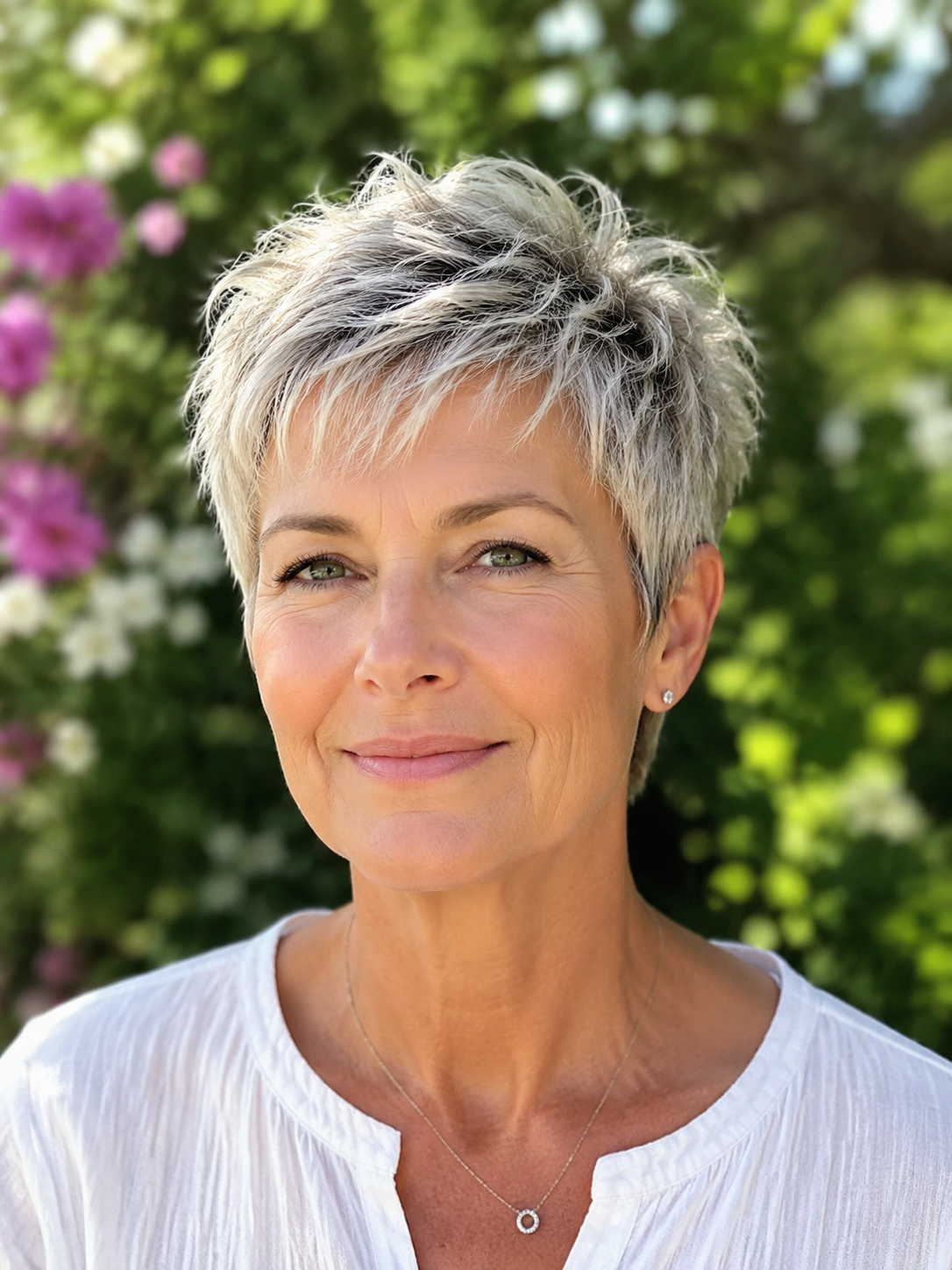
A short pixie with layers concentrated at the crown builds height right where hair tends to fall flattest with age. This is one of the lowest-maintenance options here, since the short length means minimal daily styling time. A volumizing mousse applied at the root before drying makes the biggest visible difference.
Shoulder-Length Layered Cut
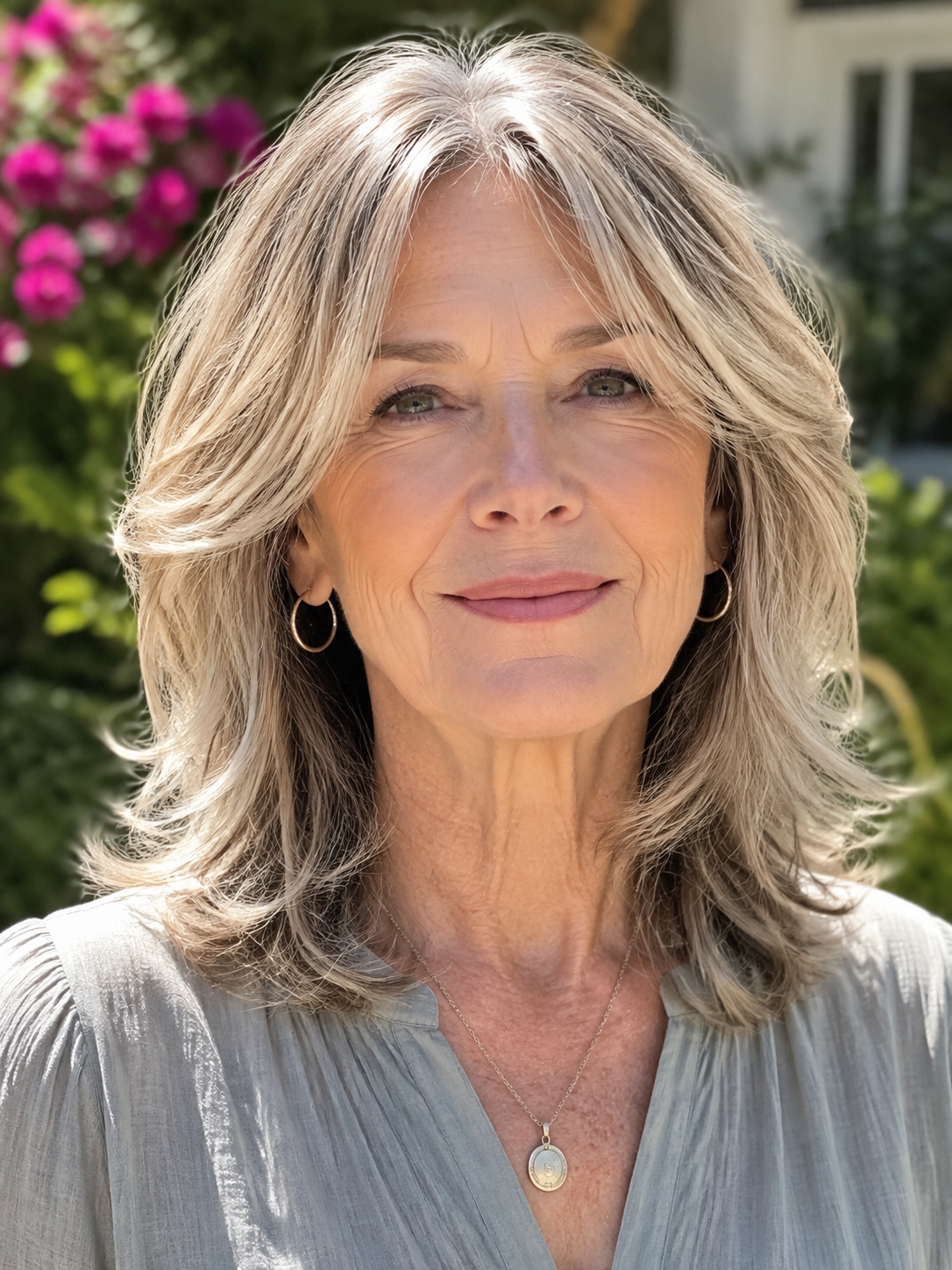
Layers throughout a shoulder-length cut give movement without the heaviness that longer, unlayered hair can bring. Keep the layers on the shorter side rather than long and feathered, since shorter layers hold shape more reliably. A texturizing spray at the roots helps prevent the length from pulling volume flat.
Layered Bob with Curtain Bangs
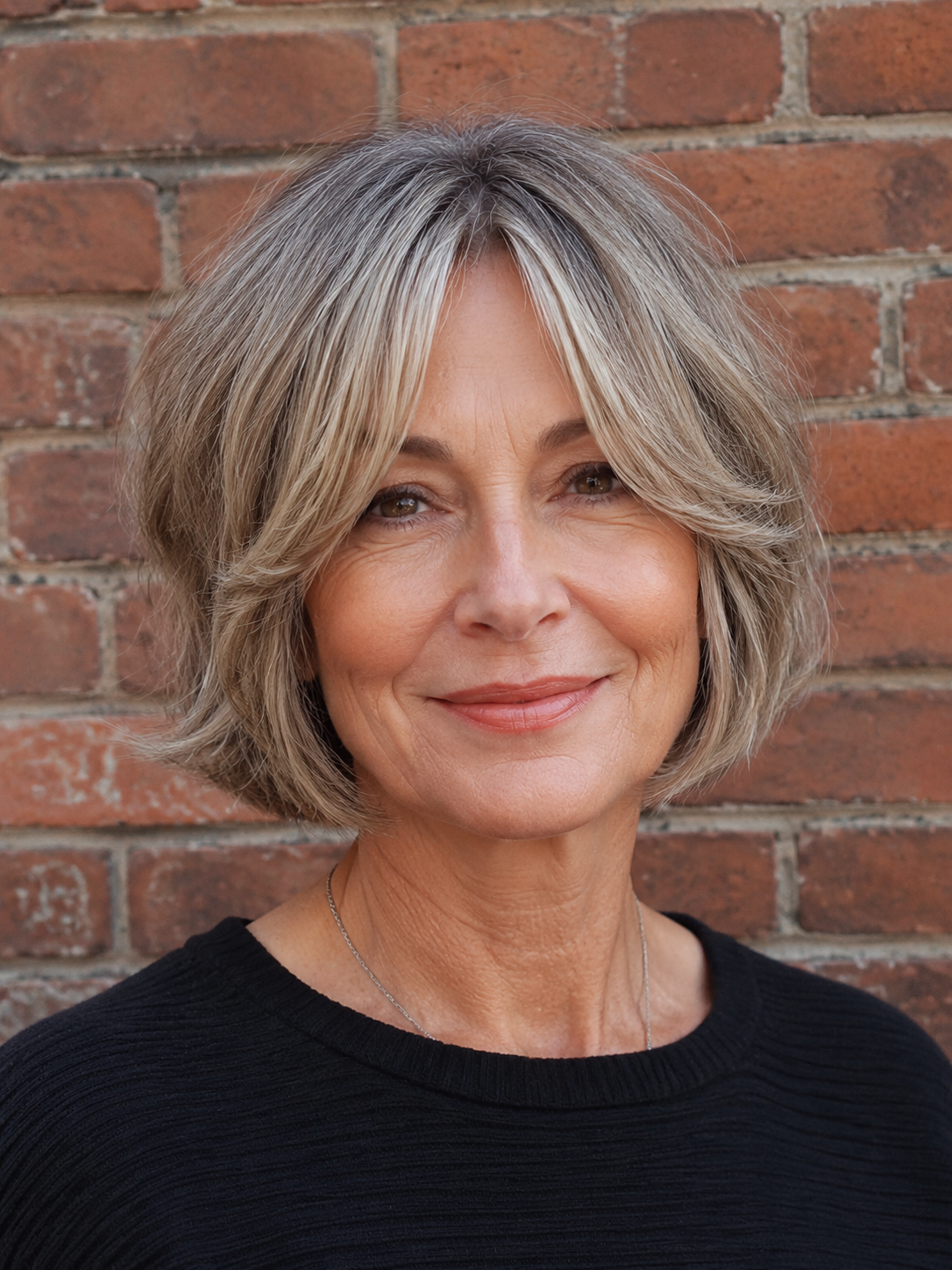
Curtain bangs split at the center and swept toward the temples soften the face without adding bulk to a layered bob. This pairing works especially well since the swept shape naturally lifts away from the forehead rather than lying flat against it. A round brush while blow drying keeps the curtain shape lifted.
Short Layered Shag
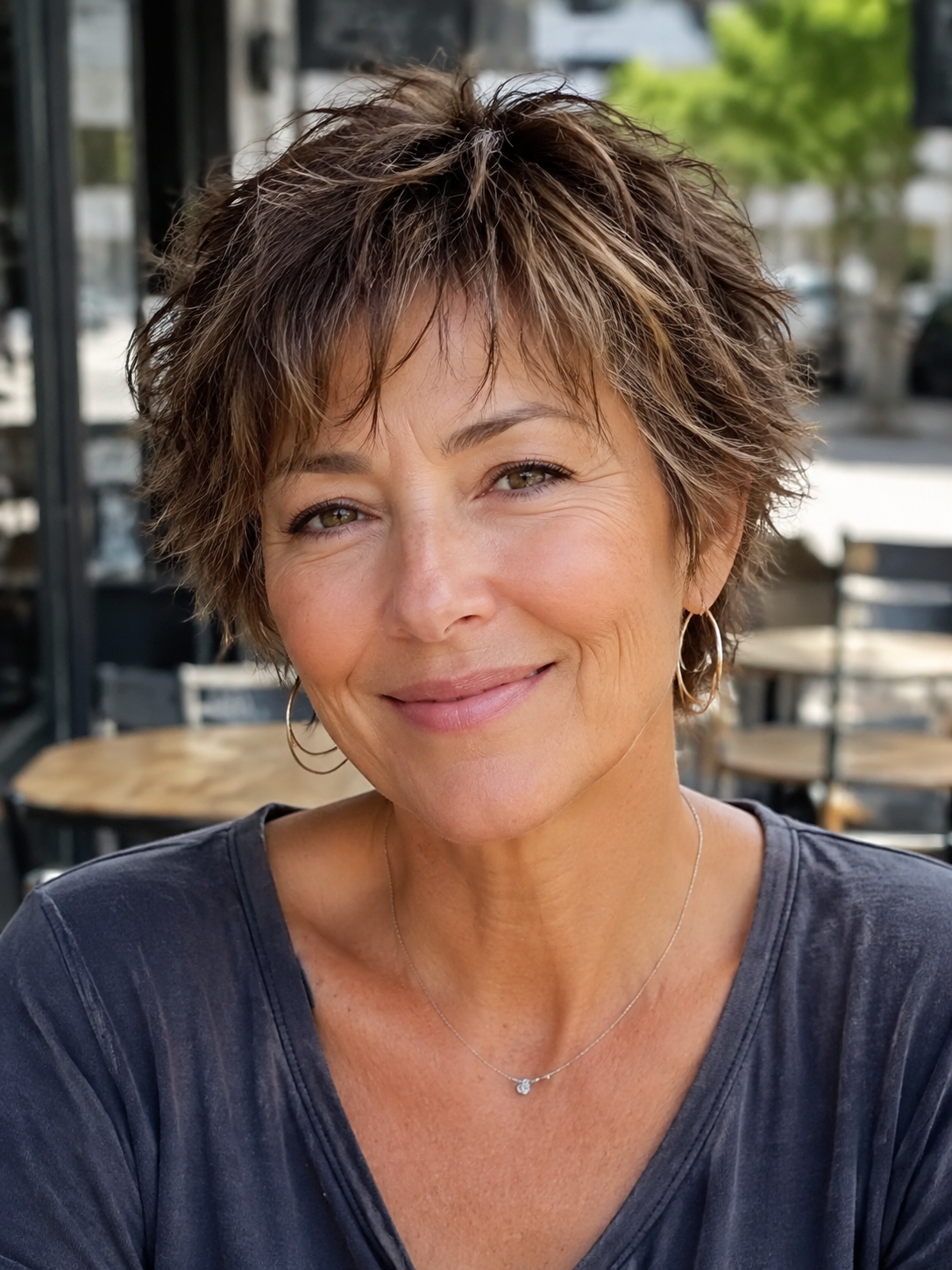
A short shag uses feathered, choppy layers throughout to create texture and the appearance of extra density at a length that stays easy to maintain. The layered ends catch light differently than one smooth section would, which helps add dimension. A texturizing spray at the roots before blow drying adds the final lift this cut depends on.
Layered Bob at the Chin
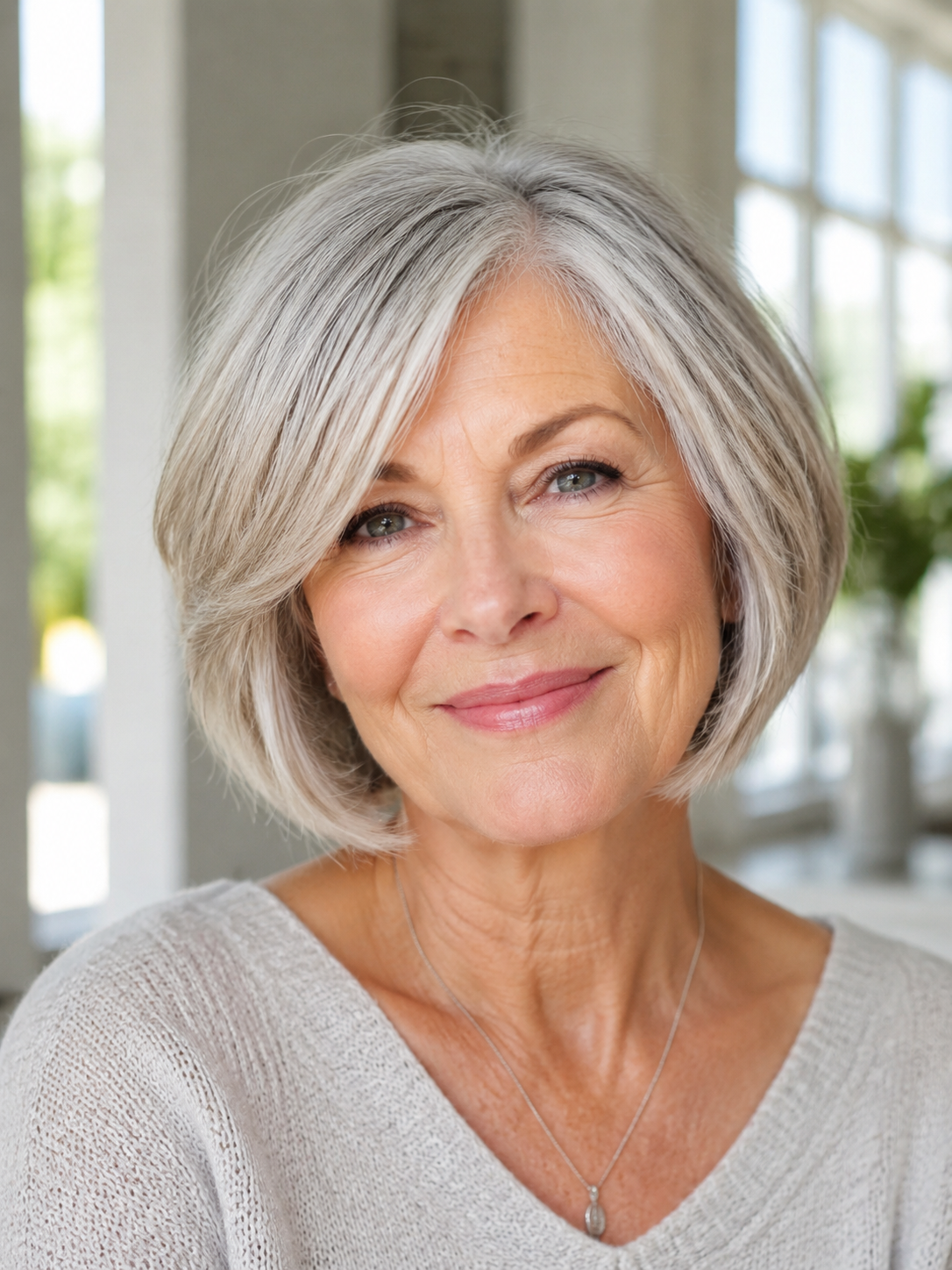
Keeping a bob at chin length, right before weight starts pulling volume down, gives layered hair the best chance at holding shape all day. Soft layering throughout adds movement without extending past the point where thickness starts to matter. A light-hold mousse works better here than a heavier styling cream.
Textured Pixie with Fringe
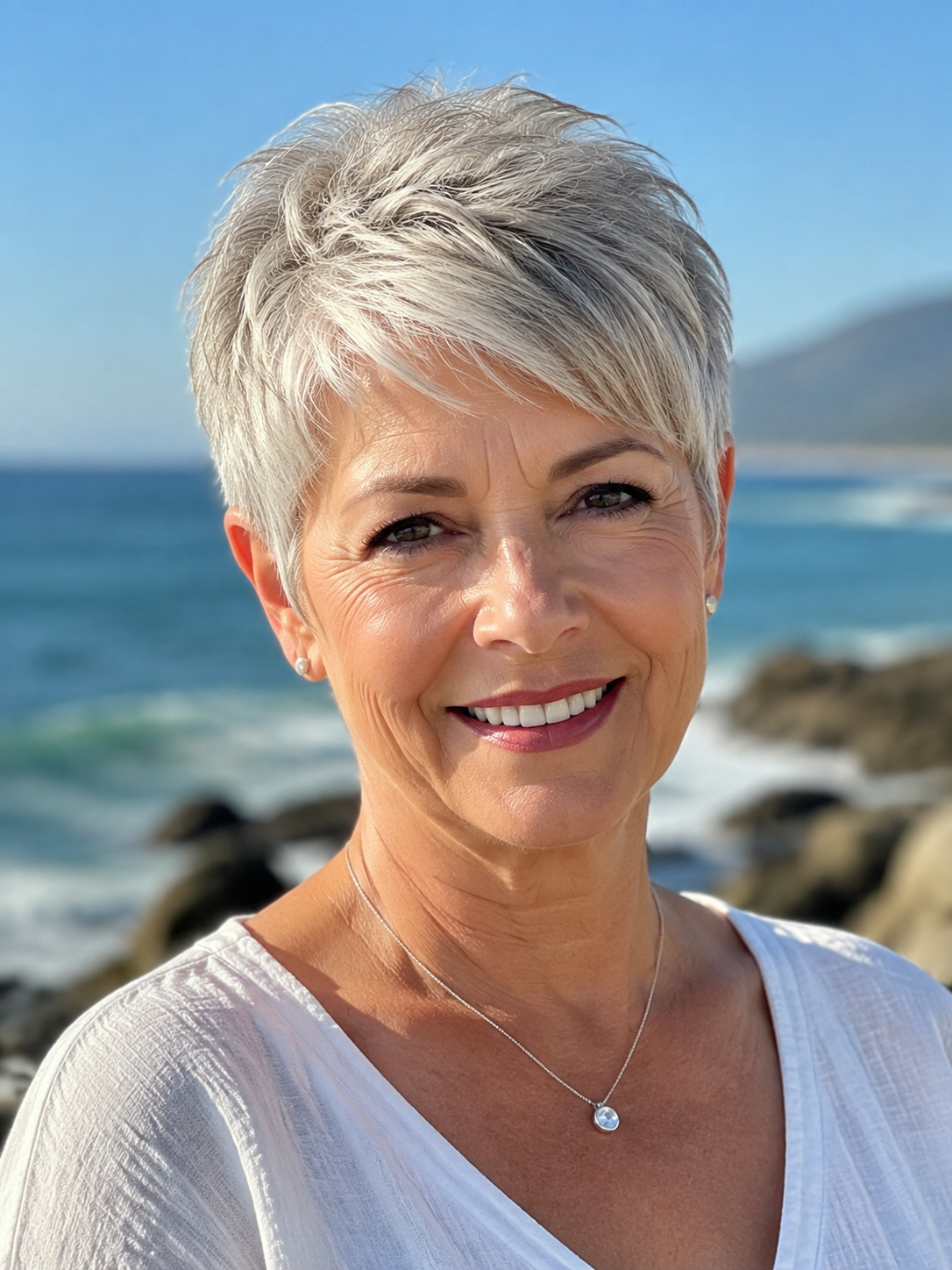
A textured pixie paired with a soft, side-swept fringe frames the face while keeping the overall cut short and low-maintenance. The angled fringe draws the eye diagonally, which tends to be more flattering than a straight, blunt line. Style with a small round brush for lift right at the root.
Stacked Layered Bob
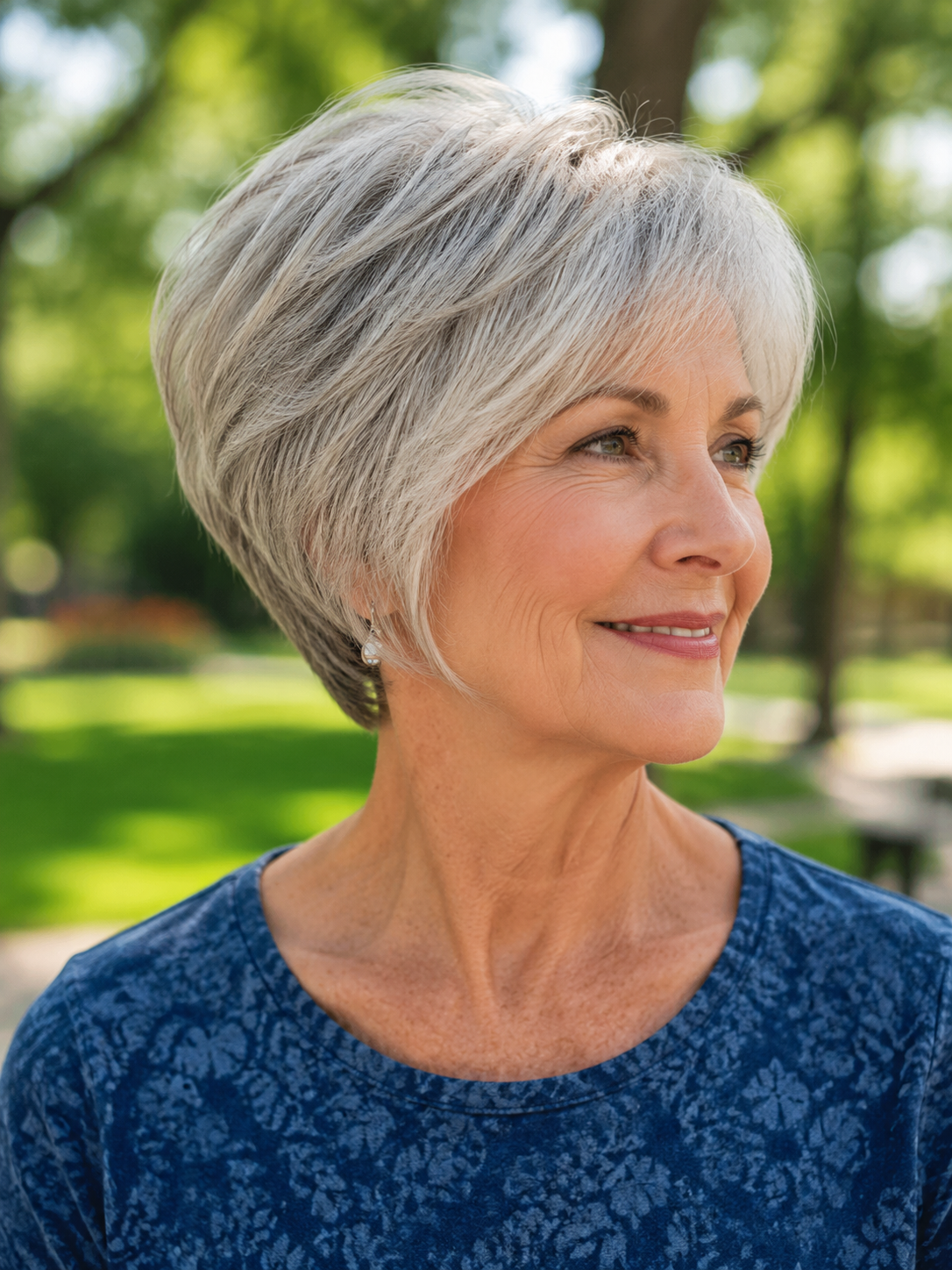
Stacking builds shorter internal layers at the back of a bob, adding lift exactly where hair tends to fall flattest against the head. This technique works best kept above the nape rather than throughout the entire back section. Ask your stylist to leave the front pieces slightly longer for a softer overall shape.
Pixie Bob with Layers
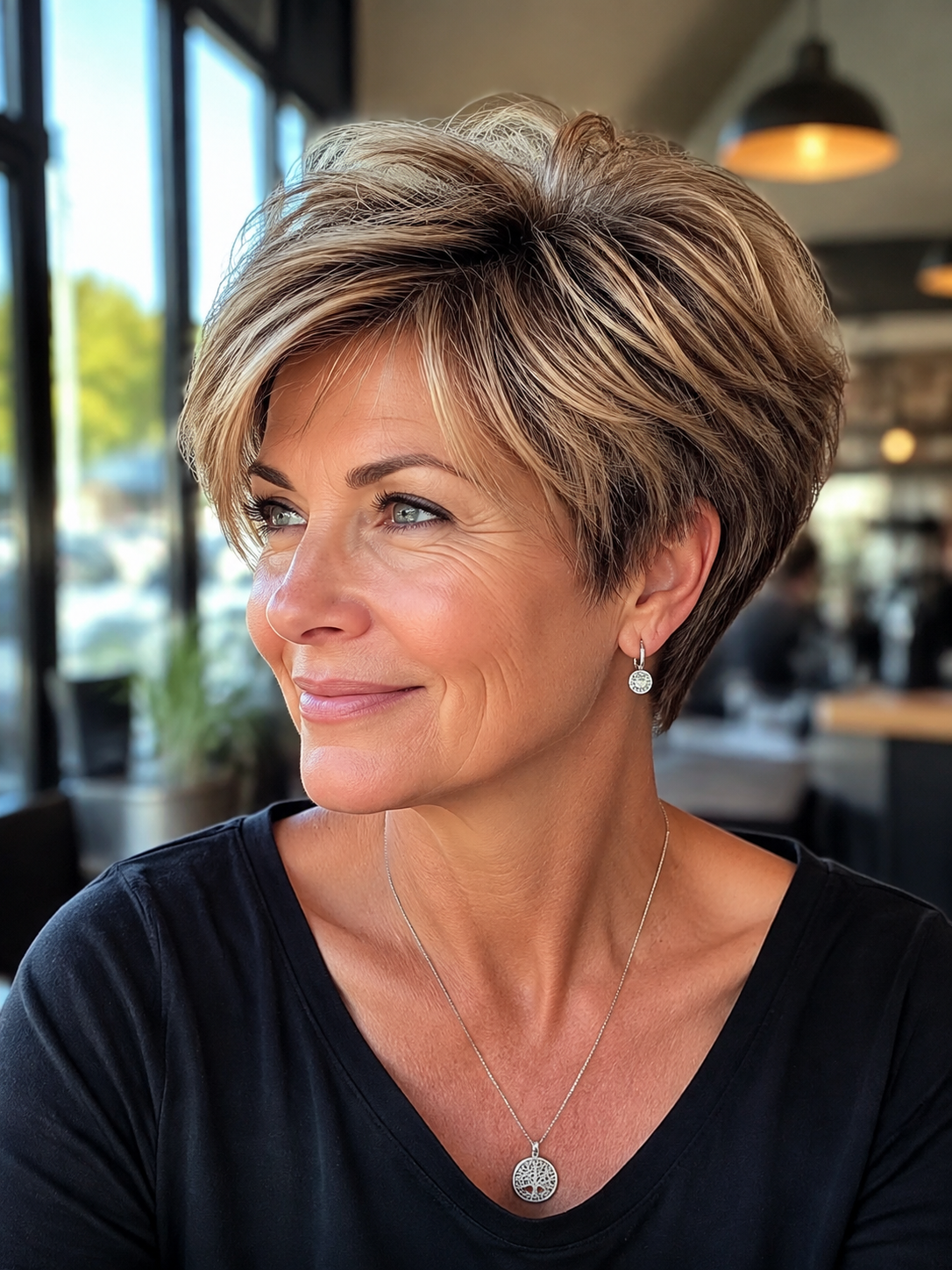
A pixie bob sits slightly longer than a classic pixie while staying short enough to keep daily styling simple. Concentrated layering at the crown builds the height needed most as hair thins with age. A round brush blowout, lifting straight up at the roots, makes a noticeable difference in overall fullness.
Layered Cut with Side Part
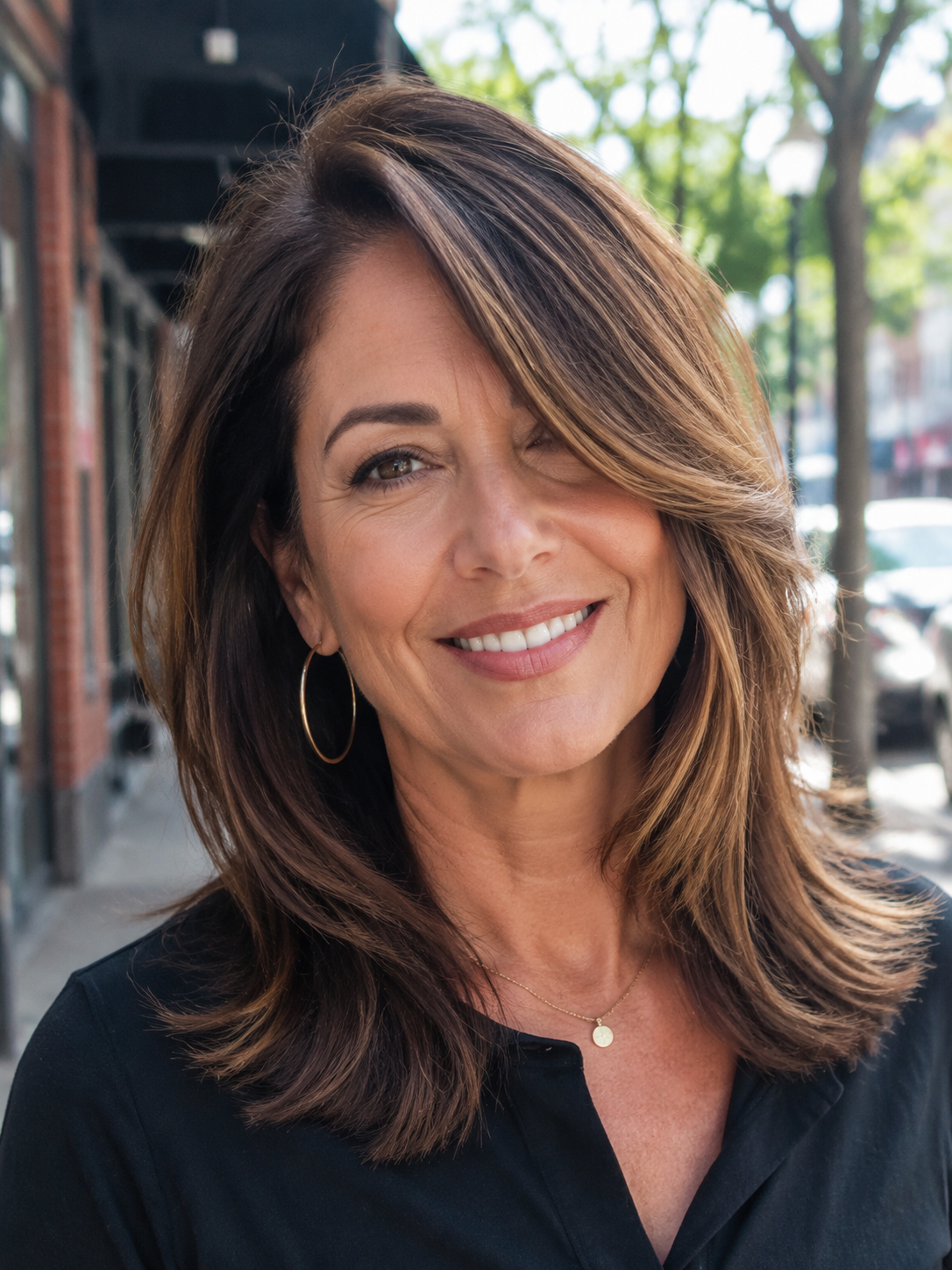
A deep side part naturally shifts volume toward the crown by moving visual weight to one side. Paired with a layered shoulder-length cut, this is one of the easier styles to maintain day to day without much extra effort. A small amount of root-lifting spray keeps the part from falling flat by midday.
Angled Layered Bob
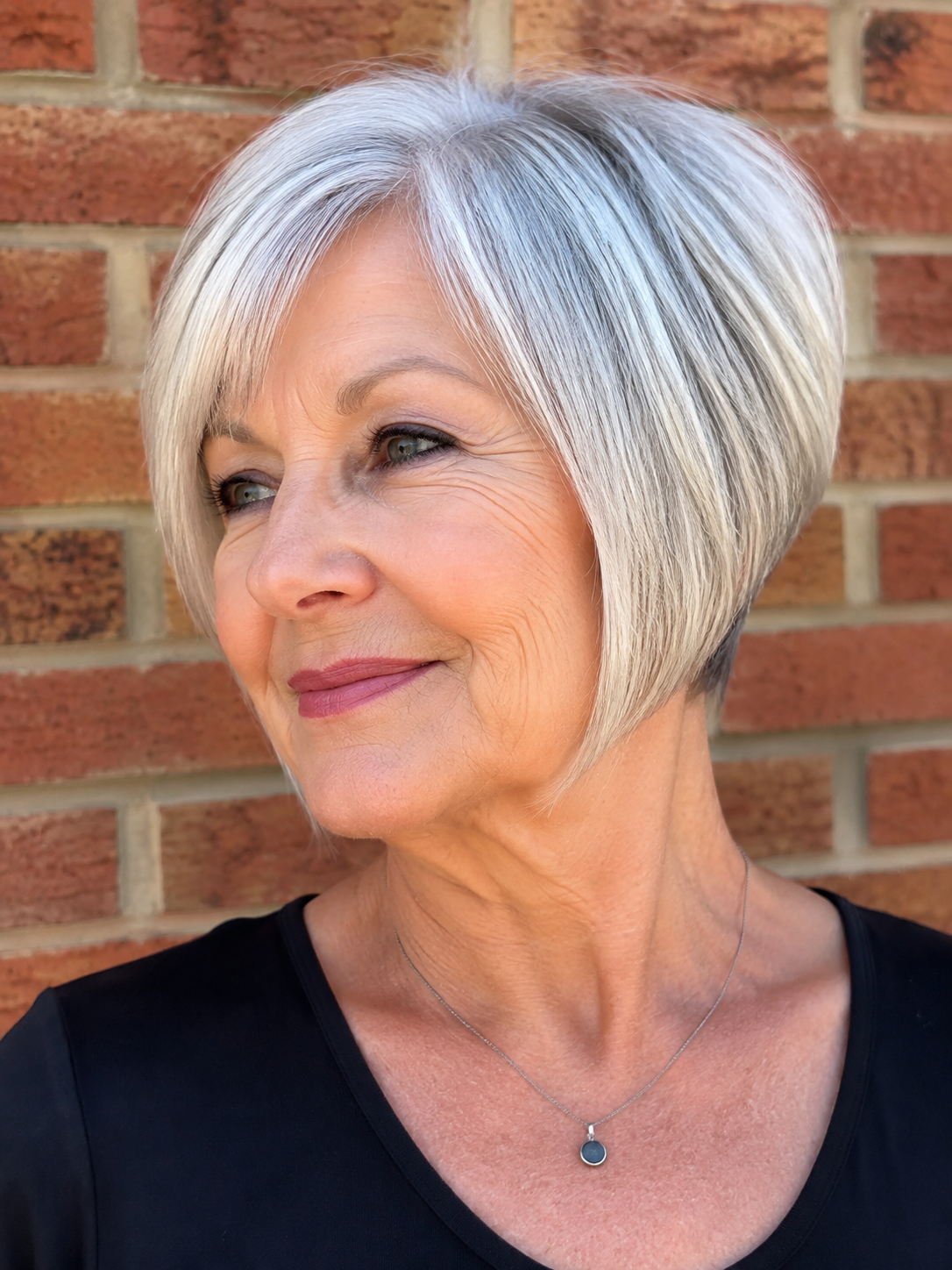
An angled bob, shorter at the back and longer toward the front, creates a diagonal line that draws the eye upward instead of emphasizing thinness at the crown. This shape works especially well styled sleek and straight, since the angle itself adds visual interest without relying on volume. A flat iron pass gives the cleanest version of this line.
Wavy Layered Shoulder-Length Cut
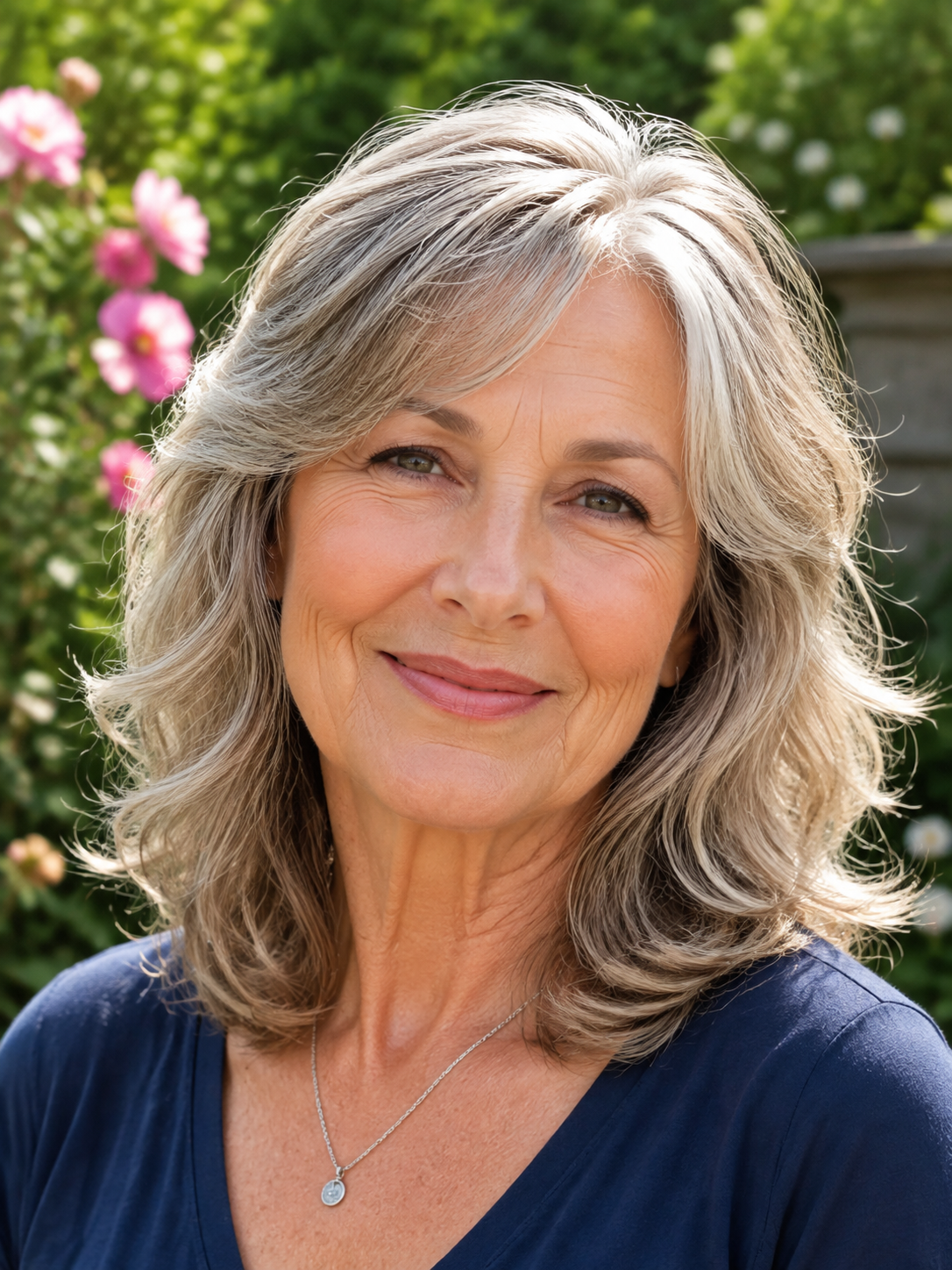
Loose, soft waves through a layered shoulder-length cut add texture that straight hair often lacks. A large-barrel curling iron on alternating sections, followed by a light finger comb, keeps the wave from looking overly done. A texturizing spray at the roots helps the wave hold shape without adding weight.
Gray Pixie with Soft Layers
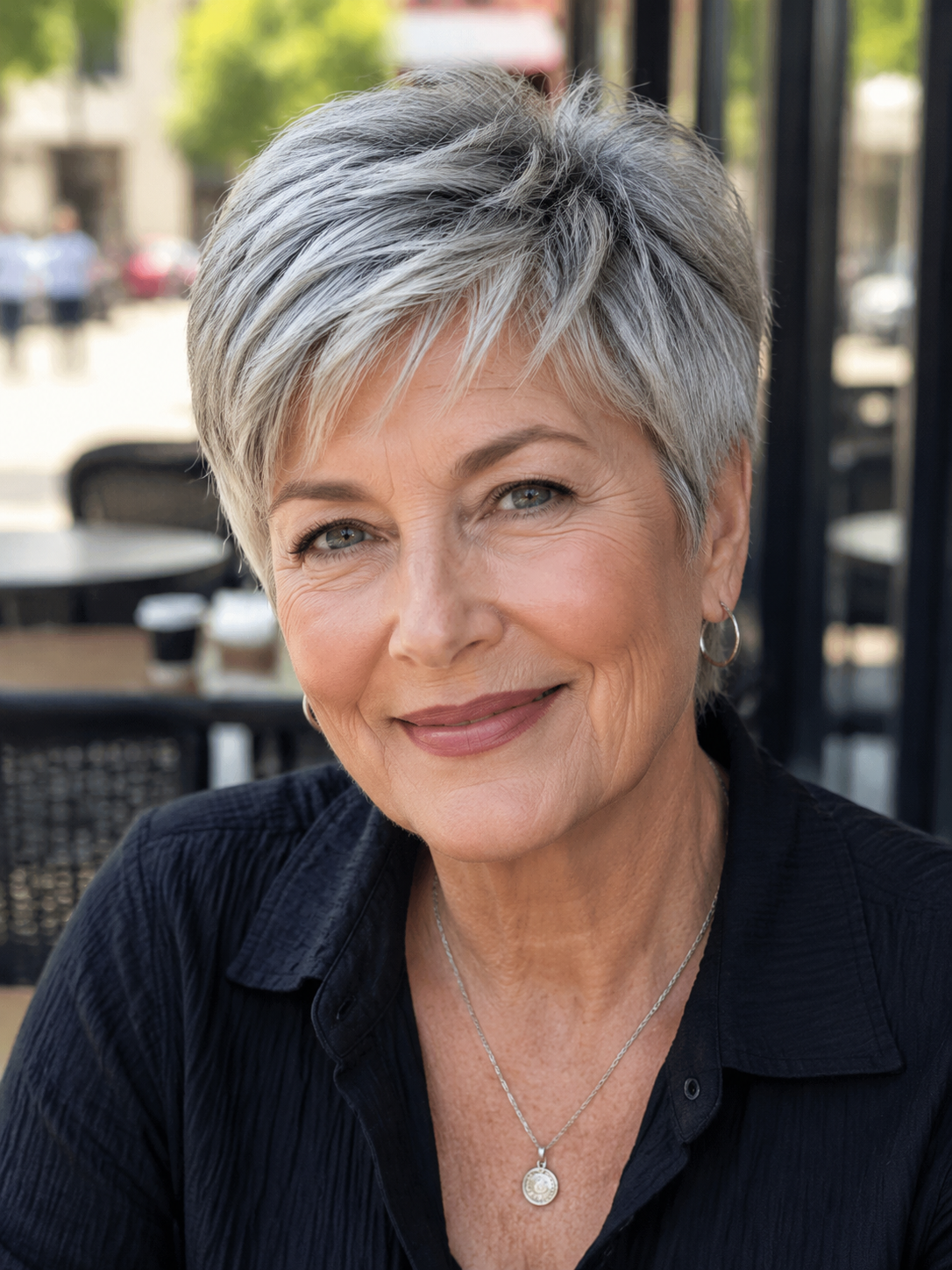
Letting natural gray show through a soft, layered pixie often looks fuller than a color-treated version, since gray strands tend to have a slightly coarser texture that holds shape well. A purple or blue-toned shampoo keeps brassiness out of the gray tone between washes. This combination photographs especially well in bright, clear light.
Layered Bob with Root Lift
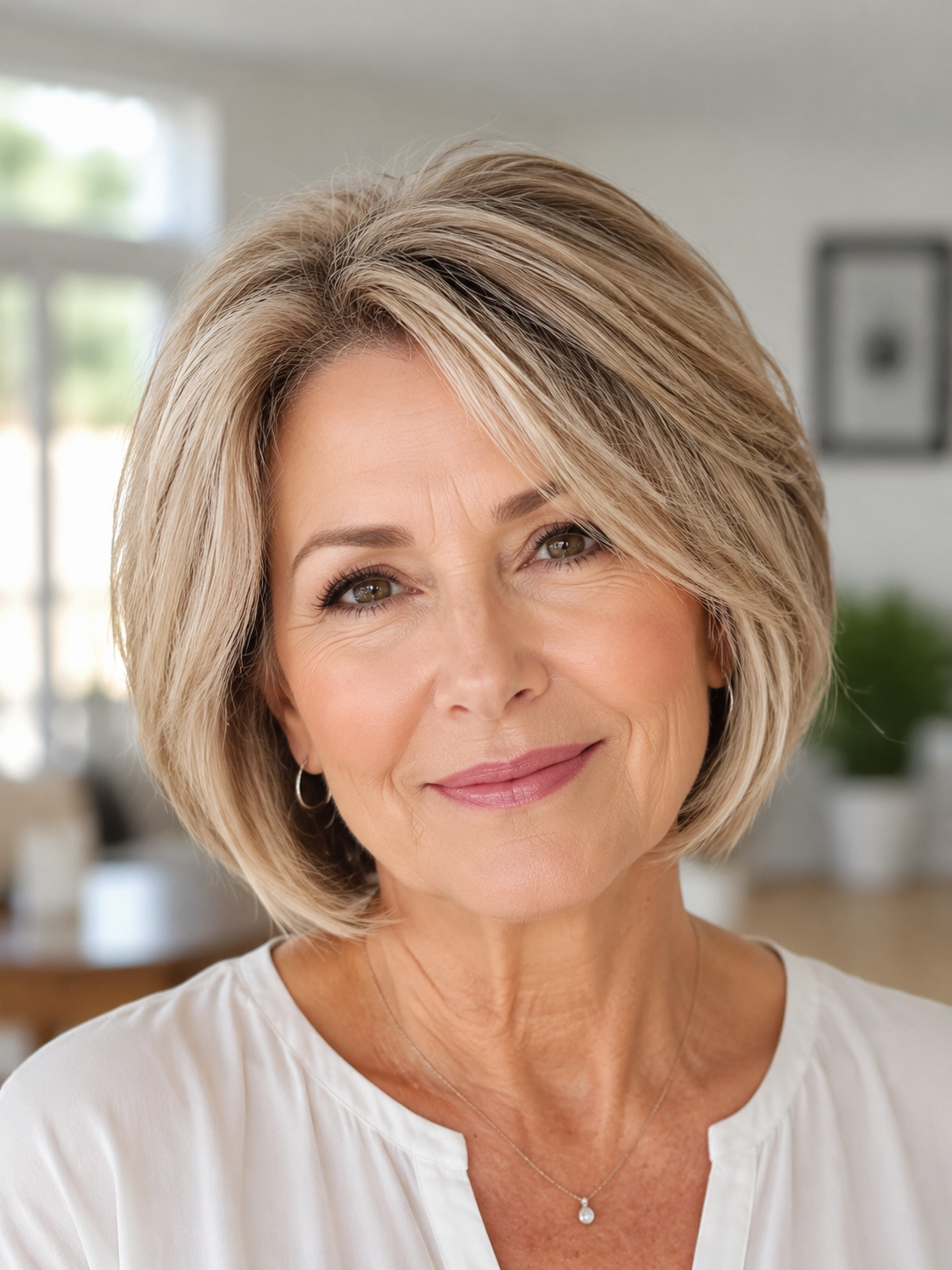
A chin-length bob styled specifically with a strong root lift, using a volumizing spray and a round brush blowout, prioritizes crown height over heavy texturizing. This is a good option if you want a simple, classic shape rather than a lot of layering throughout. Sleep with a silk bonnet to help preserve the lift overnight.
Piece-y Layered Pixie
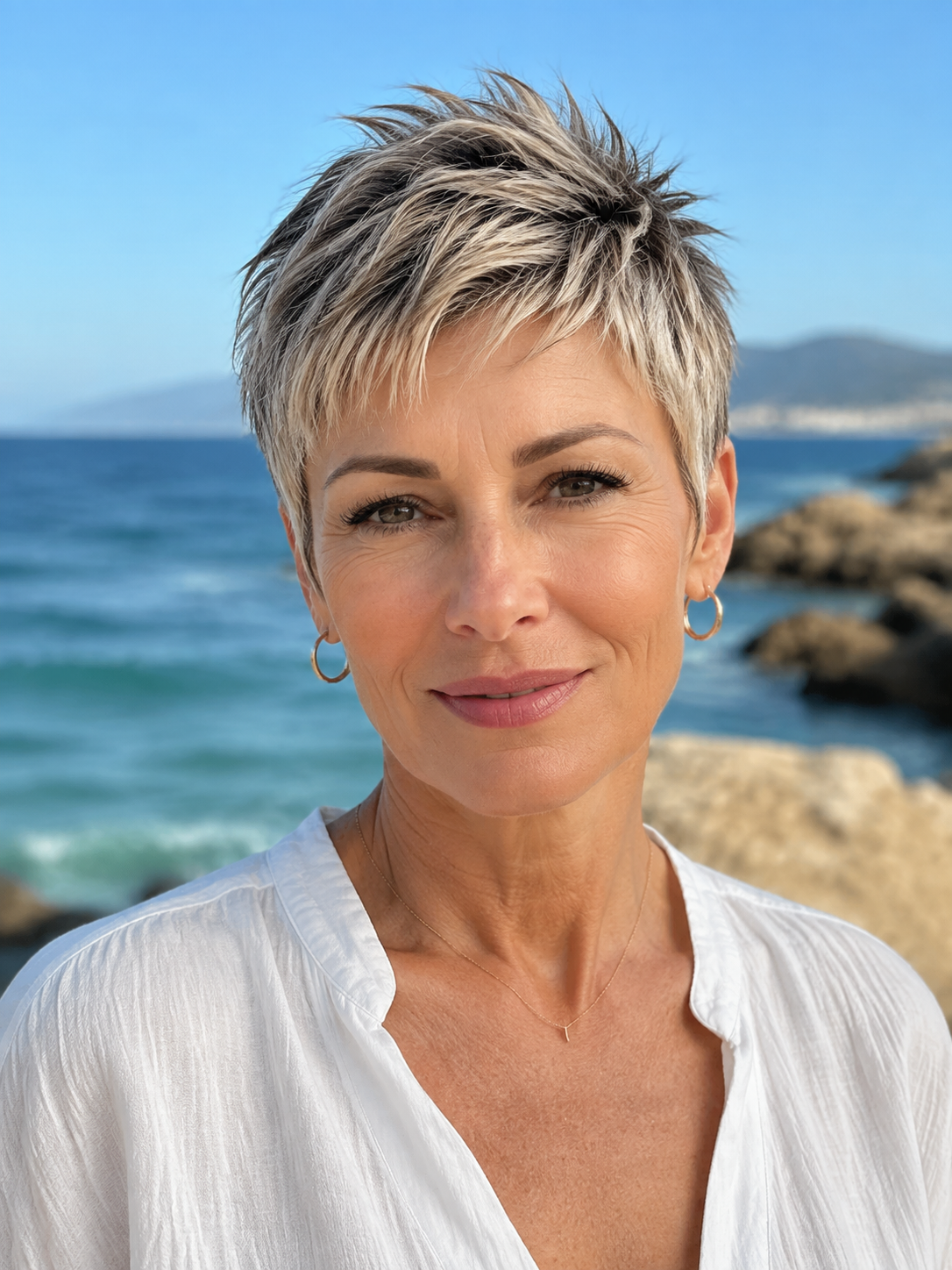
Light texturizing through the ends of a pixie creates separated, piece-y sections rather than one smooth mass, which helps hair look more deliberate as texture naturally softens with age. A small amount of pomade worked through dry hair with fingertips, not a comb, keeps the pieces distinct without adding heaviness.
Layered Bob with Highlights
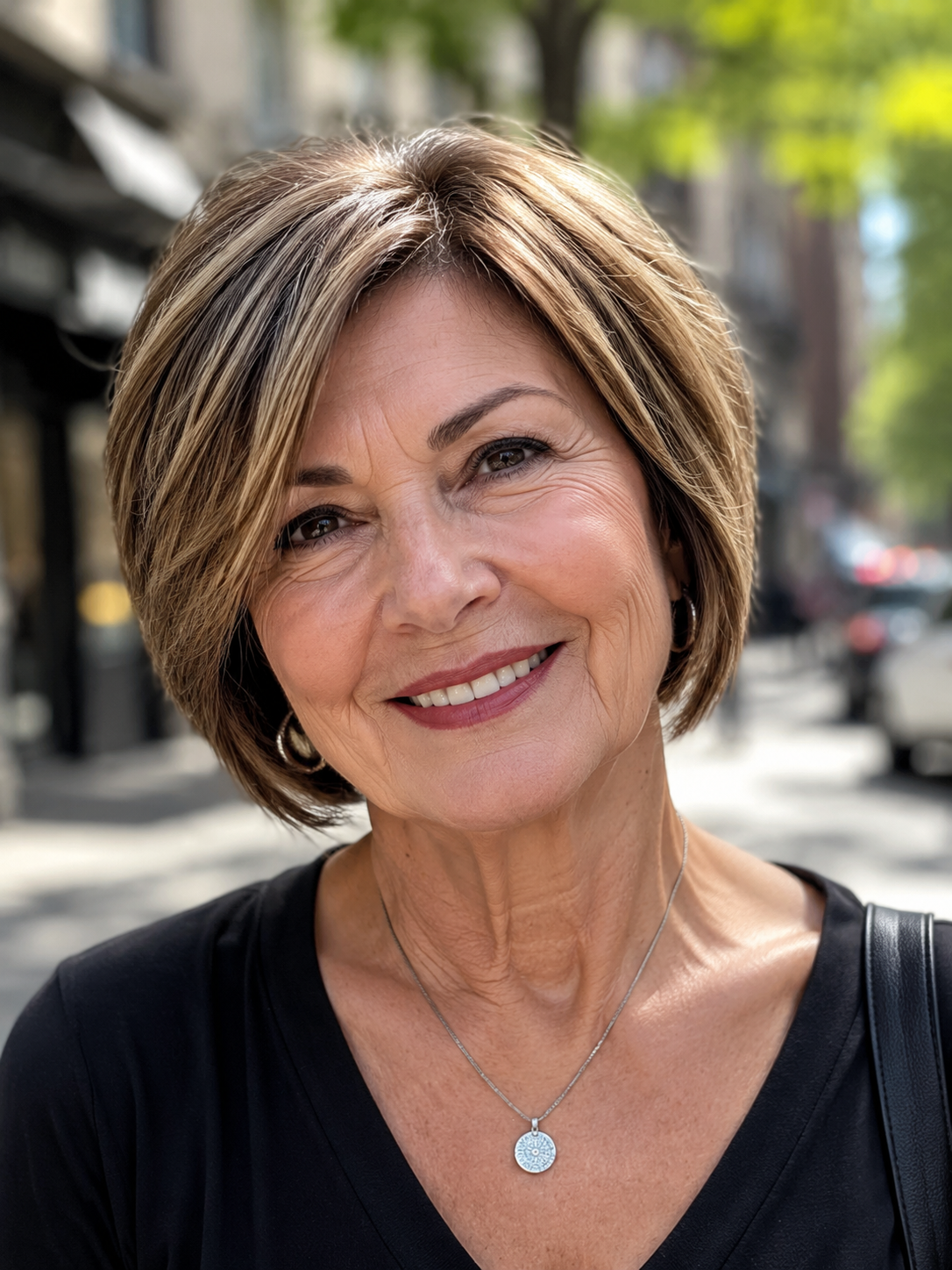
Subtle highlights woven through a layered bob create the illusion of extra depth and thickness that a single flat color can’t provide on its own. Placement matters most around the crown and part line, where light and shadow naturally build the appearance of volume. This combination photographs especially well in bright, natural light.
Cropped Layered Cut with Soft Side Sweep
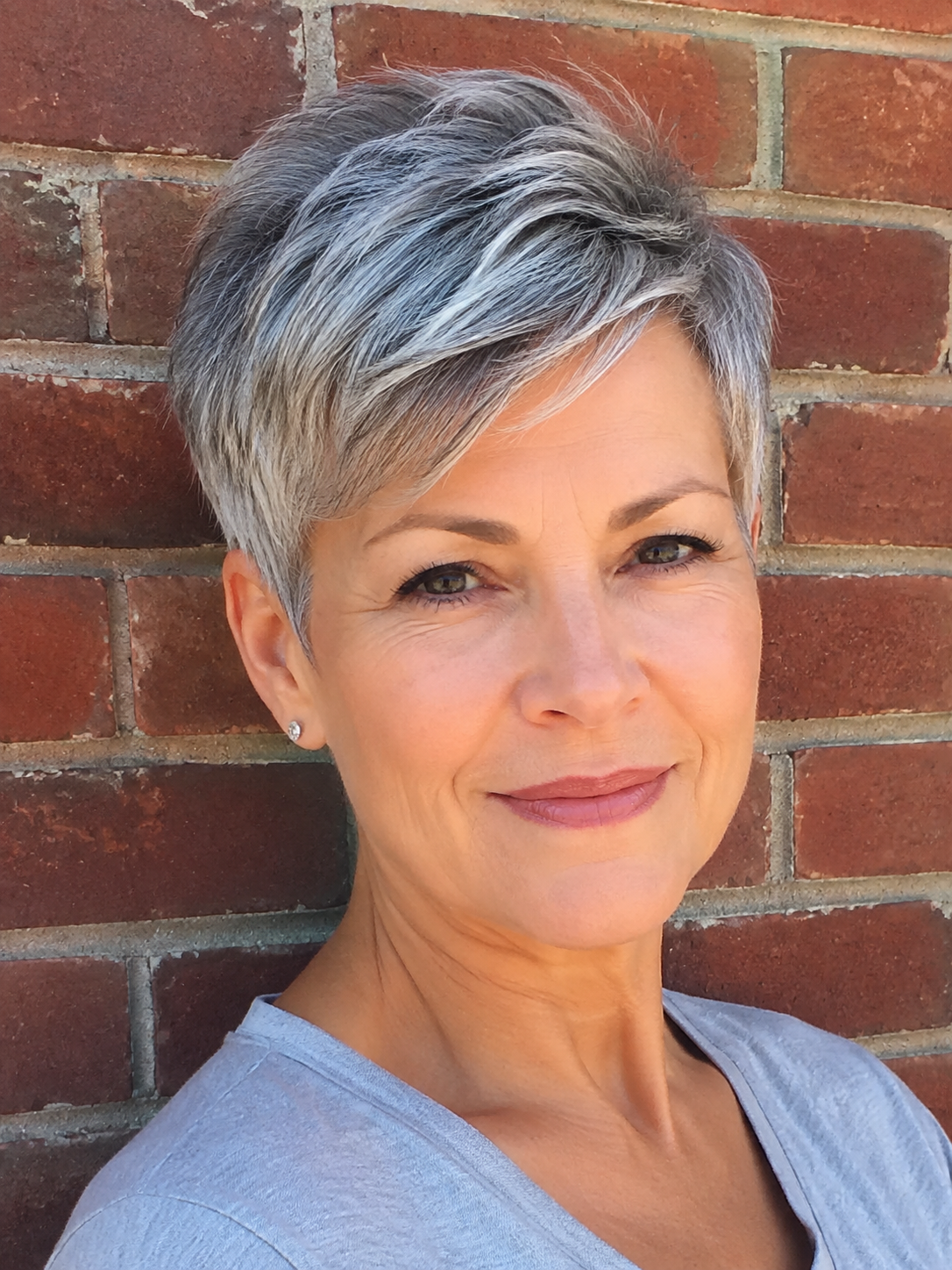
A very short, cropped cut styled with the top section softly swept to one side keeps the silhouette simple while adding a bit of movement at the front. This is one of the lowest-maintenance options here, requiring minimal daily styling beyond a quick pass with a round brush. A light-hold pomade keeps the swept section in place without weighing it down.
Shoulder-Length Layered Cut with Face-Framing Pieces
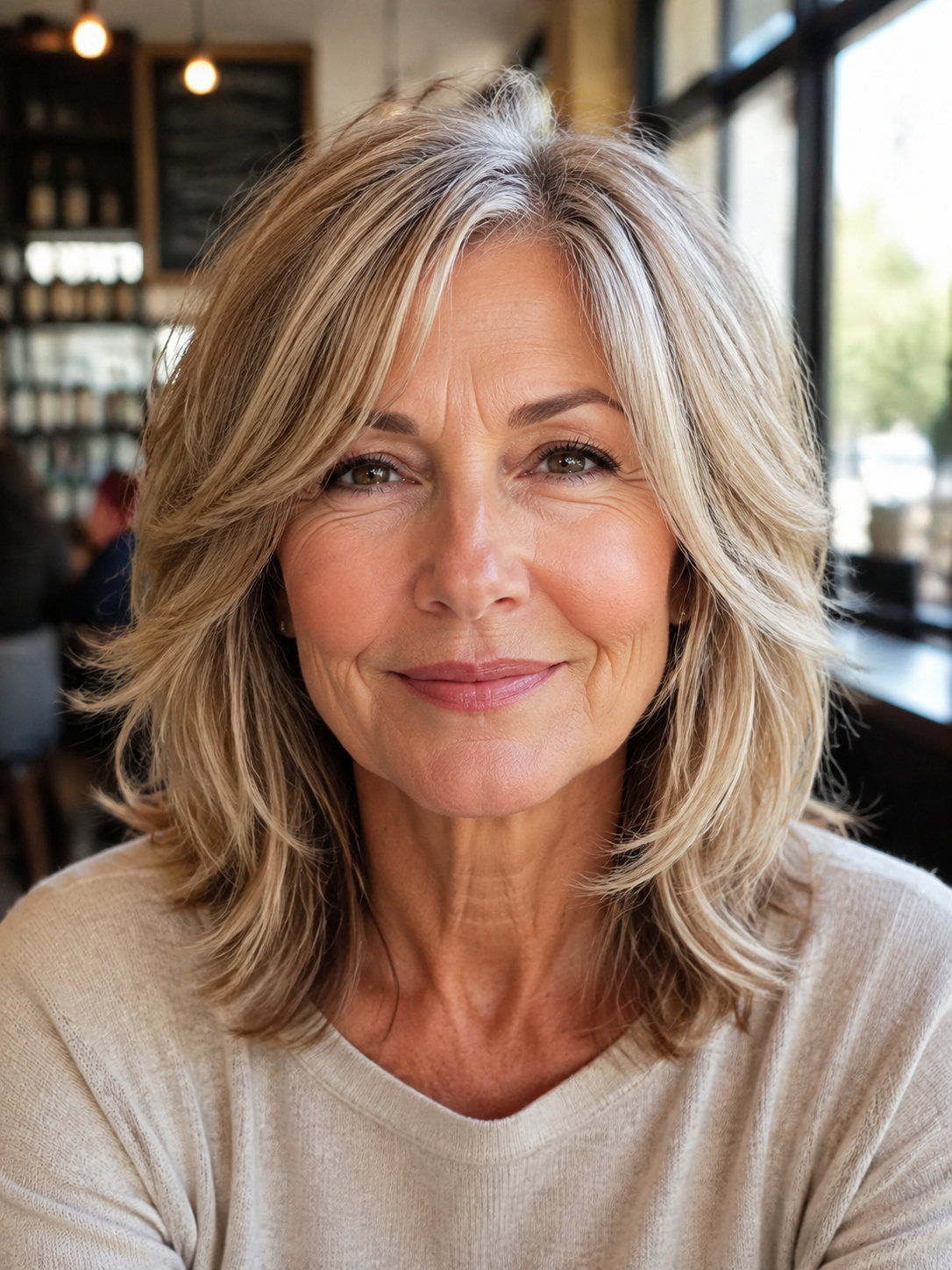
Layers concentrated specifically around the face, rather than throughout the whole cut, soften the jawline without sacrificing overall thickness elsewhere. This is a good option if you want a bit more length while still keeping some structure. Ask your stylist to start the face-framing layers at cheekbone level for the most flattering placement.
Undercut Layered Pixie
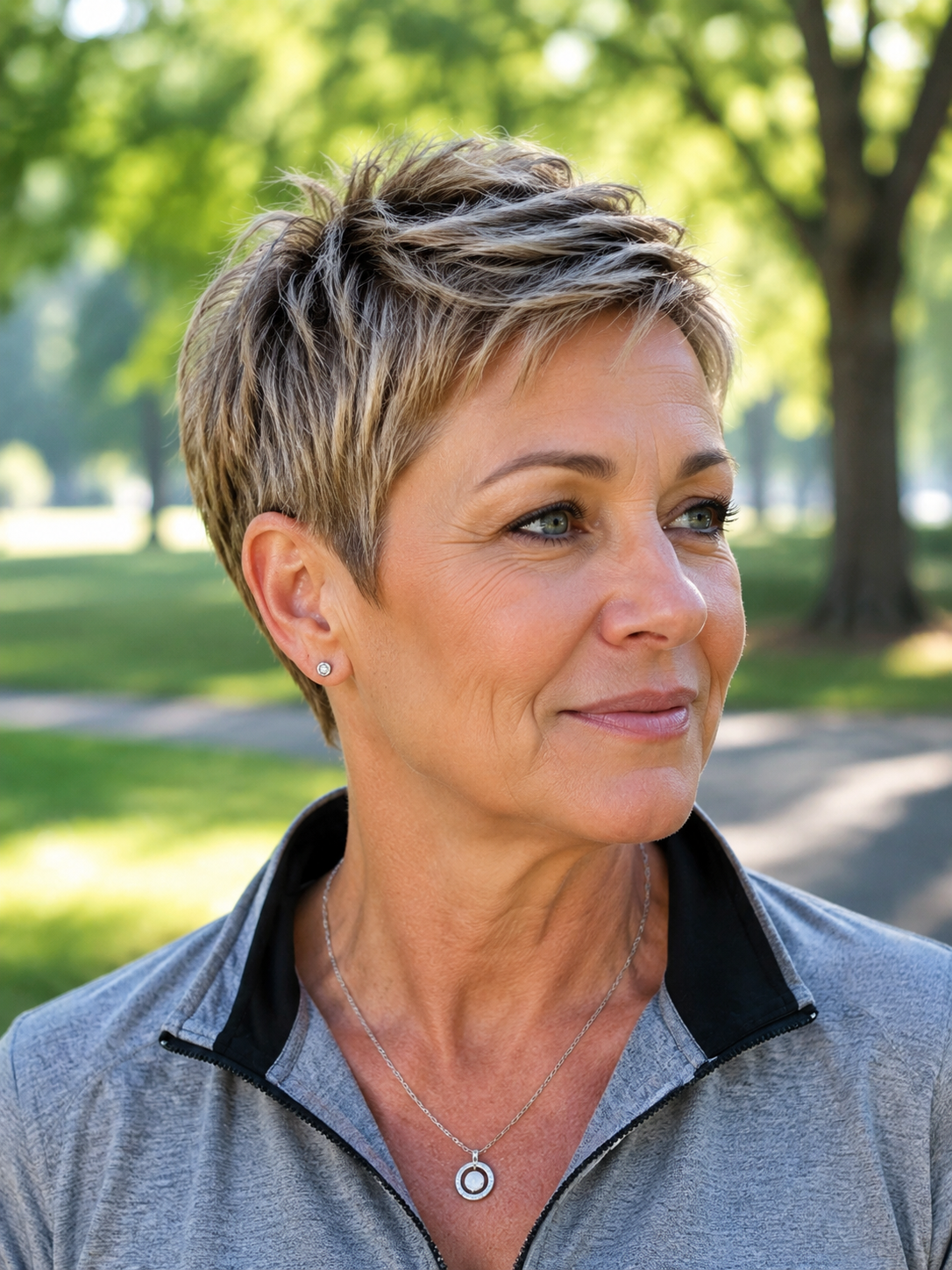
A closely cropped nape beneath slightly longer, layered pieces on top keeps this cut low-maintenance while adding visual interest without extra length. The shorter nape reduces overall weight, which helps the top layers hold lift longer through the day. This style needs trims every four to five weeks to stay clean.