Pixie cuts get recommended to everyone with fine hair, but not every pixie actually helps. The wrong texture or length can make thin strands look even more sparse up top. The right pixie, on the other hand, uses short length and strategic layering to fake density instead of exposing the lack of it. These sixteen styles are built specifically with that in mind.
Classic Textured Pixie
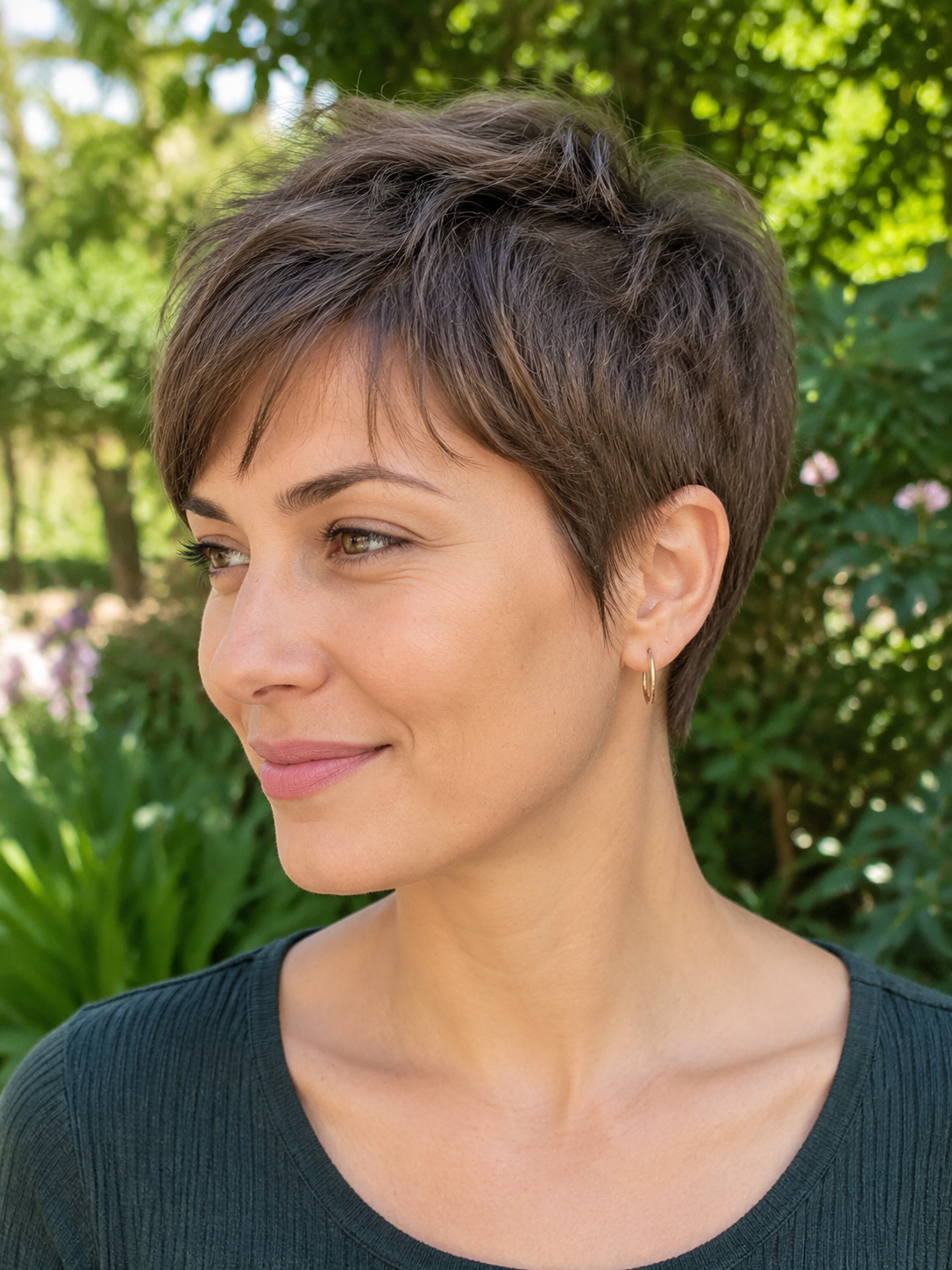
Short, point-cut layers throughout the crown break up the flat, single-direction fall that plagues fine hair. Keep the top slightly longer than the sides for lift, and finish with a matte paste rather than anything oil-based, which can weigh thin strands down fast.
Cropped Pixie with Side Fringe
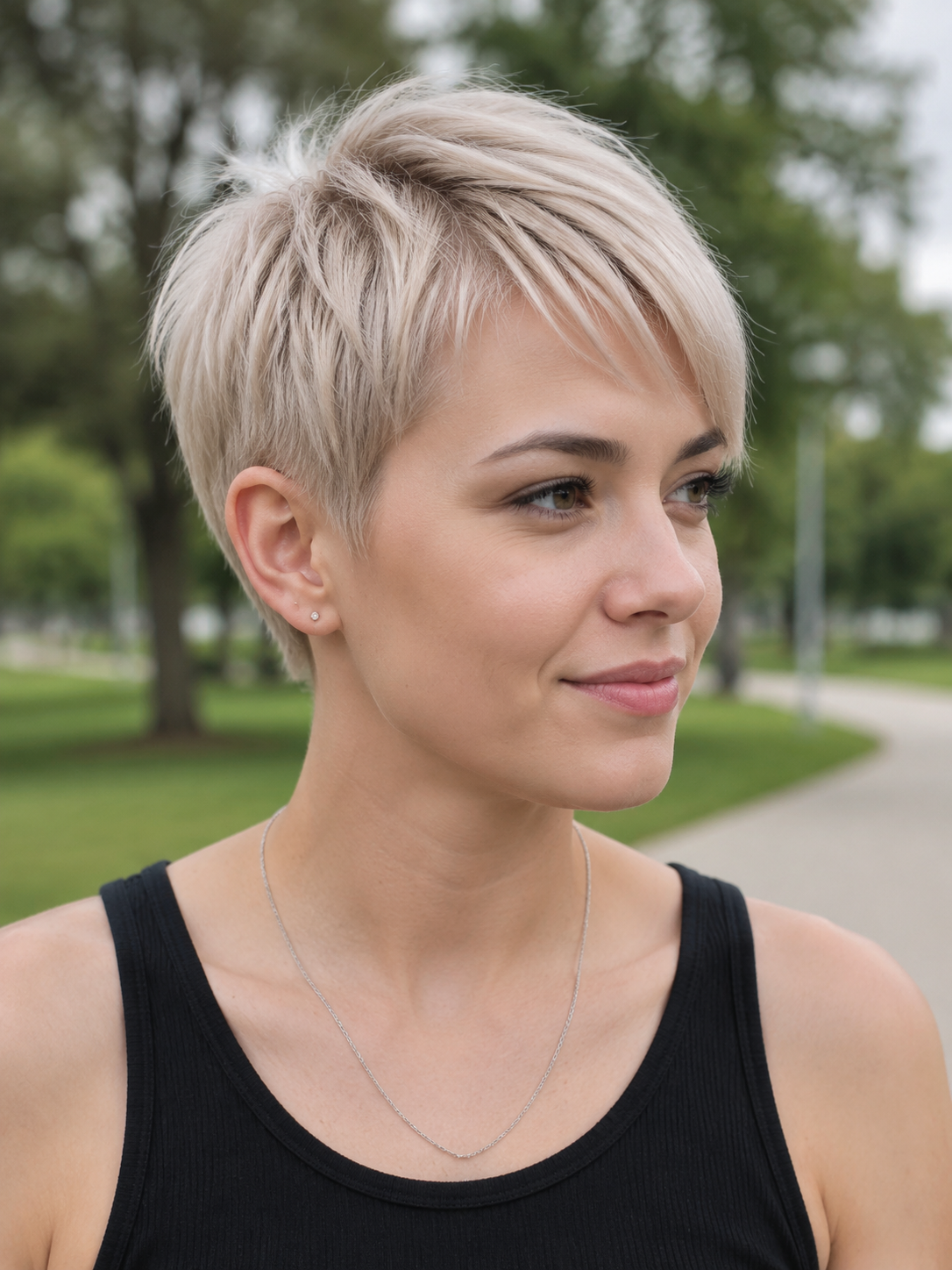
An asymmetrical side fringe adds visual interest without the bulk a full bang requires. This ultra-short crop keeps length minimal everywhere, which means less weight pulling on the roots and more natural volume at the crown throughout the day.
Pixie Bob
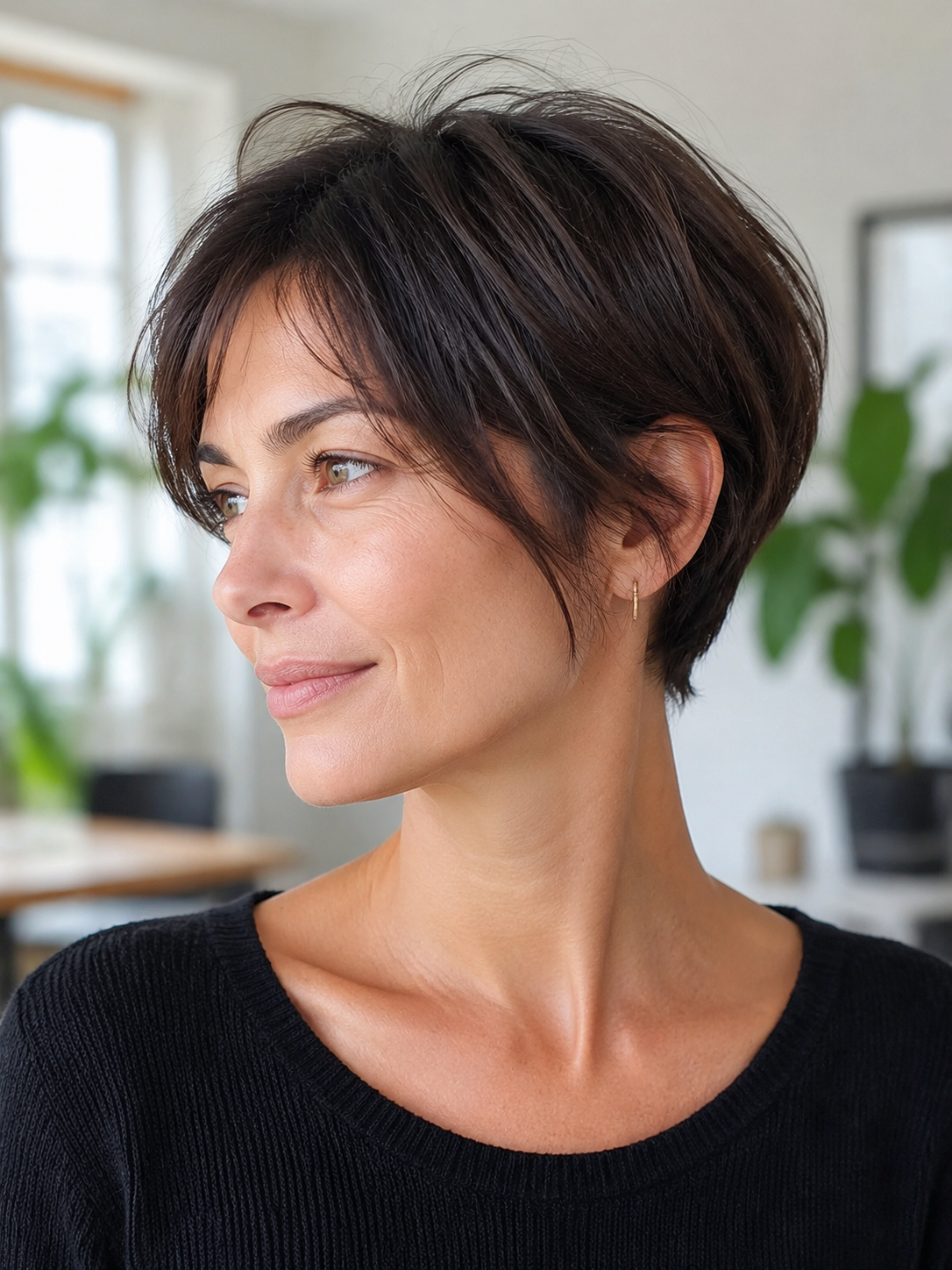
Landing right at the ear or just below, the pixie bob is a touch longer than a classic pixie but still short enough to avoid the flattening that happens past the jaw. A slightly longer front section softens the shape without sacrificing lift.
Choppy Pixie Shag
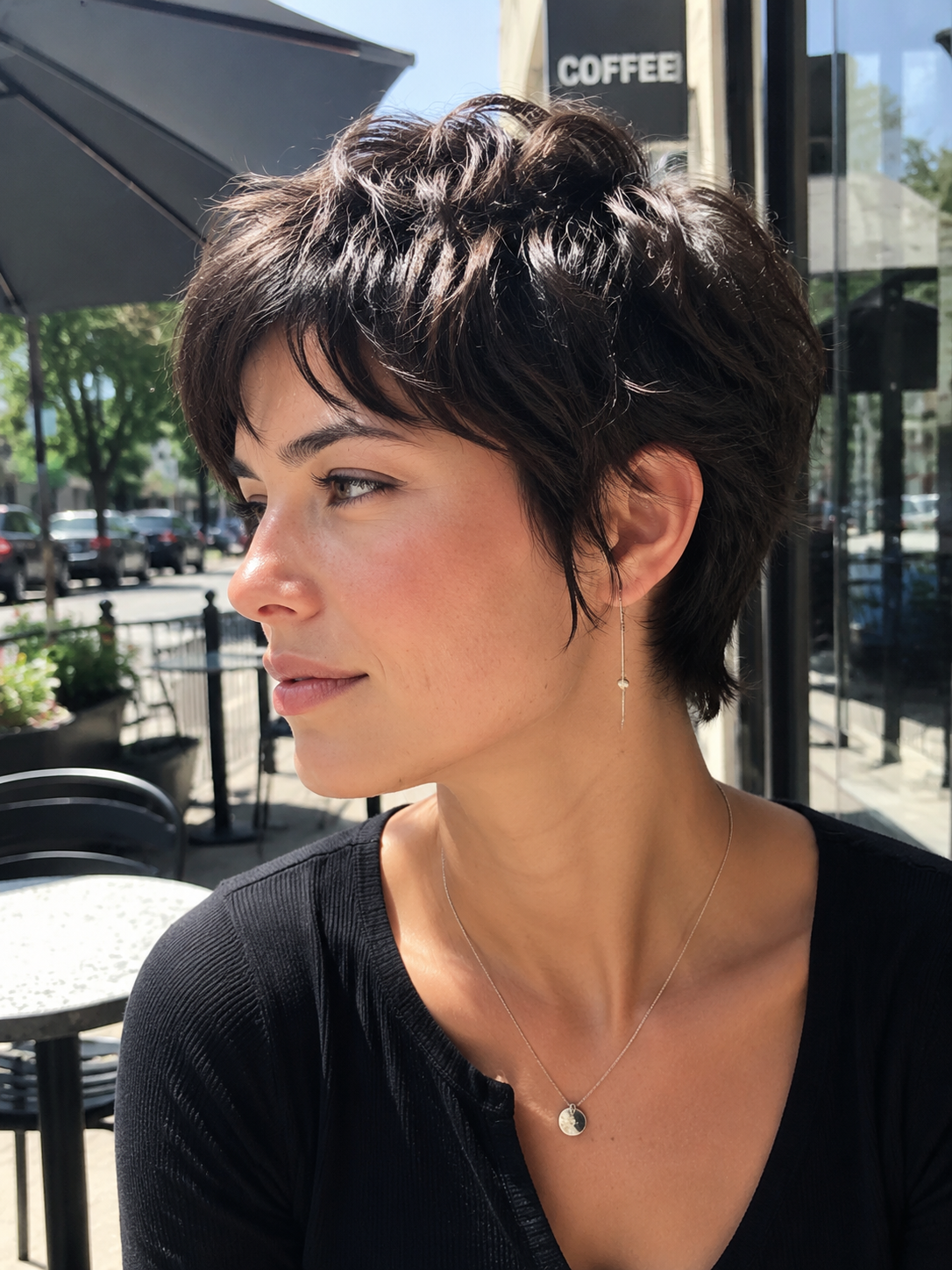
Short, choppy layers cut in different directions across the crown create texture that thin hair can’t produce on its own. This works especially well with a light wave or flat-iron bend at the ends, since it exaggerates the movement.
Undercut Pixie
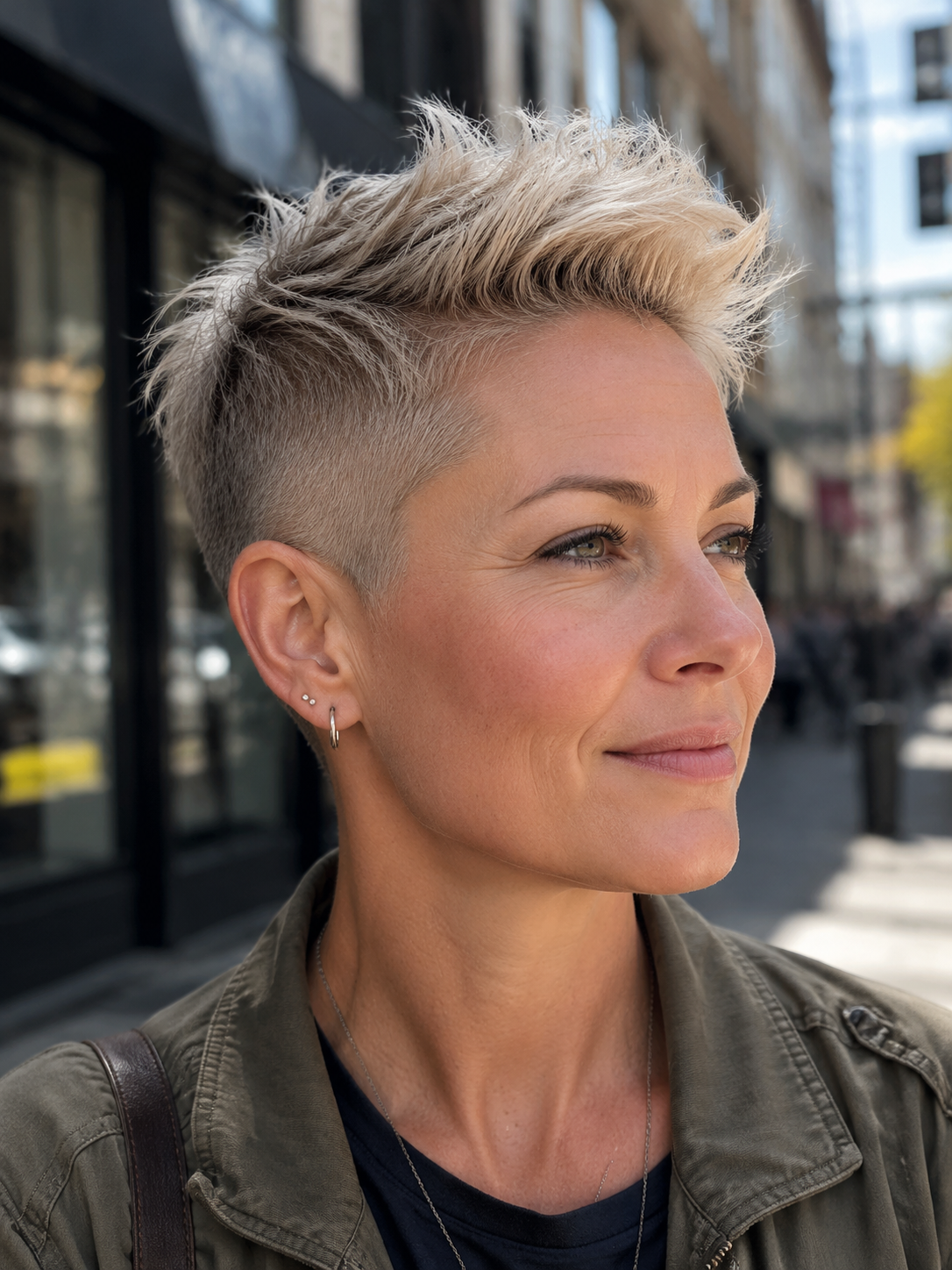
Shaving or closely cropping the sides and back leaves more visual weight on top, where a longer, textured pixie can be styled for height. This contrast tricks the eye into reading more volume than the hair actually holds.
French Crop Pixie
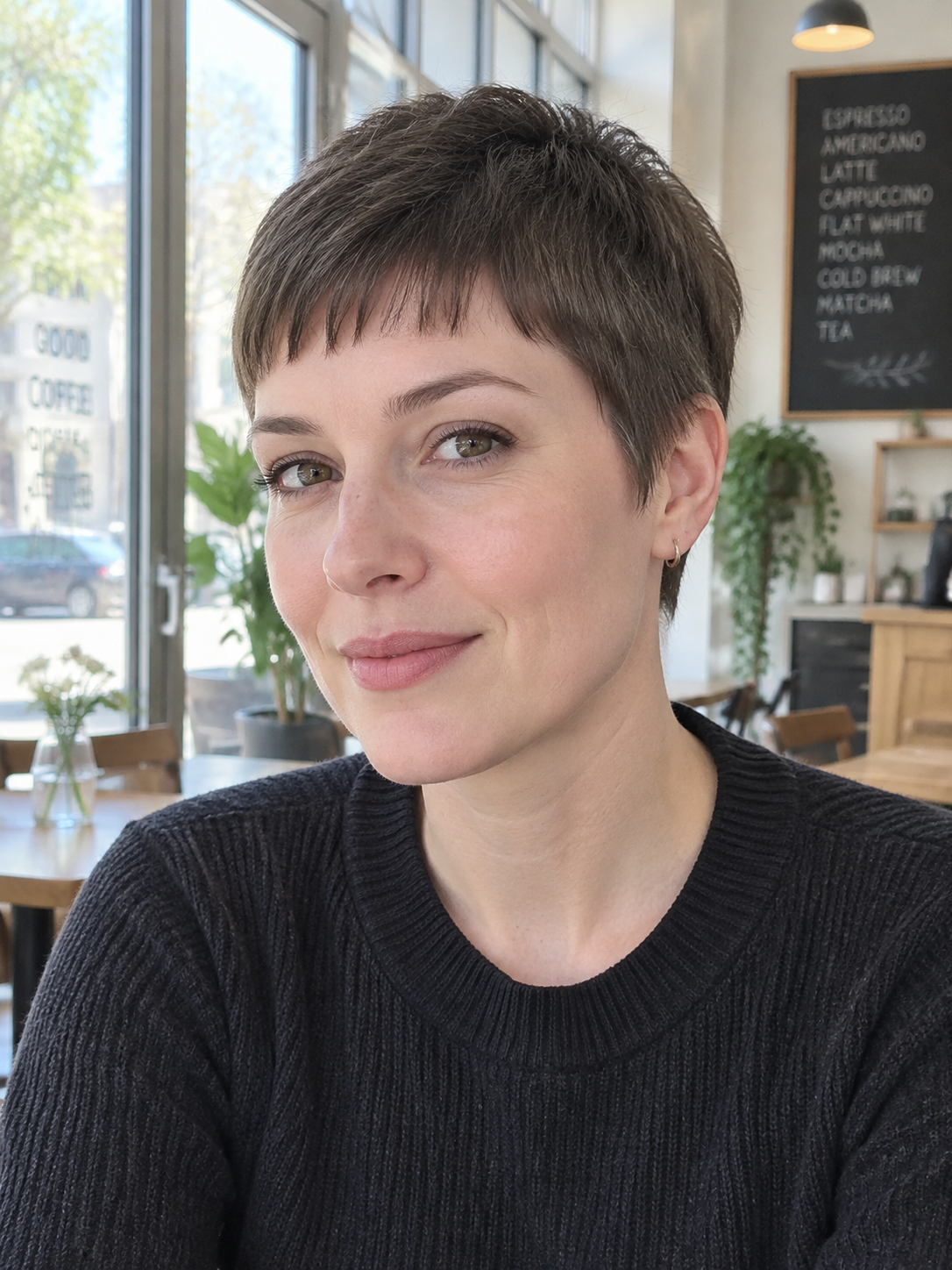
Borrowed from a men’s cut, the French crop uses a short, textured fringe with closely cropped sides. On fine hair, this creates a clean, structured shape that doesn’t rely on volume to look intentional, since the geometry does the work instead.
Feathered Pixie
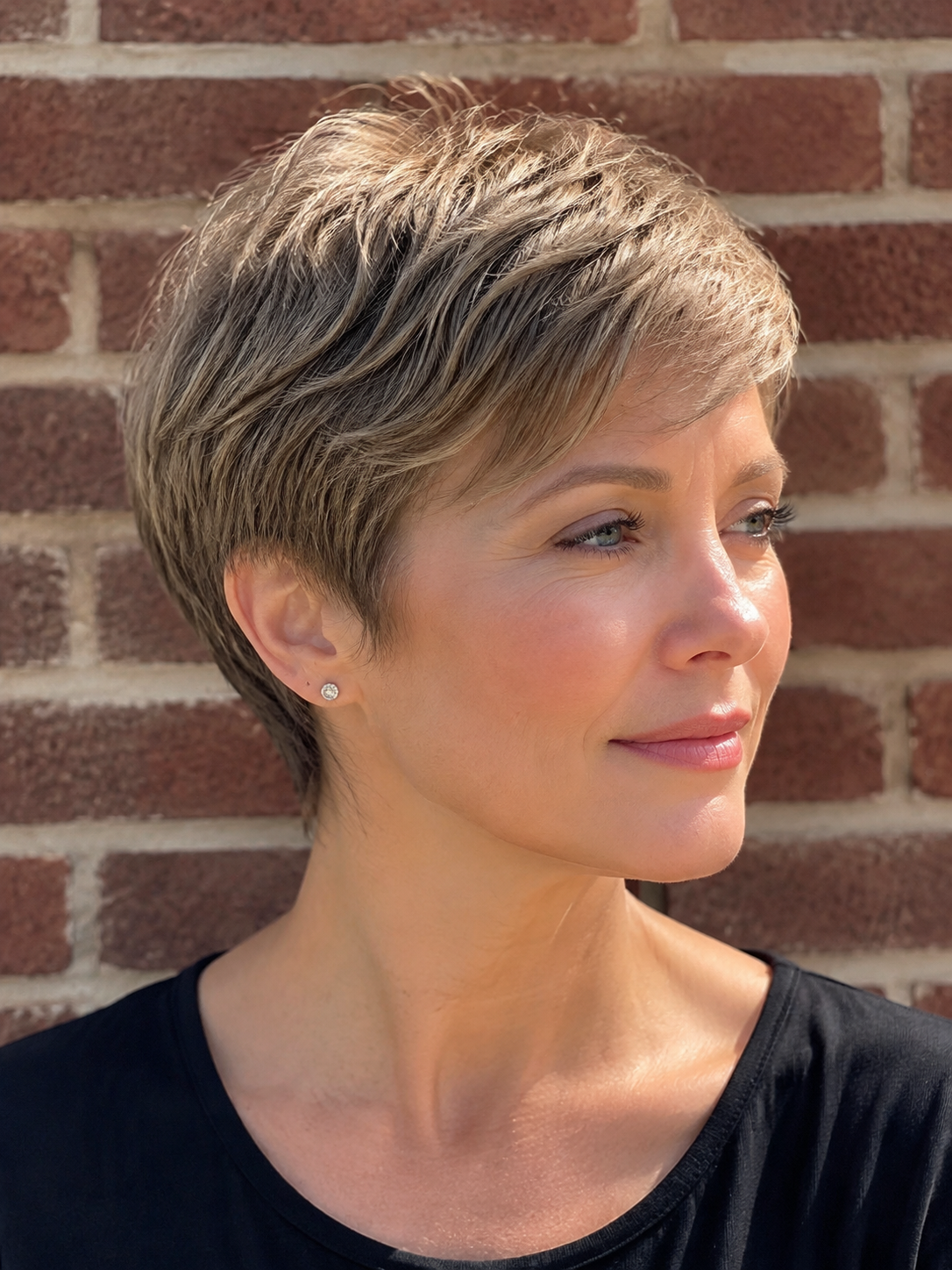
Soft, feathered layers throughout give a gentler alternative to a choppy pixie. The ends are cut at an angle rather than straight across, which blends more naturally into thin hair without creating visible gaps or thin patches.
Asymmetrical Pixie
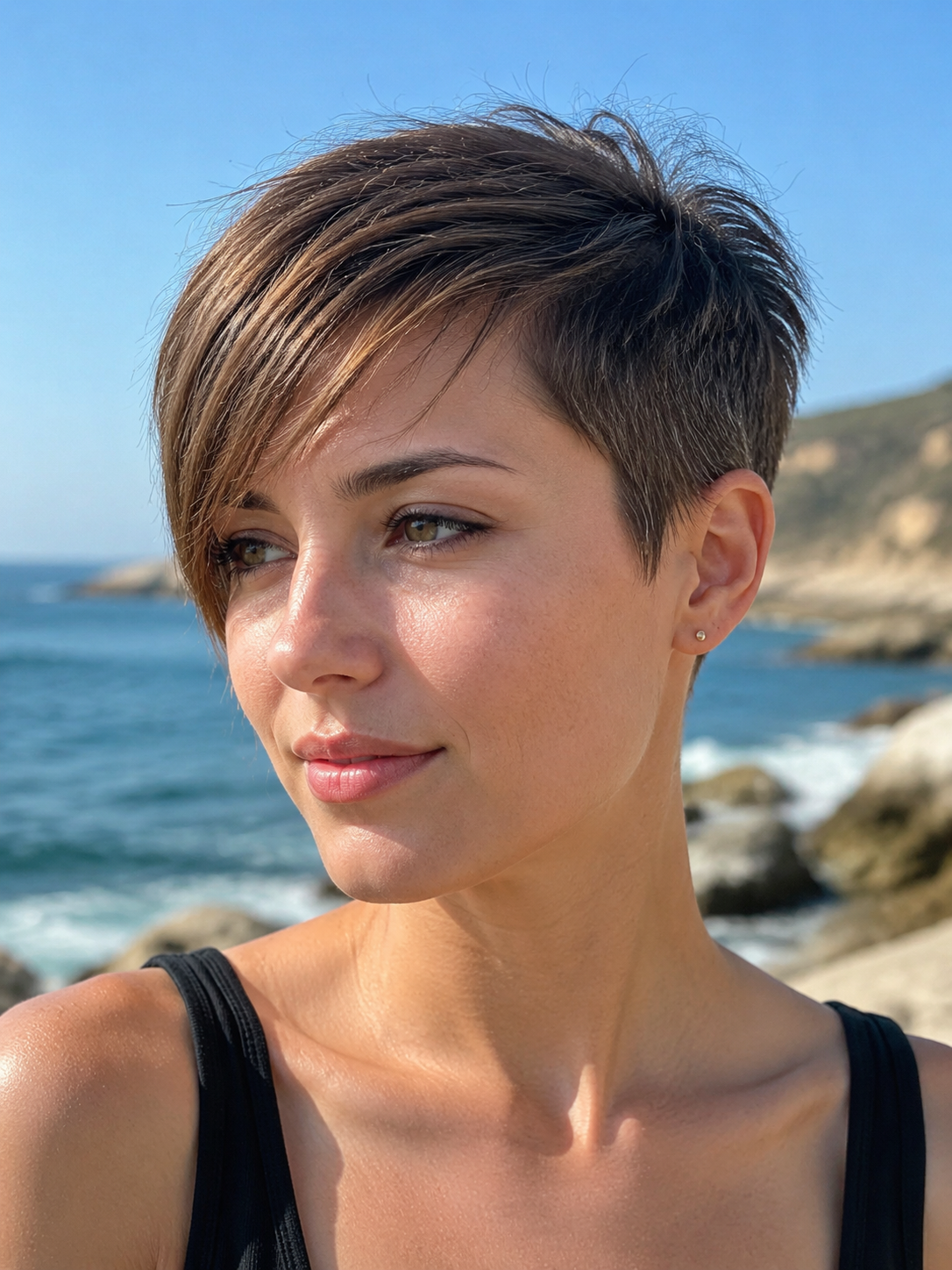
One side cut noticeably shorter than the other creates movement and draws the eye across the head rather than straight down at the roots. This works particularly well on straight, fine hair that tends to sit flat in a symmetrical cut.
Curly Pixie
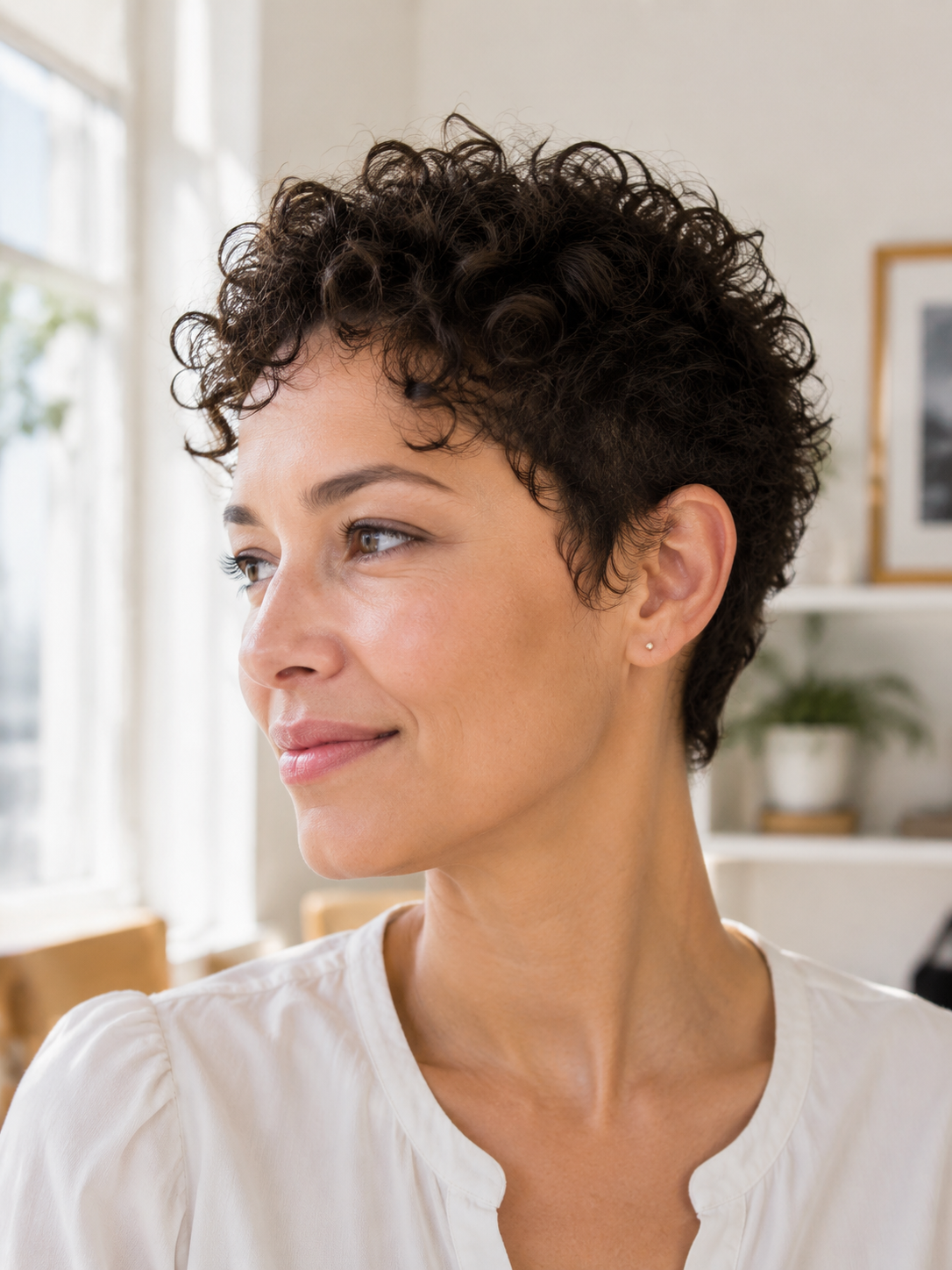
For those with natural texture, a short pixie that follows the curl pattern rather than fighting it can look surprisingly full. Curls take up more visual space than straight strands, which naturally compensates for lower density.
Textured Crop with Height
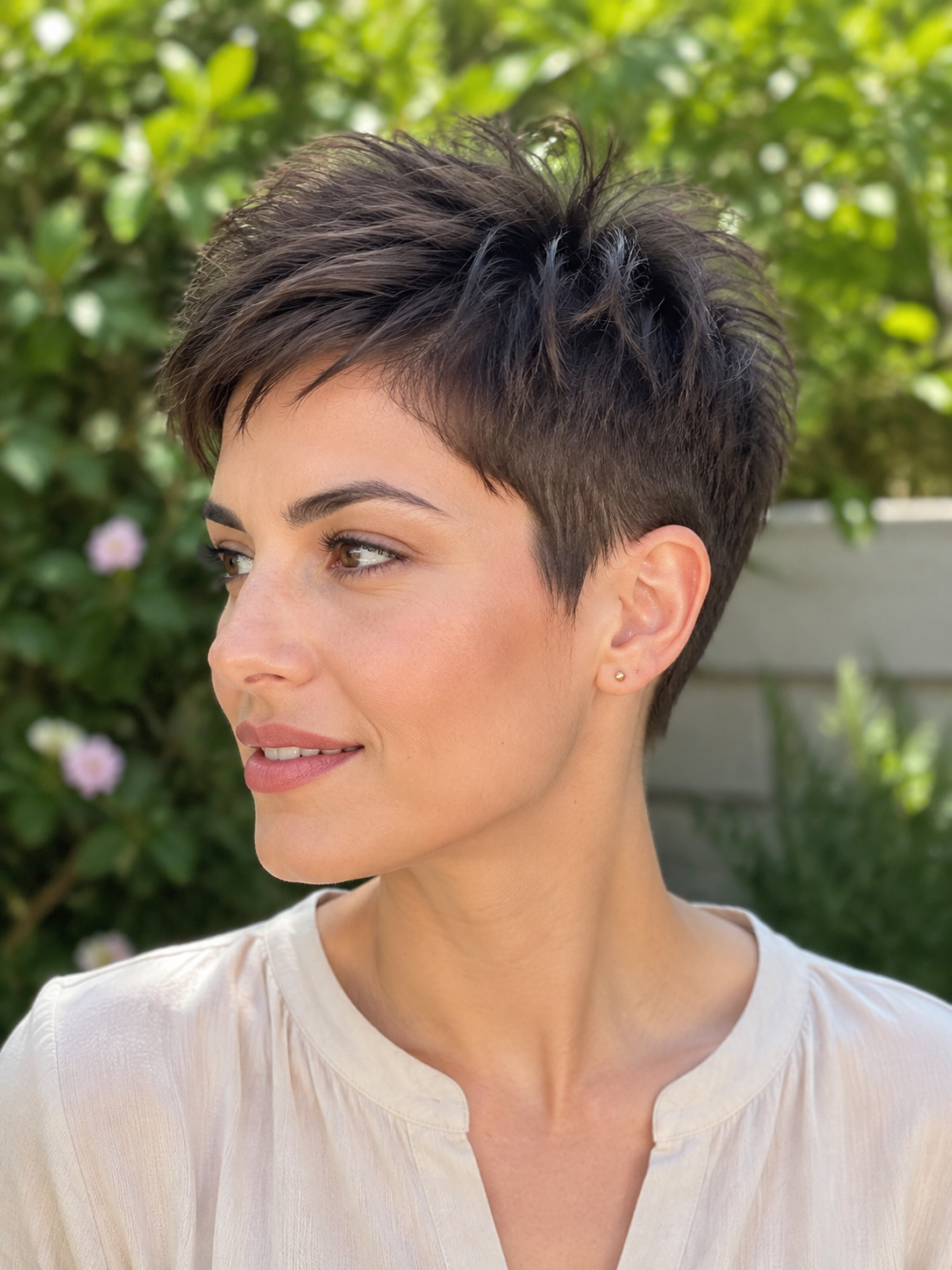
This cut concentrates length at the very top, styled upward and forward with a strong-hold product. Keeping the sides very short maximizes the contrast, making the raised top section look noticeably fuller by comparison.
Wispy Pixie with Bangs
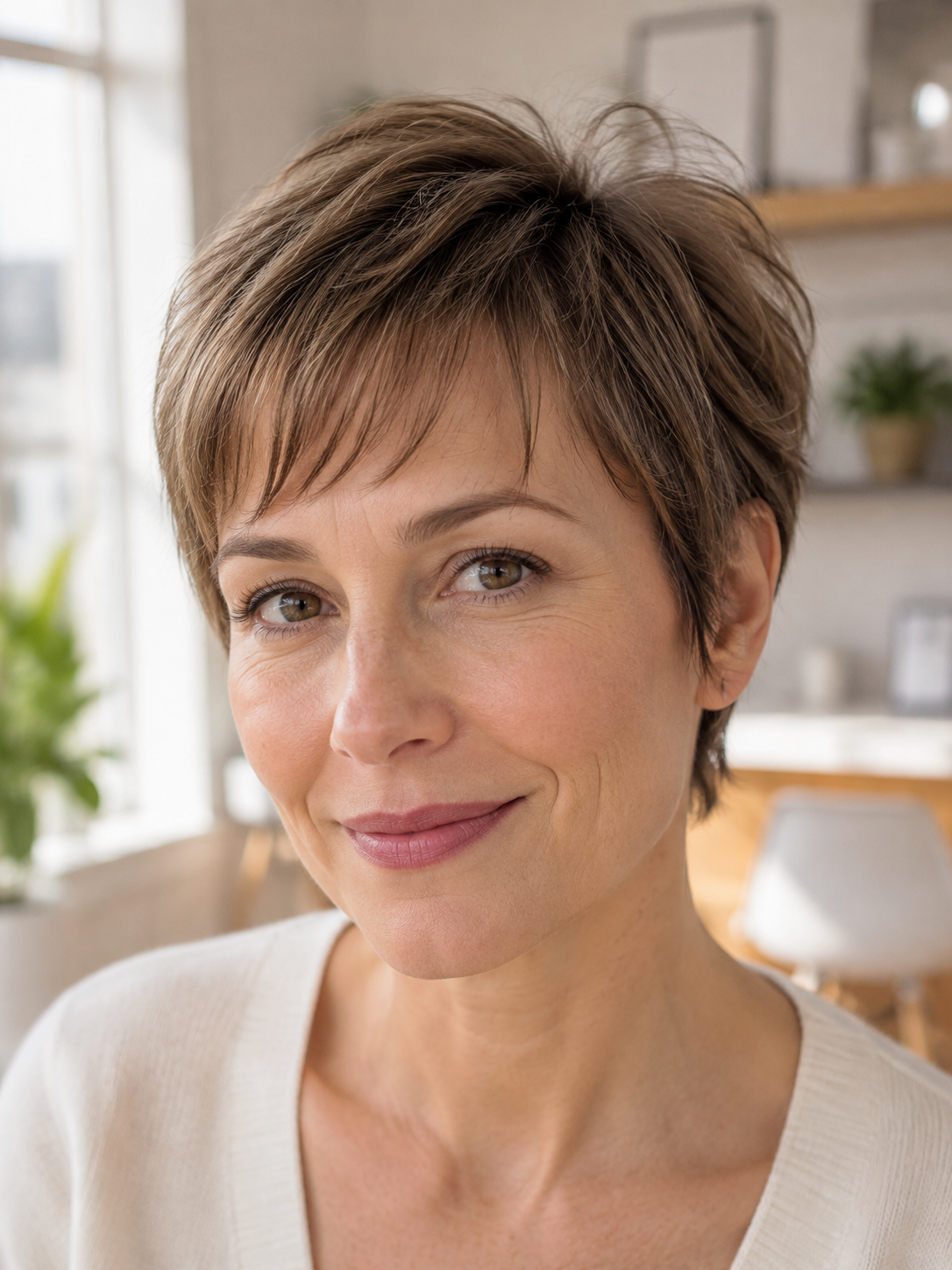
Soft, wispy bangs paired with a short pixie base add fullness right at the hairline. Keep the bangs slightly longer than a blunt fringe, since a heavy, straight-across line can look thin and see-through on fine hair.
Pixie Mullet
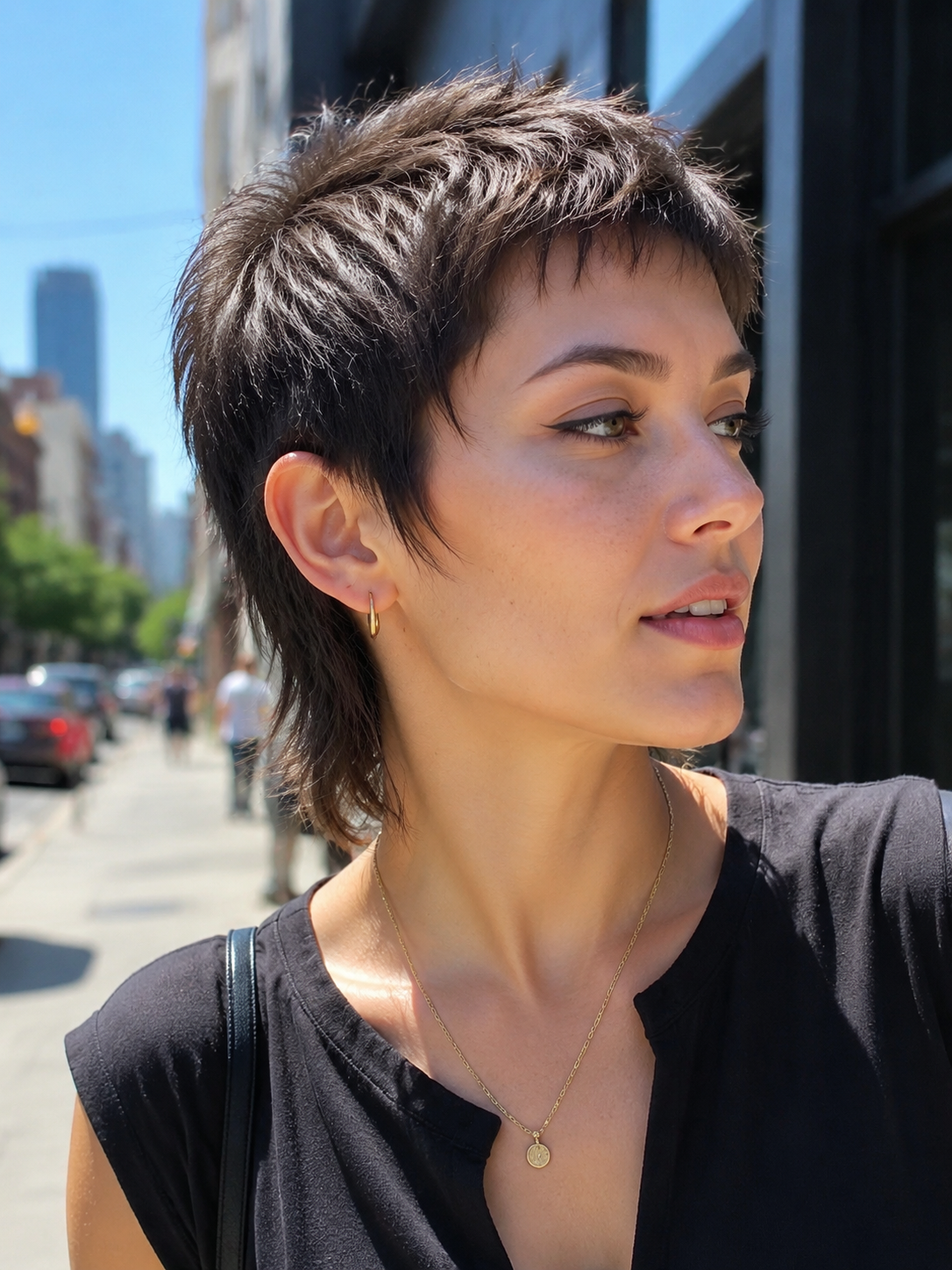
A short, cropped top and sides with slightly longer pieces at the nape gives this pixie variation more edge. The layering at the back adds texture that a plain, uniform pixie doesn’t, which helps disguise thinness throughout.
Rounded Pixie
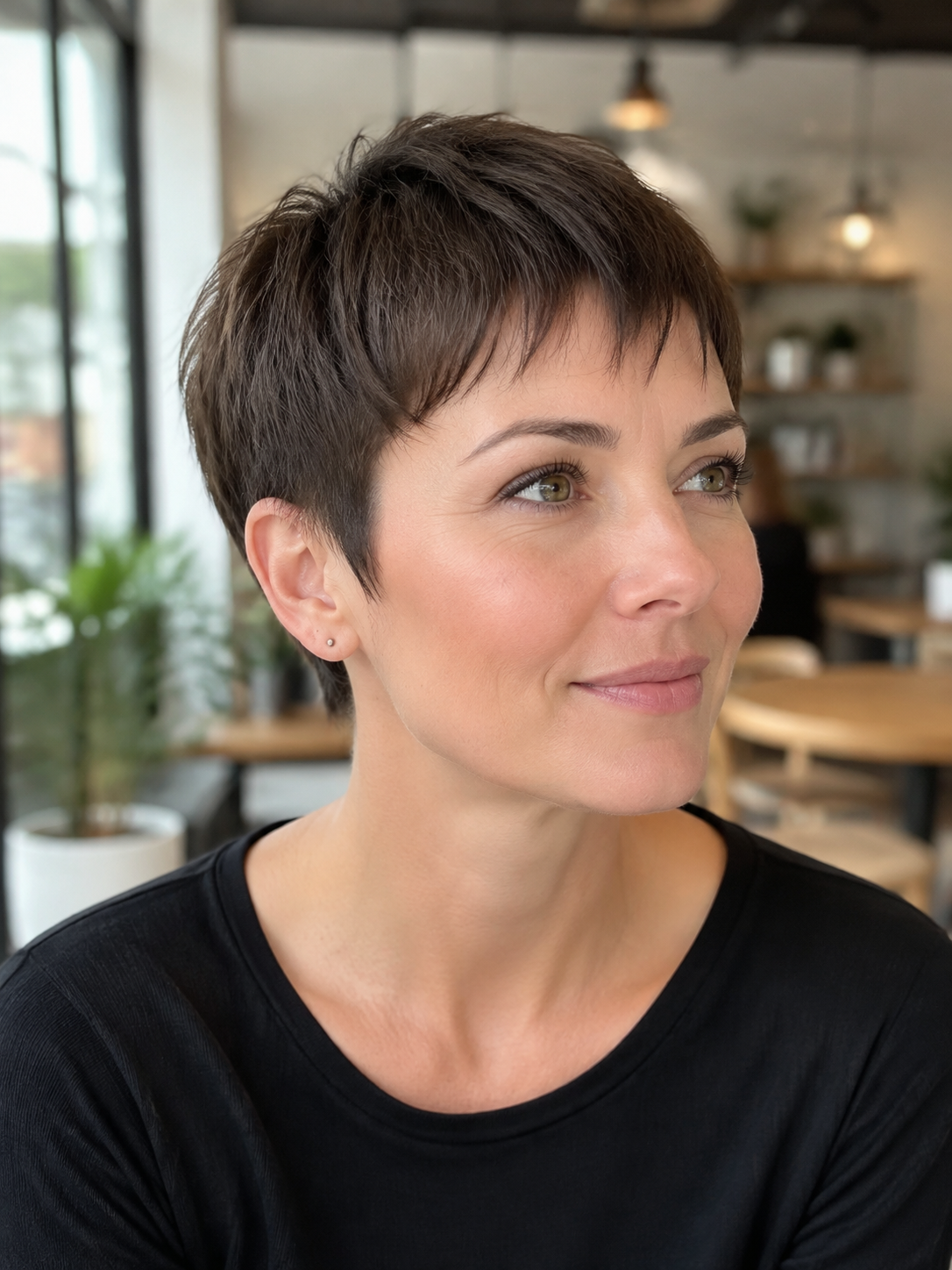
Cut close and rounded around the head rather than choppy or angular, this style relies on precise shaping instead of heavy layering. It’s a good option for anyone who wants a clean, polished look without constant styling to maintain volume.
Long Pixie with Side-Swept Fringe
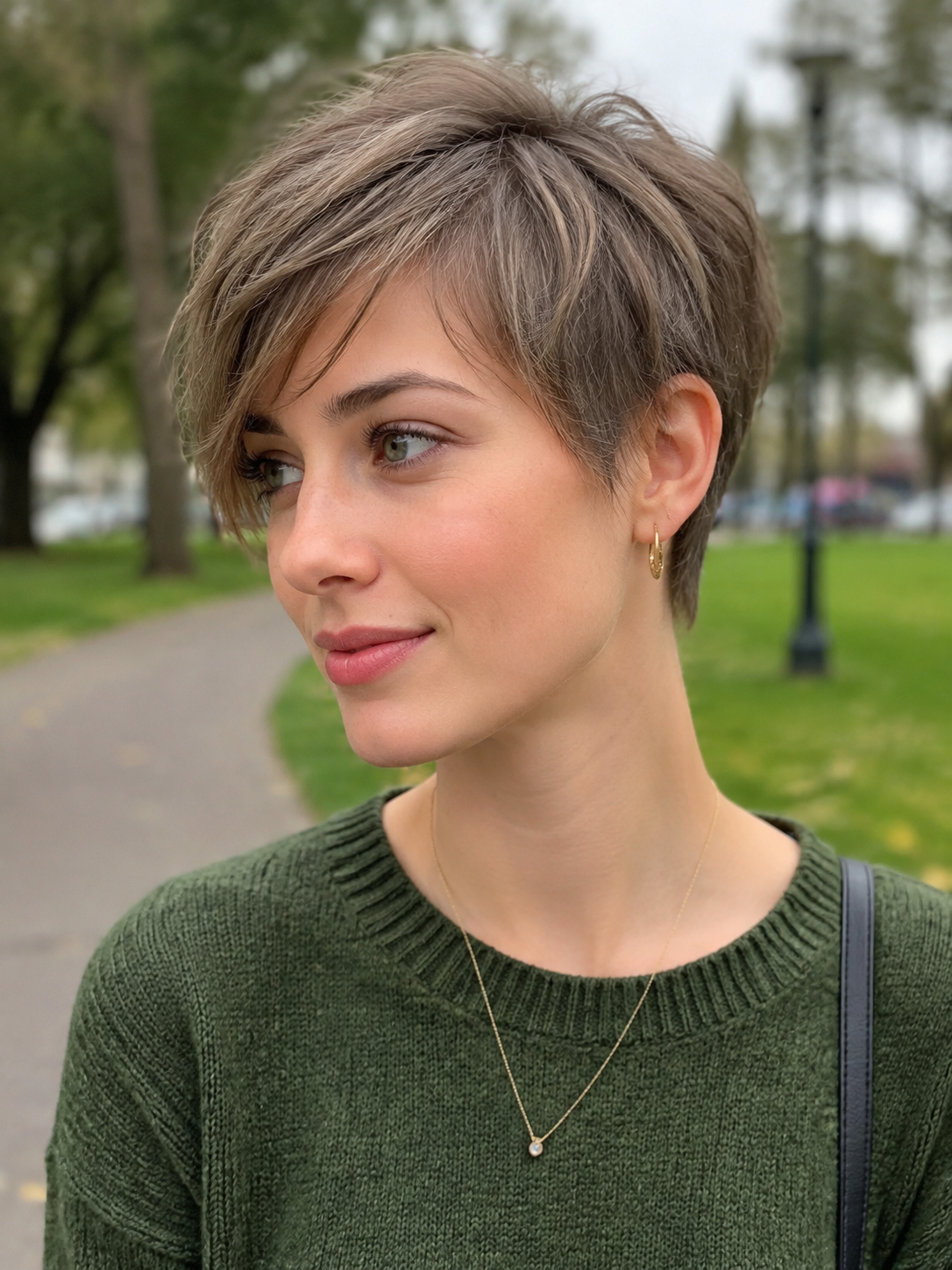
A slightly grown-out pixie, longer through the crown and sides, paired with a side-swept fringe. This version keeps enough length for versatility while staying well above the shoulders, which is what keeps it from flattening out like longer cuts do.
Spiky Pixie
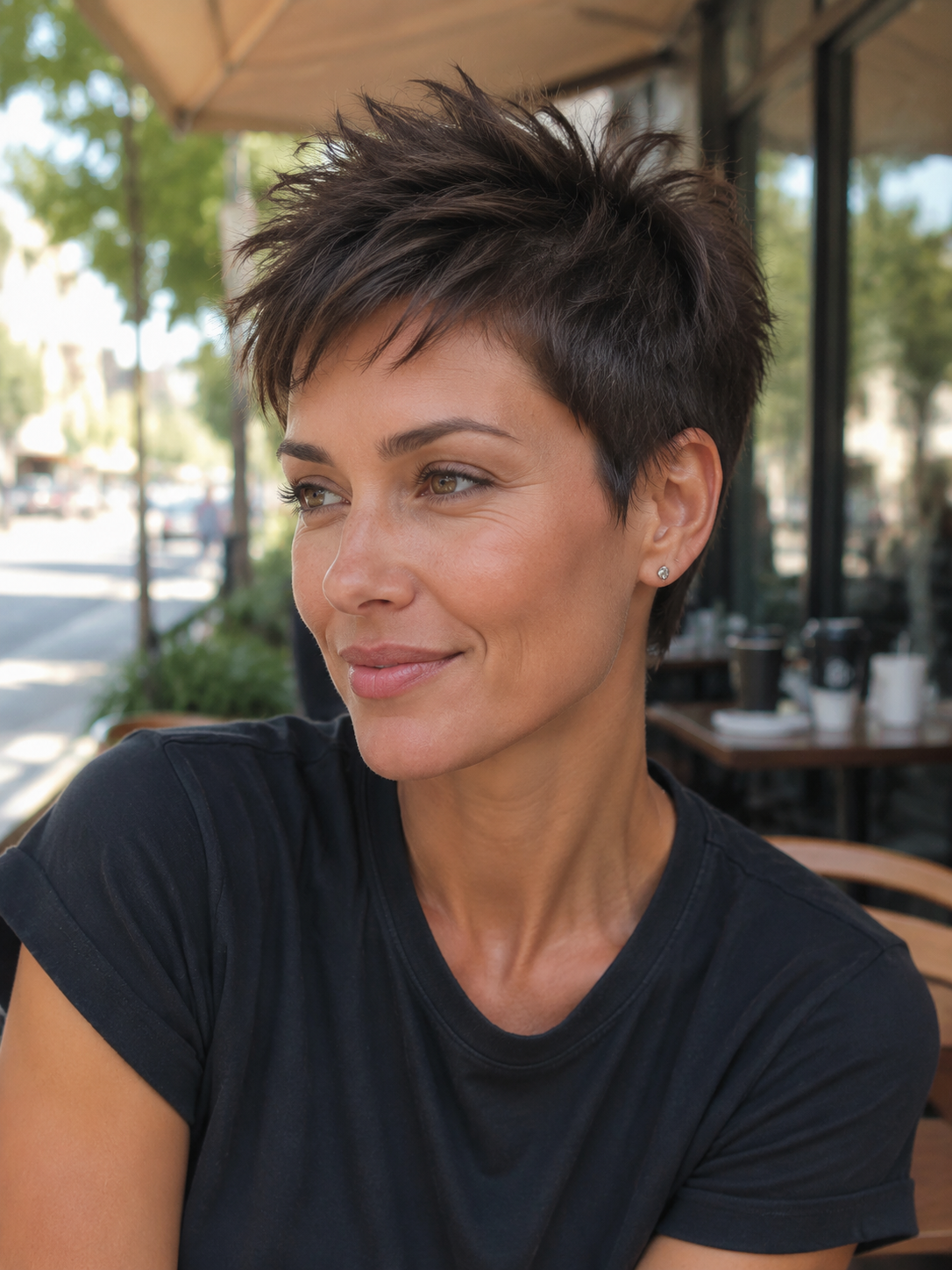
Short, piece-y layers styled upward with a strong-hold paste create noticeable height and texture. This is one of the more dramatic ways to add volume to fine hair, since the style itself depends entirely on lift rather than natural thickness.
Ear-Tucked Pixie
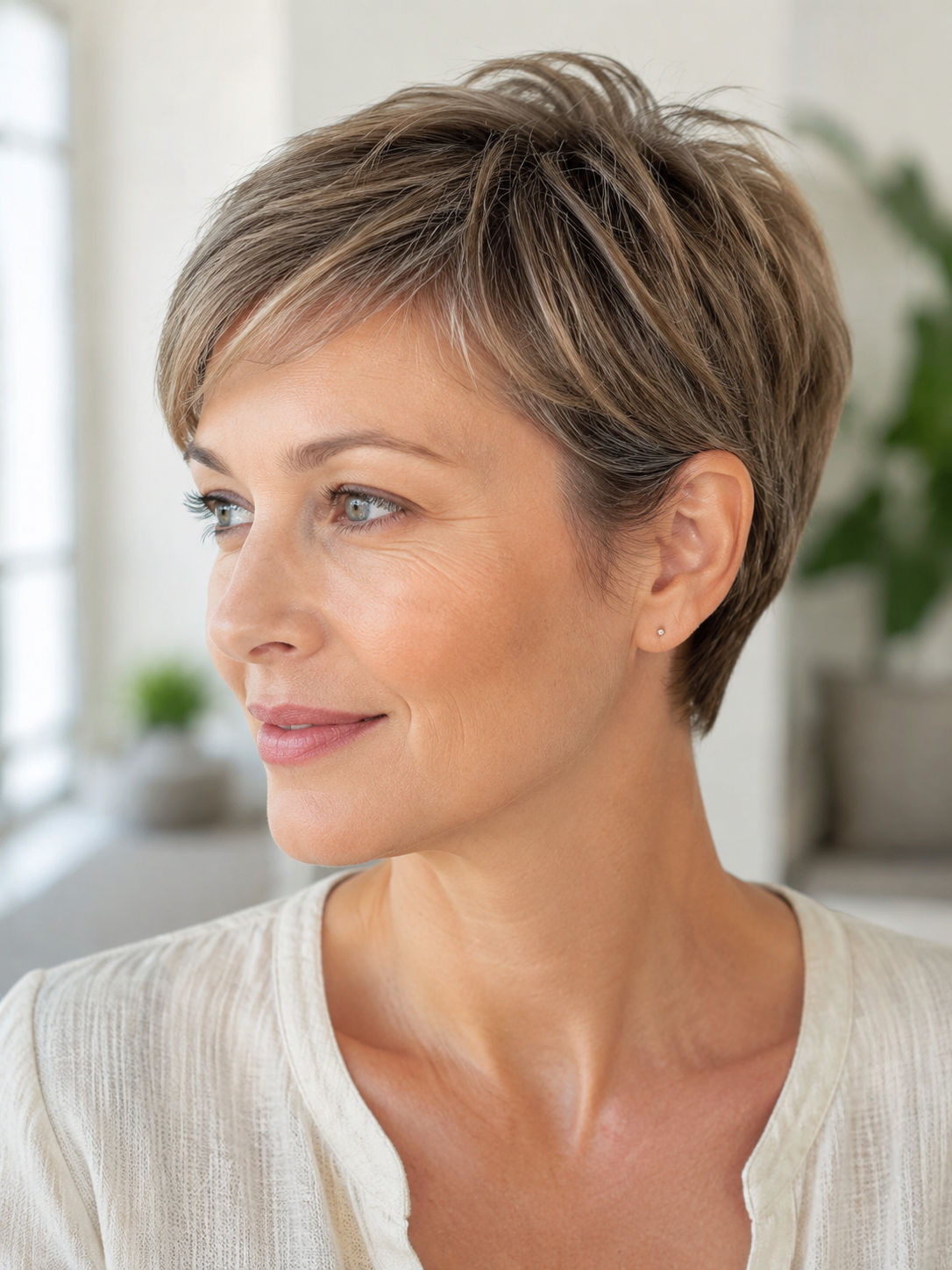
A soft, rounded pixie designed to tuck neatly behind the ears, with a bit more length left at the crown for styling flexibility. The tucked sides keep things clean while the longer top still allows for texture and movement.