Pink is one of the least forgiving hair colors when it comes to upkeep, but it’s also one of the most rewarding, since even a subtle version reads as intentional rather than accidental. The shade you land on has less to do with trend charts and more to do with your natural base and how much bleaching you’re actually willing to commit to. Here are 19 ways to wear it, from barely-there to fully saturated.
Pastel Pink
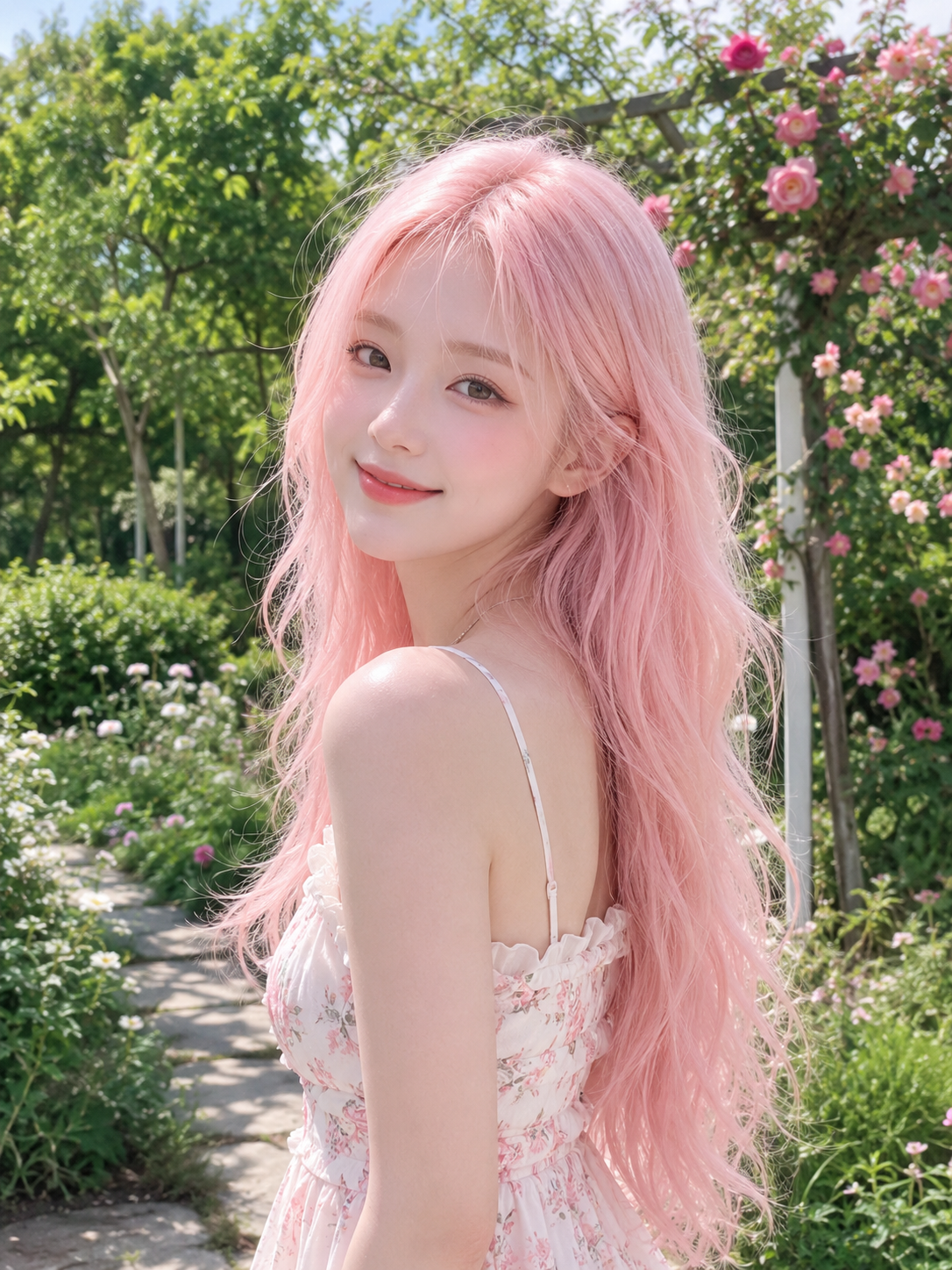
This soft, whisper-light pink needs a level 10 platinum base to show up correctly, so expect a full bleach session before any pastel toner goes on. Once it’s there, it fades gracefully into an even softer version of itself rather than looking patchy. Cool-undertone skin tends to suit this shade best. A purple or pink-toning shampoo used sparingly keeps brassiness from creeping in between refreshes.
Hot Pink
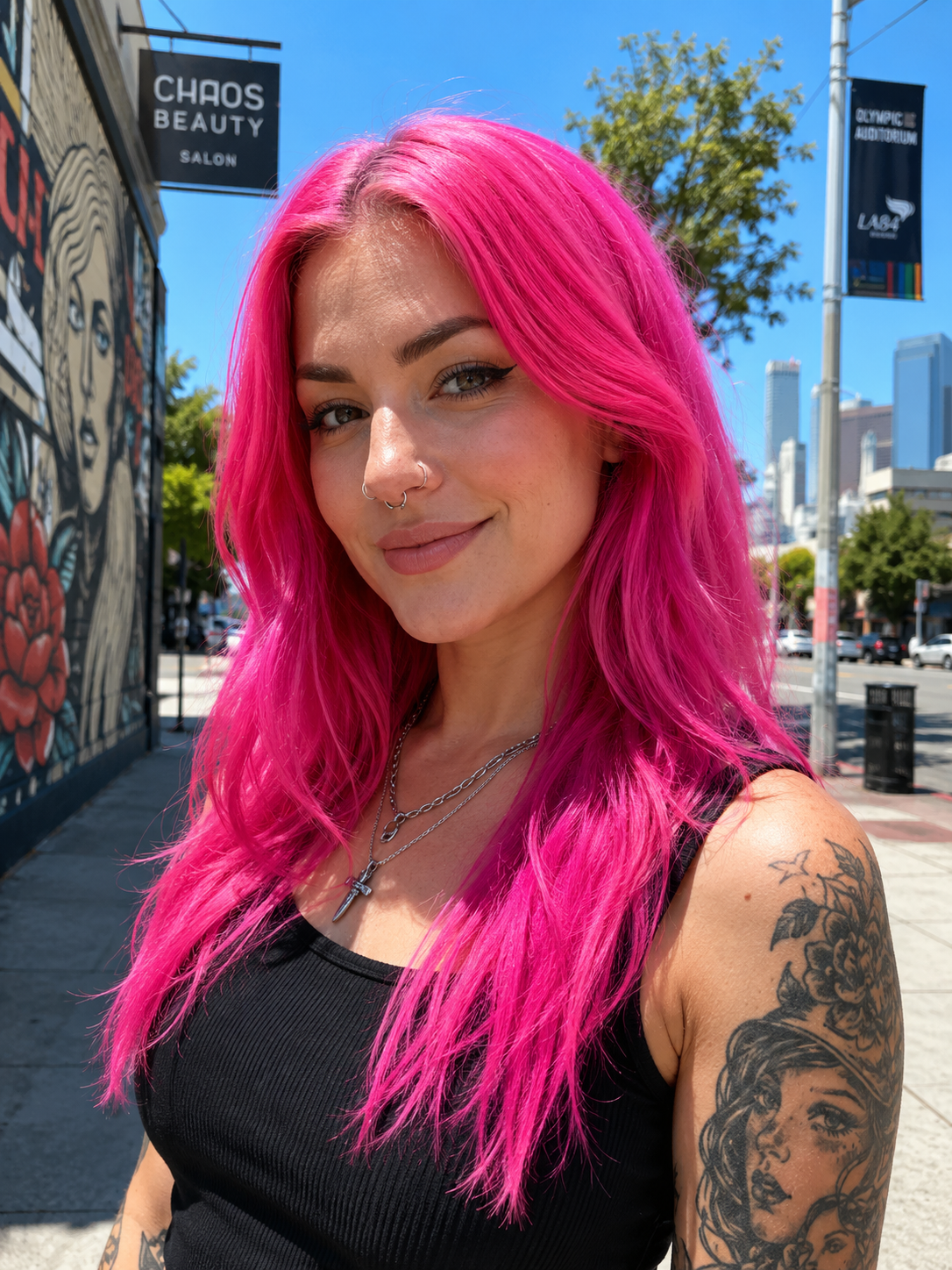
Saturated and unapologetic, hot pink demands a fully lightened base and a semi-permanent dye applied generously for even coverage. This is a high-maintenance color, vivid pinks fade fastest of any shade family, often within two to three weeks. Touch-ups with a color-depositing conditioner between salon visits help stretch the vibrancy. Best suited for anyone who genuinely doesn’t mind the upkeep.
Rose Gold
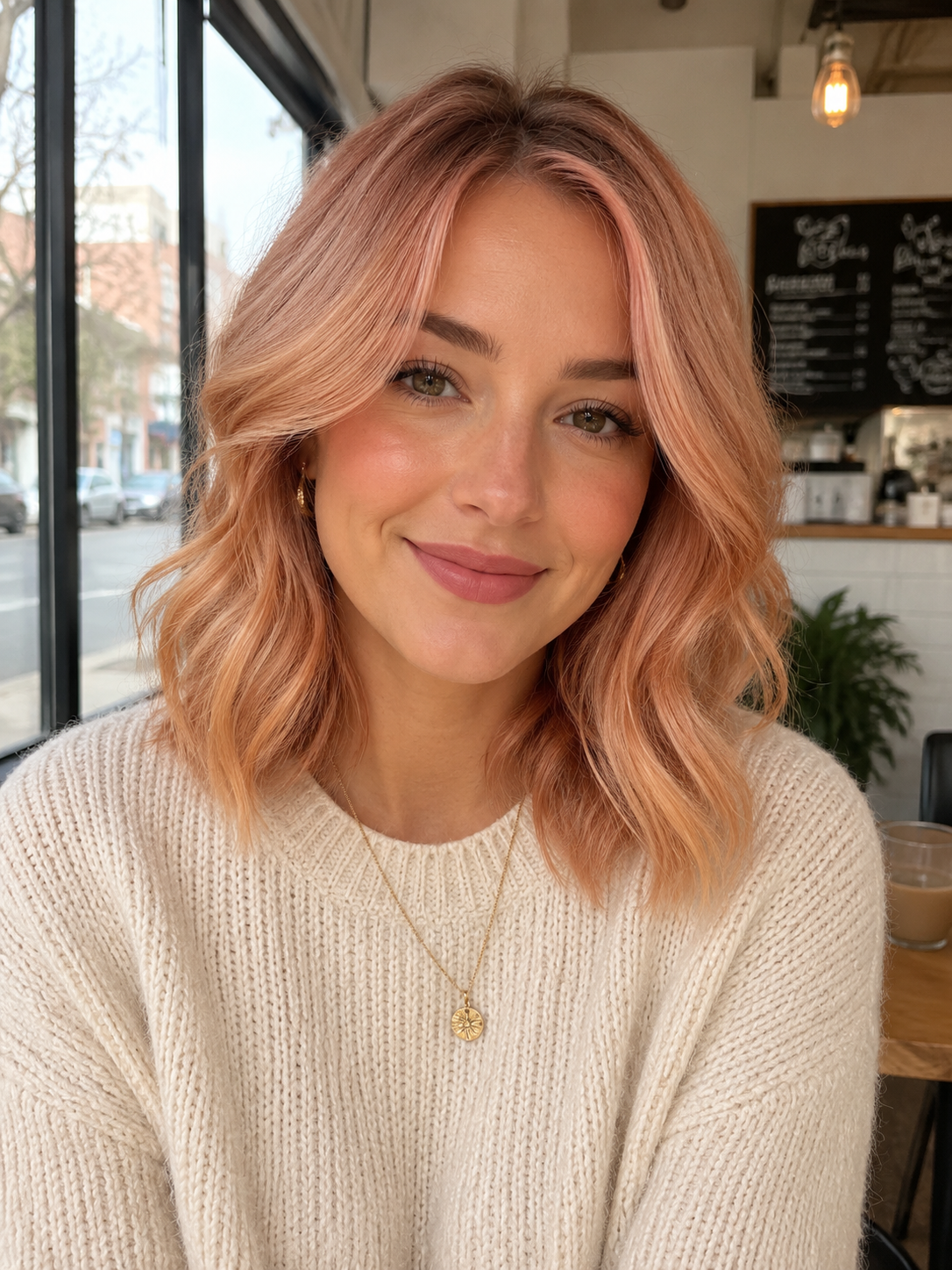
Warmer and more wearable than most pinks, rose gold blends blush tones with golden undertones for a shade that reads as elevated rather than costume-like. It works especially well over a pre-lightened blonde base rather than a full bleach job. Because it leans warm, it tends to hold longer than cooler pinks before needing a refresh.
Dusty Rose
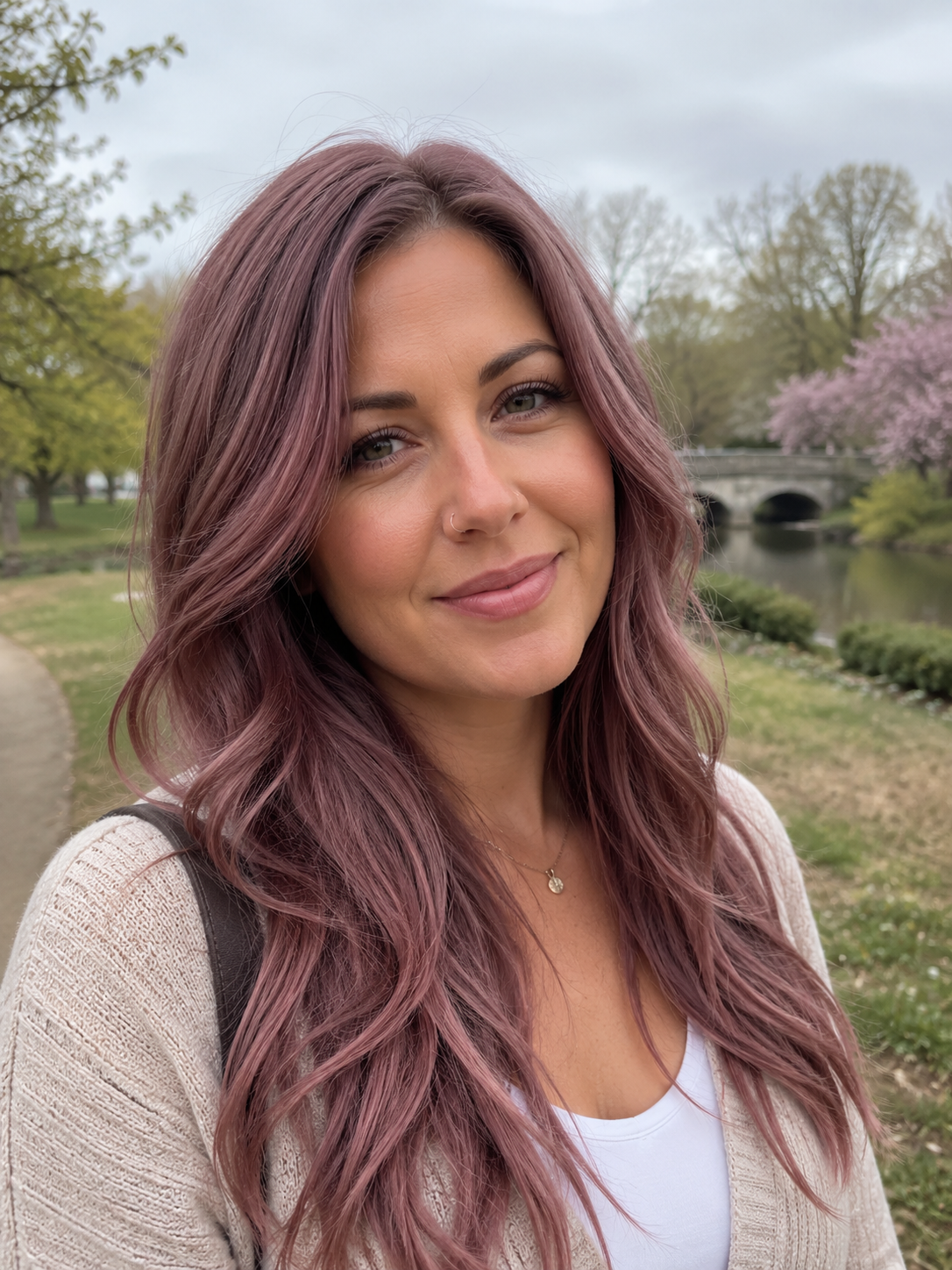
A muted, low-saturation pink with almost mauve undertones, dusty rose suits anyone who wants color without the intensity. This shade is more forgiving as it grows out, since the muted tone blends into natural roots more gently than a bright pink would. A gloss treatment every few weeks keeps the color from turning dull or ashy.
Bubblegum Pink
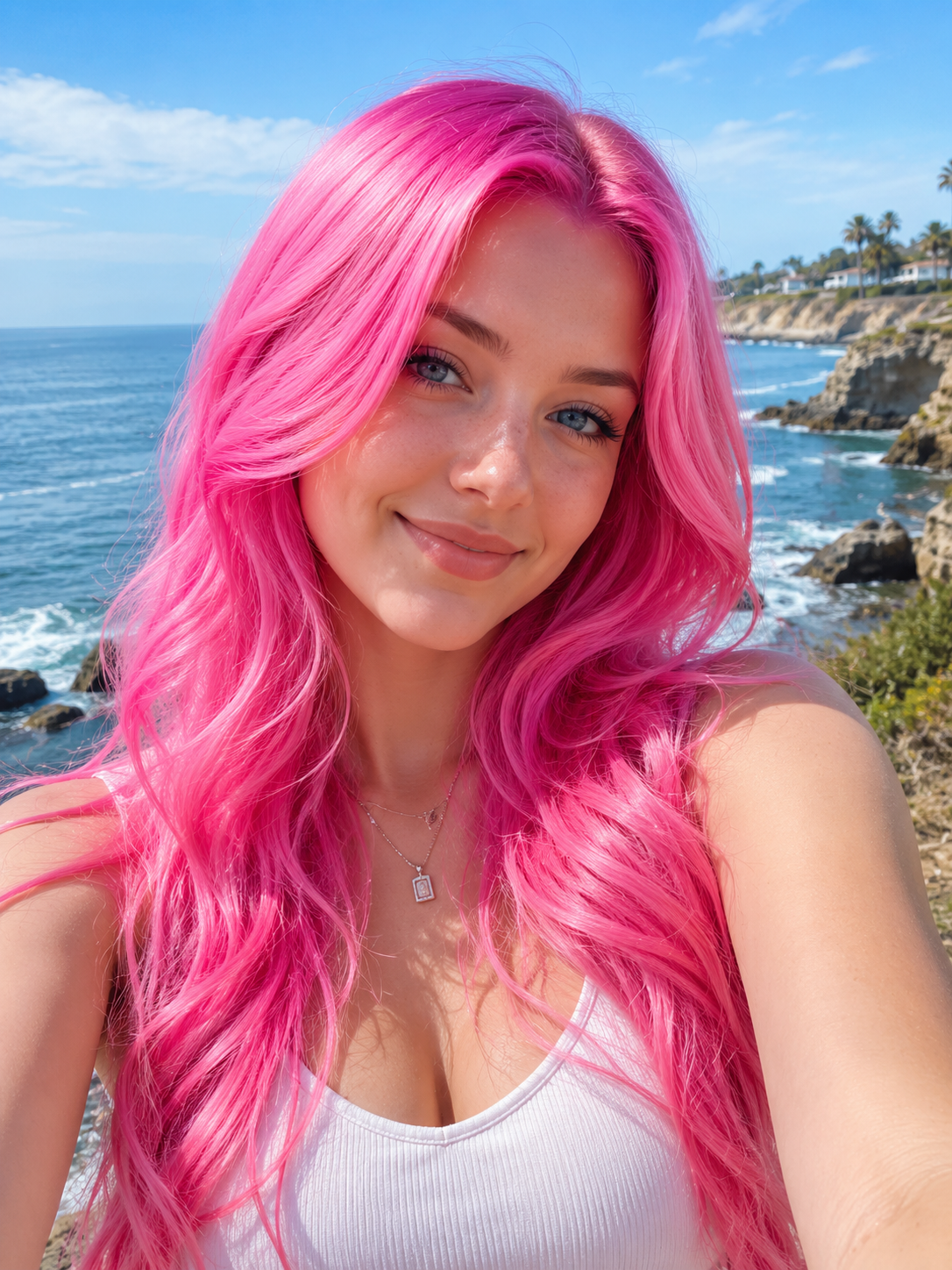
Bright, playful, and fully saturated, this shade leans candy-sweet rather than edgy. It requires the same platinum-level lightening as other vivid pastels before application. Because bubblegum pink sits toward the brighter end of the spectrum, direct sun exposure fades it noticeably faster, so a UV-protecting hair spray is worth adding to the routine.
Blush Pink
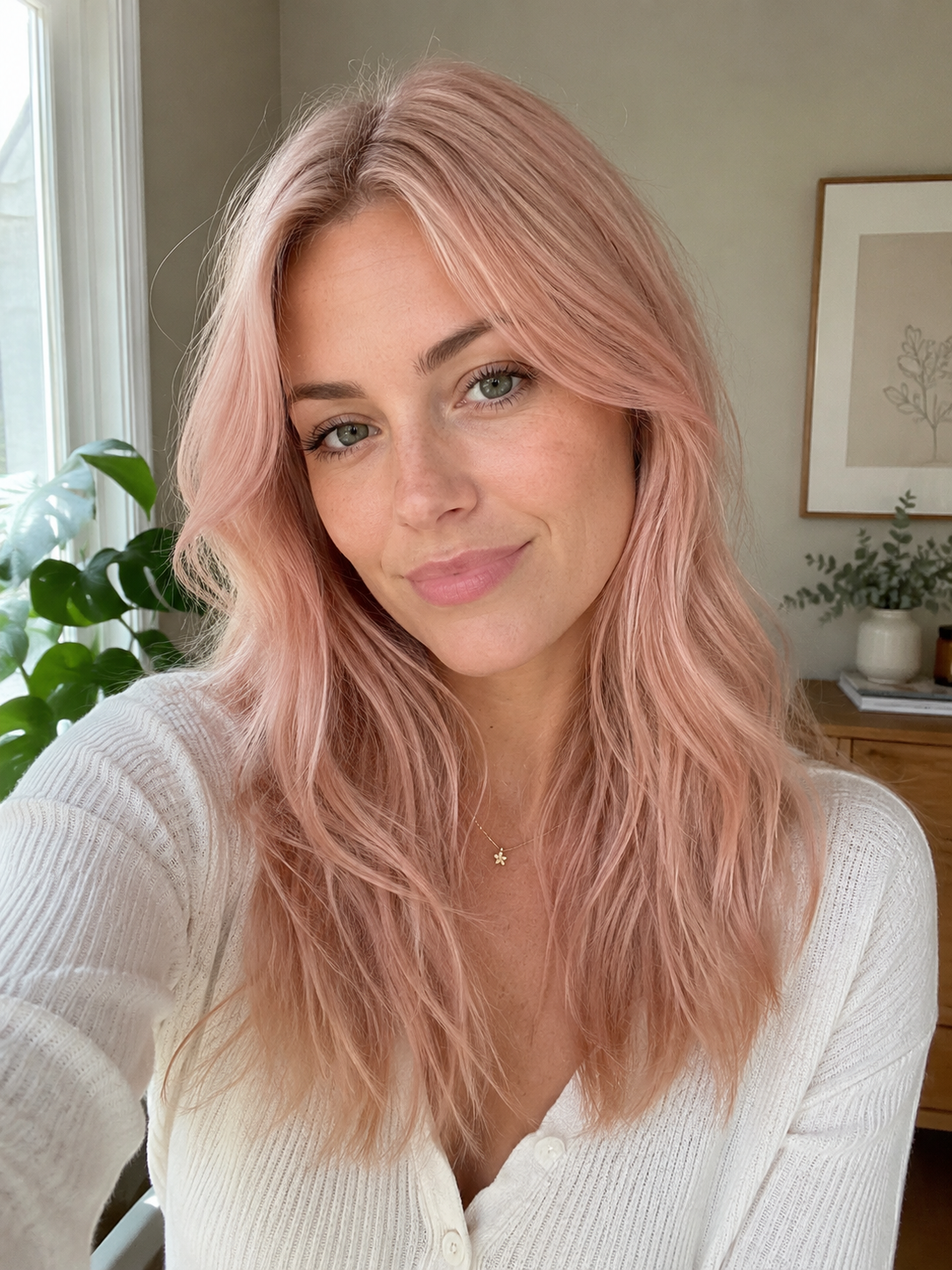
The softest, most office-appropriate version of pink, blush pink barely reads as color at first glance and more as a subtle tint. It works on hair that’s already been lightened to a light blonde, no full platinum required. This shade fades to an even softer version rather than an obvious grow-out line, which makes upkeep fairly low.
Coral Pink
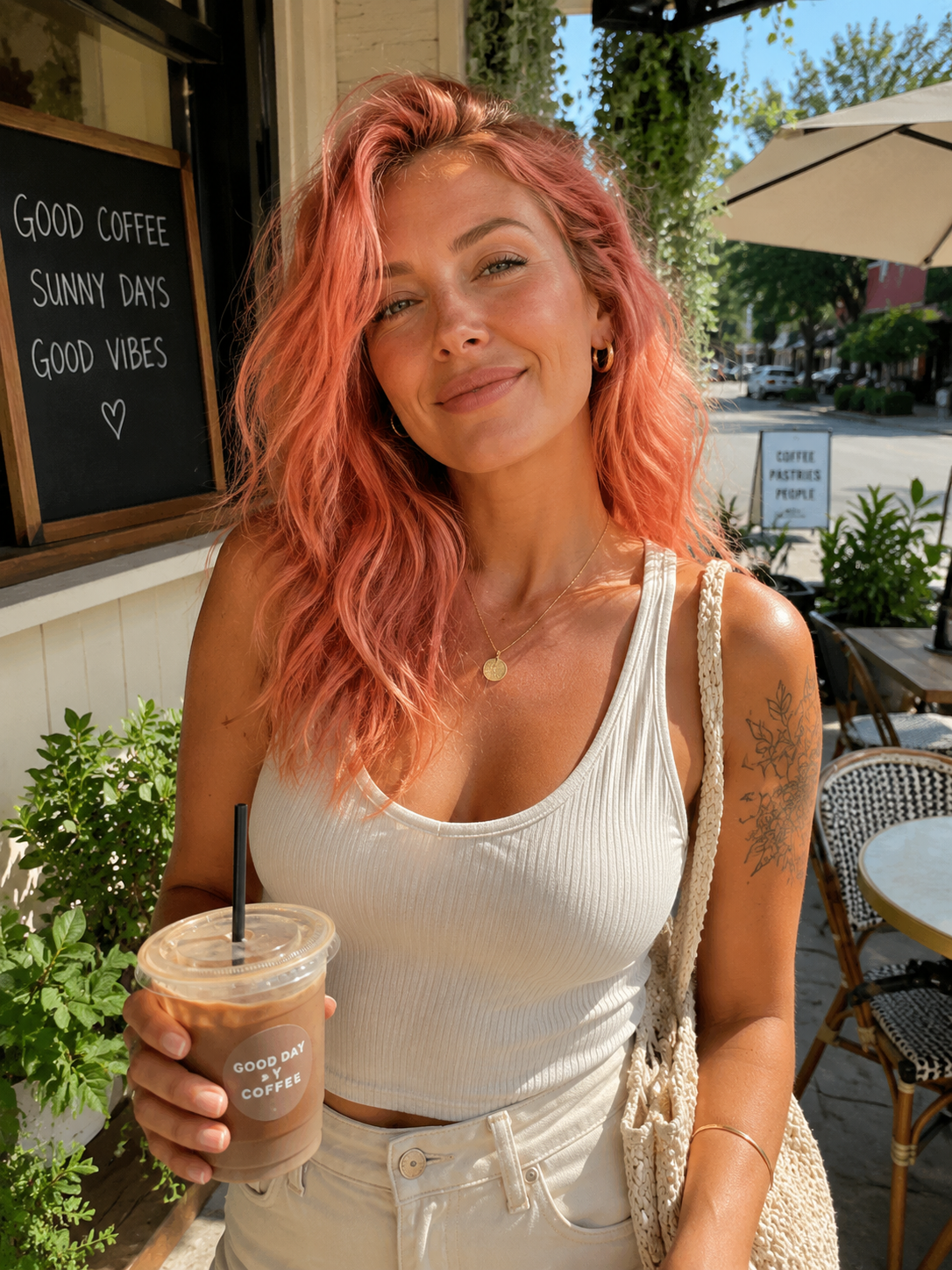
Warm undertones make this shade feel closer to a sunset than a candy color. It flatters warm and olive skin tones especially well, adding brightness without looking artificial. Because coral pink leans warm rather than cool, it tends to fade toward a soft peachy tone rather than turning brassy, which some people actually prefer.
Fuchsia
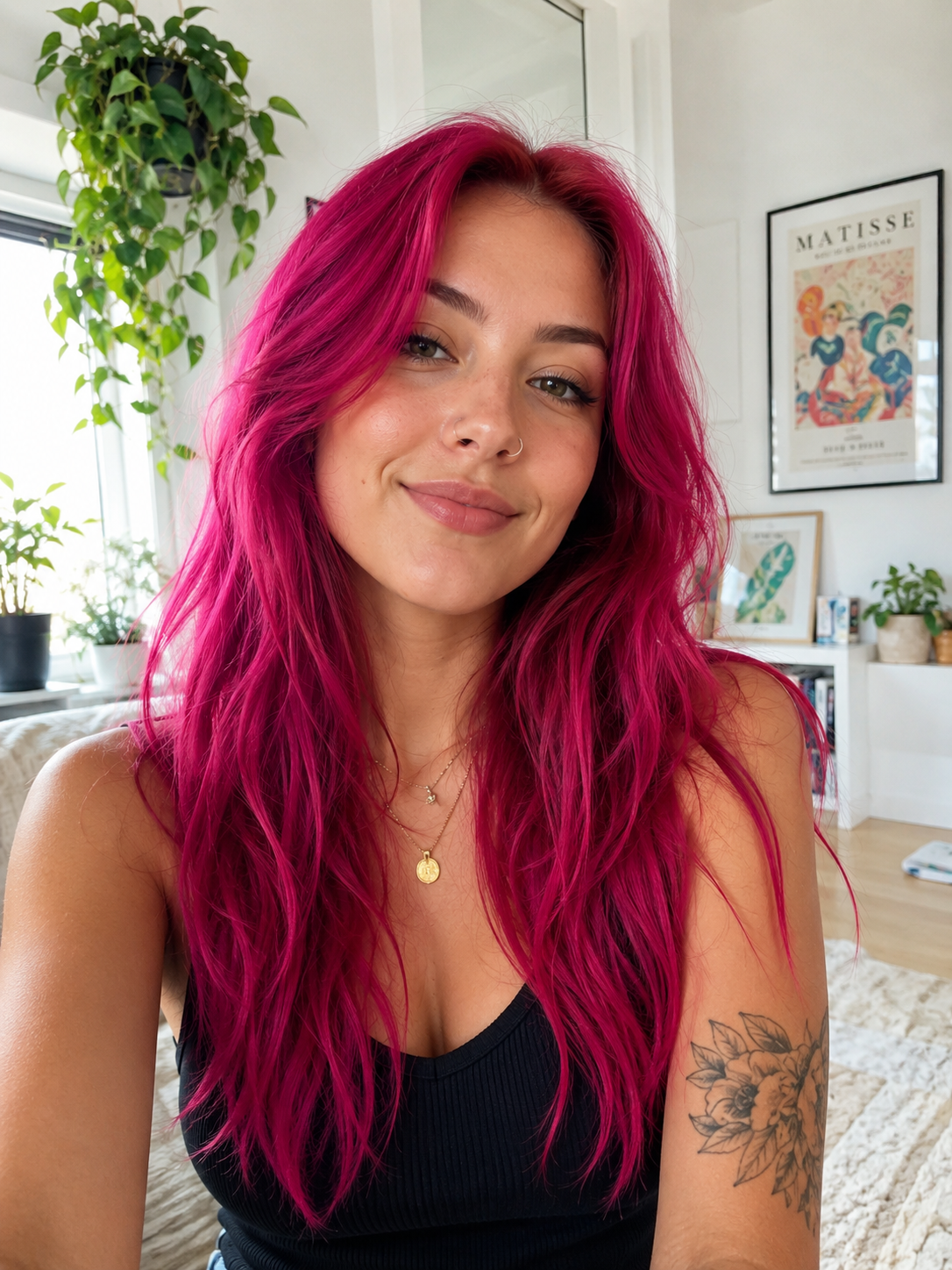
Deep and vivid, fuchsia sits between hot pink and purple, giving it more depth than a straightforward pink. It needs a lightened base to show true color and fades toward a muted lavender-pink as it washes out, which some people lean into as a secondary look. Deep skin tones tend to look especially striking with this saturated shade.
Neon Pink
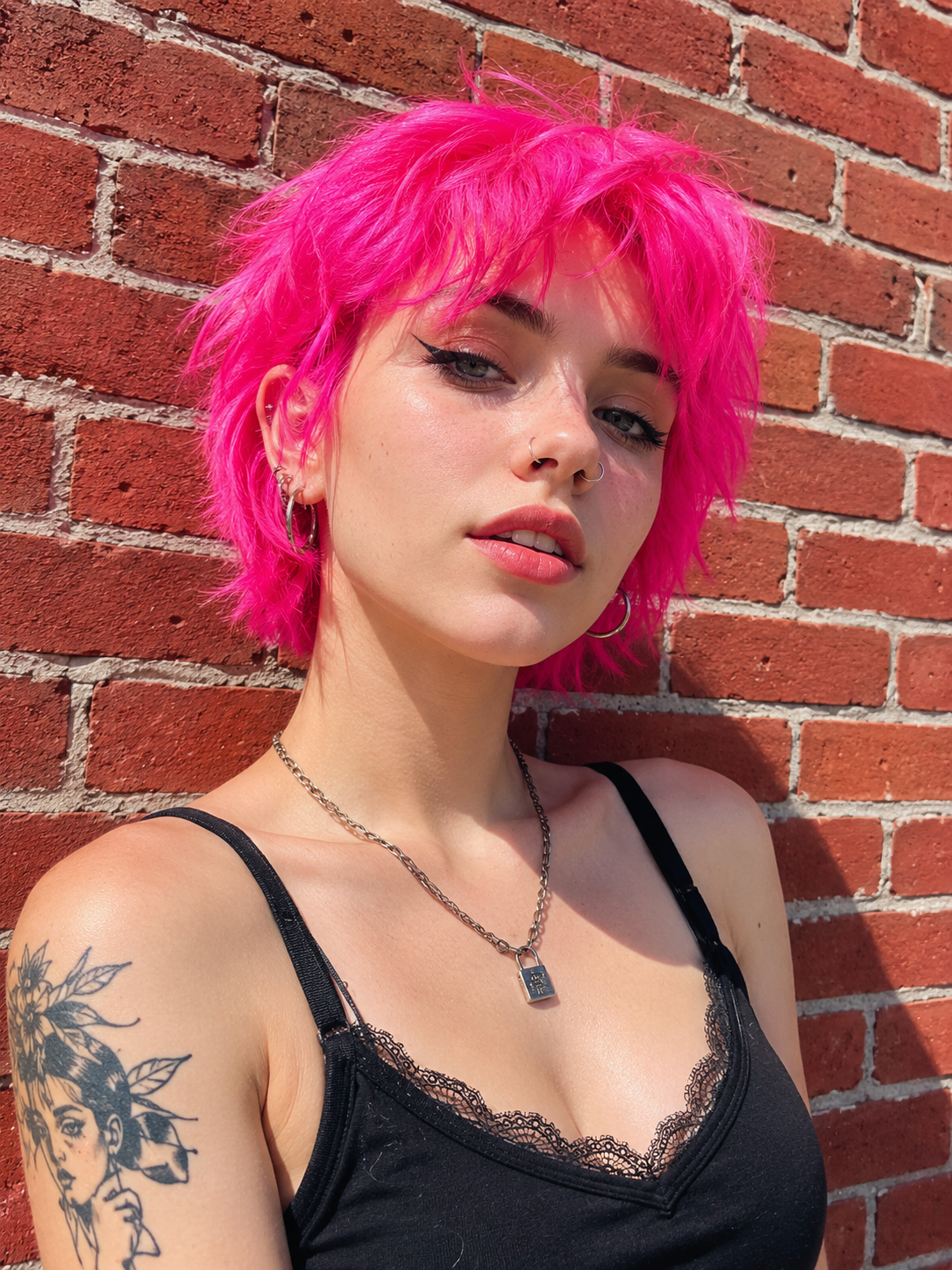
The boldest option on this list, neon pink is built for maximum visibility and works best on very short or very light hair where the color has nothing competing with it. Expect the fastest fade time of any shade here, often needing a refresh within two weeks. This one is a genuine commitment, not a casual weekend dye job.
Pink Balayage
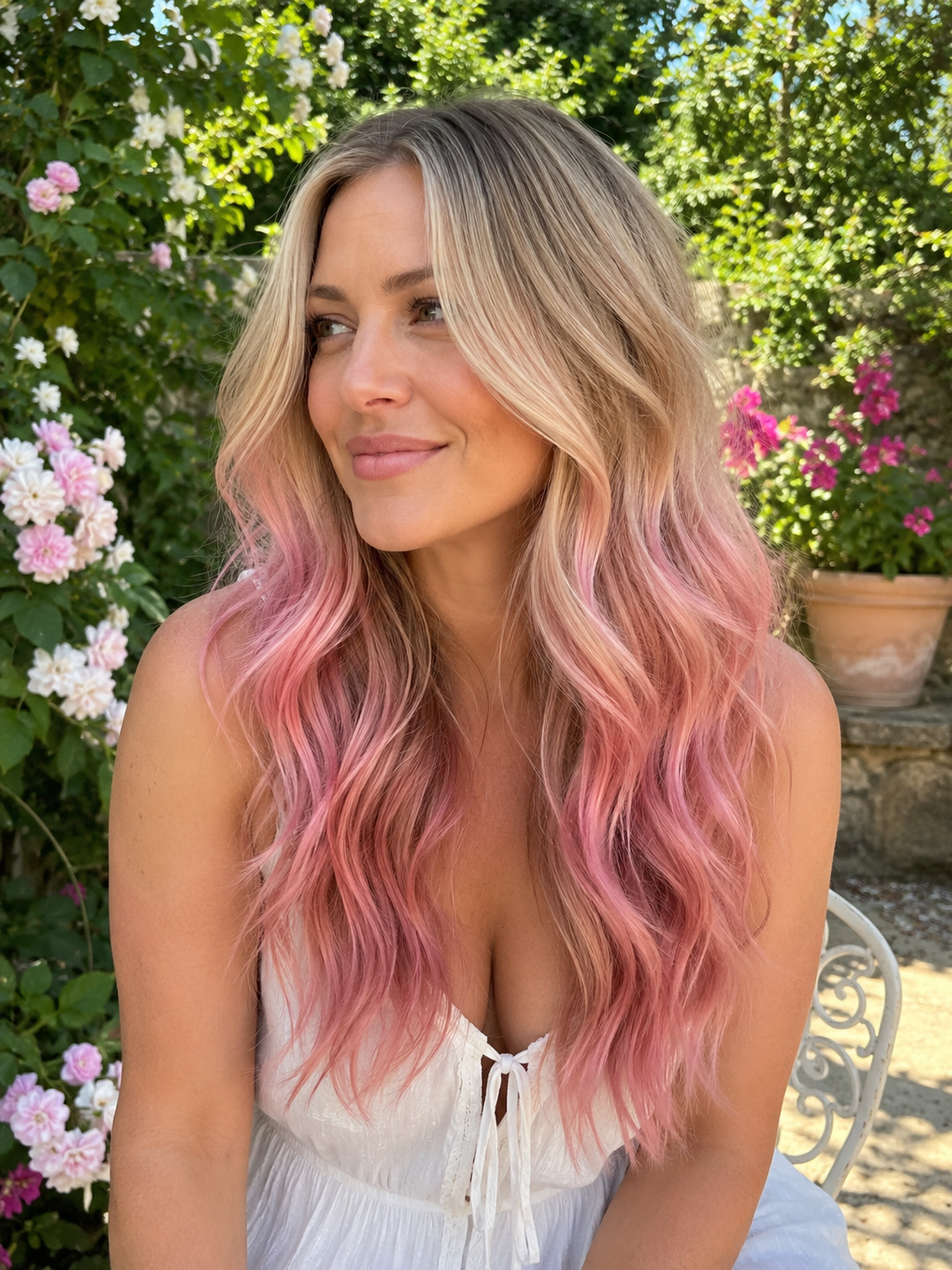
Hand-painted pink strands melted into a blonde or light brunette base give dimension without full commitment. The technique keeps regrowth soft since color isn’t applied at the root. This is one of the more low-maintenance ways to wear pink, since the grow-out actually looks intentional rather than needing an immediate touch-up.
Pink Ombré
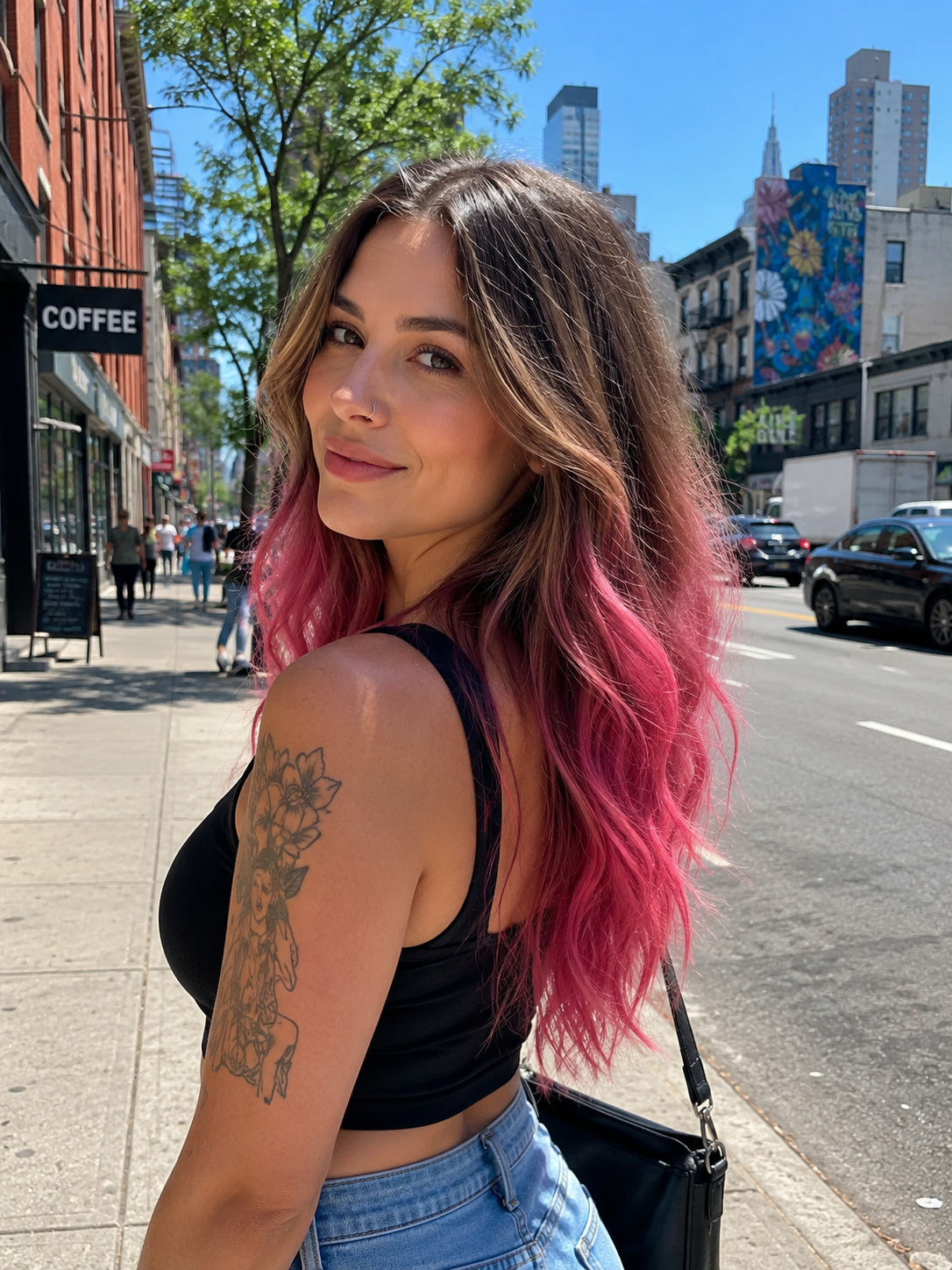
A gradual transition from natural roots into pink ends creates a built-in grow-out buffer, making this one of the more practical vivid options. The pink concentrates in the lower half to two-thirds of the hair, getting more saturated toward the tips. Works on darker bases too, though the contrast will be softer than on pre-lightened hair.
Pink Peekaboo Highlights
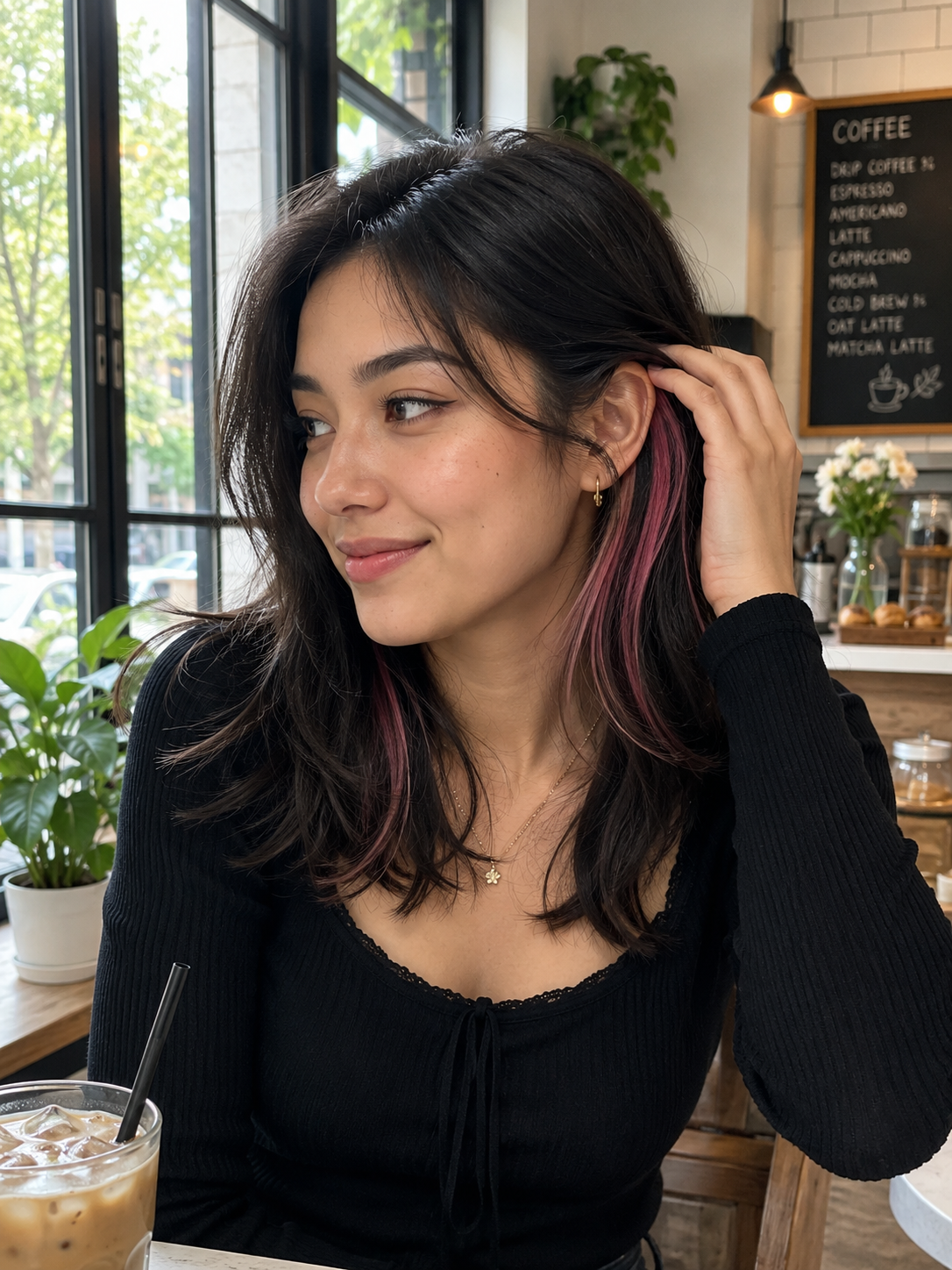
Thin panels of pink placed underneath the top layer of hair reveal themselves when hair moves or gets tucked behind an ear. It’s a genuinely low-commitment way to try pink, since most of the hair stays your natural color. This technique works particularly well on darker hair, where the hidden panels create a surprise pop of color.
Pink Root Melt
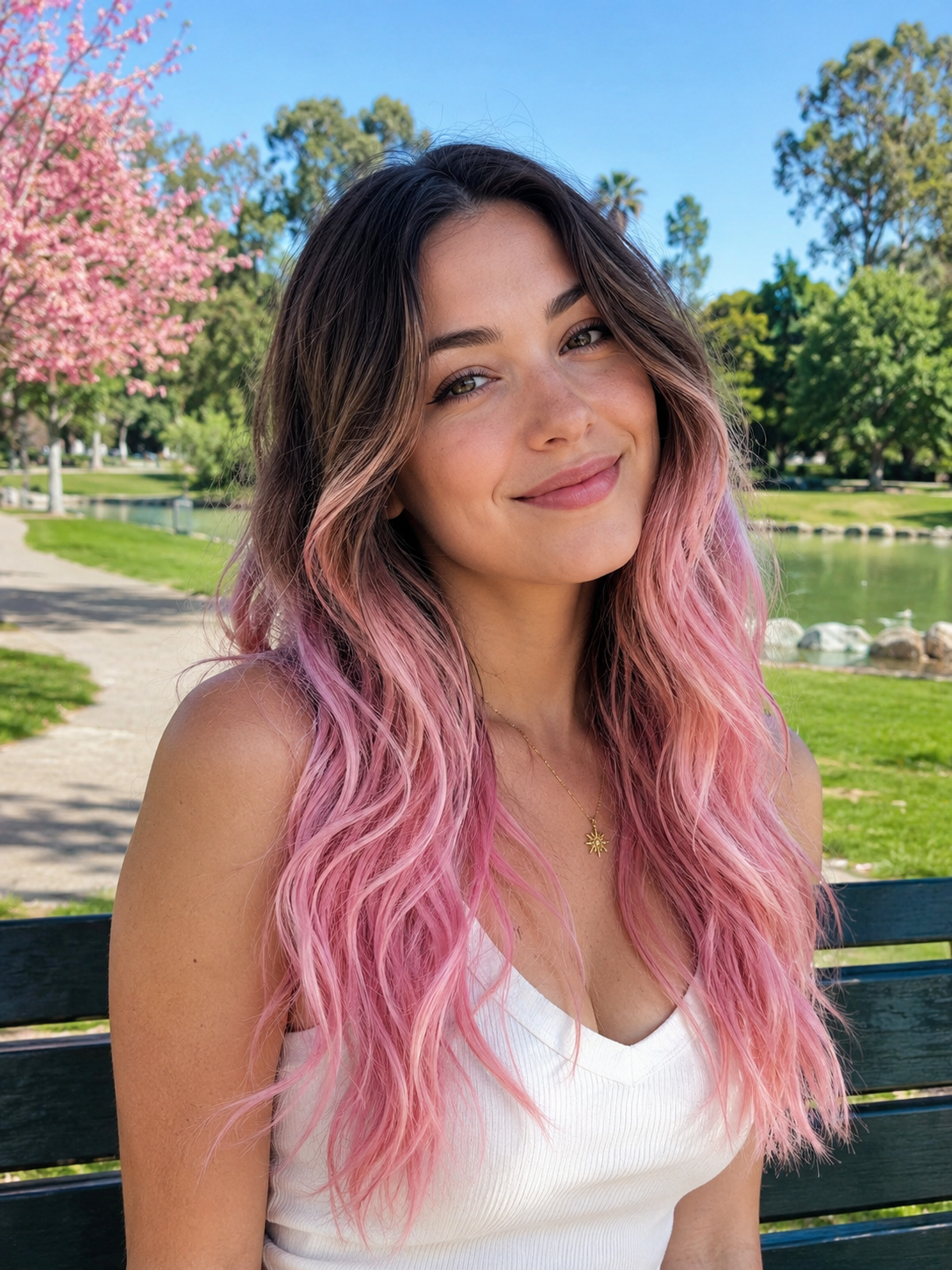
Rather than a hard line at the roots, this technique blends natural hair color gradually into pink through the mid-lengths. It’s designed specifically to minimize the visible grow-out that vivid colors are known for. This is a smart option for anyone who loves pink but doesn’t want to be back in the salon chair every three weeks.
Soft Pink and Brunette Blend
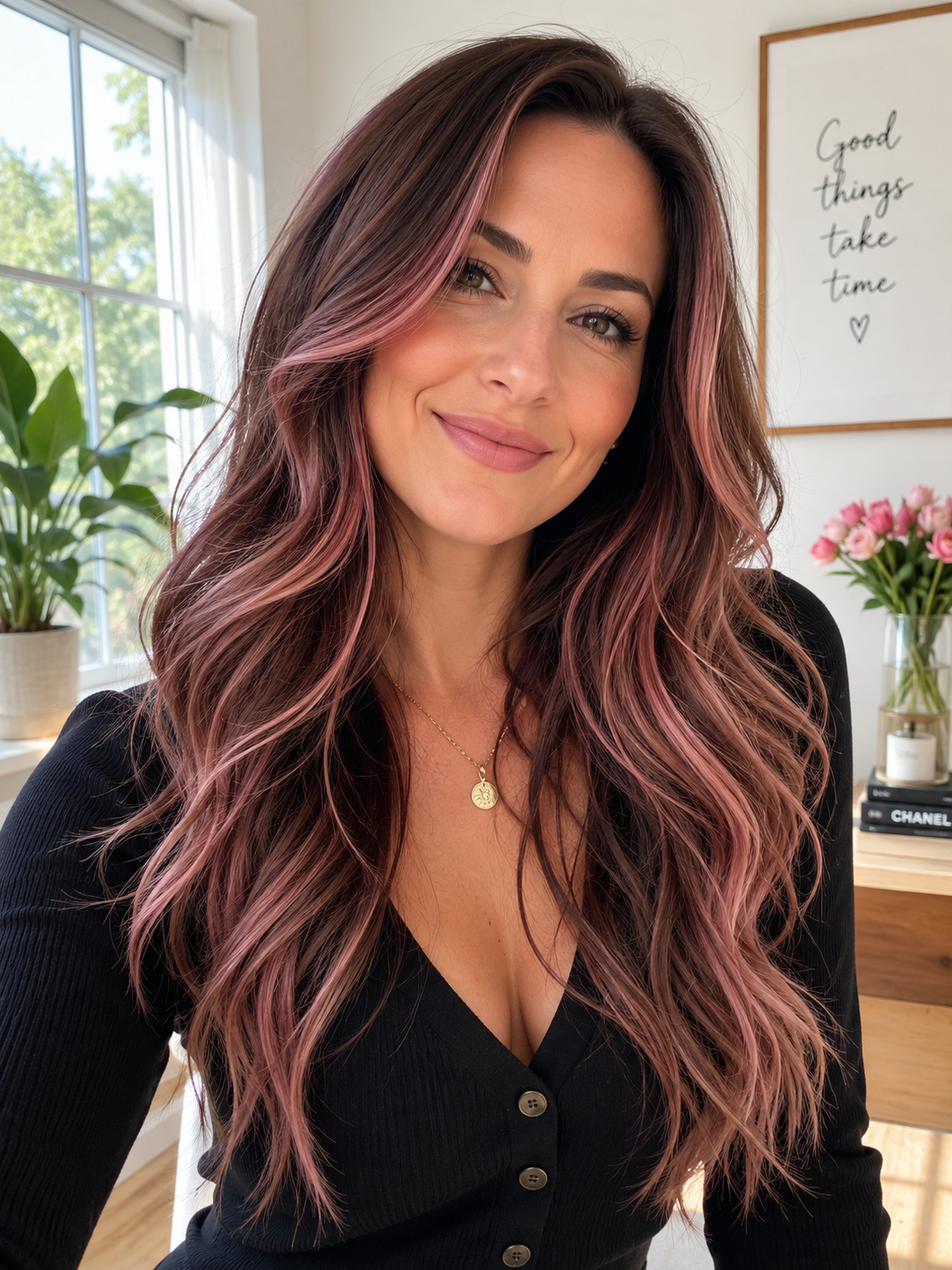
Rose-toned pink woven through a brunette base creates a shade that shifts subtly in different lighting, sometimes reading as brunette, sometimes catching a rose glow. It’s a gentler way to wear pink for anyone not ready for a full lightening process. The subtlety does mean the color fades faster than more saturated versions.
Metallic Pink
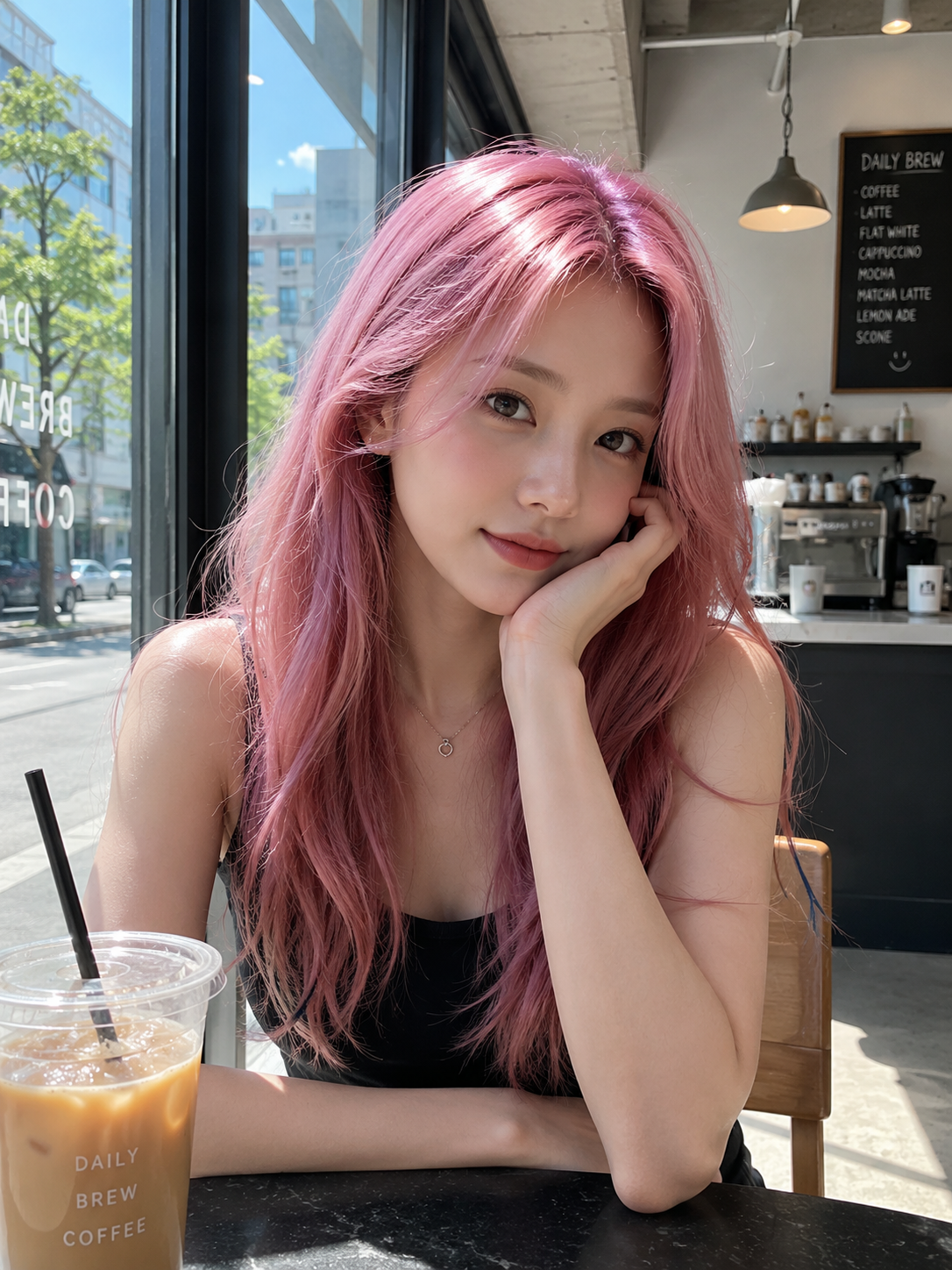
A cooler, almost silvery pink with a reflective quality that catches light differently than a standard matte pink. This shade needs a very light, ideally platinum, base to show its metallic quality properly. Semi-permanent metallic dyes fade faster than standard vivids, so frequent gloss refreshes are part of the deal here.
Strawberry Blonde-Pink Blend
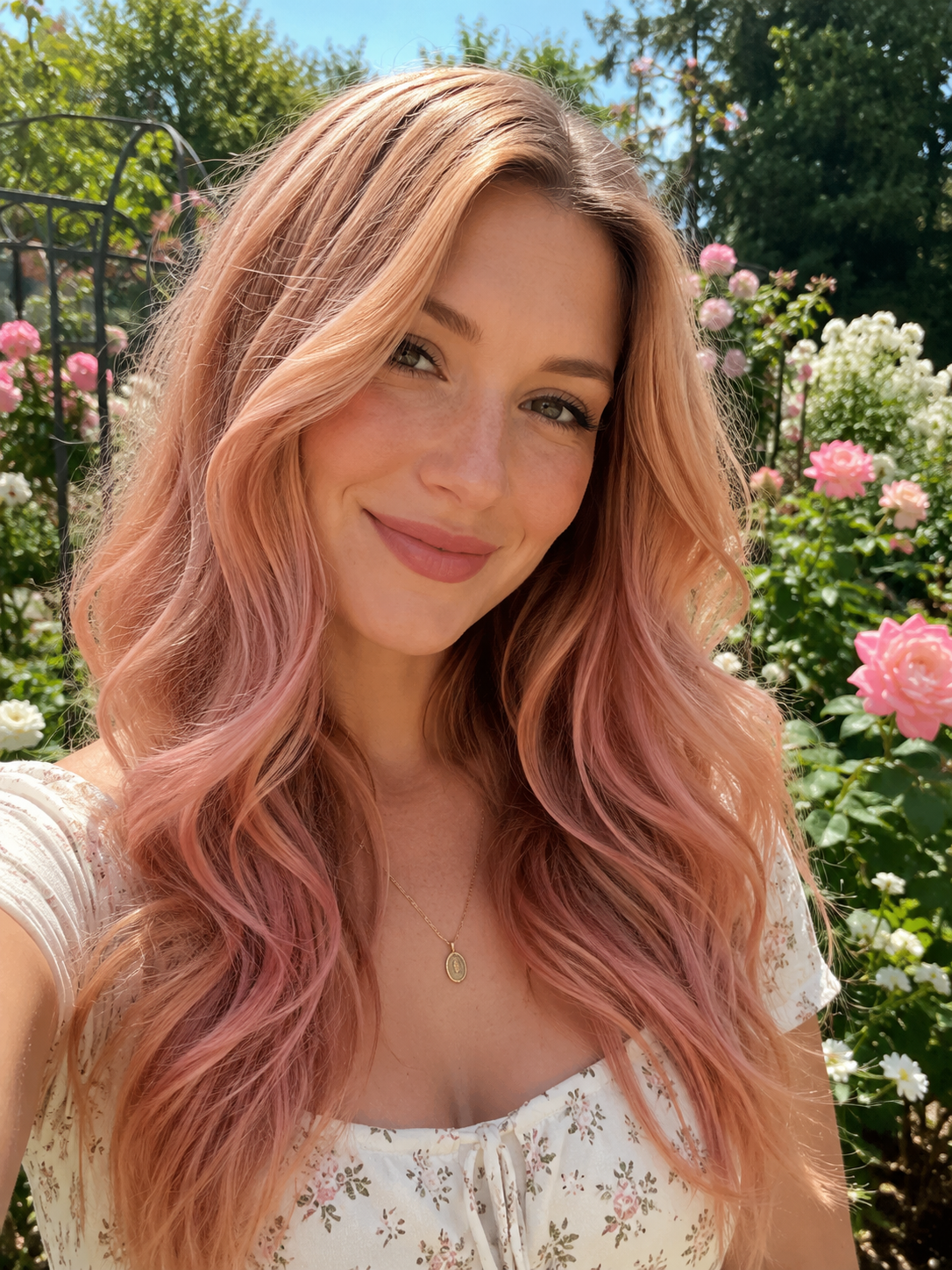
A warmer, more subtle take that blends strawberry blonde with soft pink undertones, this shade sits closer to natural than most entries on this list. It suits fair to medium skin tones with warm undertones especially well. Because it’s less saturated, the maintenance is noticeably easier than a full vivid pink commitment.
Chunky Pink Streaks
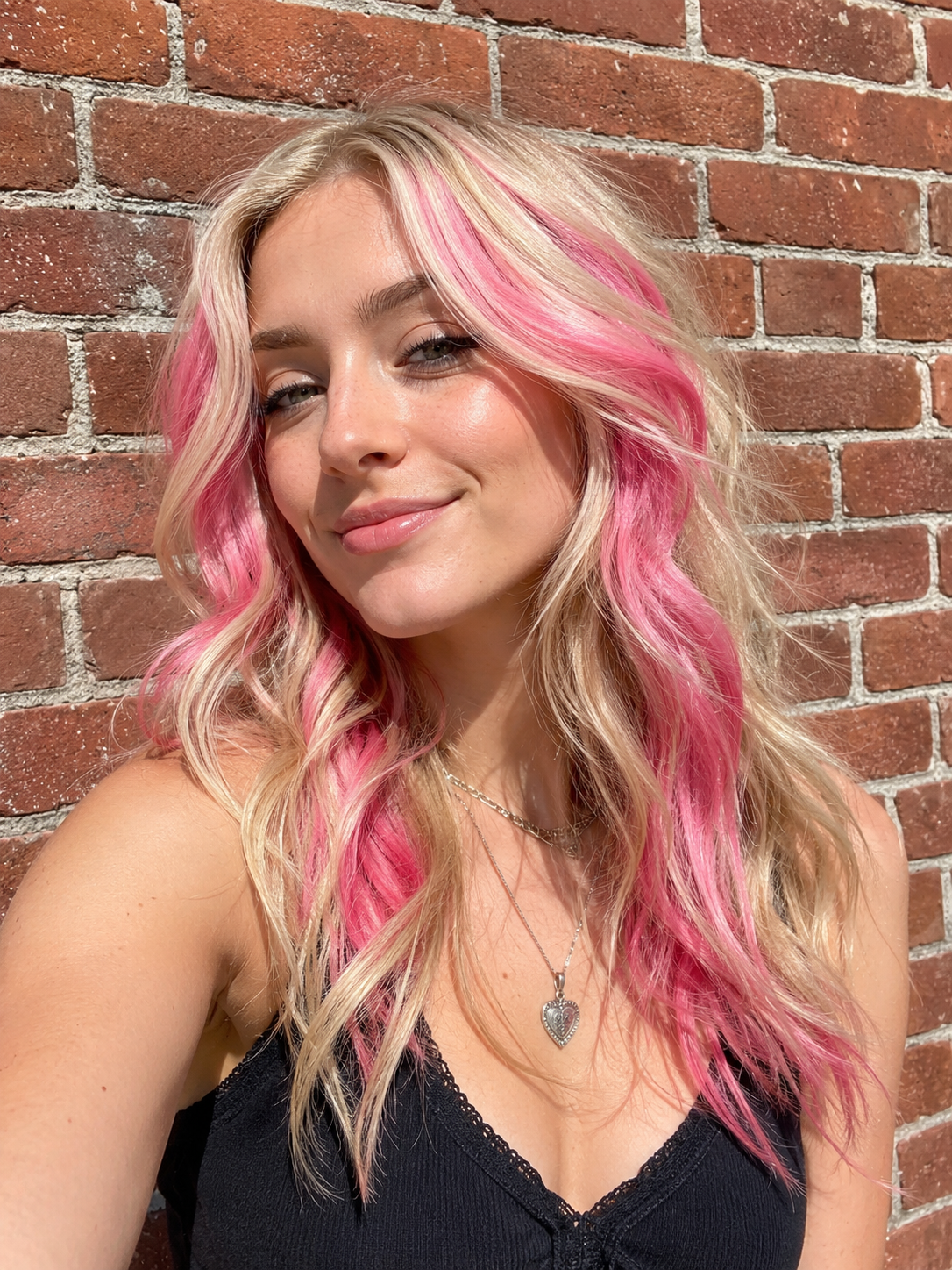
Bold, wide panels of pink placed throughout rather than blended create a graphic, editorial effect. This works best on hair that’s already light, since the streaks need contrast to read clearly. It’s a striking option for anyone who wants pink to be the statement rather than a subtle accent.
Ashy Pastel Pink
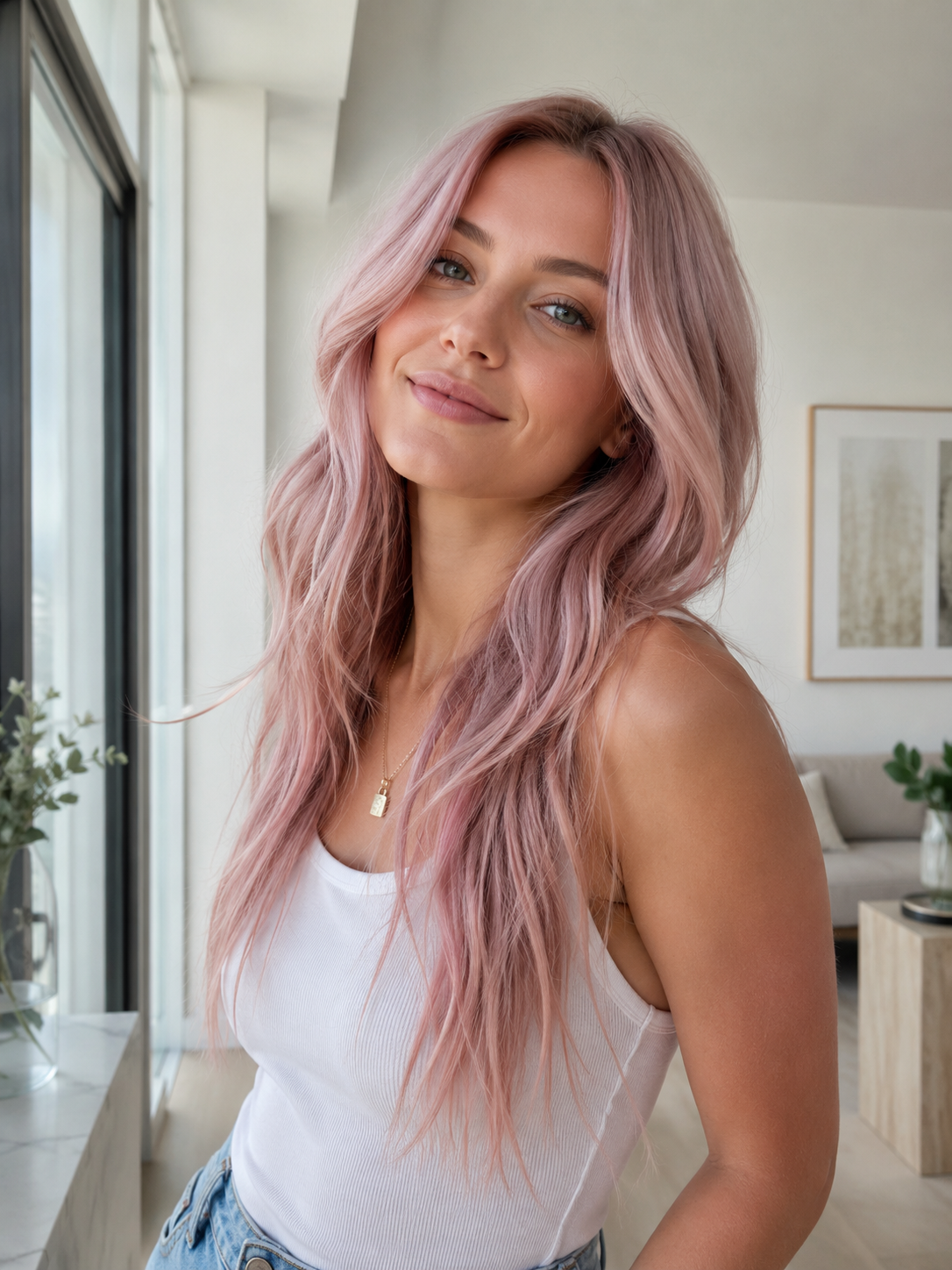
A cooler, slightly gray-toned pink for anyone who finds standard pastel pink too warm or too sweet. This shade needs consistent purple or blue toning shampoo to keep it from shifting warm as it fades. It suits cool undertones particularly well and photographs with a softer, almost silvery quality.
Deep Berry Pink
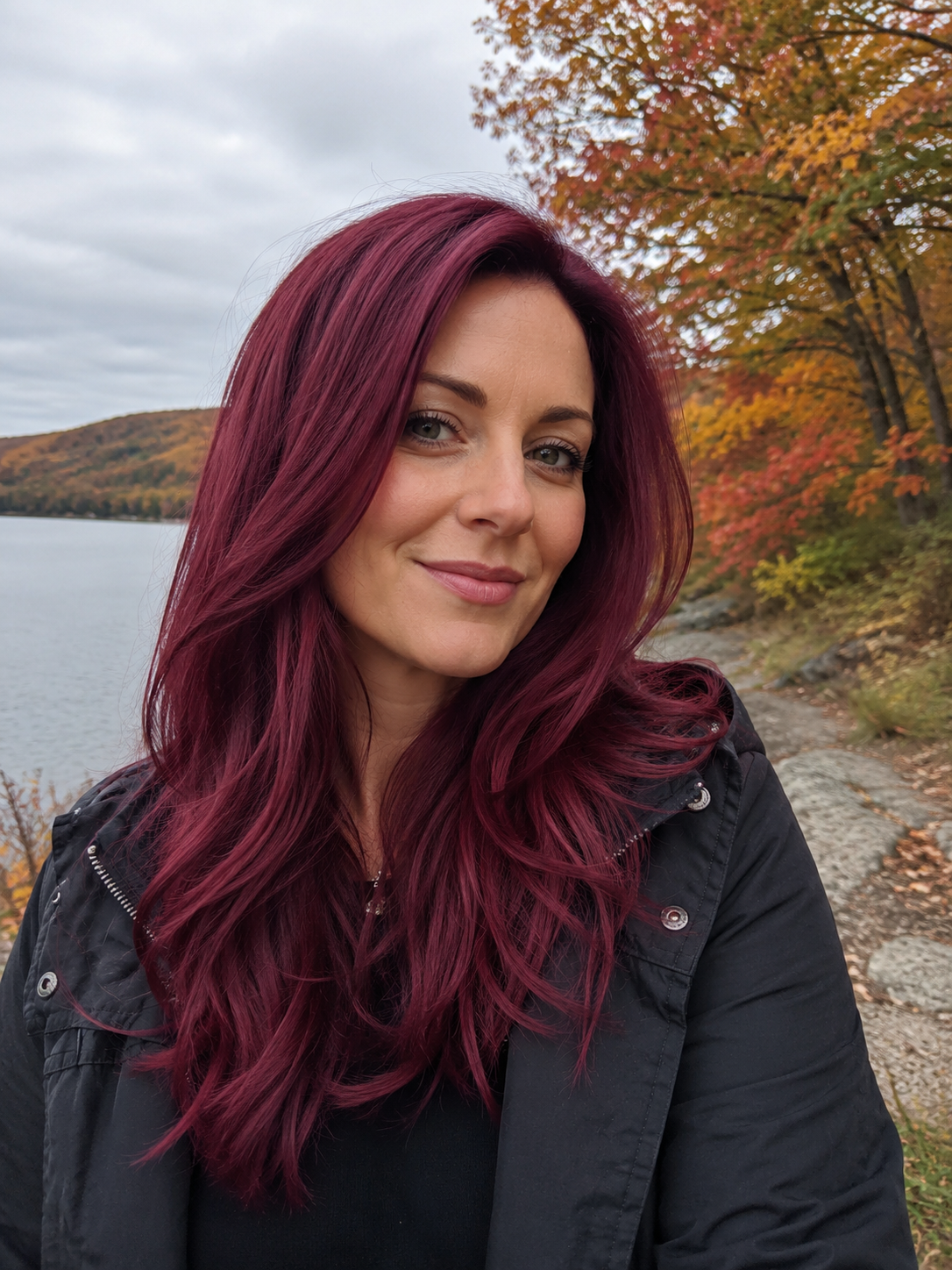
The darkest, most sophisticated shade on this list, deep berry pink reads almost like a wine tone in low light and a true pink in direct sun. It requires less lightening than brighter pinks since the depth works with darker bases too. This is a good entry point for anyone wanting to try pink without the full commitment of going platinum first.