Fine hair doesn’t need more product to look fuller. It needs the right layers in the right places. A shag lob works because shorter, face-framing pieces create movement exactly where fine strands go flat. The length past the collarbone still carries enough weight to keep the ends controlled. Stylists like this cut on thin hair for a simple reason. Uneven layers catch light differently than a blunt line, creating the illusion of extra density. The version you pick depends on your part, your bangs, and your styling time.
Curtain-Bang Shag Lob
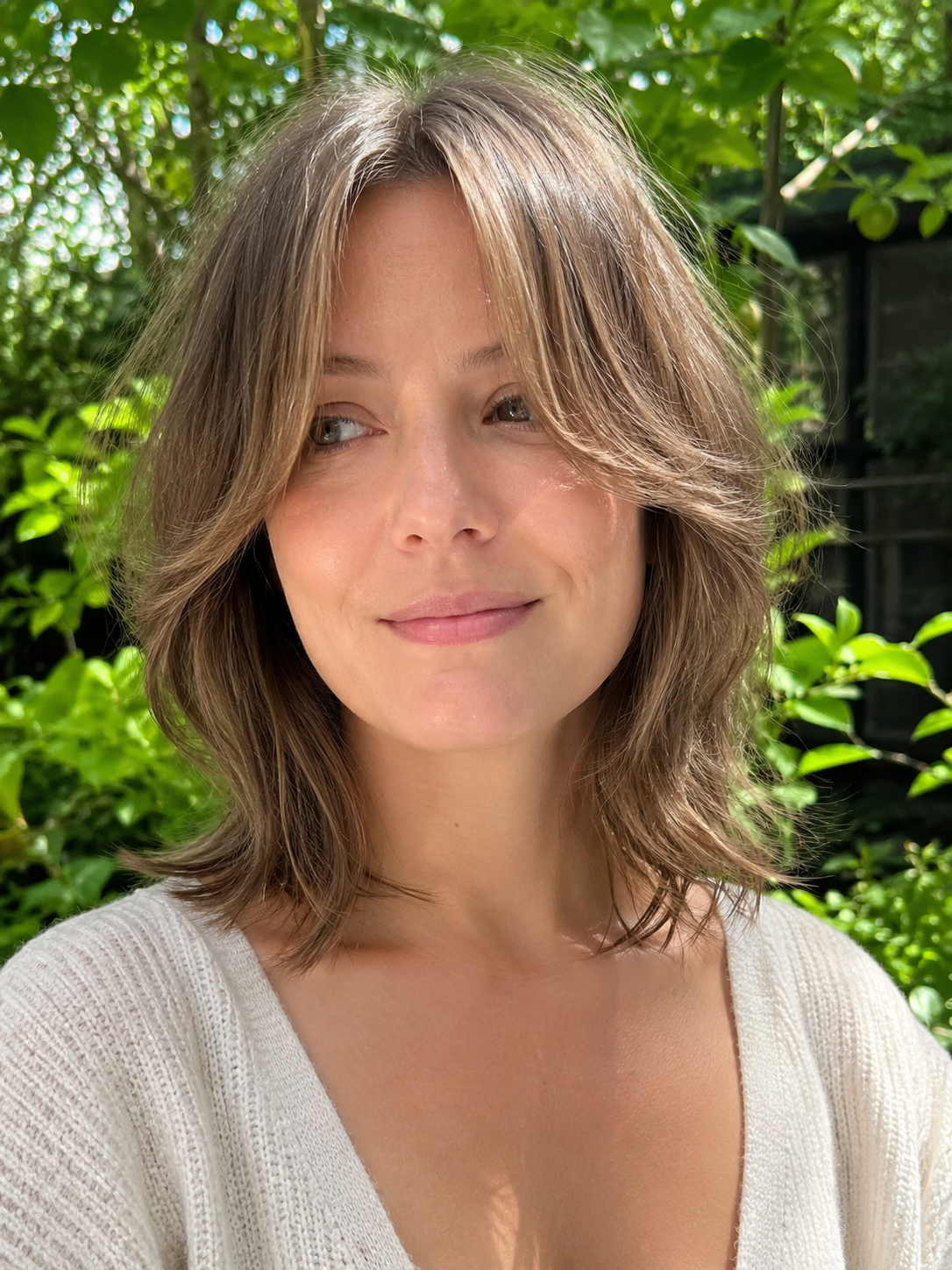
Let the bangs do the heavy lifting here. Curtain bangs split at the center and blend into long, face-framing layers. They flow straight into the rest of the shag. On fine hair, this softens the hairline fast and adds motion around the face, with no extra length needed. Ask your stylist for feather-cut ends near the part so the bangs don’t sit heavy. A light mousse at the roots keeps the whole style from falling flat by midday.
Blunt-Perimeter Shag Lob
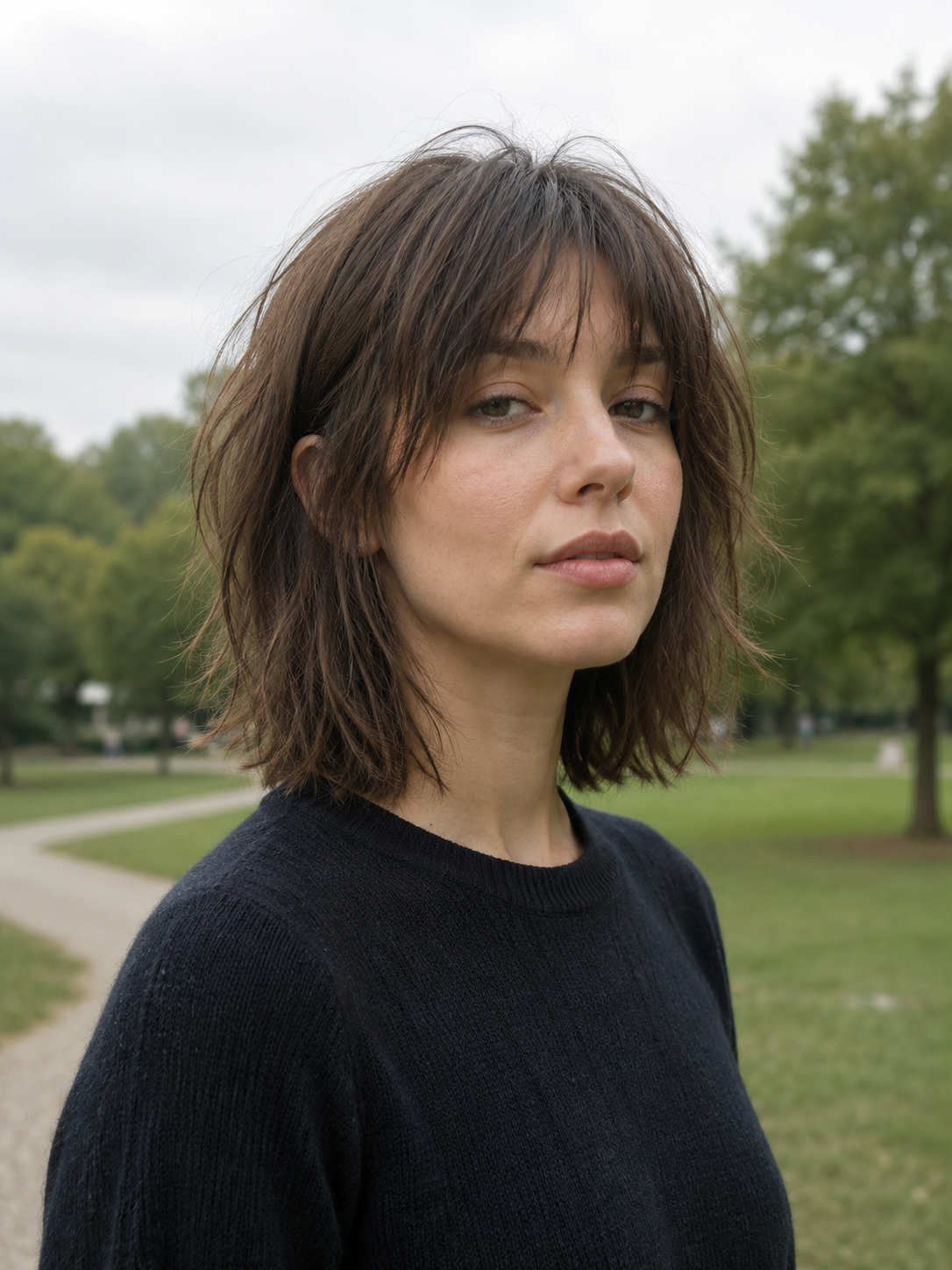
This version tricks the eye. A straight, blunt line sits at the bottom while the interior stays full of shaggy layers. The solid edge looks thicker than choppy ends on fine, limp strands. Layers start around the cheekbone and shorten toward the crown for lift. Ask for the perimeter cut wet and the layers cut dry. That way your stylist can see exactly where movement falls. A flat iron with a slight bend keeps the line soft.
Money-Piece Shag Lob
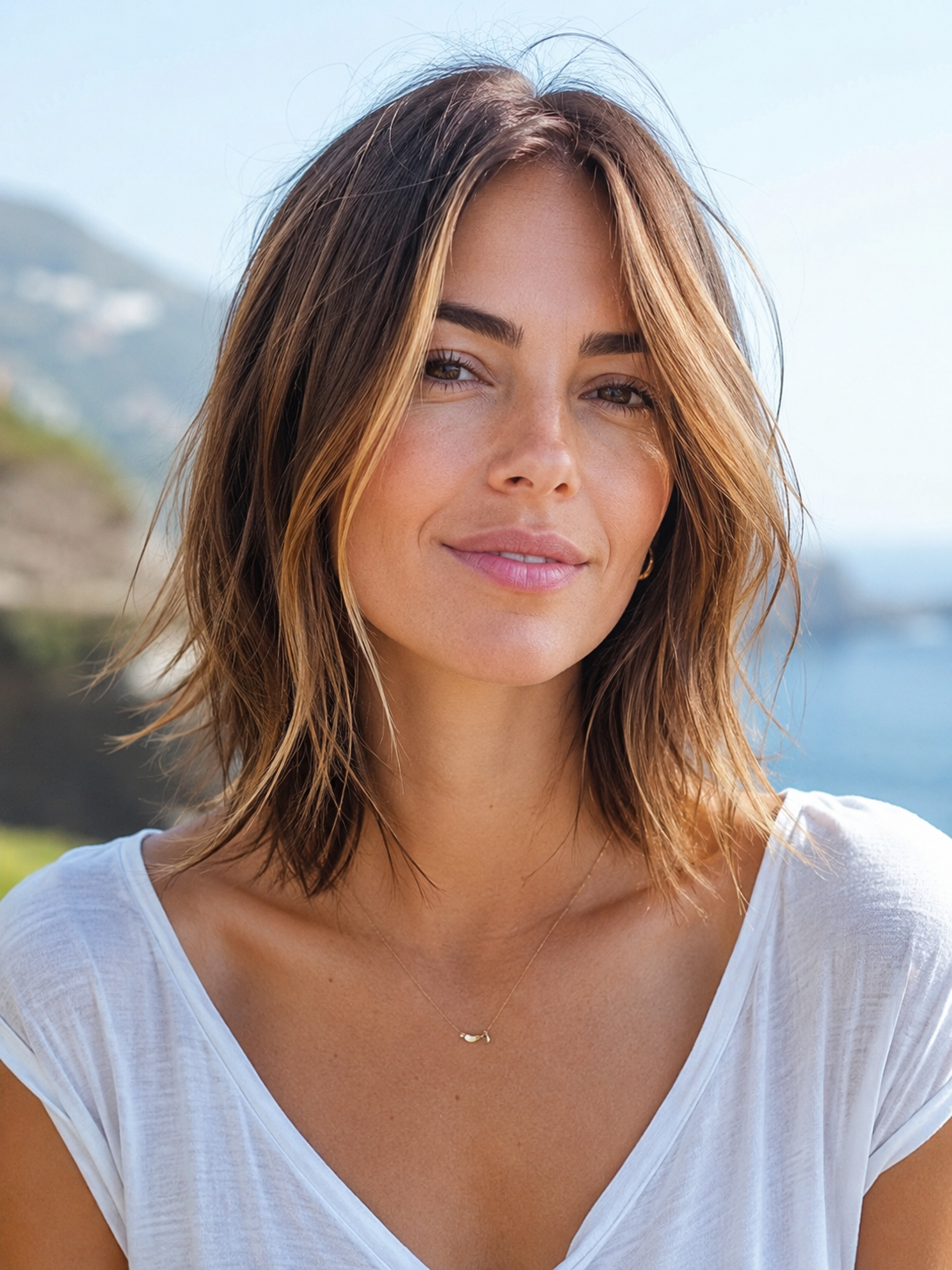
Color can do just as much volume work as the cut itself. Money piece highlights frame the face with two bold pieces near the part. The base underneath stays a shade or two deeper. That contrast alone makes hair look denser without touching a single layer. Pair it with the shag’s texture and the whole head looks fuller, not just the front. Keep the highlights fine and ribbon-like, since chunky sections can wash out fine strands.
Middle-Part Shag Lob
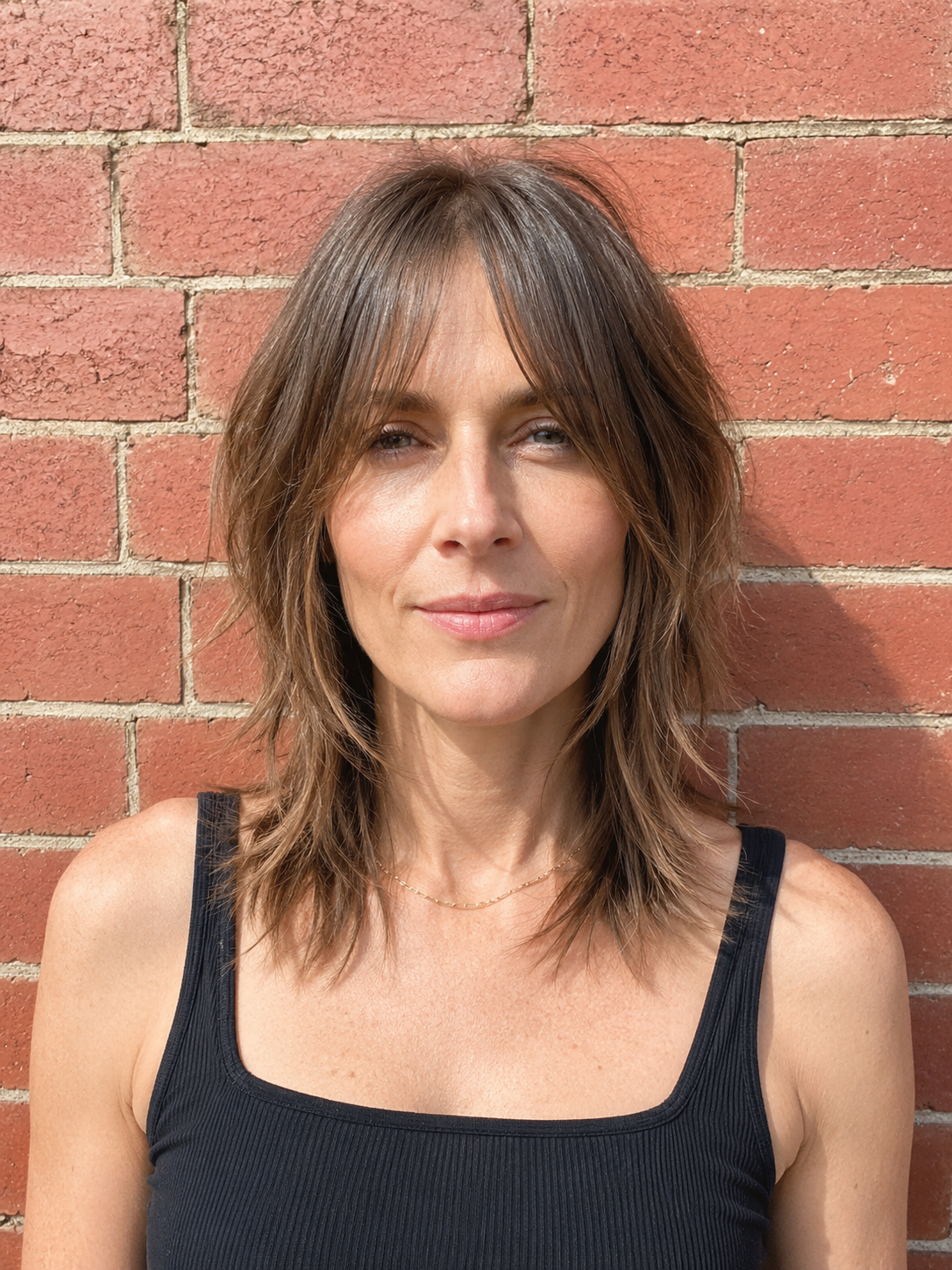
A center part keeps this cut symmetrical. Shaggy layers fall evenly on both sides. On fine hair, symmetry matters more than people think, since an off-center part exposes thin patches near the crown. This version works best with layers starting just below the chin, for enough weight to keep both sides balanced. Blow-dry with a round brush pointed away from the face for width at the temples. Finish with a light-hold spray, never anything heavy that flattens the crown.
Feathered Flip Shag Lob
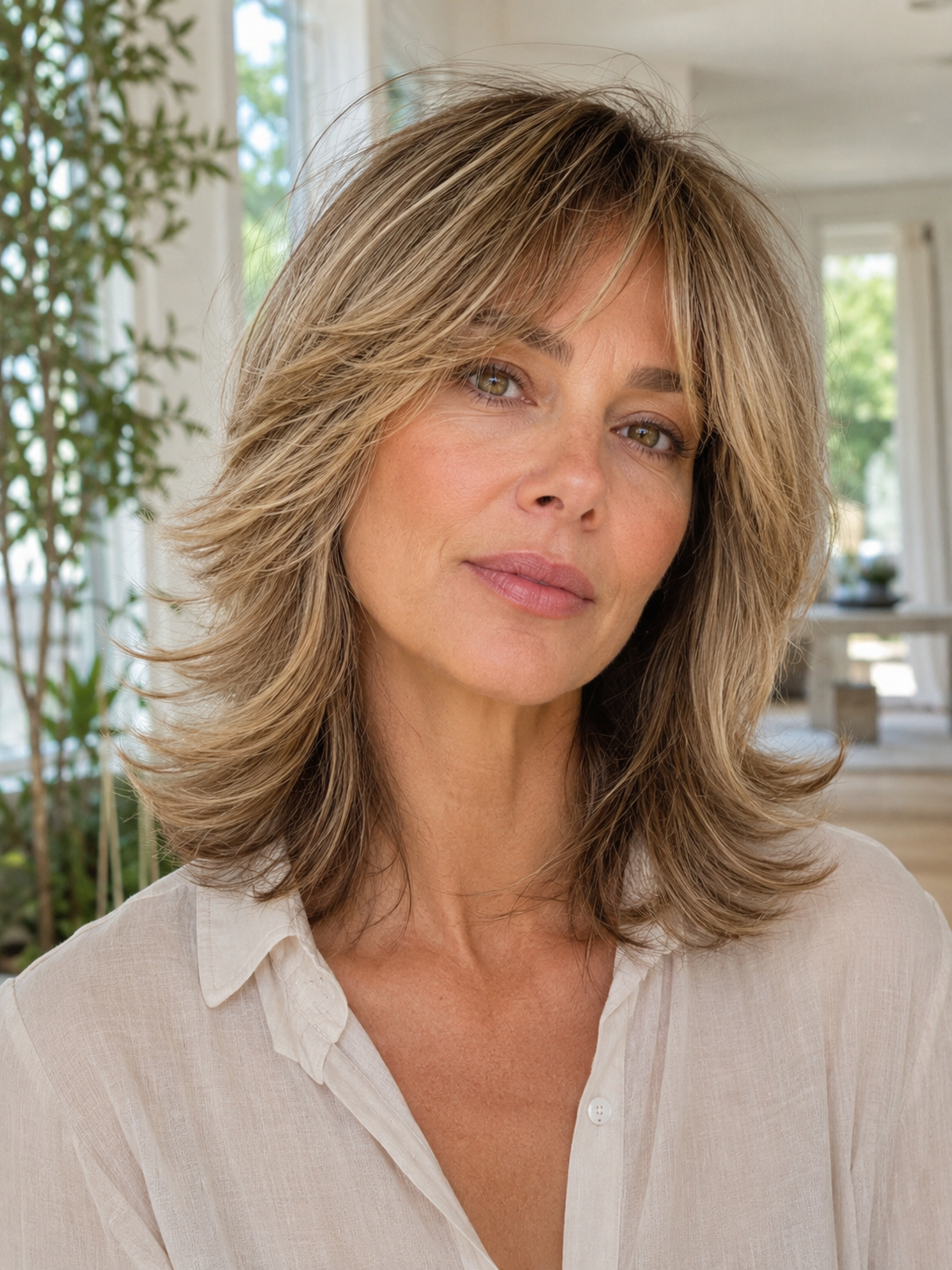
Feathered layers flip outward at the ends instead of curling under. It gives this shag a distinctly retro edge. Every layer gets cut at an angle, then blow-dried with a round brush rotated outward. On fine hair, the flip adds the illusion of extra length. The ends catch air and light instead of sitting flat. This style leans more polished than tousled or piecey versions. A light-hold hairspray keeps the flip from collapsing by afternoon.
Deep Side-Part Shag Lob
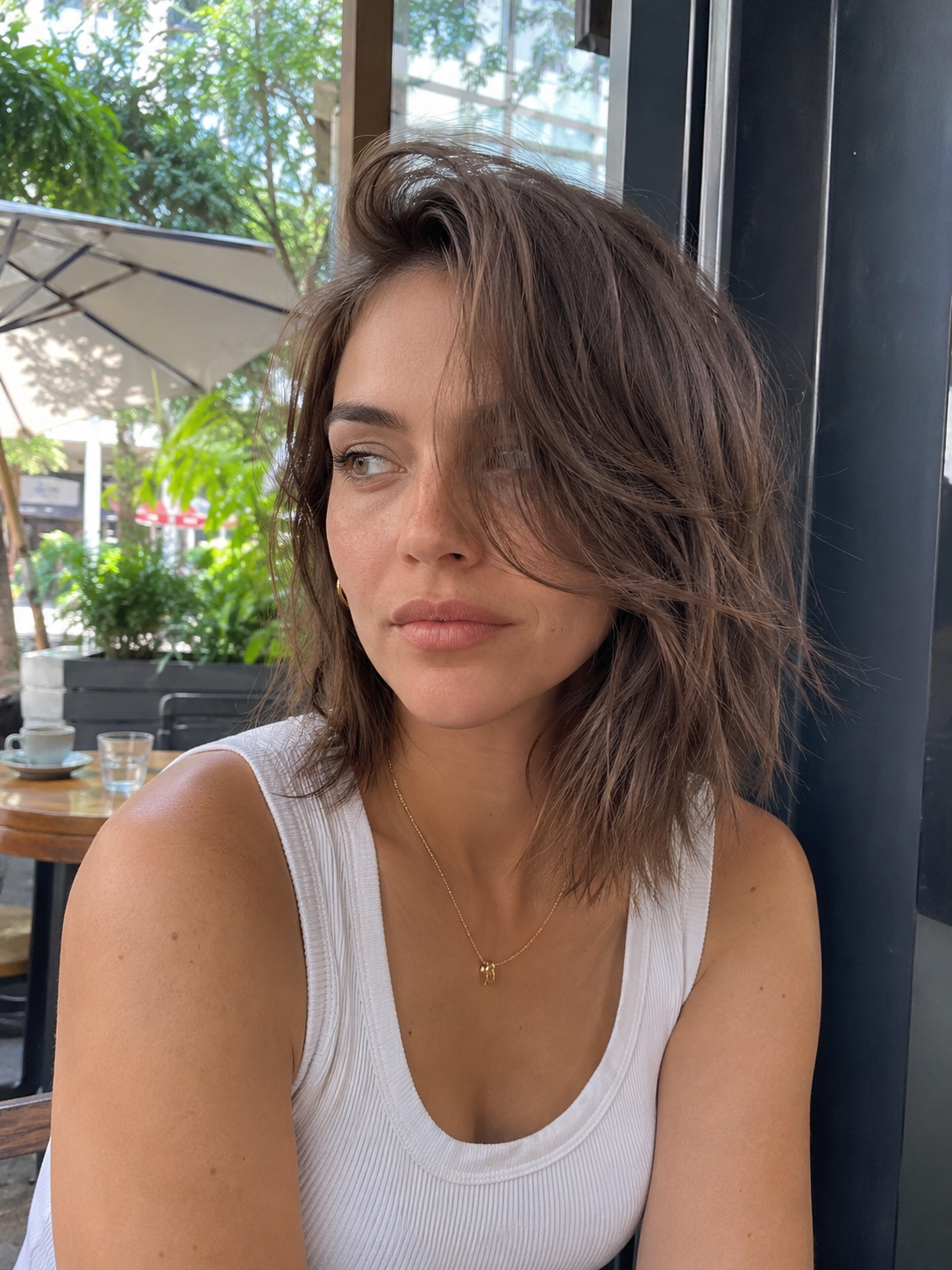
Move the part over and the whole cut shifts its job. A deep side part gives one side extra coverage and lift. That hides thinning at the crown better than any product can. The heavier side carries longer layers while the shorter side stays close to the face for contrast. This works especially well with a diffuser. The tousled texture holds the part in place without pins or clips.
Rooted Bronde Shag Lob
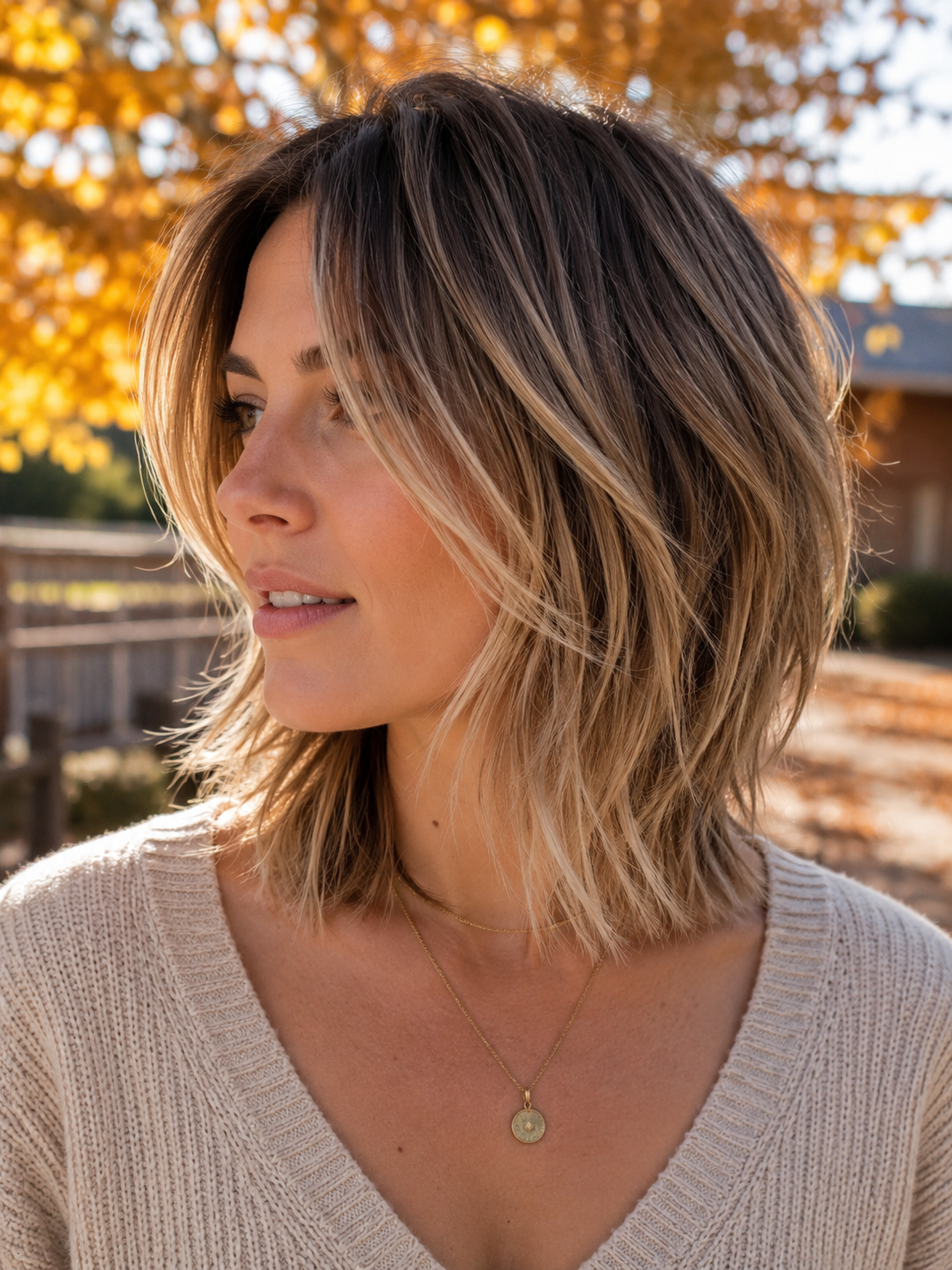
Going lighter doesn’t have to mean losing dimension at the root. A rooted bronde keeps a soft, natural root that melts into caramel and beige tones through the ends. That gradual shift creates the appearance of depth, which flat, single-process color can’t fake. On a shag lob, the color transition also highlights the layering. Lighter pieces catch more light right where the shag lives. Maintenance stays lower than balayage, since the root doesn’t need touching up for months.
Wispy-Ended Shag Lob
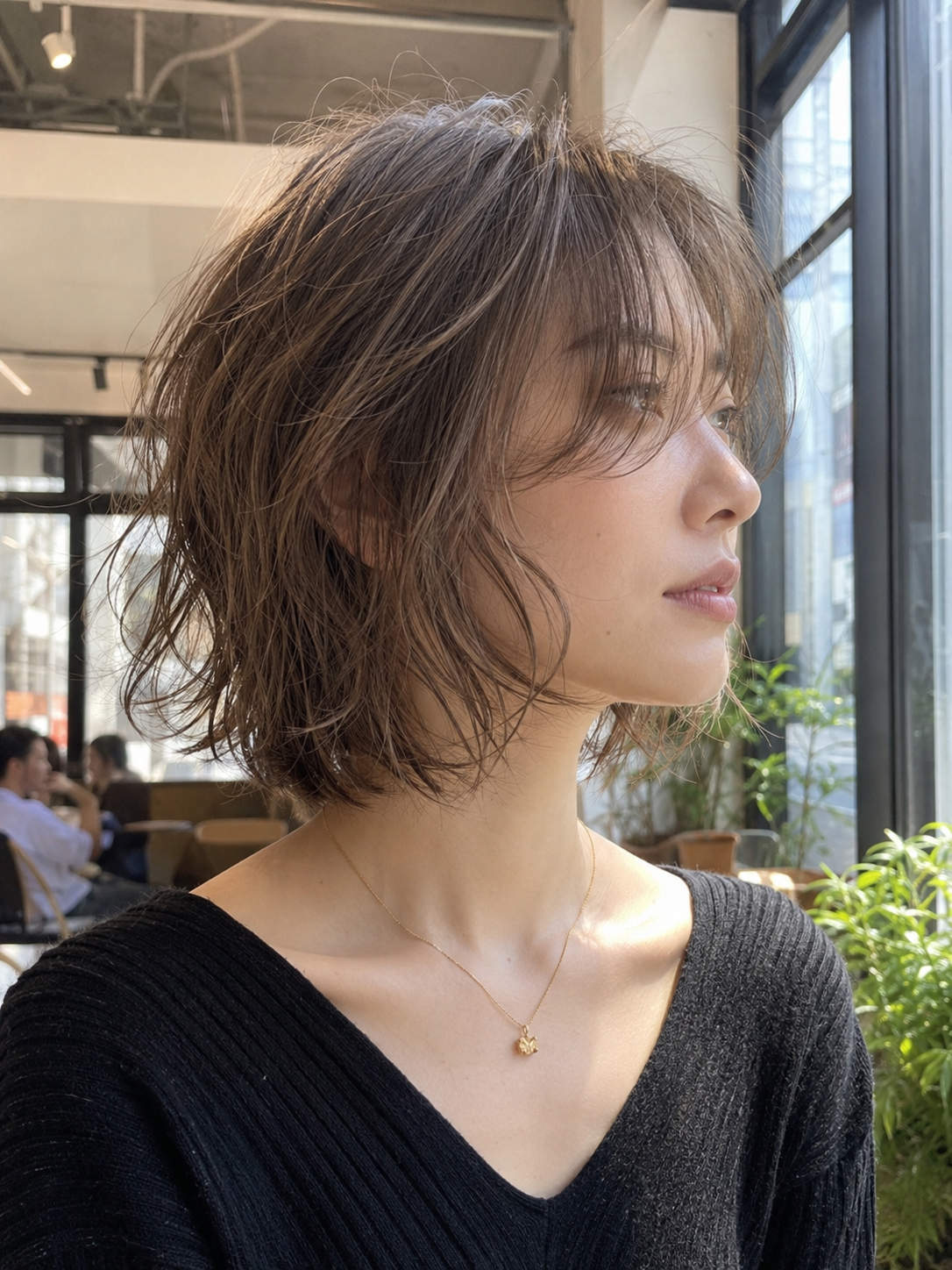
Thick, blunt ends can make fine hair look thinner by pooling weight at the bottom. Wispy, feather-light ends solve that by tapering each strand instead of cutting straight across. The result moves more, catches more light, and never drags your head down. Ask for point cutting or razor work at the ends only, keeping mid-lengths intact for structure. A texturizing spray on damp hair brings out the wispiness before you reach for a dryer.
Root-Volume Blowout Shag Lob
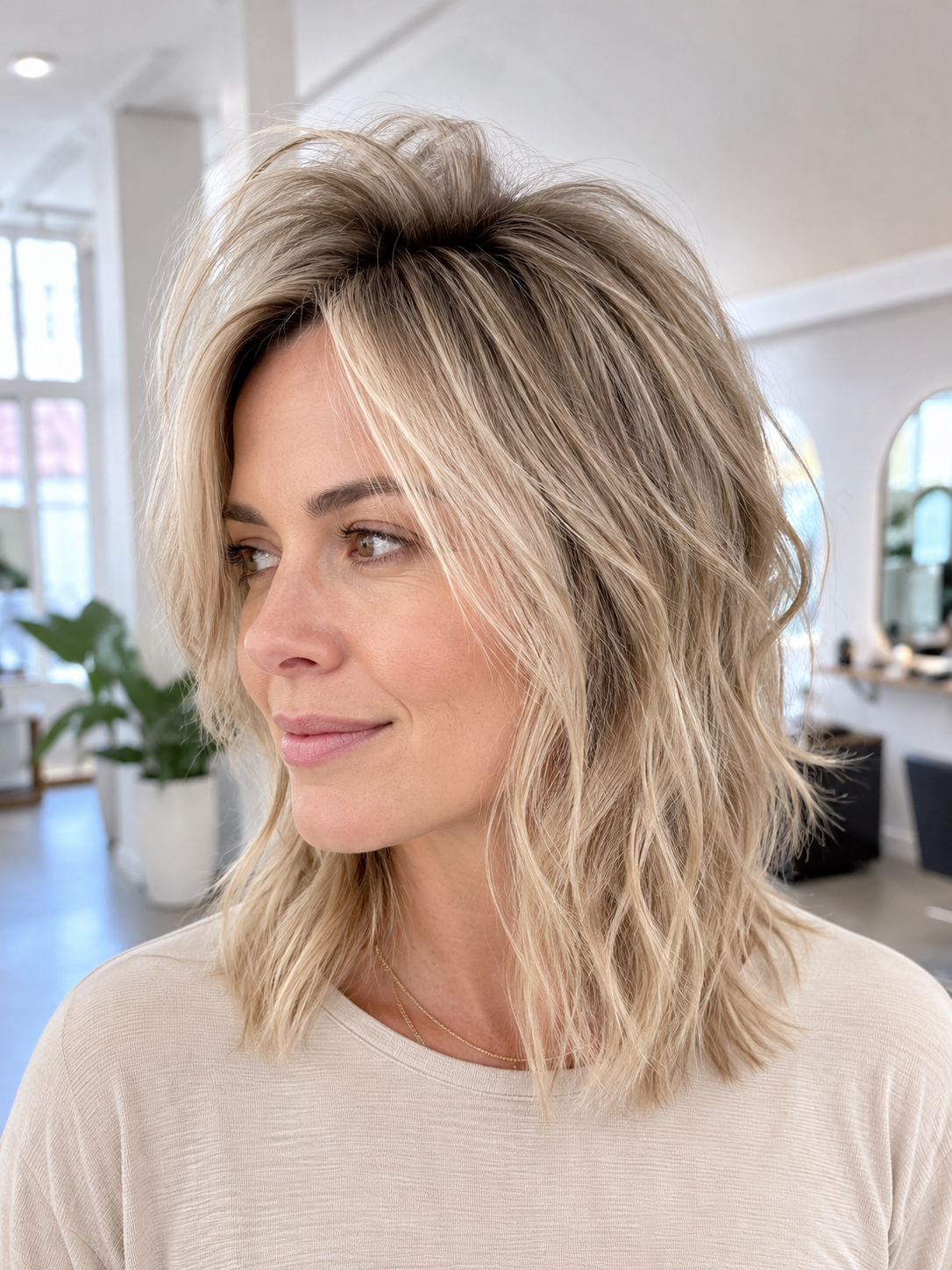
Sometimes the cut is only half the story, and the blowout does the rest. This version pairs standard shag layering with a root-lift technique. Hair gets blow-dried upside down at the crown before styling even begins. The layers themselves stay fairly classic: medium length, feathered ends, subtle face-framing. What changes is the finishing routine, volumizing mousse at the root, a cool-shot blast to set the lift. Loose waves finish the mid-lengths and ends.
Bottleneck Bangs Shag Lob
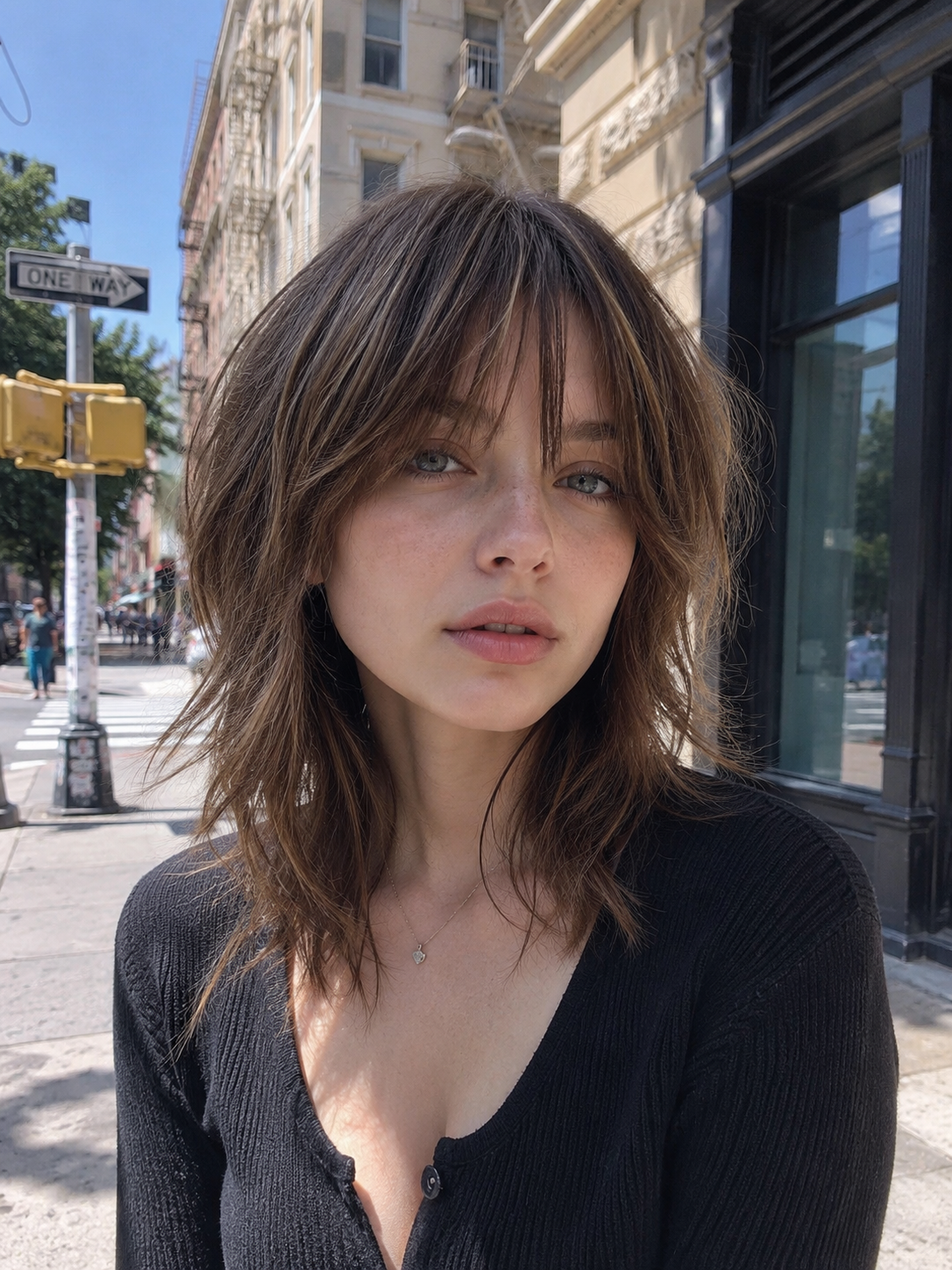
Bottleneck bangs start narrow at the part, then flare wider toward the temples. Paired with a shag lob, they look effortless rather than cut-in. The shape mimics how bangs naturally grow out over time. This style works well on fine hair, since the narrow section doesn’t need much density to look intentional. Blend the bangs into the top layers to avoid a harsh separating line. Expect a trim every three to four weeks to hold the shape.
Beachy Wave Shag Lob
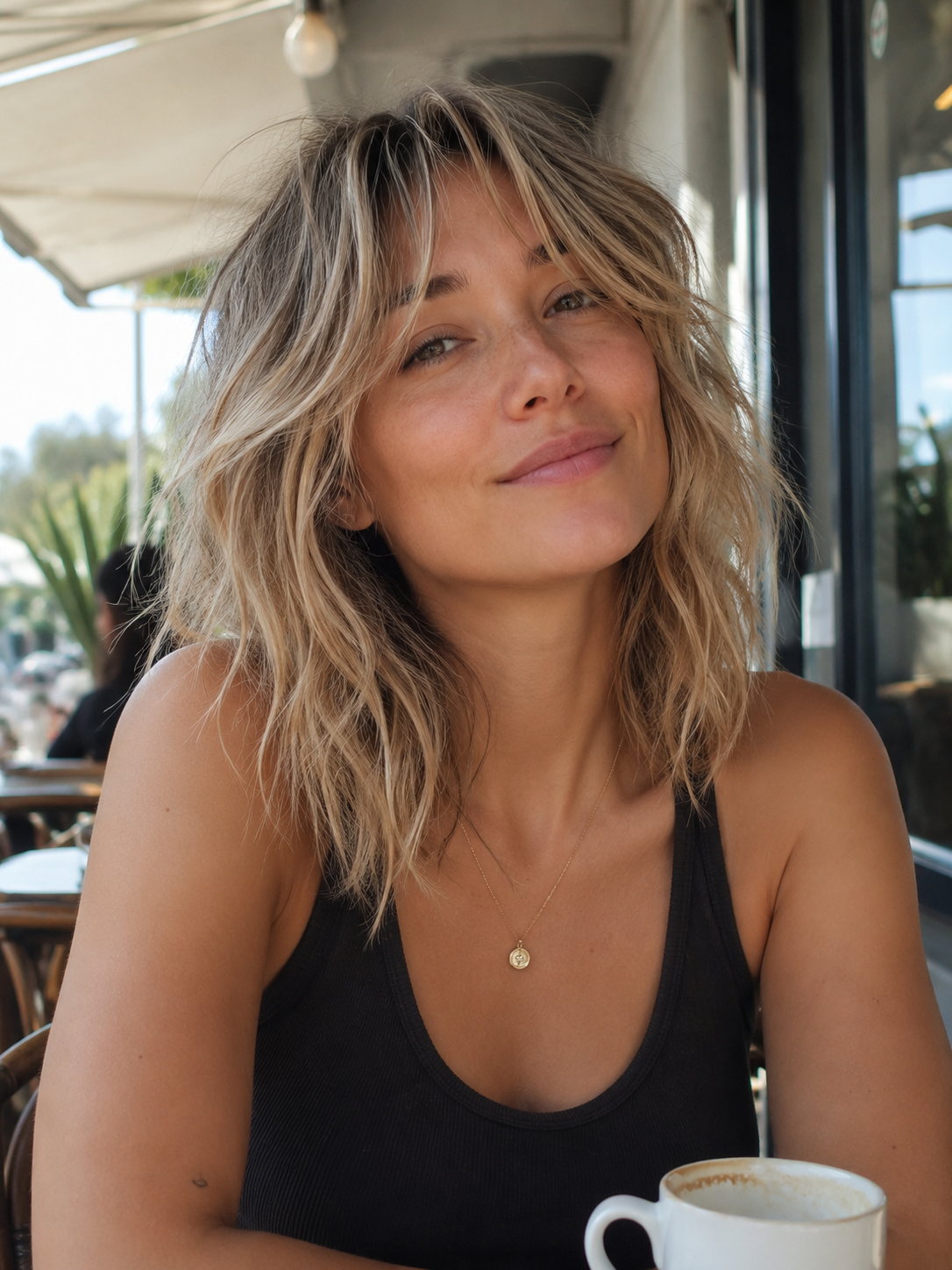
Texture hides more sins than any cutting technique. Loose, undone waves through a shag lob create irregular movement. That irregular movement is what makes fine hair look fuller, not flat, uniform sections. A salt spray or texturizing mist on damp hair, scrunched rather than brushed, keeps the waves loose. Avoid tight curling-iron waves here, since uniform curls can flatten within an hour. The shaggy layers already do most of the volume work, so styling just needs to support them.
Face-Framing Long-Layer Shag Lob
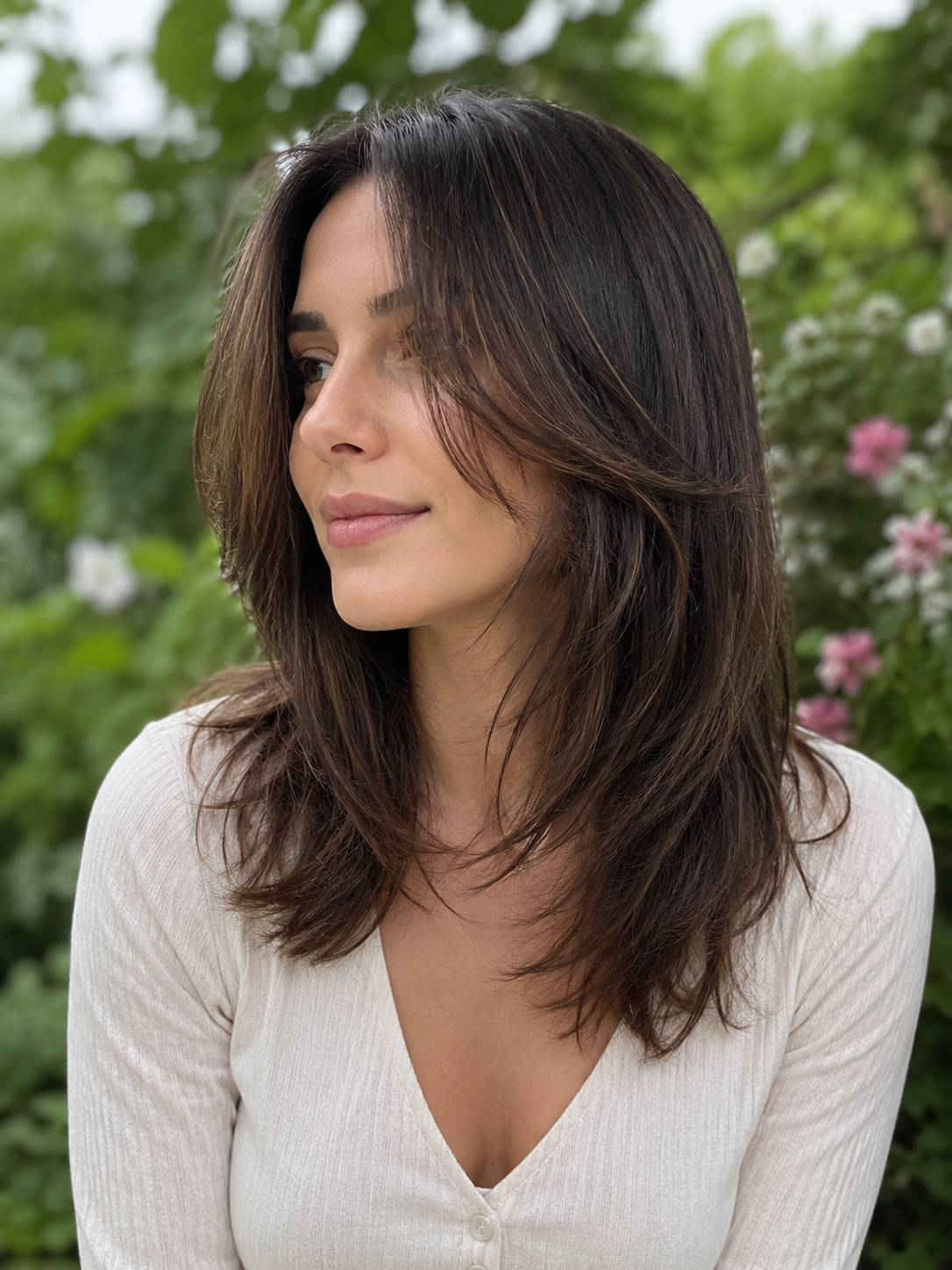
Not every shag needs choppy, aggressive layering to work. This version keeps most of the length intact. It adds just a few long layers around the face, starting near the cheekbone. On fine hair, fewer layers can mean more perceived thickness, since less hair gets cut away overall. The face-framing pieces add movement right where people look first, without thinning out the rest of the cut. Ask your stylist to keep these layers long and soft, not short and choppy.
Babylight Shag Lob
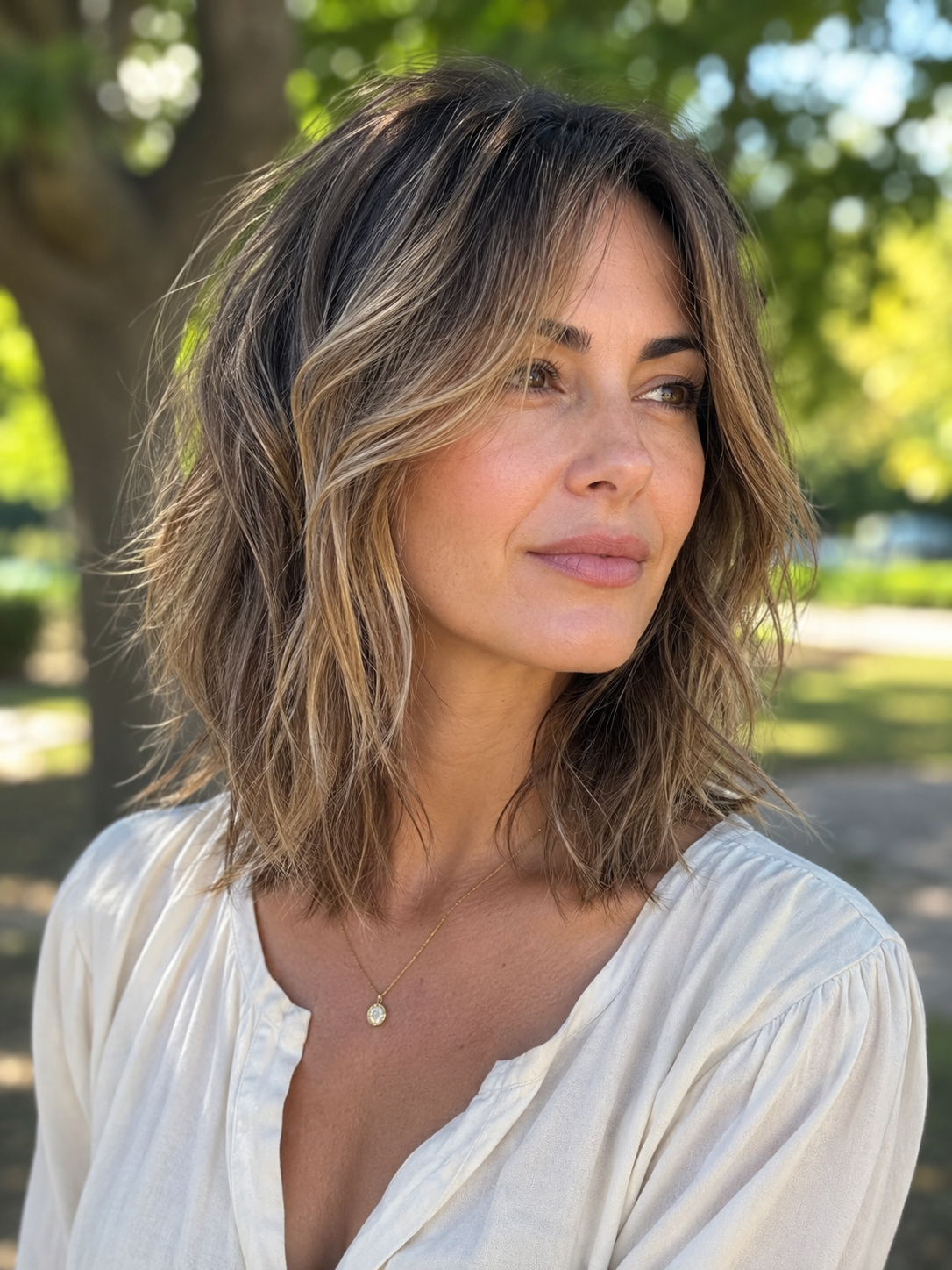
Babylights are the finest highlighting technique available, ideal for hair that’s already fine. Thin, subtle strands of lightness get woven through the top layers only. That avoids the heavy, chunky sections traditional highlights use. The effect looks sun-kissed rather than obviously colored, adding dimension without the weight of full foils. On a shag lob, babylights catch light differently at each layer, amplifying texture the cut already creates. Expect a longer appointment, since babylights take more time to place.
Shullet Lob
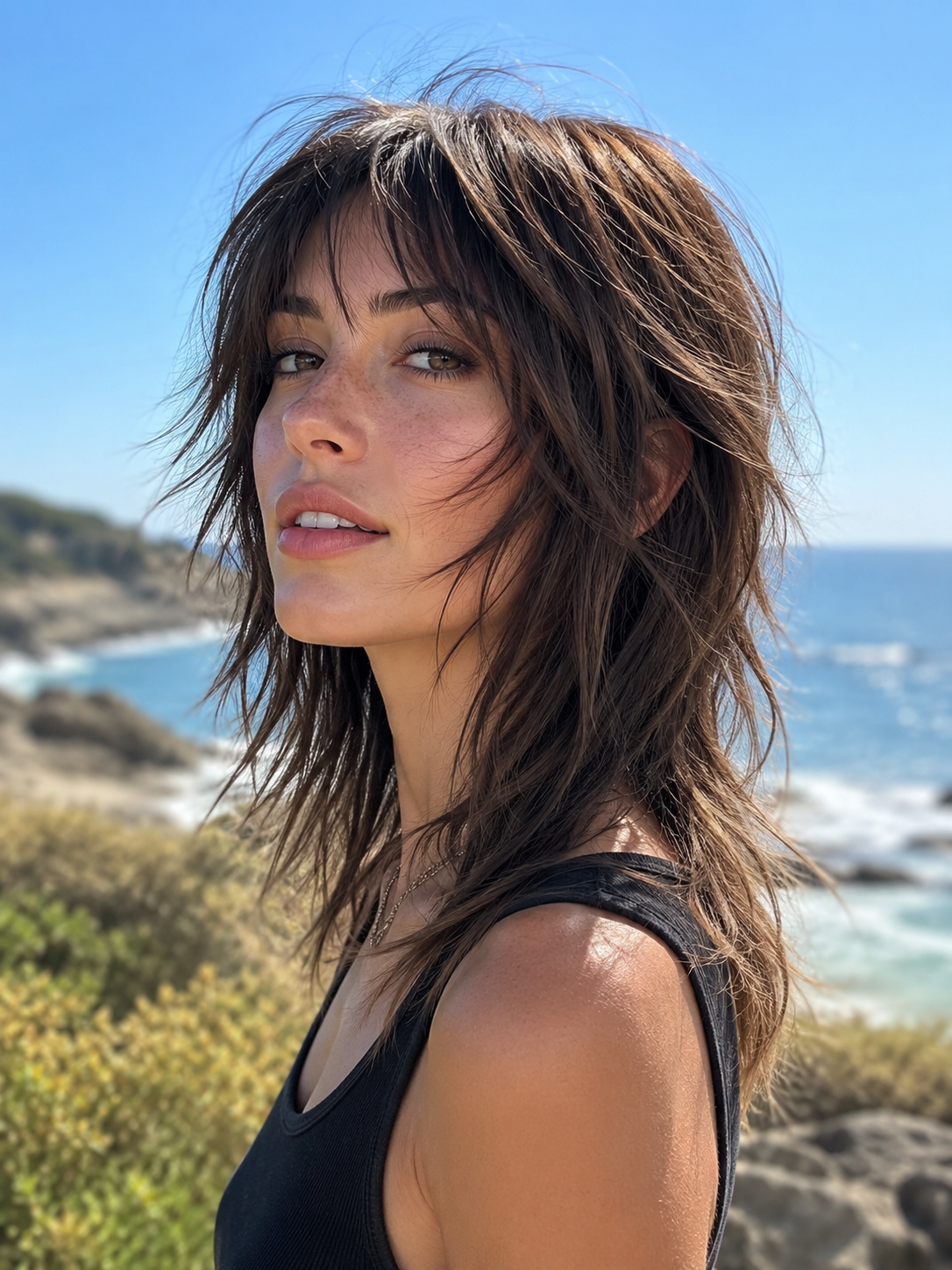
The shag-mullet hybrid, sometimes called a shullet, adds edge to a classic lob without the full mullet drama. Layers stay shorter, choppier around the crown and face. They blend into longer, shaggier length through the back, kept around collarbone length. Fine hair handles this well, since shorter top layers create lift no single length could. Ask your stylist to keep the length difference subtle, just a few inches. That way it looks like an edgy shag, not a costume mullet.
Piecey Textured Shag Lob
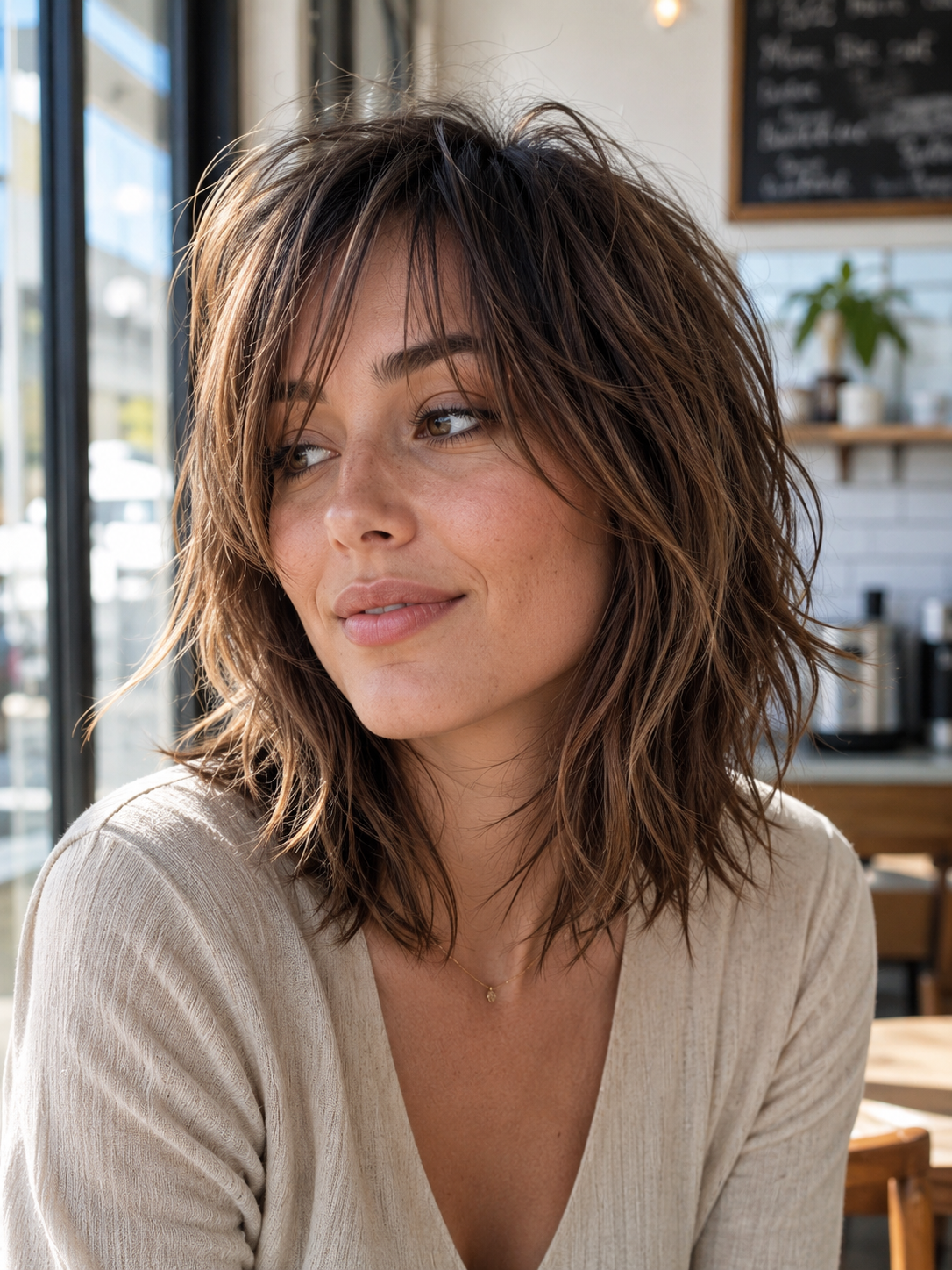
This is the shag lob at its most deconstructed. Every layer gets point cut or razored. The ends separate into individual pieces instead of falling as one solid mass. A texturizing paste, worked through dry hair section by section, holds the shape all day. This look actually benefits from second or third-day hair. A little natural oil helps pieces clump together instead of looking too polished. Skip smoothing serum here, since shine and separation rarely mix.
Undone Tousled Shag Lob
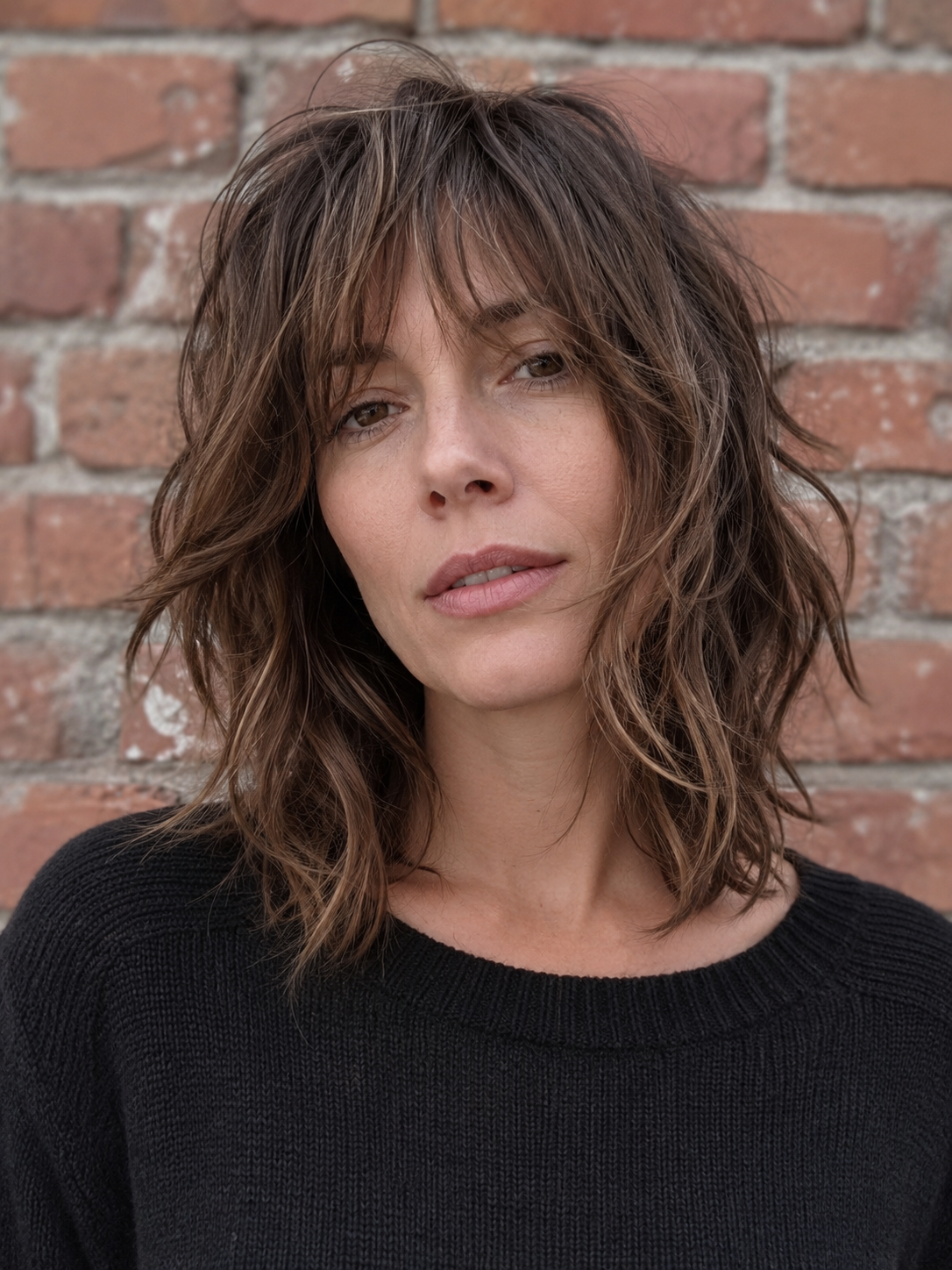
Some days, hair that looks a little slept-in is exactly the point. This version leans into loose, imperfect texture rather than a polished finish. Rough-dry hair with your fingers instead of a brush. Then twist small sections around a curling wand for a few seconds each. The waves should look irregular, not uniform, since matching curls everywhere starts to look styled rather than undone. A dry texturizing spray at the roots and ends locks in the shape without adding weight.