Fine hair doesn’t thin your options, it just changes which ones work hardest for you. Pixie cuts are genuinely one of the smartest moves for fine hair past 60, because less length means less weight dragging strands flat. The right pixie adds visible texture, lifts at the crown, and frames the face without relying on density you don’t have. These sixteen cuts are chosen specifically for low volume and mature hairlines, with styling notes that reflect how fine hair actually behaves.
Soft Tapered Pixie
Graduation at the nape and sides keeps bulk exactly where fine hair doesn’t need it. The top stays longer, around two to three inches, giving you enough length to lift and direct with a volumizing mousse.
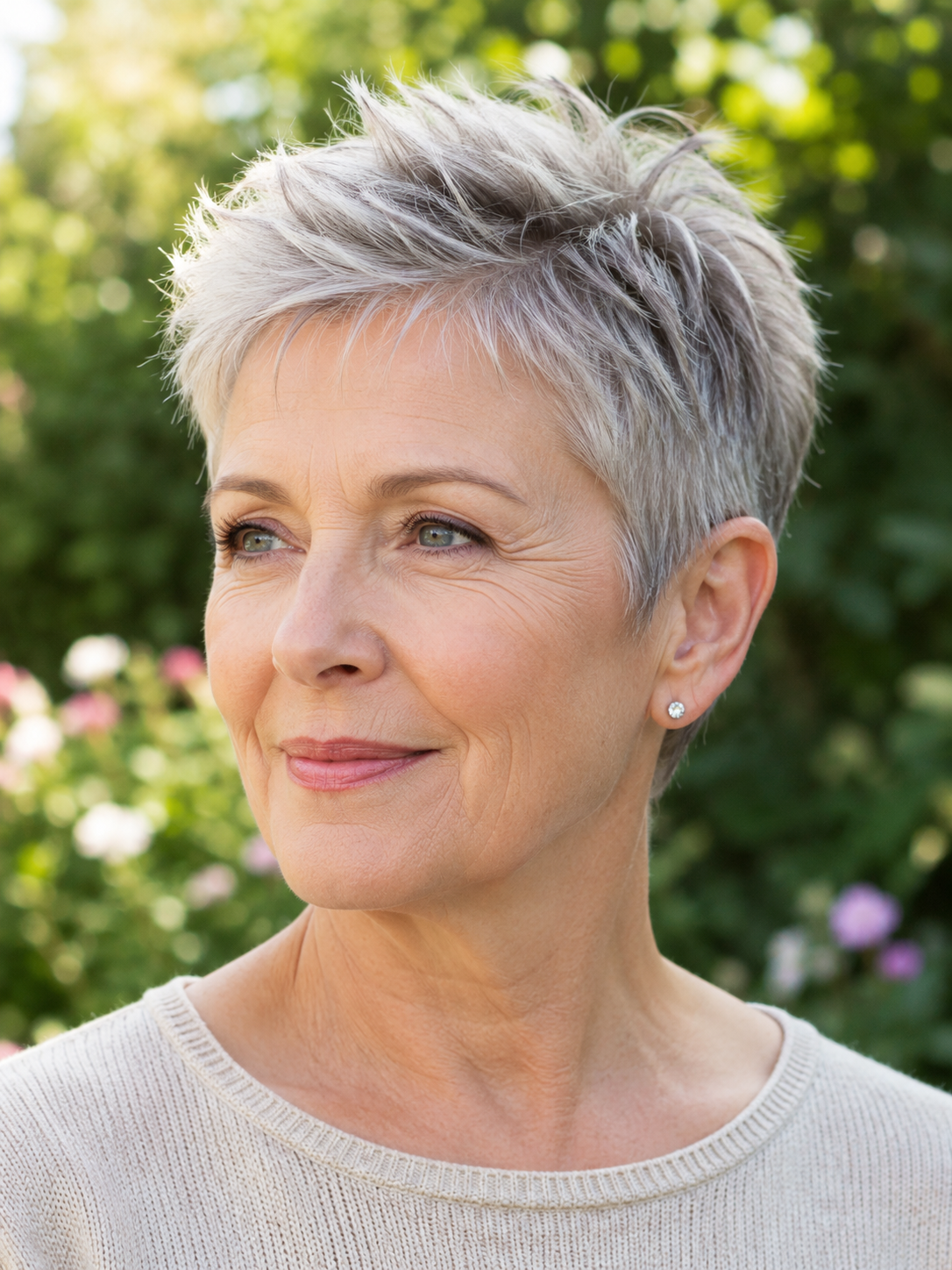
Ask your stylist for point-cut ends rather than blunt ones. Blunt lines on fine hair look sparse at the tips. Pointed ends create the illusion of thickness even when individual strands are fine.
Wispy Textured Pixie
Piece-y, separated ends are doing real work here. Your stylist uses a razor or texturizing shears to break up the perimeter so strands fall in soft, irregular fragments rather than one flat line.
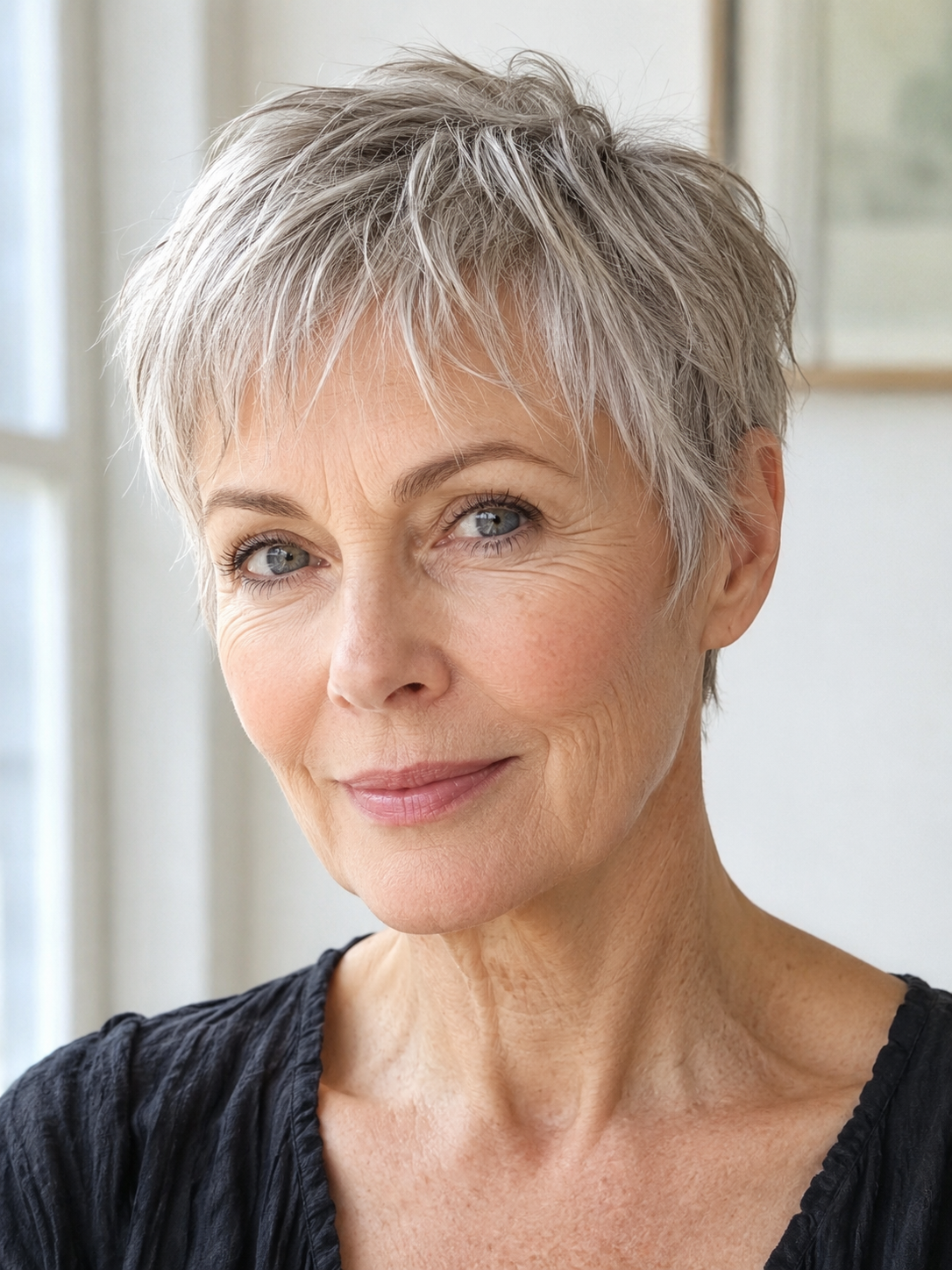
Style it with a lightweight paste worked through dry hair, pulling small sections forward and upward. The wispy finish suits fine hair beautifully because it makes sparse ends look intentional rather than thin.
Classic Short Pixie With Side Sweep
One of the most flattering shapes for fine hair over 60, partly because the side-swept fringe covers the forehead without adding weight.
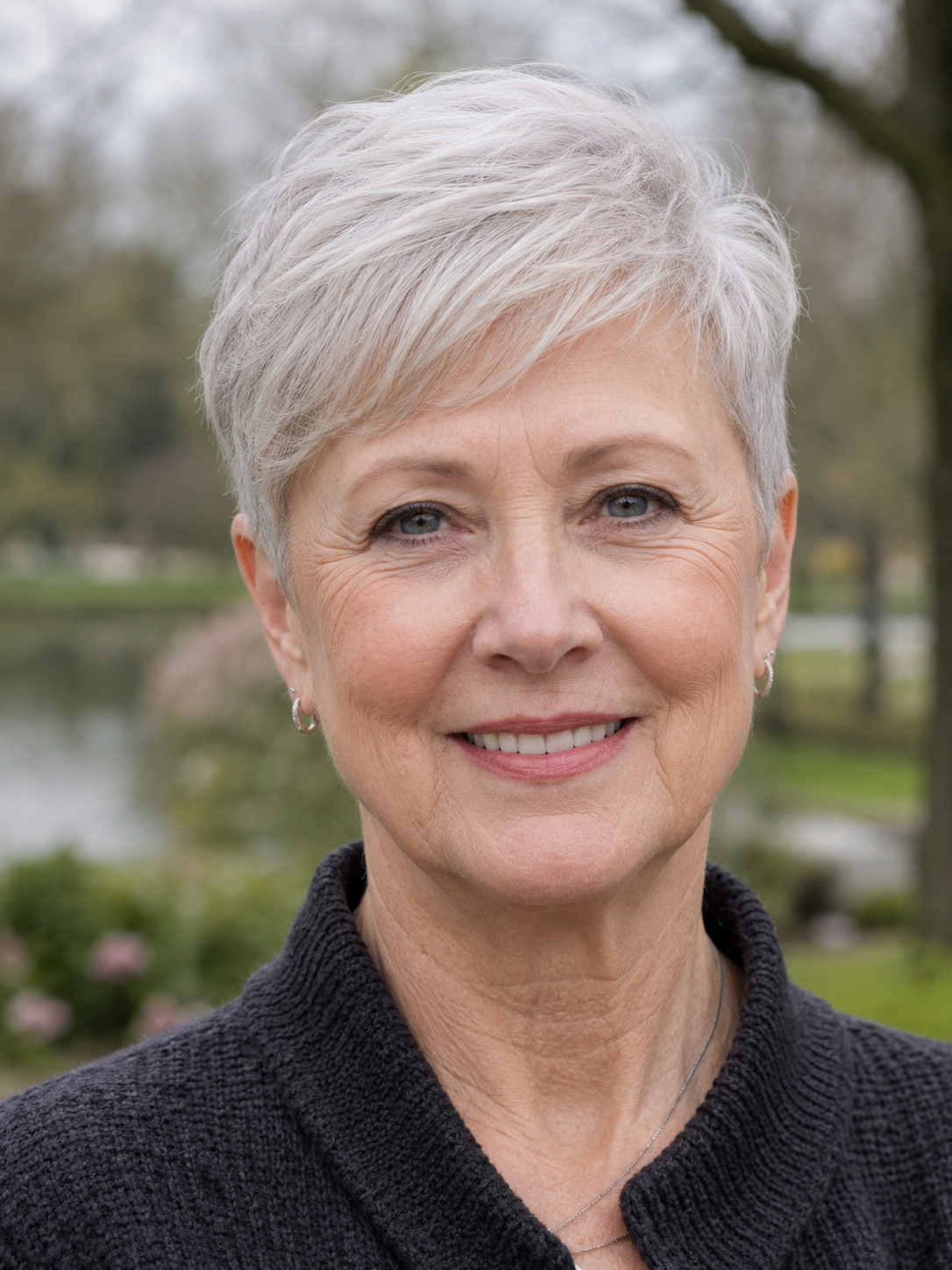
Keep the sides close-cropped and direct the top across with a fine-tooth comb and a small amount of volumizing spray. The sweep creates the appearance of density across the crown, which is where fine hair typically loses volume first.
Layered Pixie With Crown Volume
Layers cut specifically into the crown section let fine strands stack on top of each other instead of lying flat. When blow-dried with a small round brush, even very fine hair catches enough air to hold a soft lift.
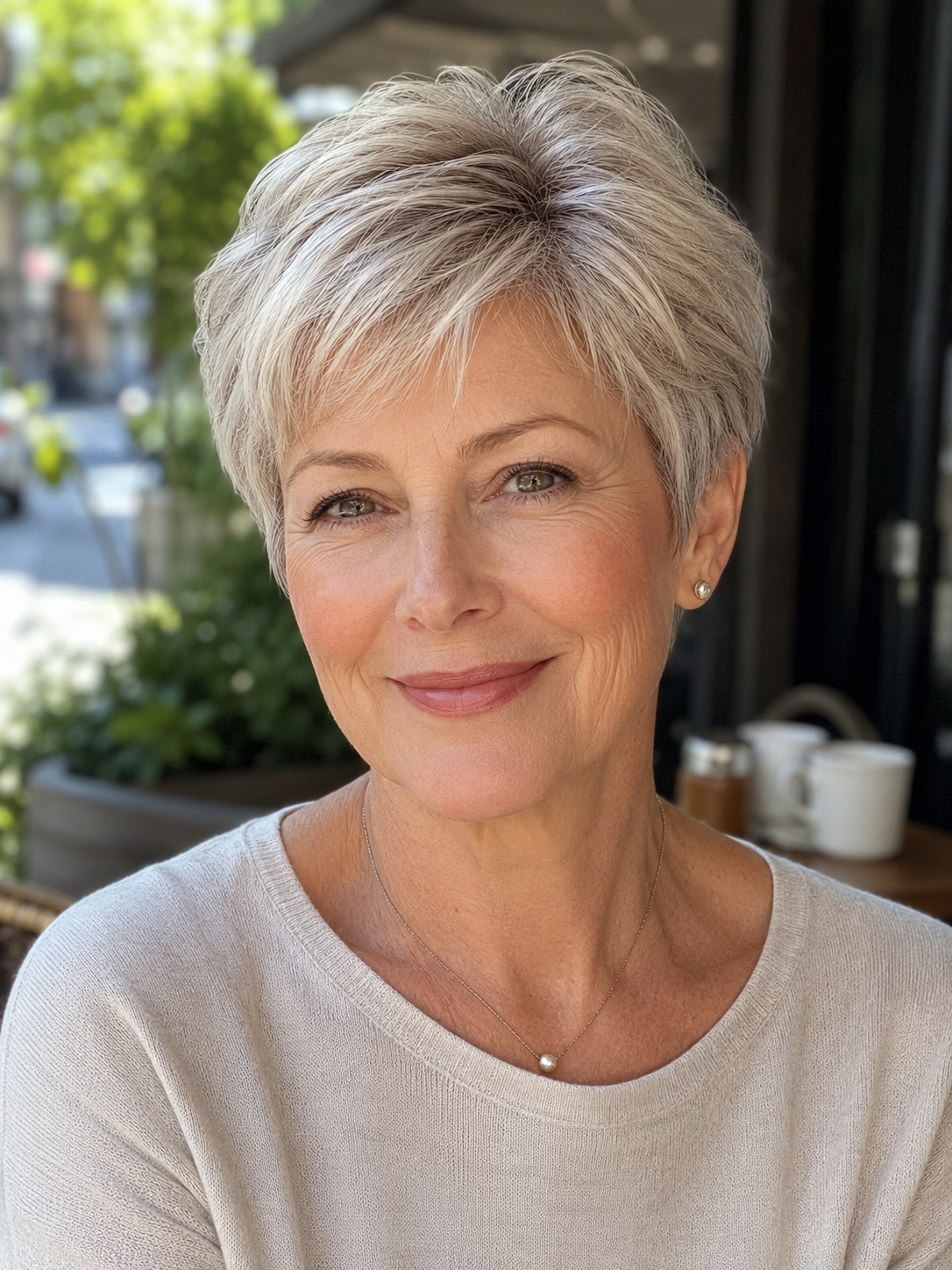
Ask for layers that start mid-shaft rather than at the root, so the base has weight while the top has movement. Finish with a flexible-hold spray to keep height without stiffness.
Choppy Pixie Bob
Sitting just below the ear, this is the longest option in the pixie family and one of the most forgiving for fine hair over 60. The choppy internal layers prevent the cut from looking bowl-like or helmet-shaped, which is a real risk with fine hair at this length.
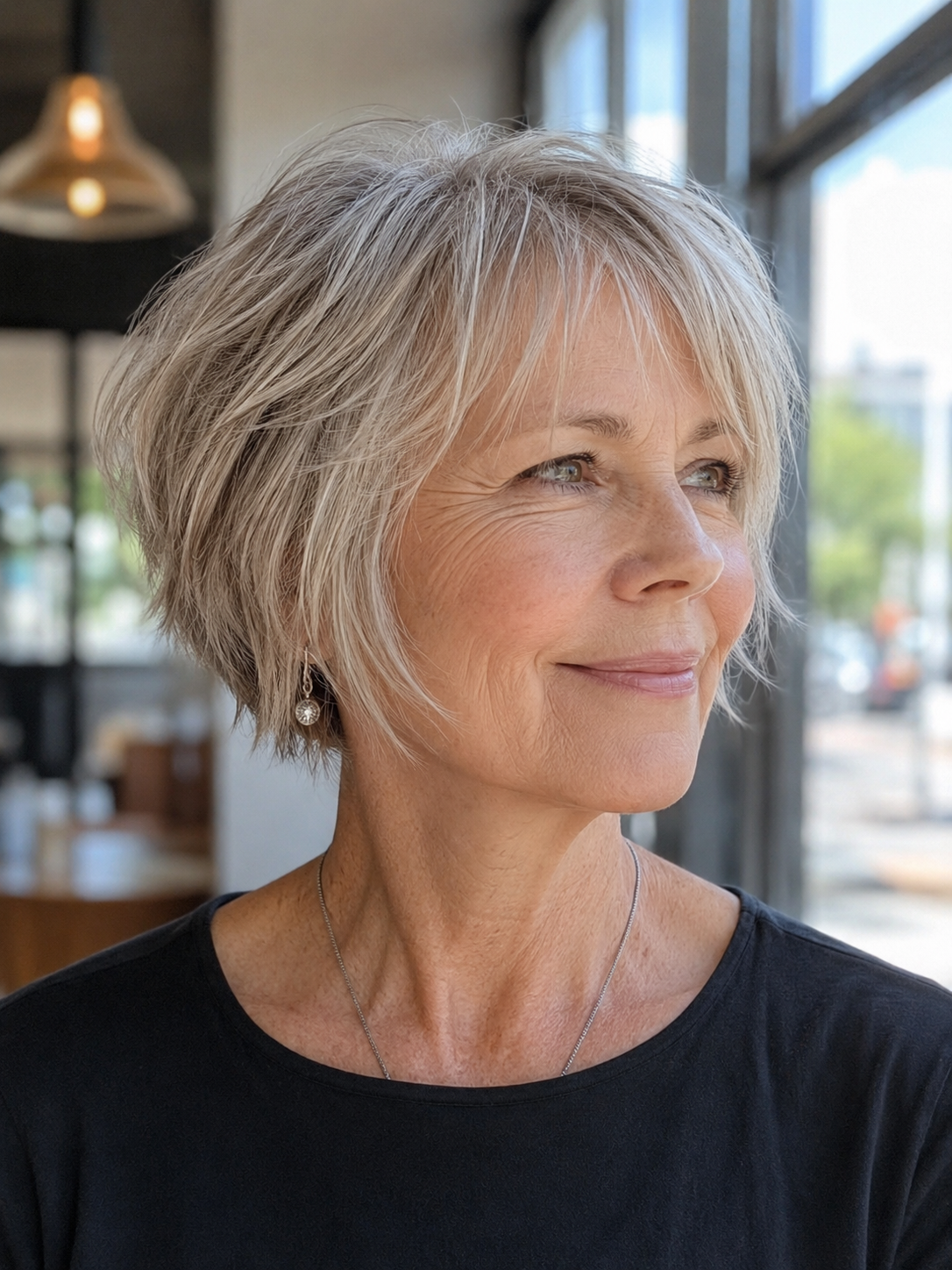
Dry shampoo at the roots between washes adds grip and visual fullness, and the slightly longer length gives you a little more styling flexibility on days you want softness around the jaw.
Undercut Pixie
Close-clipped sides with a fuller, longer top create contrast that makes the upper section appear denser by comparison. For fine hair, this structure does more than aesthetics. It removes the flat, floppy sides that weigh fine hair down and puts all the visual focus on the top, where texture and volume are easier to build.
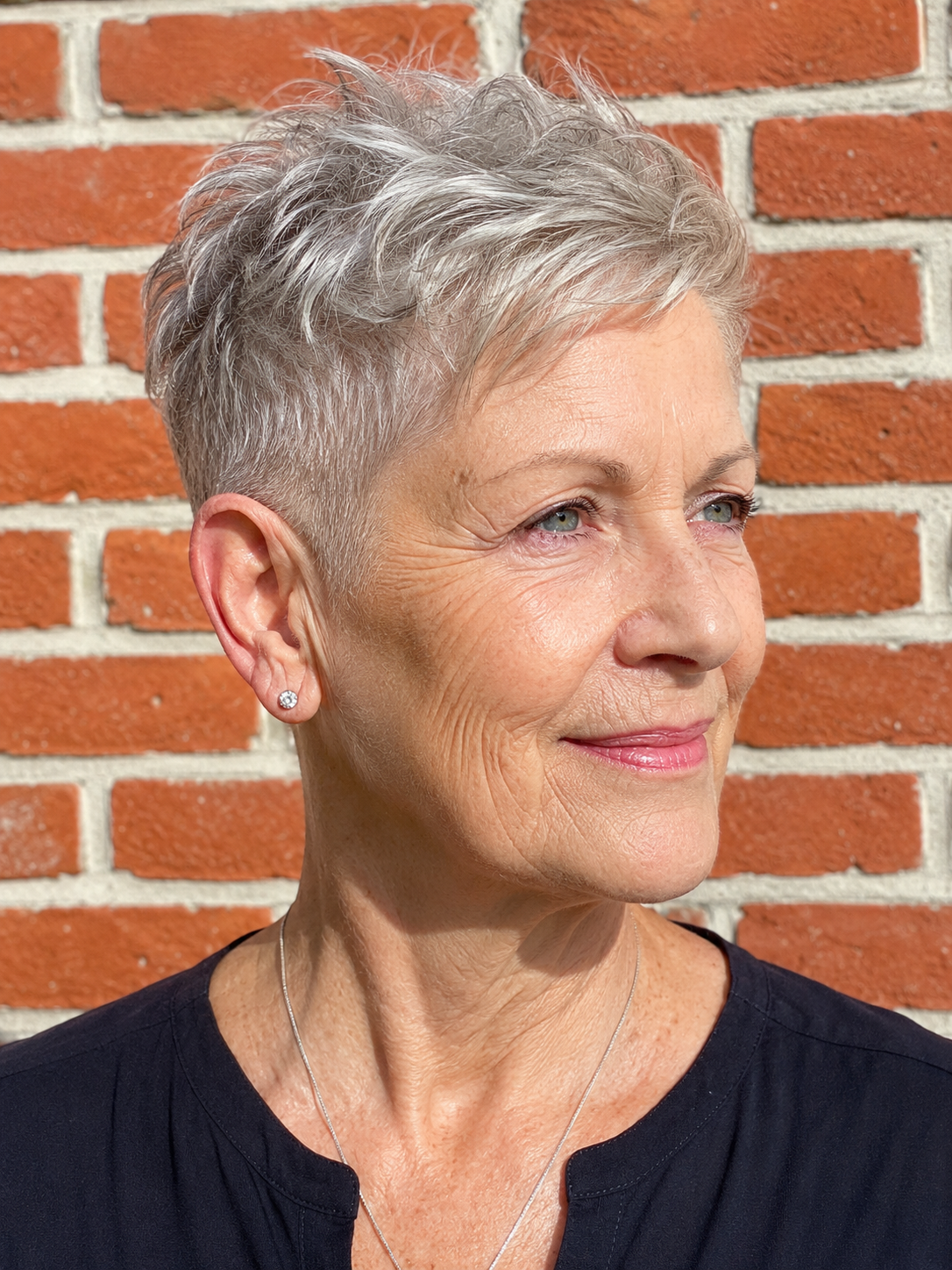
Style the top forward or to one side with a volumizing cream, and the contrast between lengths reads as intentional architecture.
Curly Pixie
If your hair has any natural wave or curl, a pixie cut is one of the few lengths where curl pattern actually works in your favor with fine hair. Shorter strands spring up rather than stretching out, so even a loose wave becomes visible texture.
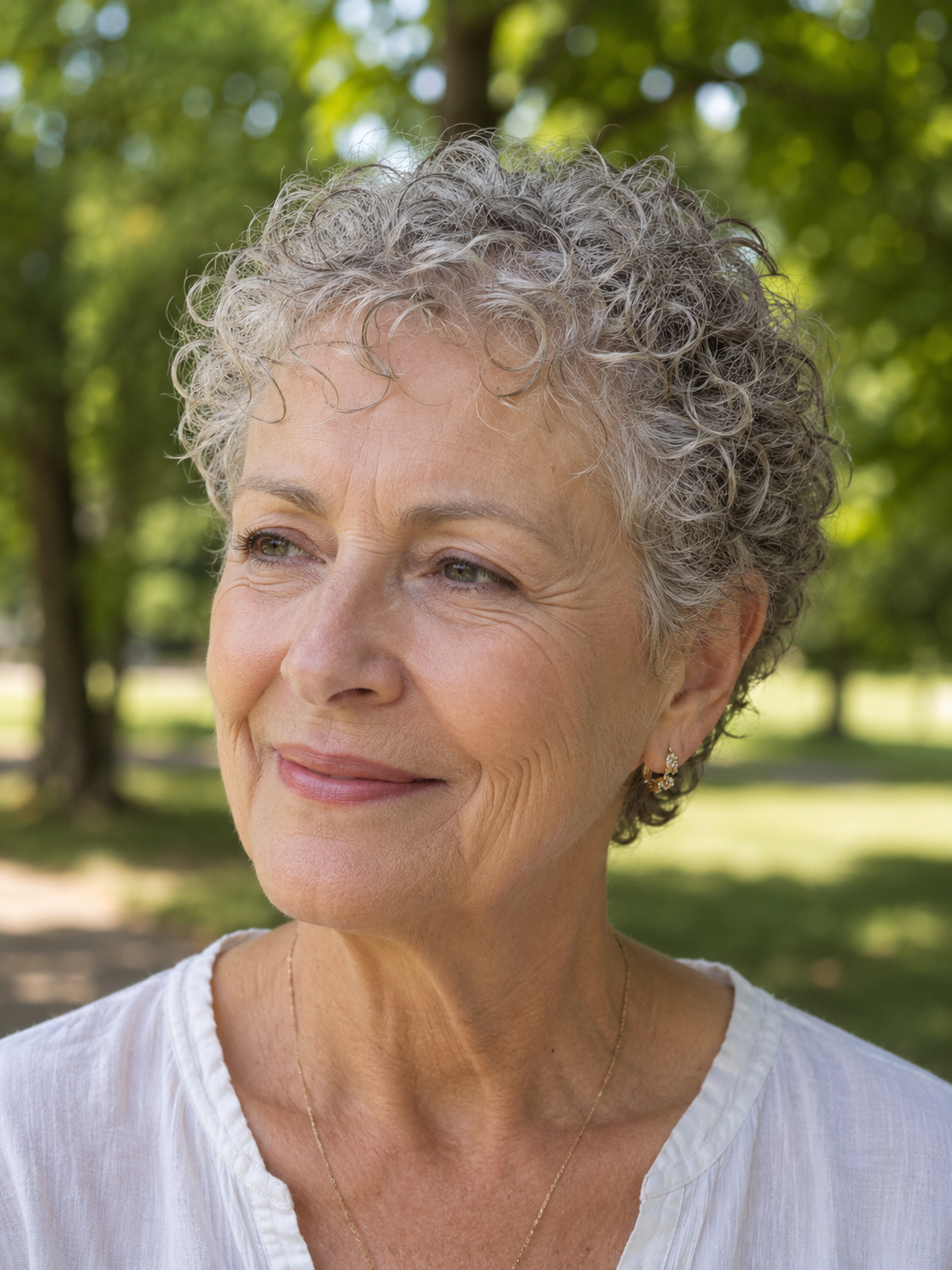
Use a curl-defining cream on damp hair and scrunch upward. Diffuse on low heat. The result is a soft, full-looking shape that fine straight hair would need product and tools to fake.
Asymmetric Pixie
One side cut closer than the other creates movement and visual interest that a symmetrical shape can’t. For fine hair over 60, asymmetry is a genuinely useful tool because it keeps the eye moving rather than landing on sparse spots.
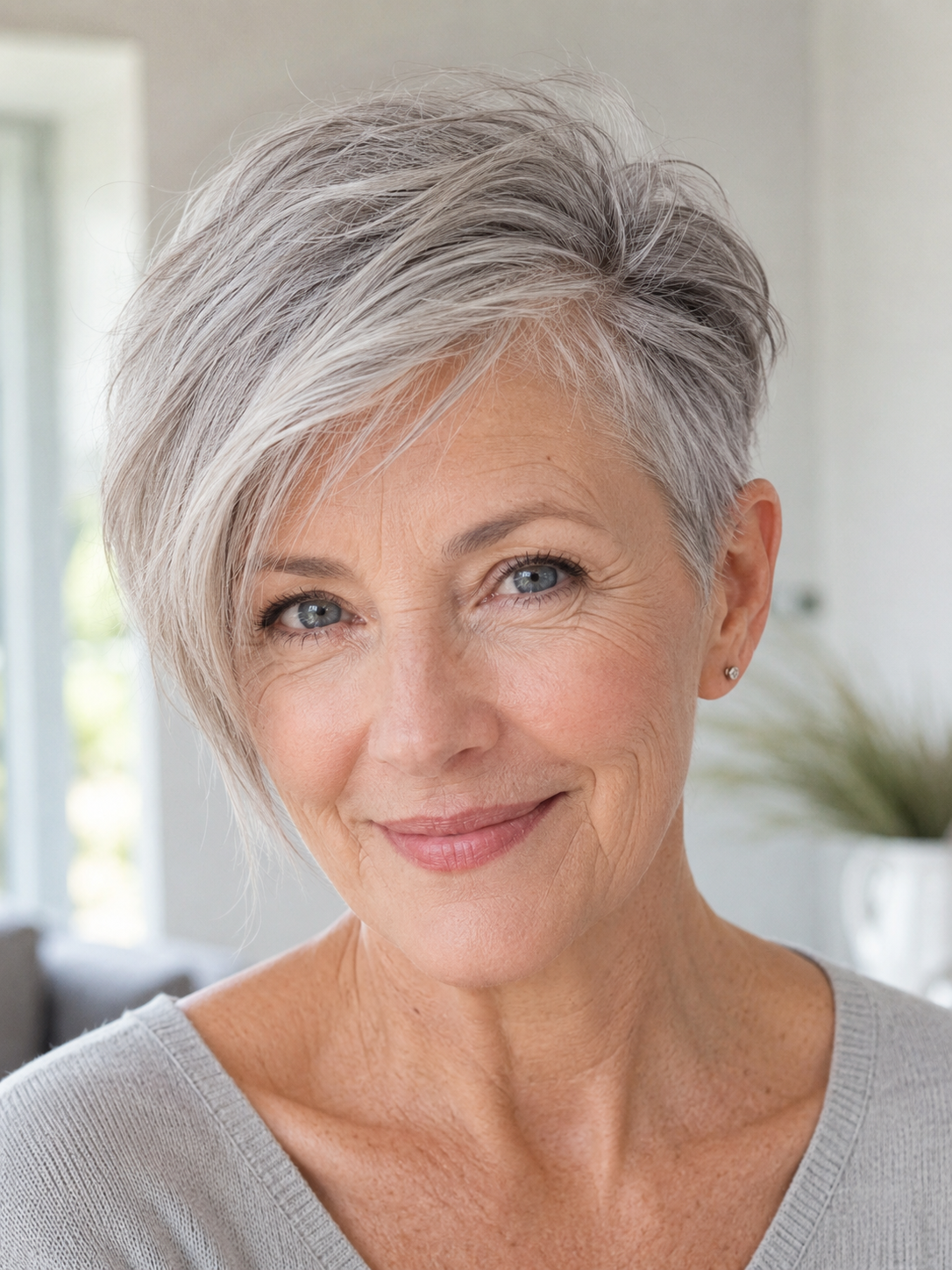
The longer side can be worn tucked behind the ear or swept forward, both of which work well with fine strands. Ask your stylist to keep the longer side point-cut so it doesn’t look blunt and flat against the cheek.
Feathered Pixie
Feathering, the technique of slicing layers outward so they fan away from the head, is one of the oldest tricks for creating volume in fine hair and it still works. The layers catch light at different angles, which gives depth to hair that would otherwise look one-dimensional.
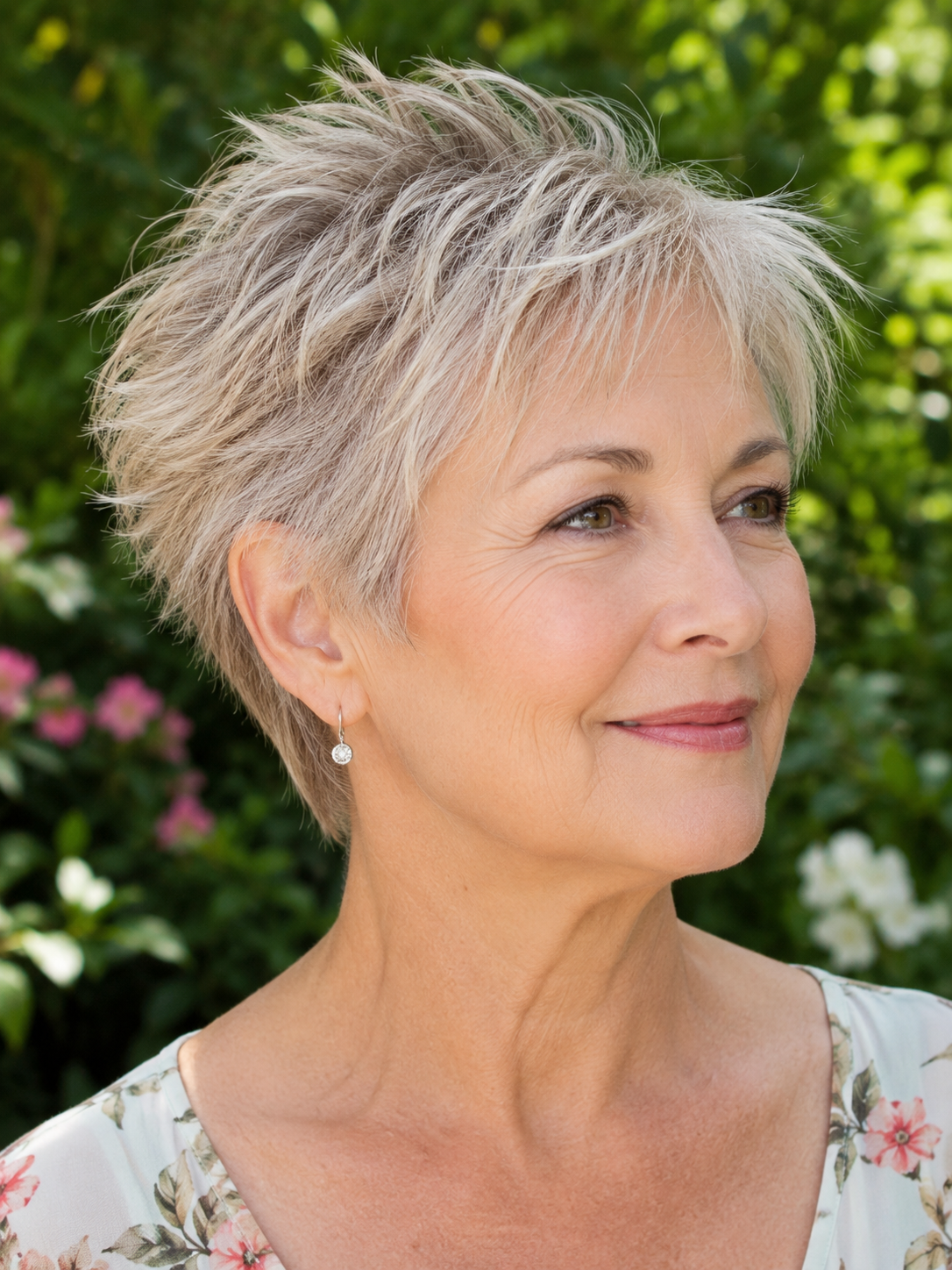
A light-hold mousse applied before blow-drying helps feathered layers stay lifted. This cut has a soft, slightly retro quality that suits women over 60 particularly well.
Pixie With Wispy Fringe
A short, wispy fringe, not a blunt bang, changes the entire balance of a pixie for fine-haired women. It brings attention to the eyes and reduces the visual weight on the sides, which often look sparse with fine hair.
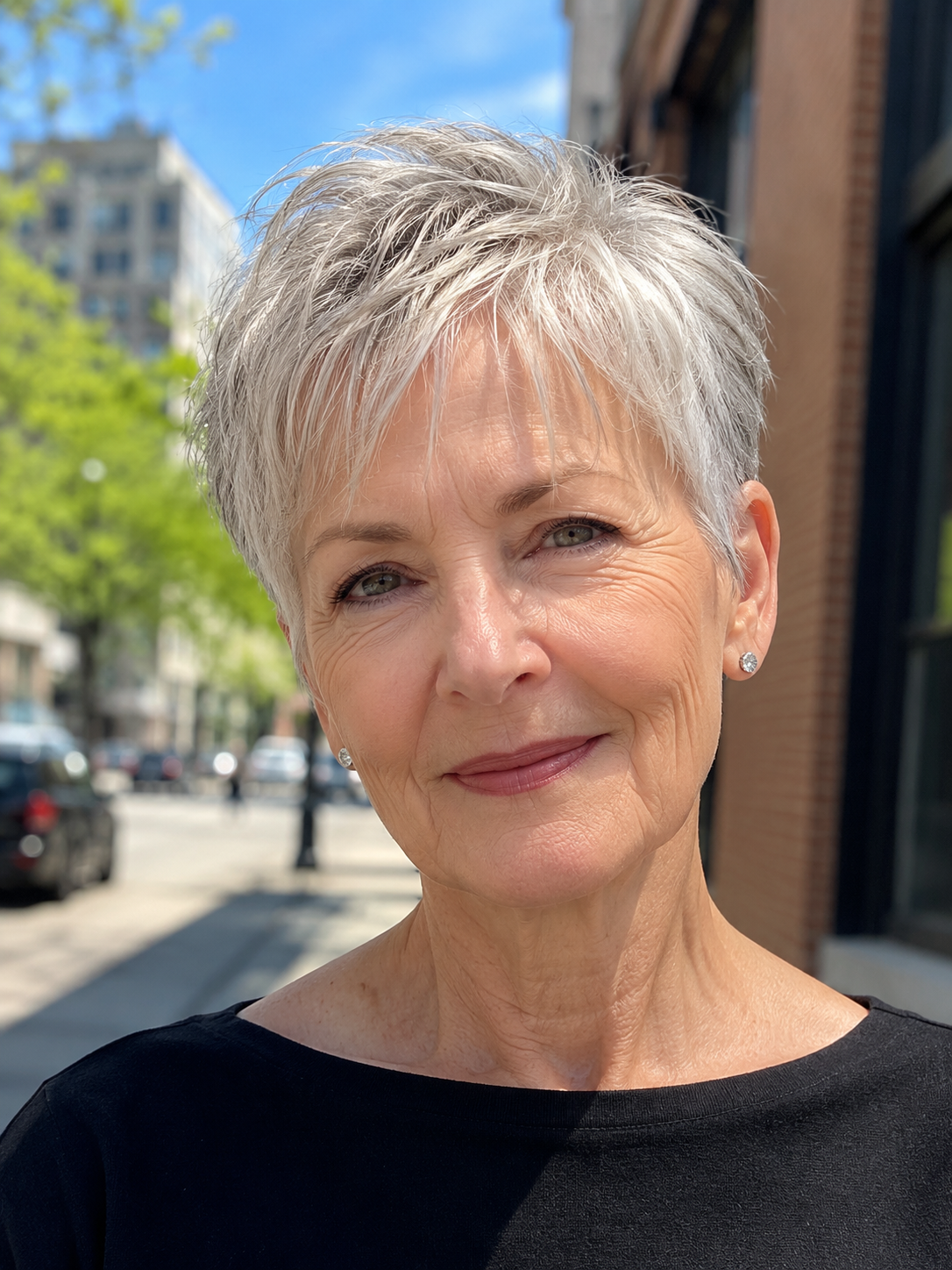
Keep the fringe light and piece-y rather than solid and flat. Solid fringes need density to look intentional. A wispy fringe works with what fine hair actually does, sitting in soft, separated strands across the forehead.
Tapered Pixie With Nape Detail
The nape is cropped very close here, sometimes with a subtle curved or tapered line. This precision at the back makes even the simplest pixie feel polished and deliberate. For fine hair, a clean nape line prevents the scraggly, growing-out look that fine hair at the back often develops between cuts.
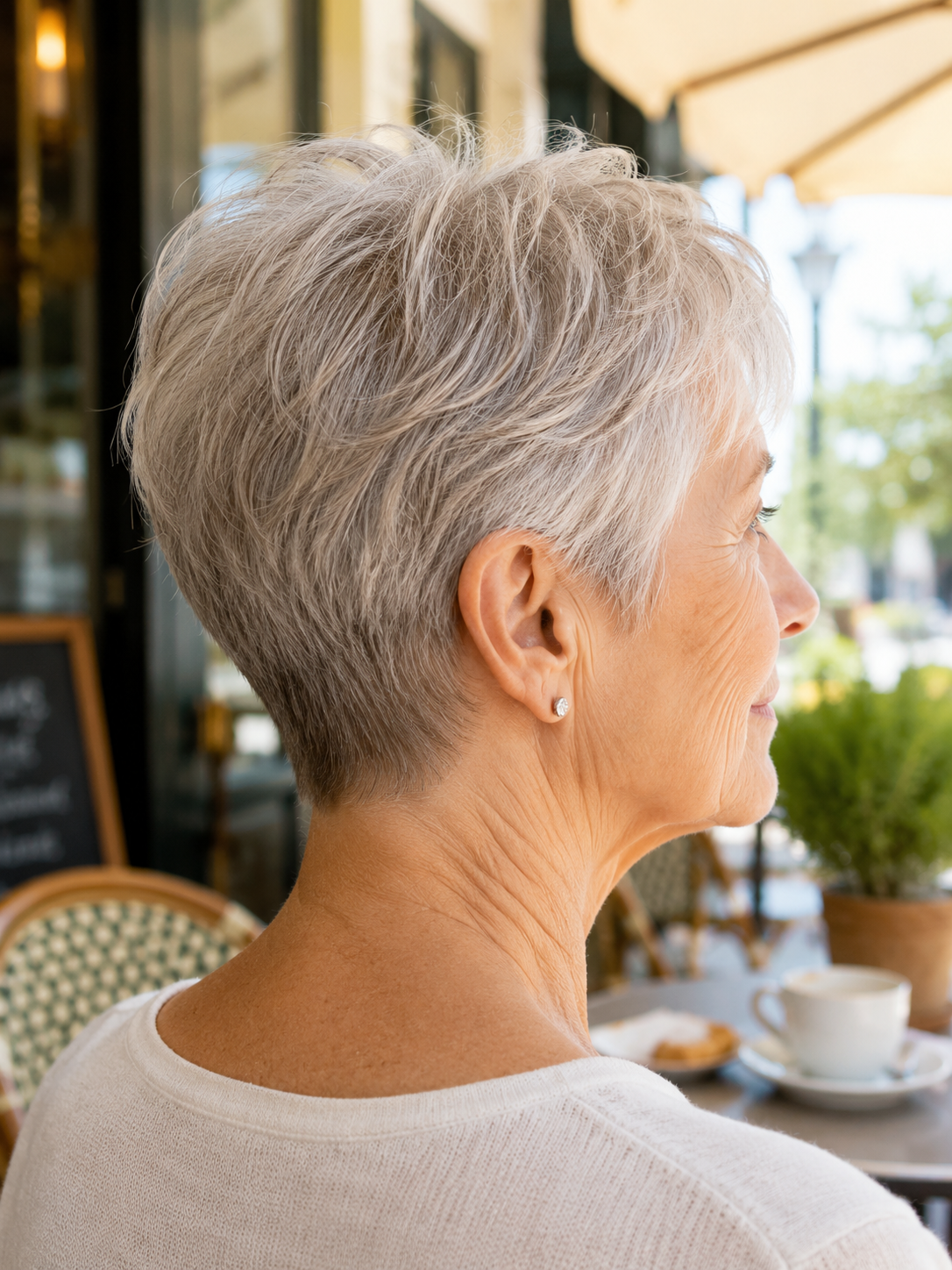
Maintenance every four to five weeks keeps the shape intact. It’s a small commitment that makes a significant difference to how the overall cut holds up.
Shaggy Pixie
Short shag energy applied to pixie length means lots of internal texture, curtain-style fringe, and layers that move independently of each other. For fine hair, the shaggy approach is better than a sleek one because it distributes the hair across more surface area, making it look fuller overall.
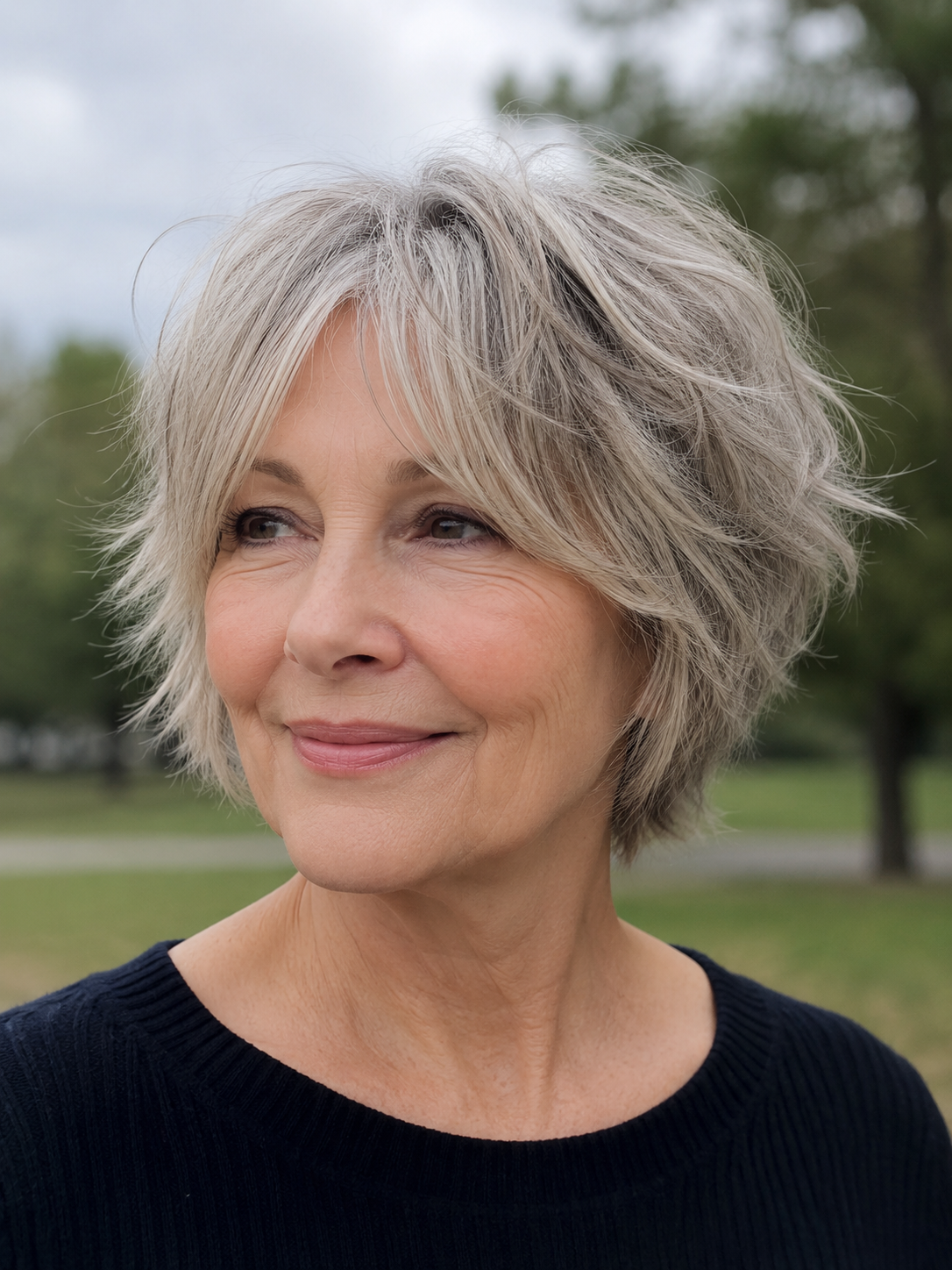
Keep the length well above the shoulders and use a texturizing spray on dry hair rather than heavy styling products. Weight is the enemy of fine-hair volume.
Salt-and-Pepper Pixie With Texture
Going gray doesn’t mean going flat. A textured pixie cut in a natural salt-and-pepper tone can look exceptionally striking, especially when the cut itself has enough internal movement to catch light across the mix of shades. Ask for point-cut ends and light texturizing throughout.
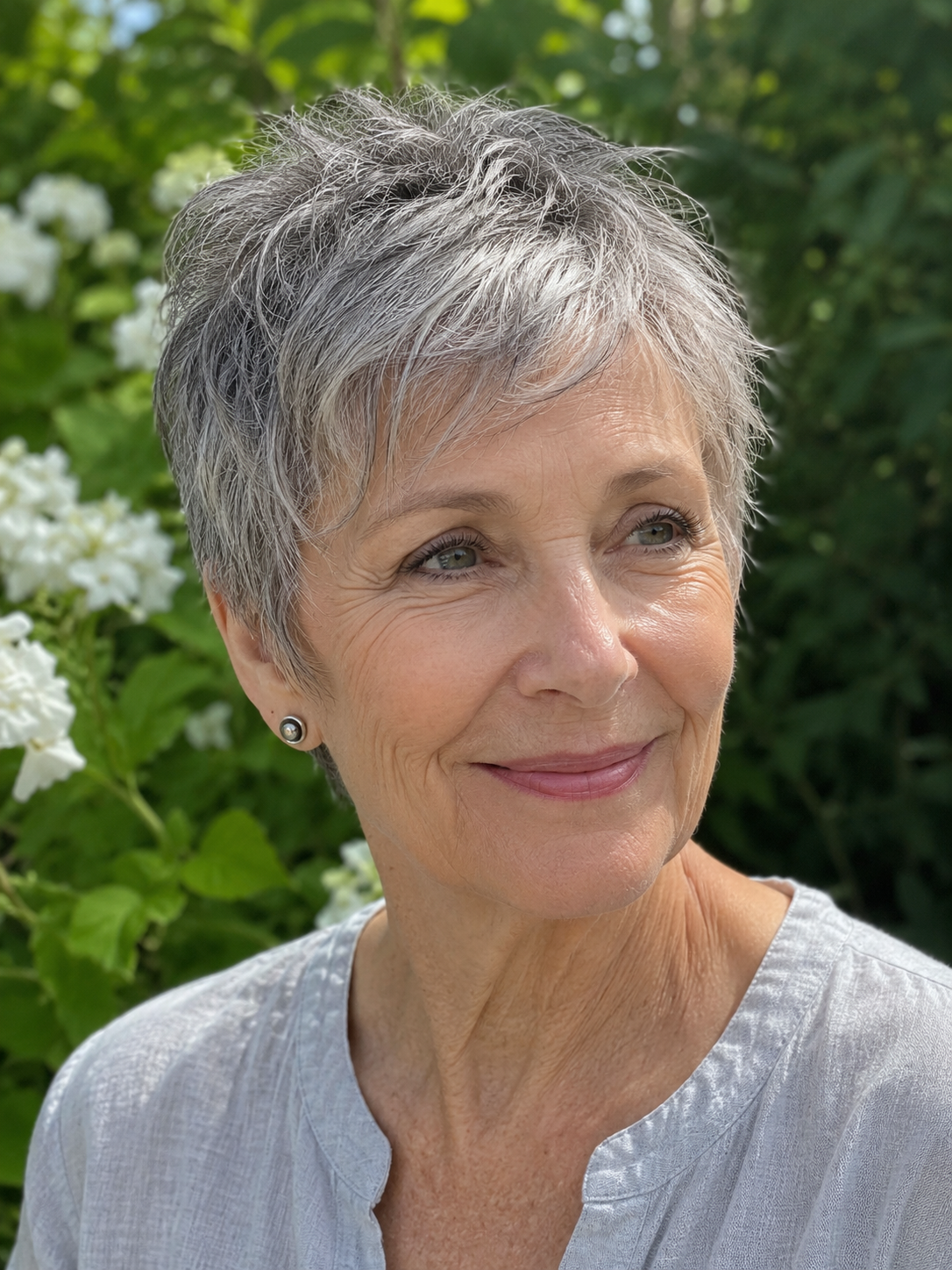
The tonal contrast of gray and darker strands does some of the volume work for you, creating the appearance of depth that solid-color fine hair has to work harder to achieve.
Pixie With Soft Undercut And Texture On Top
A softer version of the full undercut, this approach fades the sides gently rather than clipping them close, with deliberate texture built into the top section. The gradual fade avoids the high-contrast look that some women find too sharp, while still removing the flat, heavy sides that work against fine hair.
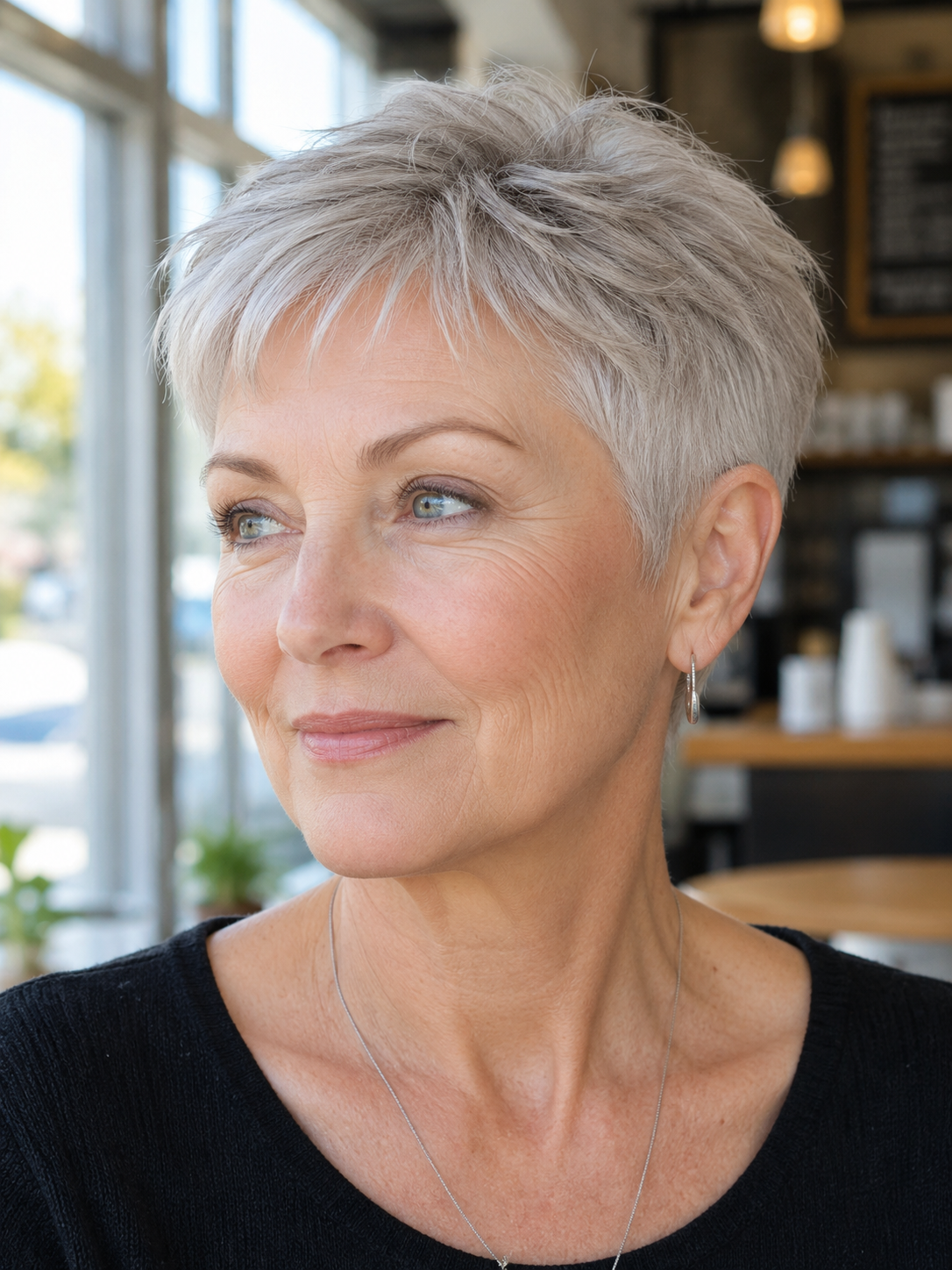
Style the top with a small amount of volumizing paste, working it through with fingertips in an upward motion. The texture stays without looking overdone.
Grown-Out Pixie
Not every pixie needs to be cropped close to look intentional. A grown-out pixie, longer at the top and around the ears with tapered sides, gives fine hair more surface area to work with while staying well within pixie territory.
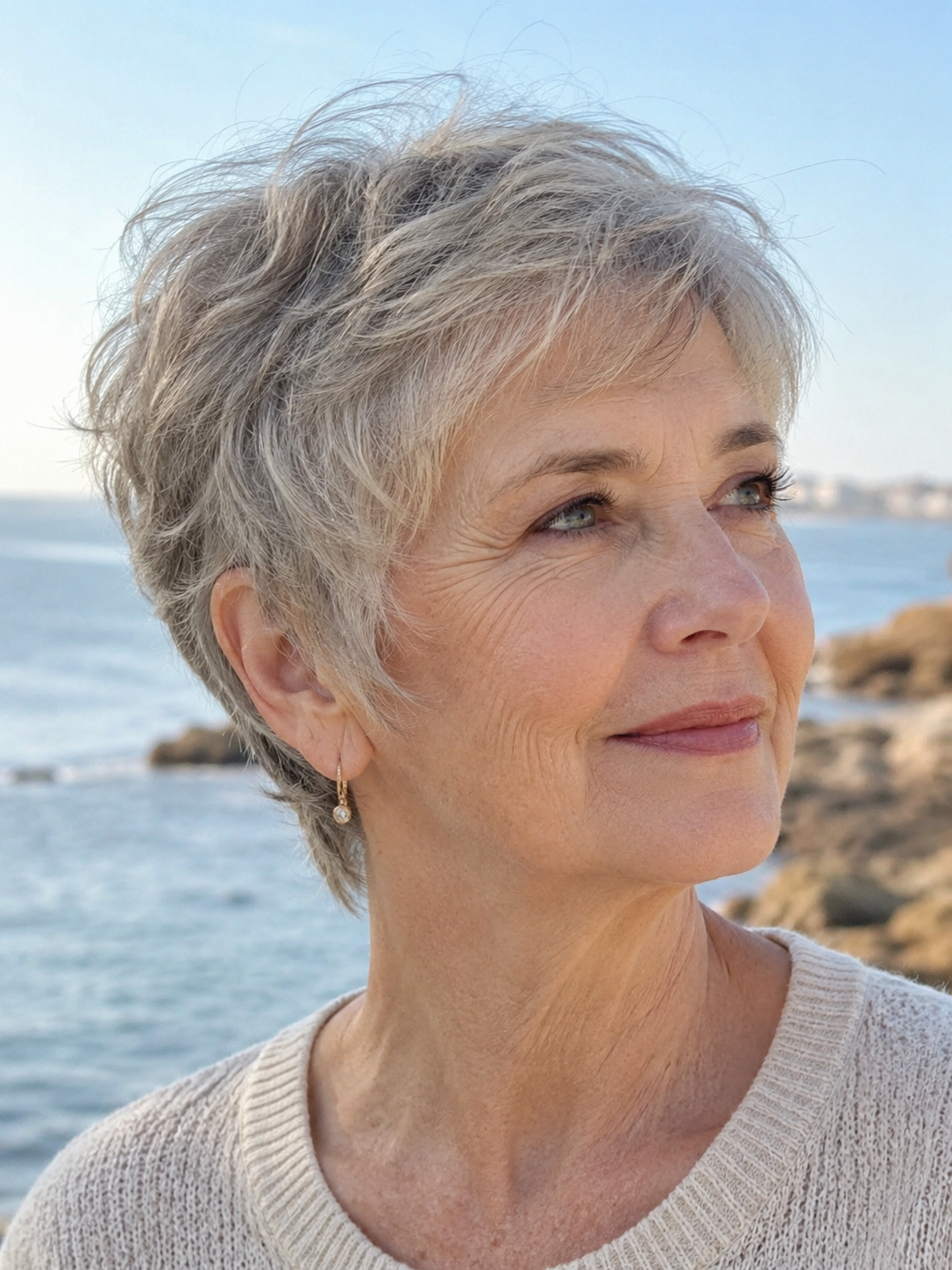
This is a good option if you want styling flexibility or are transitioning between lengths. The key for fine hair is keeping the sides tapered rather than letting them bulk out, which makes fine hair look flat rather than full.
Modern Slicked Pixie
Unexpected for fine hair, but hear it out. Slicking a pixie close to the head with a light glossing cream works when the cut itself has a strong, precise shape. For fine hair over 60, this approach trades volume for polish and works best on women who prefer a sleek, low-maintenance finish to a textured one.
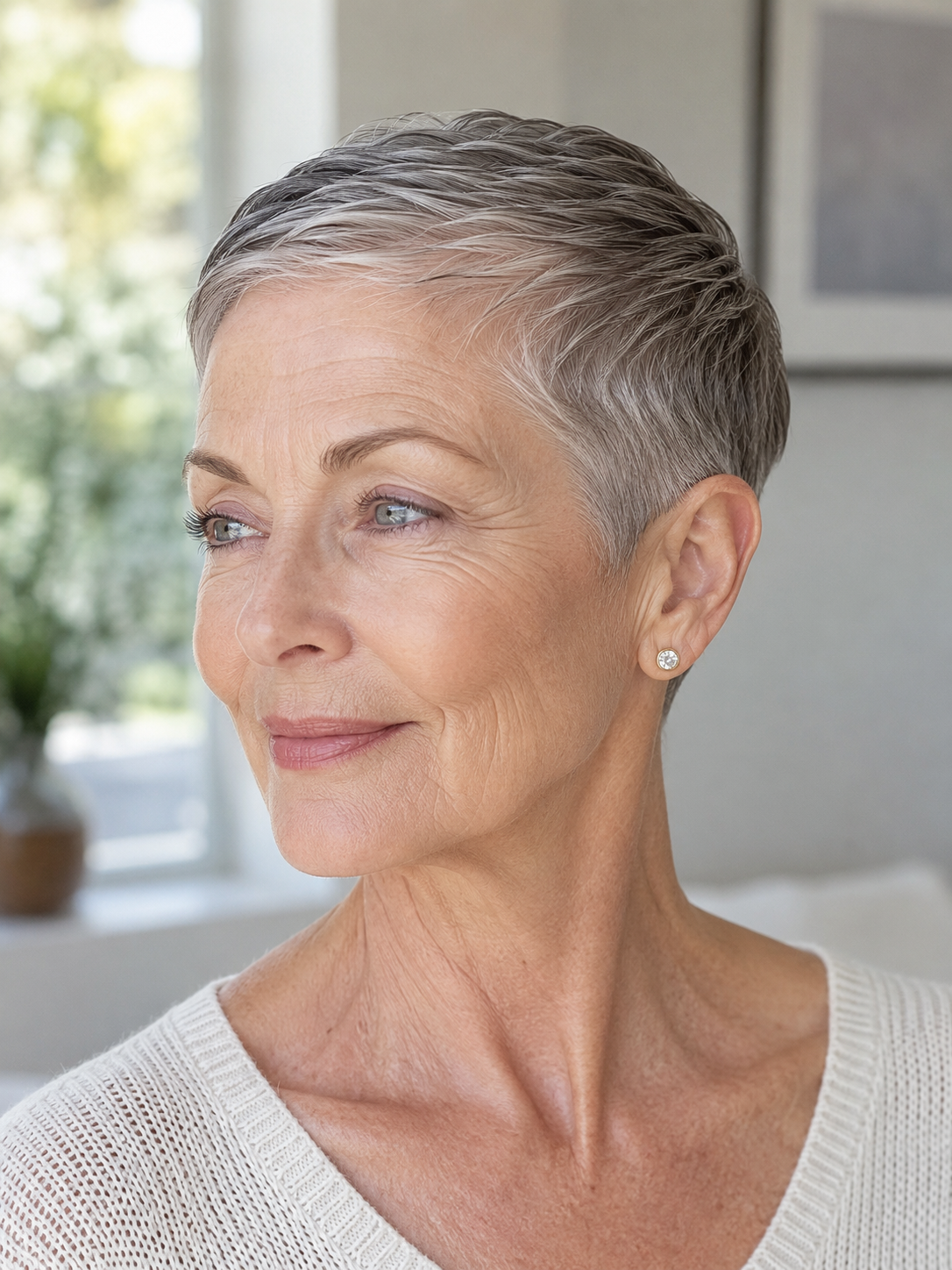
The cut needs to be very well shaped, because without volume to fill gaps, the silhouette does all the work. Have this one trimmed every three to four weeks.