Nobody tells you this part: pixie cuts get easier to wear as you age, not harder. Fine or graying hair holds shape better in short lengths because there’s less weight pulling curls and layers flat. The trick stylists rarely mention out loud is picking a pixie based on how your hair grows, not just a photo you liked. Here are 15 versions that hold up against real texture, real gray, and real mornings with no time to style.
Classic Textured Pixie
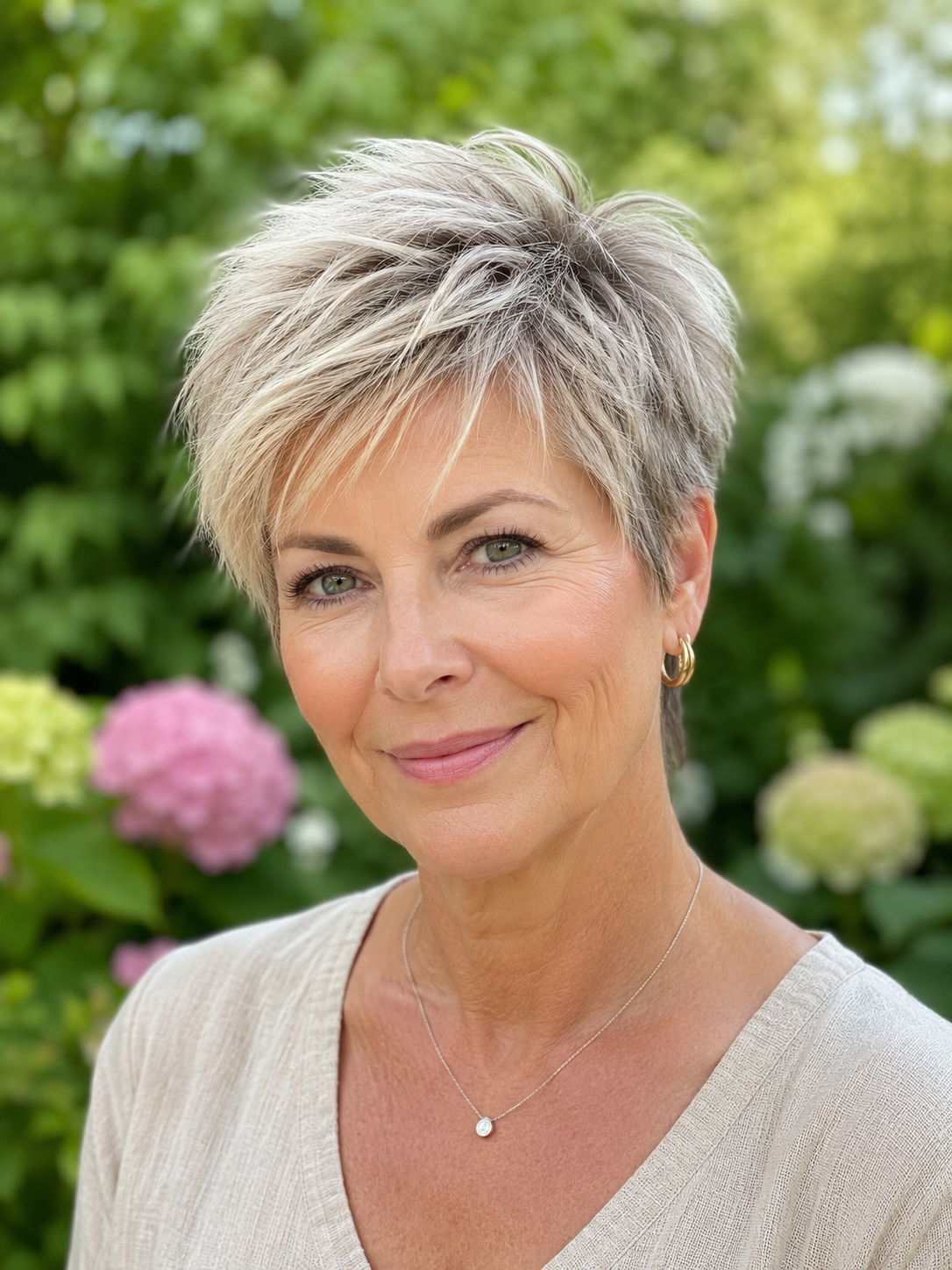
Ask for layers cut with a razor, not just scissors, so the ends look soft instead of blunt. This version adds volume right at the crown, which naturally lifts thinning areas. A small amount of texturizing paste worked through damp hair is really all it needs. It reads effortless because it is.
Long Pixie with Side-Swept Fringe
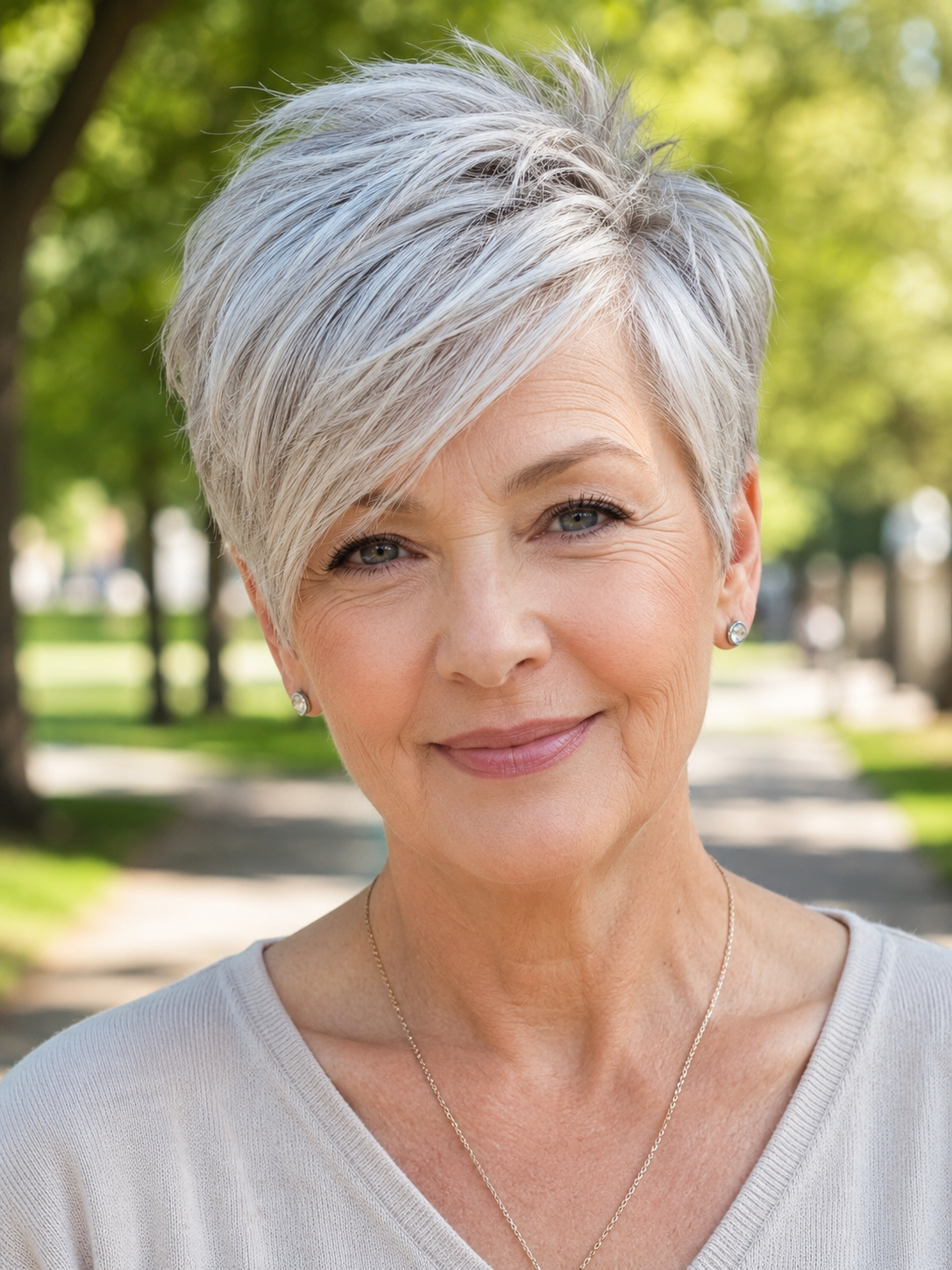
Length through the top and a fringe that sweeps to one side gives you more styling options than a cropped version. It softens angular jawlines and covers a bit of forehead if that’s a priority. Blow-dry the fringe across with a round brush for lift. Low daily upkeep, high payoff.
Tapered Pixie for Fine Hair
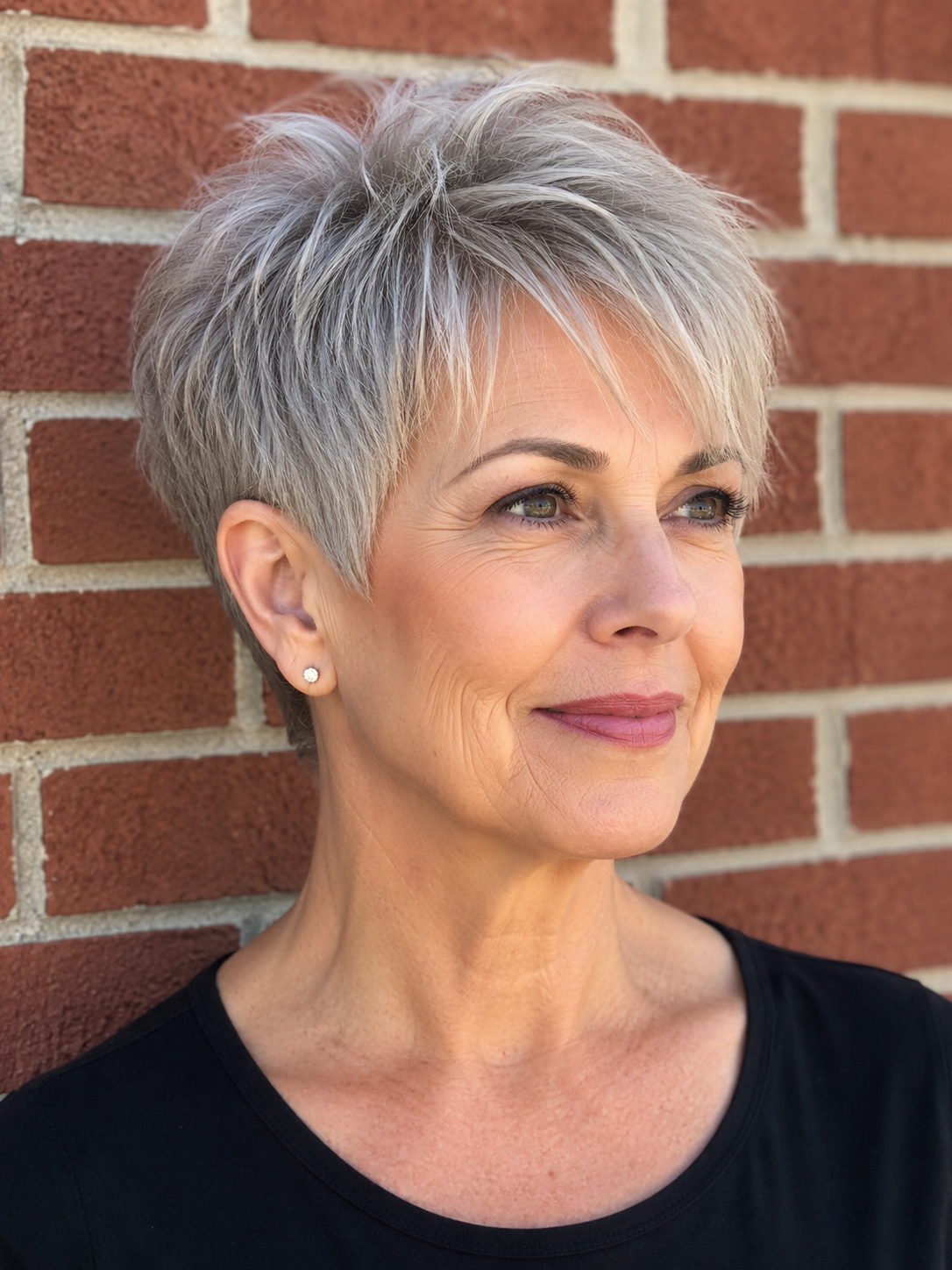
Fine hair thins out fastest at the nape, so a tapered back keeps things looking dense instead of straggly. Layers are kept short and close through the sides. A lightweight mousse before blow-drying adds body without weighing strands down. Great option if volume has become harder to hold onto.
Gray-Embracing Pixie
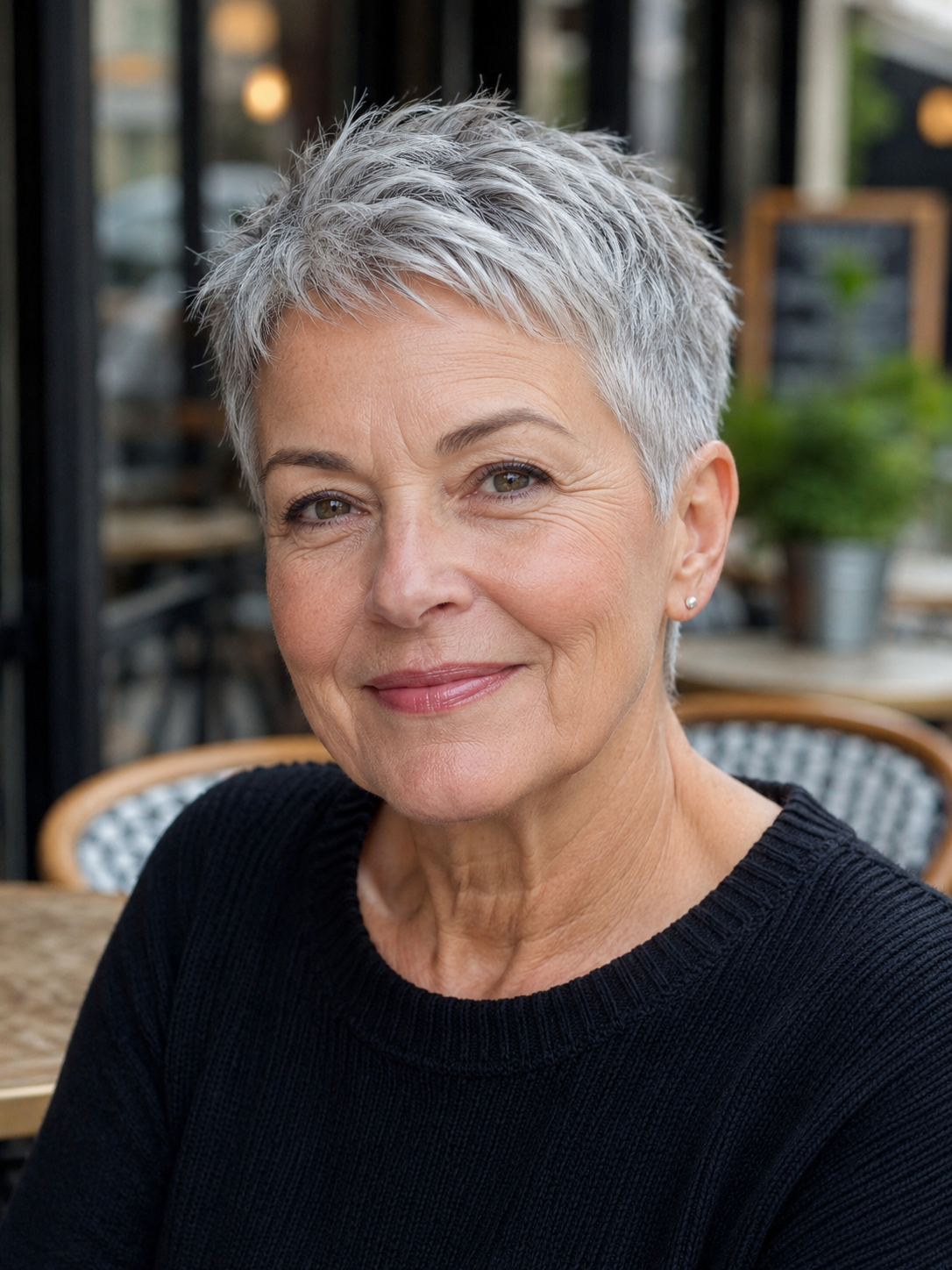
Short layers cut close to the head let natural gray and silver tones catch the light instead of getting lost in longer hair. Ask your stylist to avoid heavy layering on top, since gray can look sparse if it’s cut too thin. A glossing treatment keeps the color looking rich rather than dull.
Asymmetrical Pixie
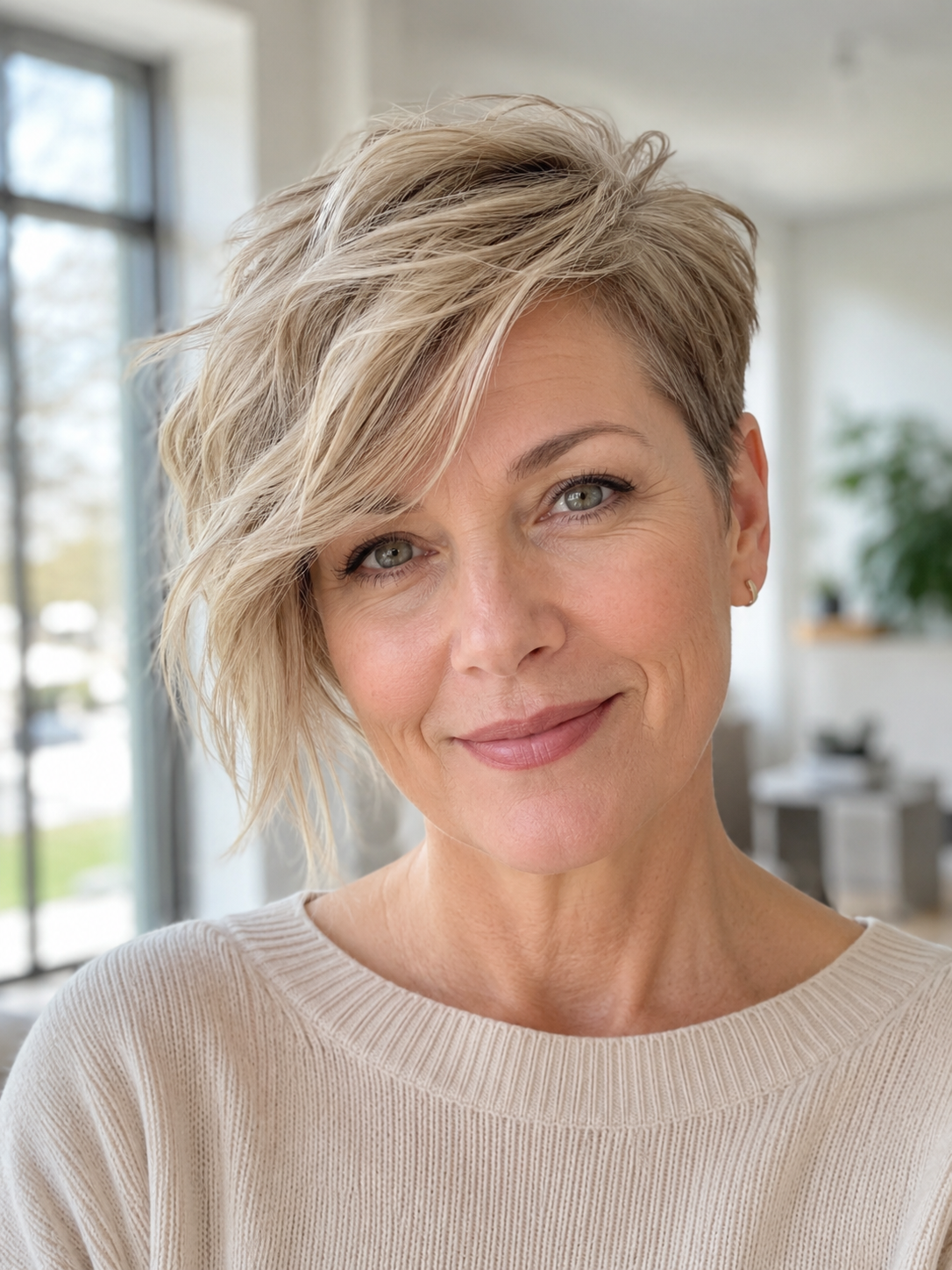
One side kept slightly longer than the other adds movement without any extra length overall. This shape works well if you want something a little edgier than a classic pixie but still easy to manage. Style with fingers and a dab of pomade for a lived-in, undone finish.
Curly Pixie
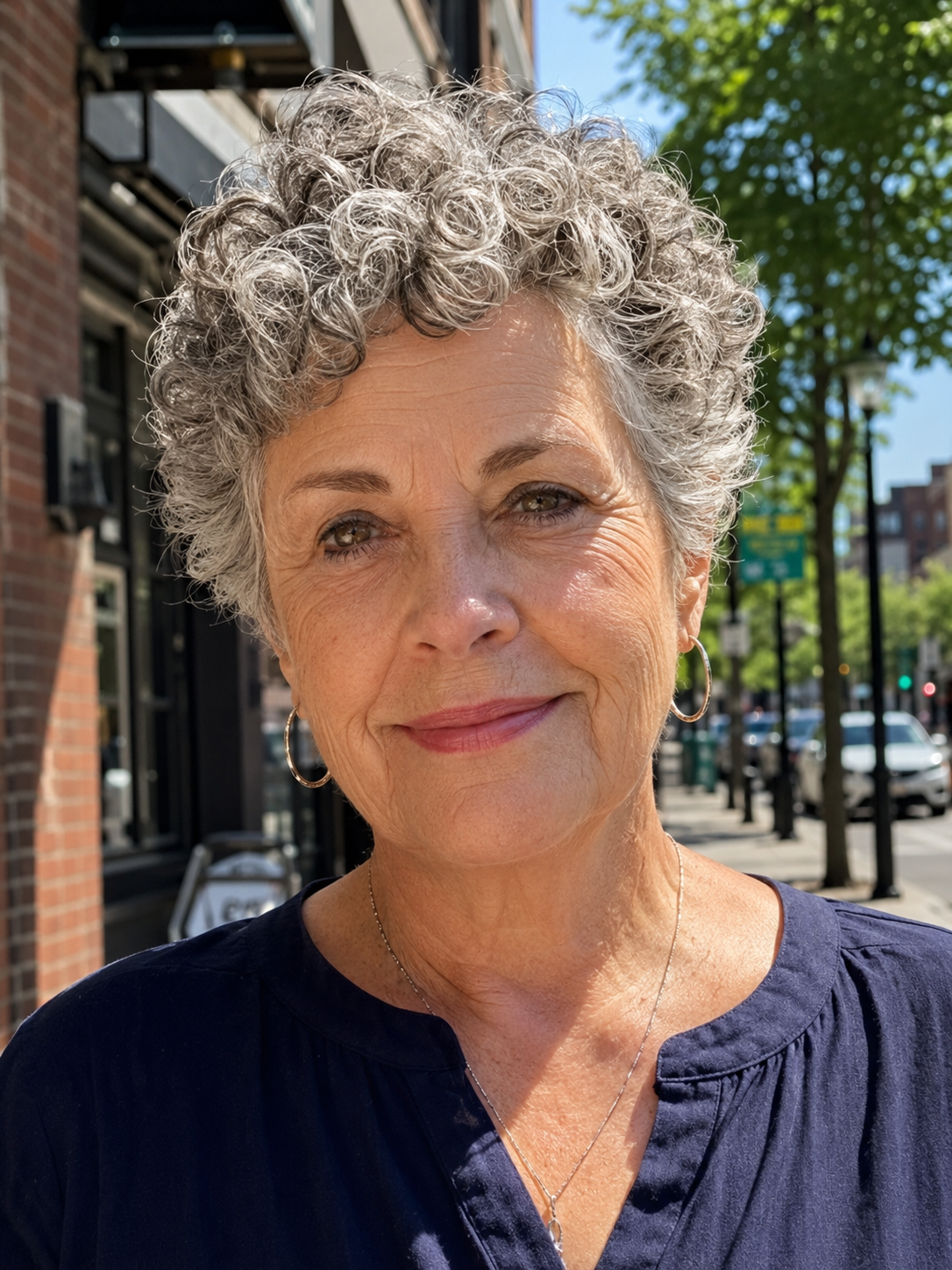
Curls need room to spring, so this version keeps length slightly longer on top while sides stay close. A curl cream applied to soaking wet hair, then air-dried, keeps definition without frizz. This shape actually gets easier with curl pattern as you age since shrinkage does a lot of the shaping work.
Pixie Bob
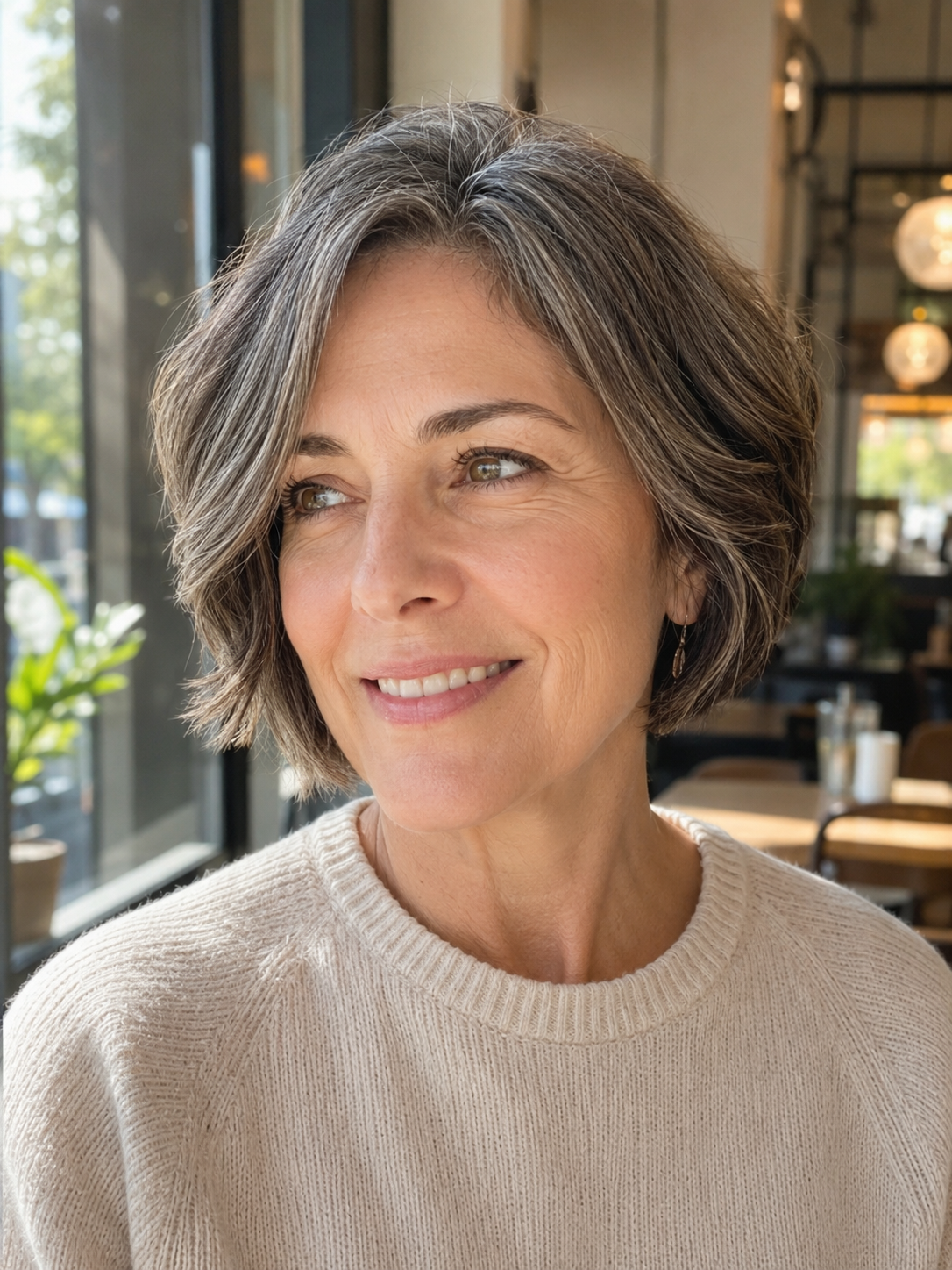
A pixie that grazes the jaw on the sides gives a slightly softer, rounder silhouette than a traditional crop. It suits women who want short hair without looking severe. Waves added with a curling wand at the ends keep it from looking too structured or stiff.
French Crop Pixie
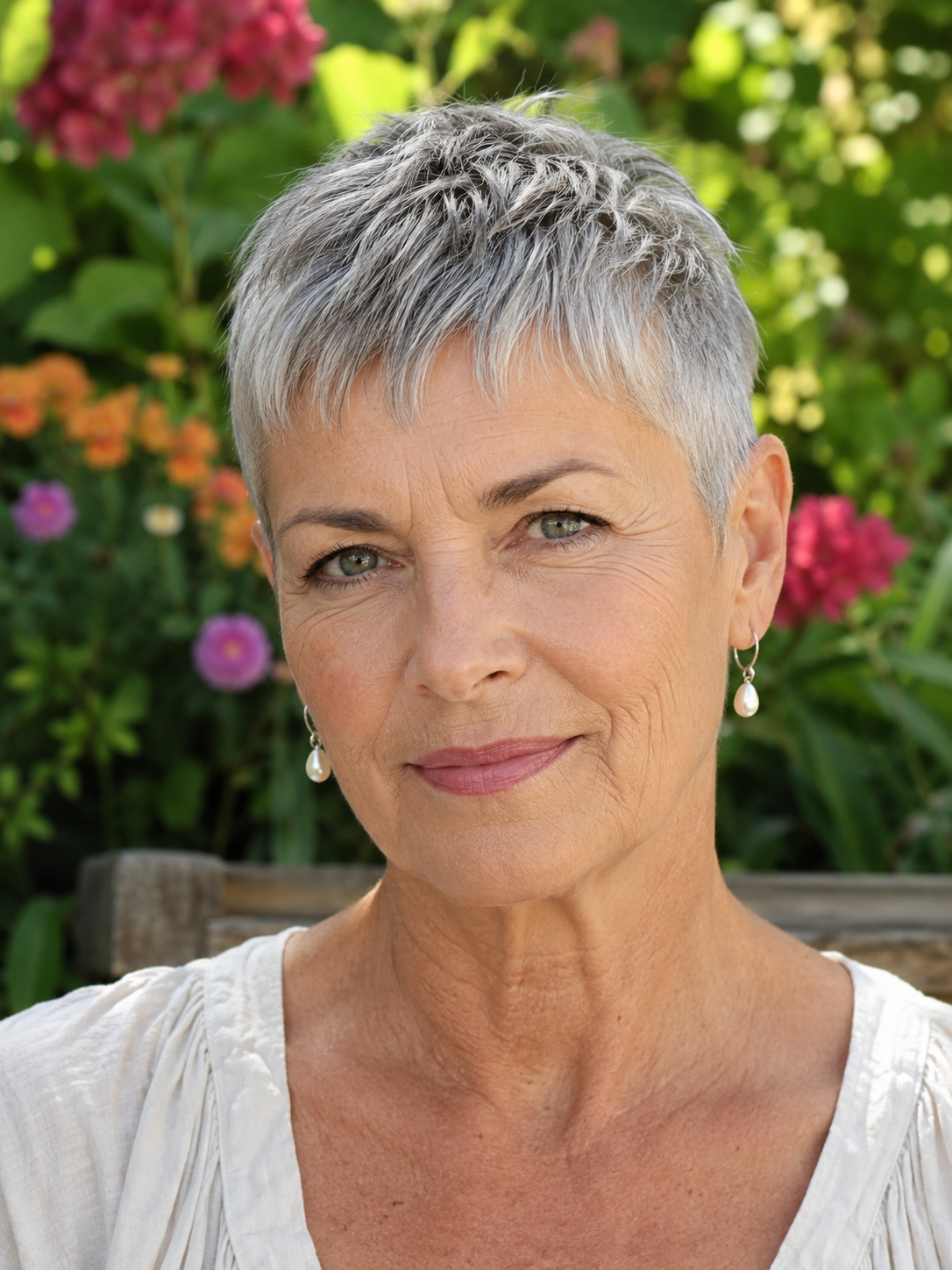
Very short on the sides and back with a bit more length and texture through the top, this cut has a clean, tailored look. It works especially well on rounder face shapes since the shorter sides create the illusion of more definition along the jaw. Style with a matte paste for texture.
Wavy Pixie

If your hair has natural wave, work with it instead of blow-drying it straight every day. Diffuse dry on low heat and scrunch a texturizing spray through mid-lengths. This version has a relaxed, beachy quality that reads younger than a rigid, sprayed-in-place pixie.
Undercut Pixie
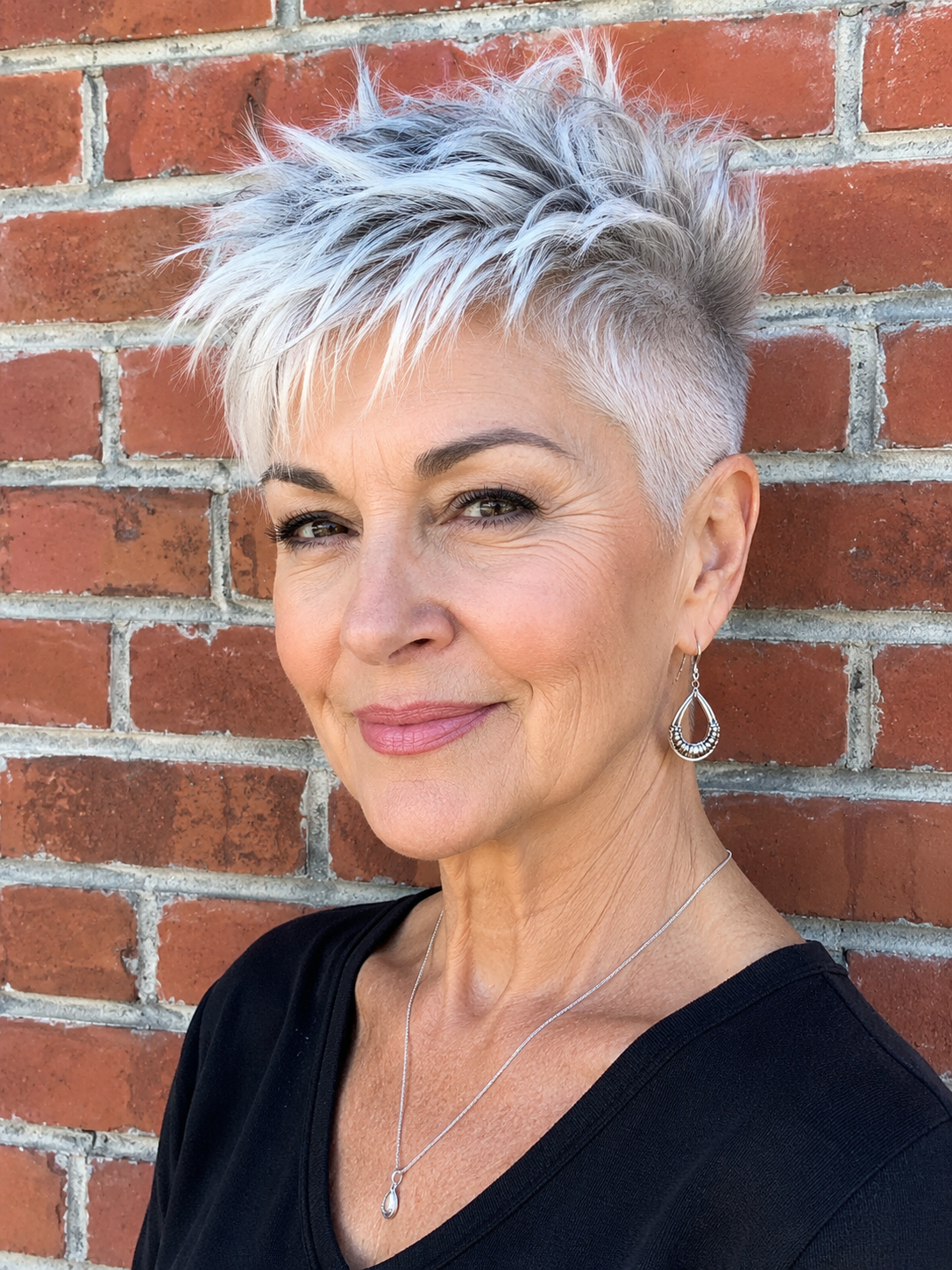
Shaved or closely clipped sides paired with longer, textured length on top create real contrast and make thinner hair look fuller by comparison. This is a bolder choice, but it’s genuinely low maintenance since the sides need almost no daily styling at all.
Spiky Pixie
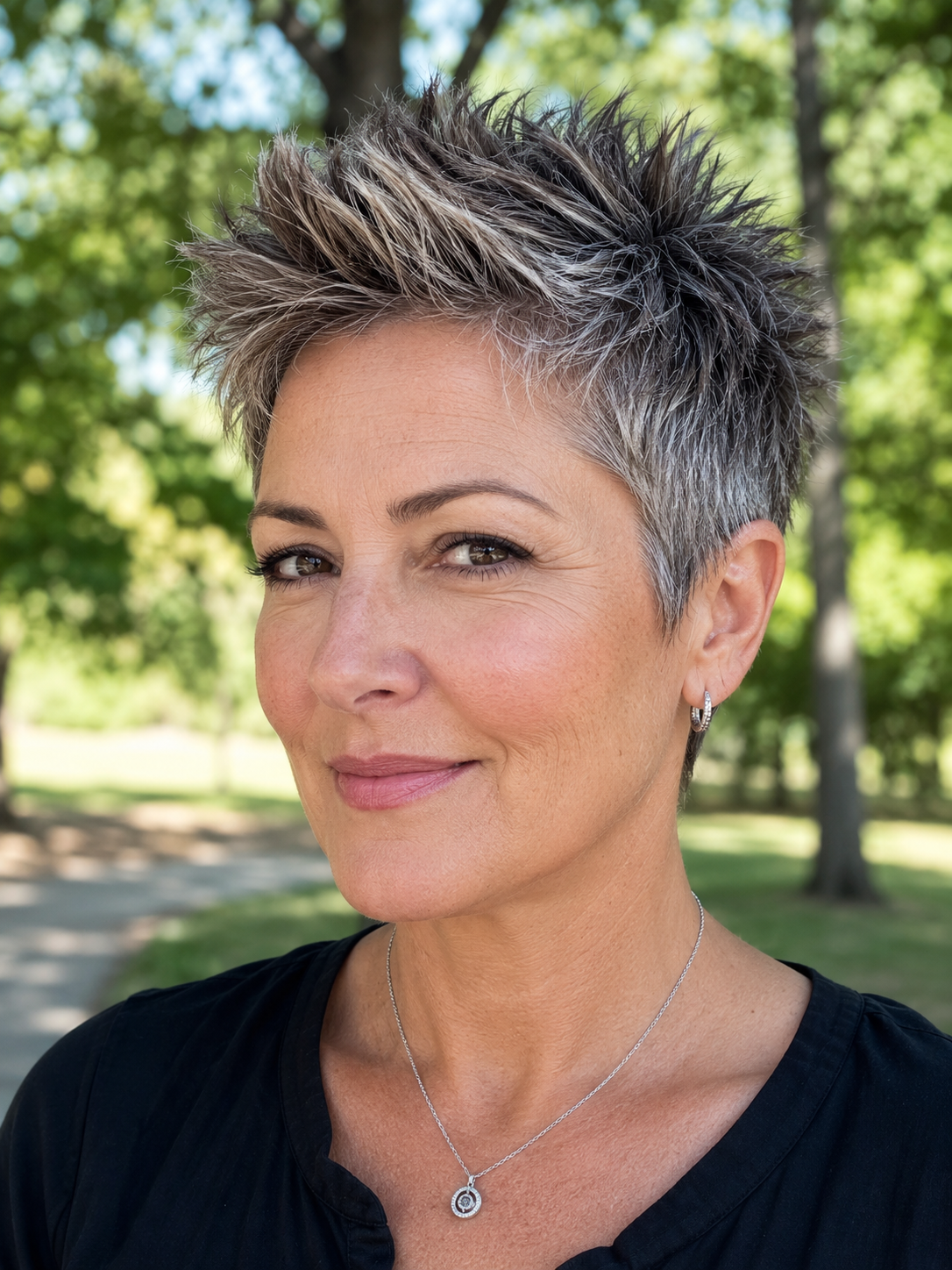
Short layers pushed up and out with a strong-hold pomade give this cut energy and edge. It works particularly well for finer hair since the spiking technique creates the illusion of extra density and height. Two minutes with fingers is the entire styling routine.
Rounded Pixie
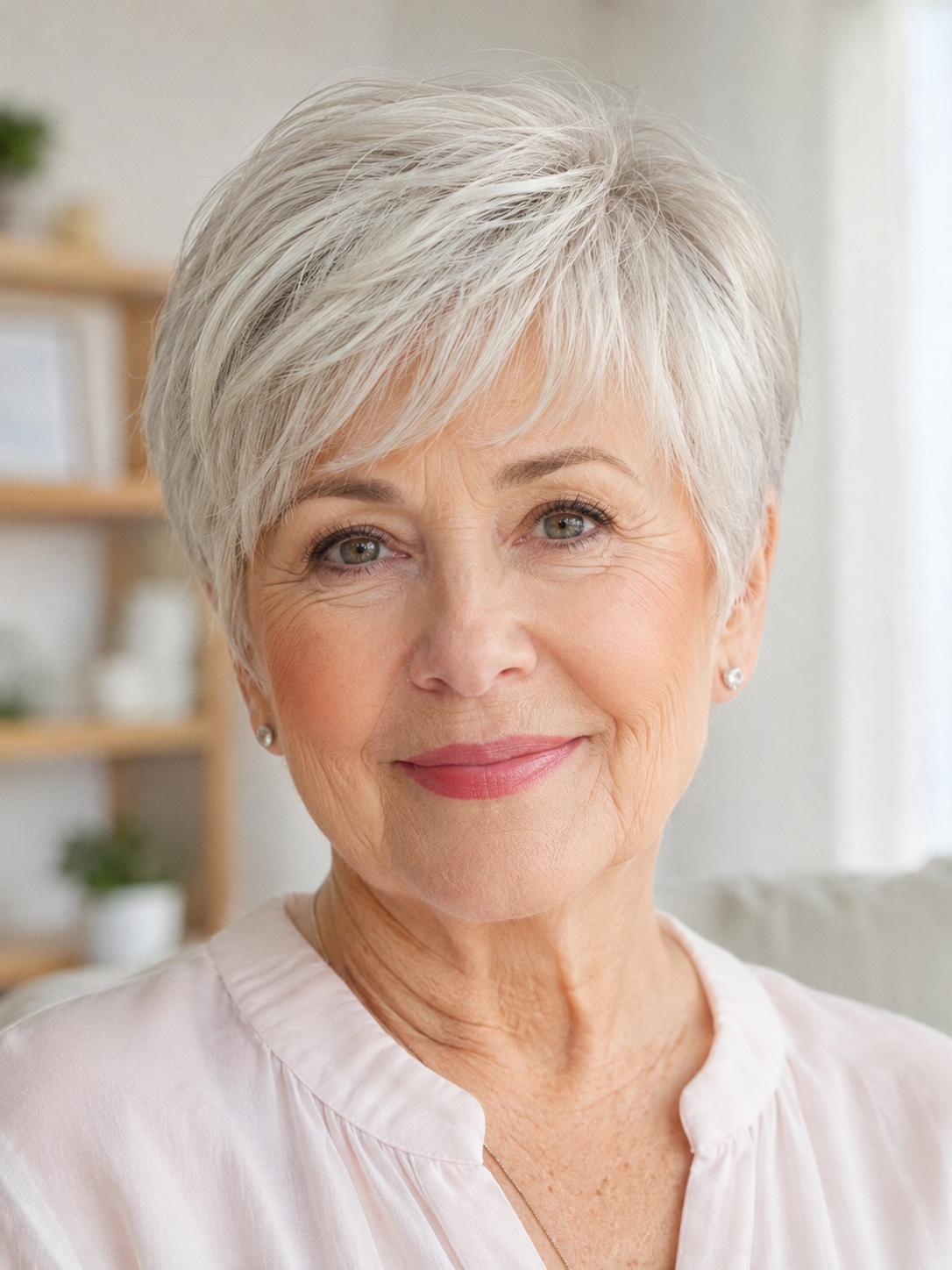
Soft, rounded layers that hug the head rather than spike or point outward give a polished, put-together look with almost no effort. This shape flatters angular or long face shapes by adding width and softness around the cheekbones. A light shine serum finishes it nicely.
Piecey Pixie
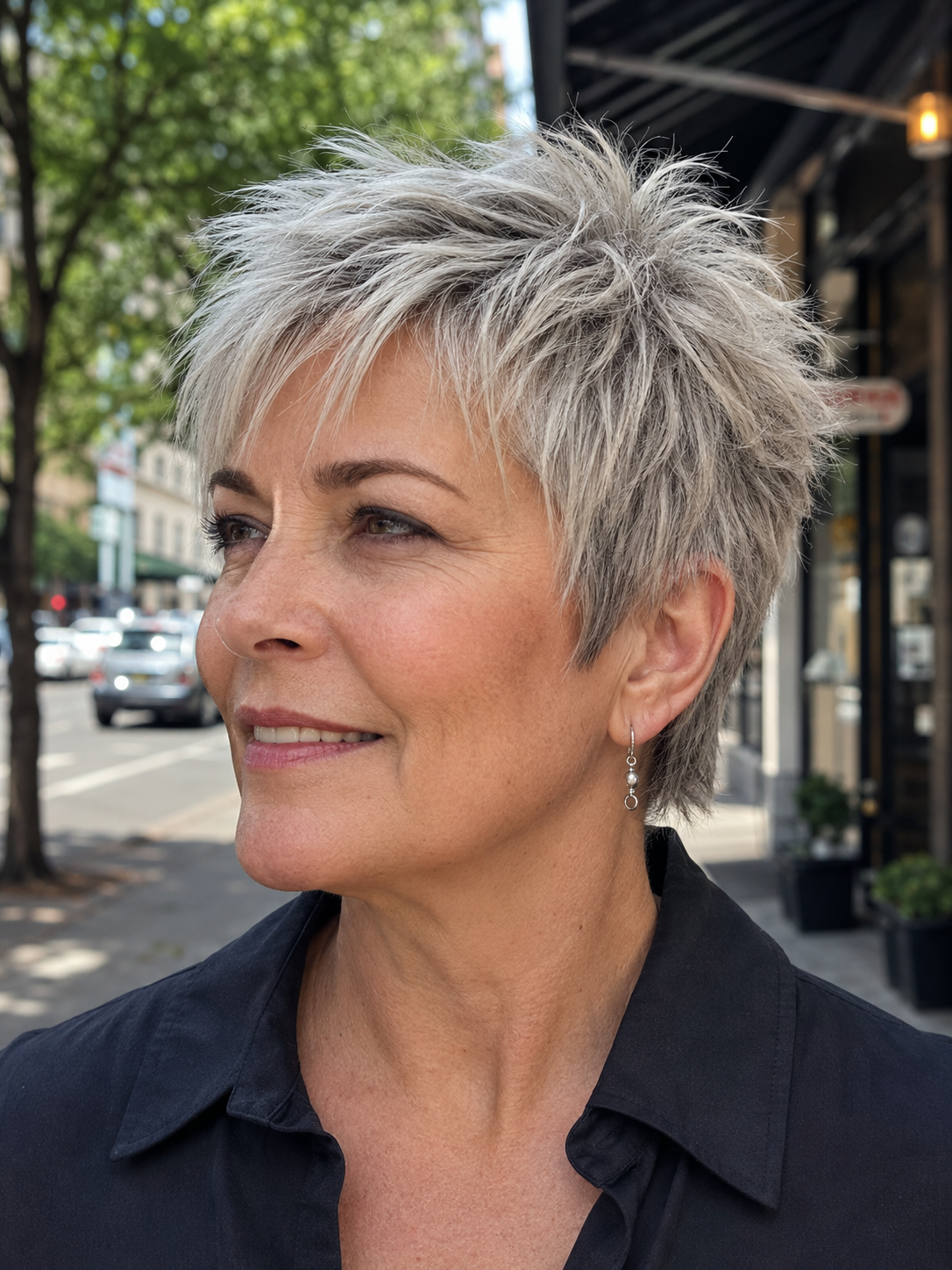
Choppy, disconnected ends throughout give this version movement and prevent it from looking too uniform or helmet-like. Great for anyone who wants a pixie with some attitude. Scrunch a texturizing cream in while damp and let it air-dry for the best piecey definition.
Side-Parted Pixie
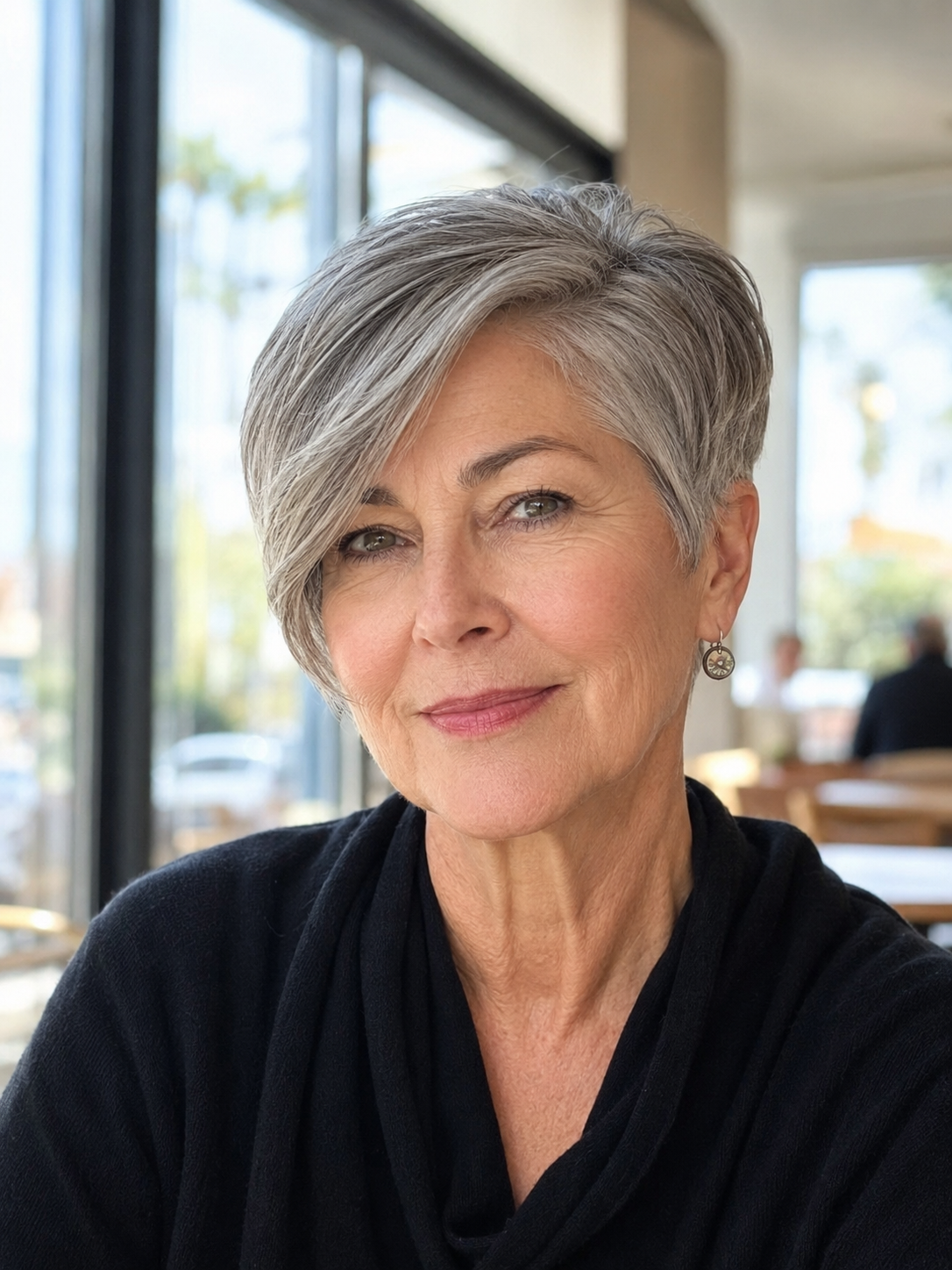
A deep side part instantly changes the shape of a pixie, adding asymmetry and a slightly more polished, dressed-up feel. This works well for thinning crowns since the parted section can be angled to camouflage sparse areas. Great transitional option for anyone easing into shorter hair.
Choppy Layered Pixie
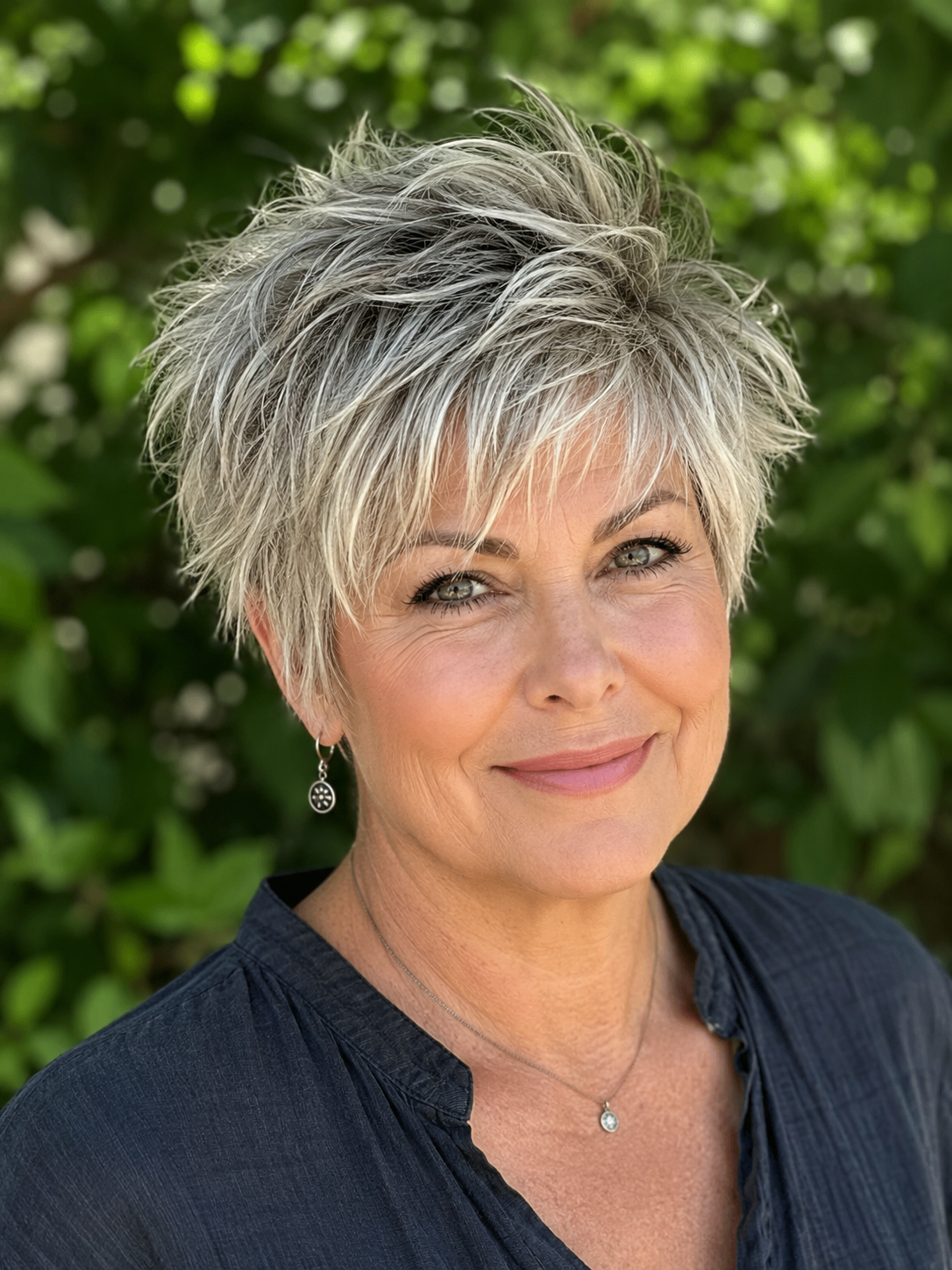
Heavily textured, uneven layers throughout give this cut a modern, slightly undone quality. It’s forgiving of cowlicks and awkward growth patterns since the choppiness disguises imperfect regrowth between cuts. A matte wax worked through dry hair keeps the texture looking intentional rather than messy.